
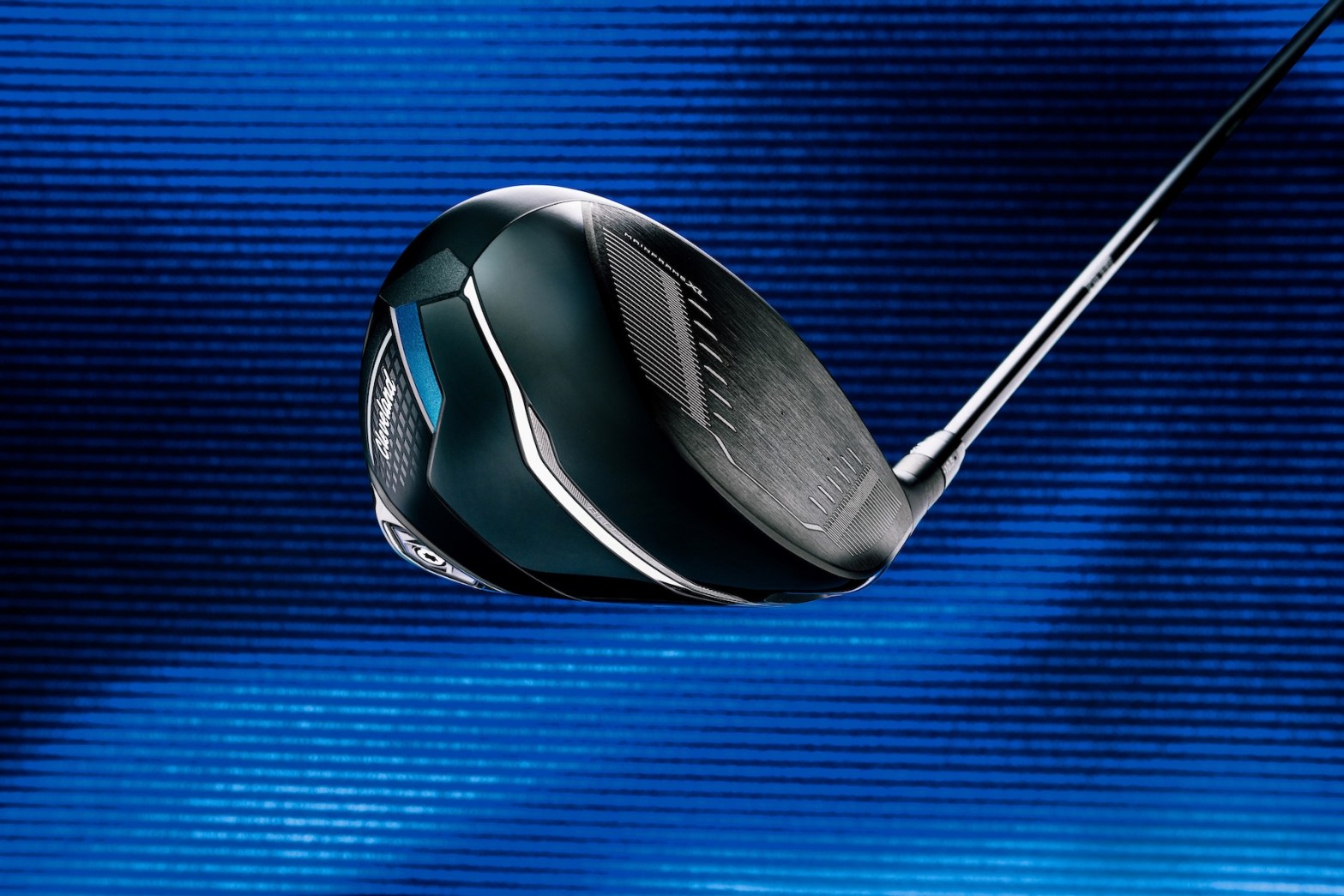
Golf equipment companies known for their drivers – like Callaway, TaylorMade, and Ping – have turned in recent years to AI applications to rethink and redesign their big sticks. Now Cleveland, a legendary equipment company traditionally known more for wedges and putters, has entered the AI arena. Released December 6, 2024, the Cleveland HiBore XL Driver promises longer, straighter drives and a design that stands out from the crowd.
“AI” is certainly a buzzword today, in golf and everywhere else. What does it mean to apply “artificial intelligence” to club design? Basically, it’s machine-learning – tasking a computer with looking for patterns in huge amounts of data, patterns that would take humans too long to find. What are the data? Well, you start with idealized parameters: and acceptable range of longest distance and narrowest shot dispersion. Then you build simulation models with variables associated with the clubhead, such as face thickness across the entire face, weighting (amount and position), lofts, crown and sole material density, etc. (within the bounds of USGA conforming specs). Add in variables associated with the swing, such as speed, directionality, angle of attack, etc., and maybe even variables associated with different golf ball designs. And then you run every combination of these models thousands of times each – hundreds and hundreds of thousands of runs, maybe millions. The AI bit, then, is asking the computer to analyze all these data points, learning the combinations that return the best results for the specified ideal output parameters.
The result of these sorts of AI-aided R&D processes can be designs that no human might have considered. In the case of the Cleveland HiBore XL Driver ($400), engineers began with a traditional pear-shaped driver head, and ended up with a triangular head that turns out to be as effective as it is untraditional.
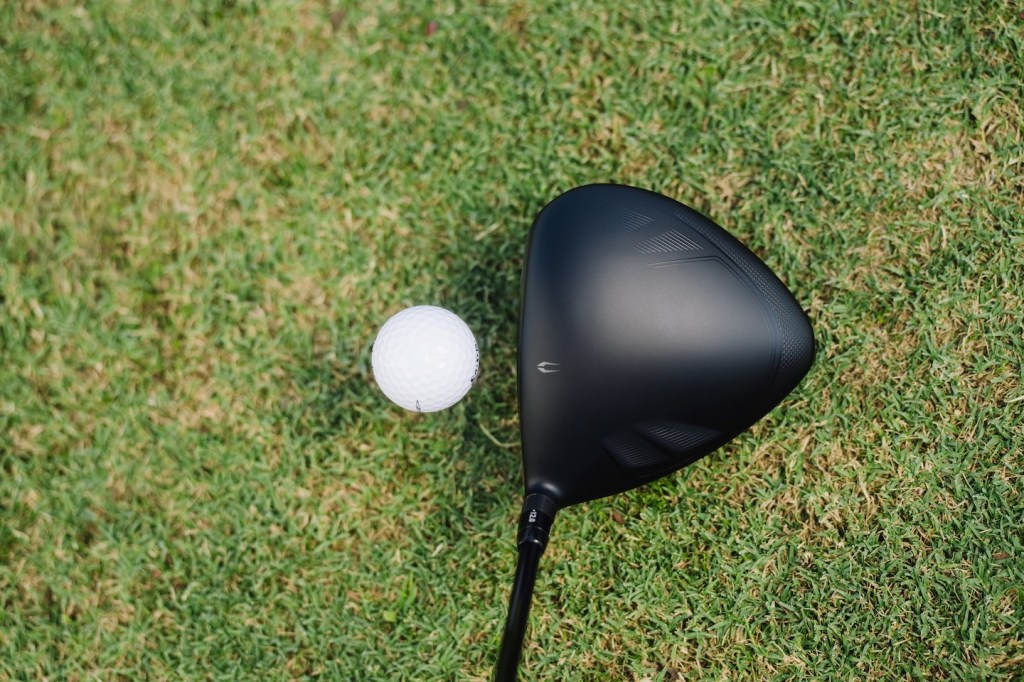
According to Cleveland’s Senior Product Casey Shultz, “As our R&D research has developed hand-in-hand with advancements of our A.I. simulation capabilities, the realization came that removing the constraints of a ‘traditional’ looking driver shape would allow for new and exciting performance opportunities.…[W]e were able to unlock levels of forgiveness and distance that weren’t possible before. But there is one key difference with the new model compared to that of the past – it also sounds great!”
Playing the Cleveland HiBore XL Driver
The week before someone flipped a switch and the weather in central Illinois went from 60 to 20, I took my Cleveland HiBore XL (9-degrees, stiff Mitsubishi Tensei shaft–a REALLY nice stock shaft) out to the driving range with my son, Erik, who was on his high school golf team and still plays often in college. He hits the ball a long way. I also took my past season’s gamer, a 10-degree Titleist TSR, for comparison.
The first thing we both remarked about was the unconventional shape. If you’re a “purist,” the triangular head shape will either take some getting used to or will not be for you. To my eye, it just looks powerful – kind of mallet or hammer-like. We were both a little rusty, and contact was distributed around the face for several swings. What was most striking is even though Erik hit a bunch of lower drives off the heel, and I hit a fair number of shots toward the toe, both ended up respectably long and, surprisingly in or close to what would have been the fairway.
As Erik said, “I’m not swinging great, but those all would have been acceptable drives.” I had to agree.
A week later, after the aforementioned arctic blast, I took the HiBore XL into the simulator at my local course to double-check that the numbers and accuracy impressions from the range held up under computerized scrutiny. Long story short, they did. Whereas Cleveland’s Launcher XL2, which I reviewed last year, found a lot of fairways but felt like it lacked a bit of “pop,” the HiBore XL stood up on the range and the simulator to my regular driver in terms of distance, AND it kept my ball more consistently in the fairway.
What might account for this accuracy performance? Thanks to the head shape, the driver face of the HiBore XL is 19% larger than the face of the Launcher XL2, which might be part of it. The larger face penalizes mishits (like our toe and heel contact at the range) far less. There’s also a counterbalancing weight in the shaft, which provides both control and promotes higher swing speed without losing connection between your hands and the clubhead.
Cleveland HiBore XL: The verdict
Cleveland’s initial foray into the world of AI-design appears to be a solid success. The HiBore XL is an excellent all-around driver, with plenty of “pop” and outstanding forgiveness. Both my son and I were able to work it in both directions, and the overall feel and sound were very pleasant – as long as you’re not aichmophobic. That’s the fear of sharp corners and objects with sharp corners, like triangles. (Is it just a coincidence that that word begins with “ai,” too…?)

 Midwestern Golf
One thought on “Cleveland HiBore XL Driver: All-in on AI”