
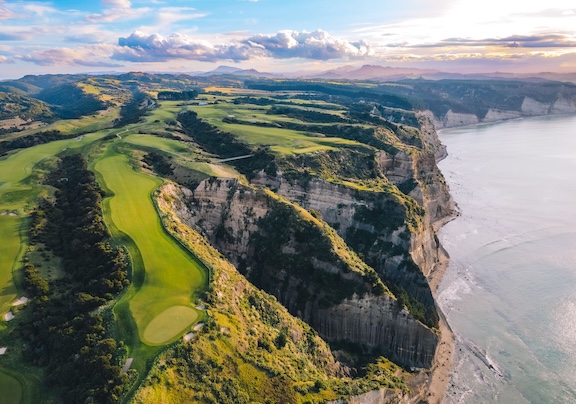
Ask avid golfers in the US for opinions about “dream golf trips” – you know, those bucket-list destinations dotted with bucket-list courses – and Scotland and Ireland will naturally be mentioned first. Beyond those iconic venues, it’s hard to predict responses. The savviest of sticks might surprise you by casting their covetous eyes southward – like, way southward – to New Zealand.
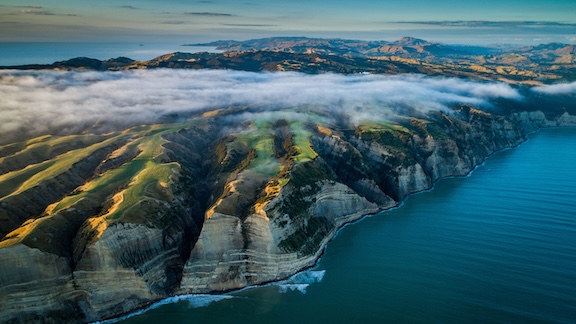
The land of kiwis and the Māori People is also probably the most under-appreciated golf destination in the world, with so much more to offer beyond golf. The only catch: If you’re going to travel to literally the ends of the earth, be sure to plan plenty of time to both play golf AND fully enjoy unsurpassed scenery, food, and hospitality.
Golf in New Zealand
Even most golf fanatics might be surprised to know that New Zealand is home to nearly 400 golf courses, scattered across the North and South islands. Equally surprising is that the nation’s first course, Manawatu Golf Club, opened in 1895. In 1896, the second course, Napier Golf Club, opened on land gifted by the local Māori tribe.
Fast-forward over a hundred years, when American developer Julian Robertson realized there was plenty of room to build golf courses on his vast sheep- and cattle-ranch lands both north and south of Auckland, the North Island’s largest city. To the north at Matauri Bay, in the late 1990s, he enlisted course architect David Harmon to design Kauri Cliffs. To the south, near Hawke’s Bay, a stern competition between course designers resulted in one of Tom Doak’s earliest international masterpieces – Cape Kidnappers Golf Course.
Cape Kidnappers
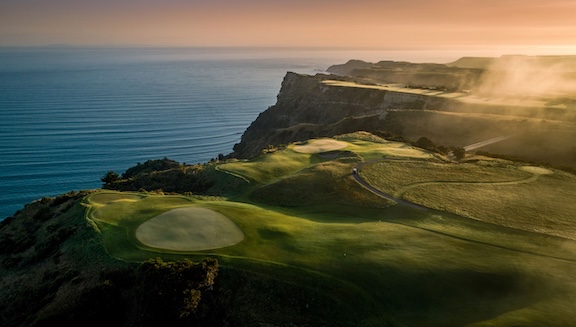
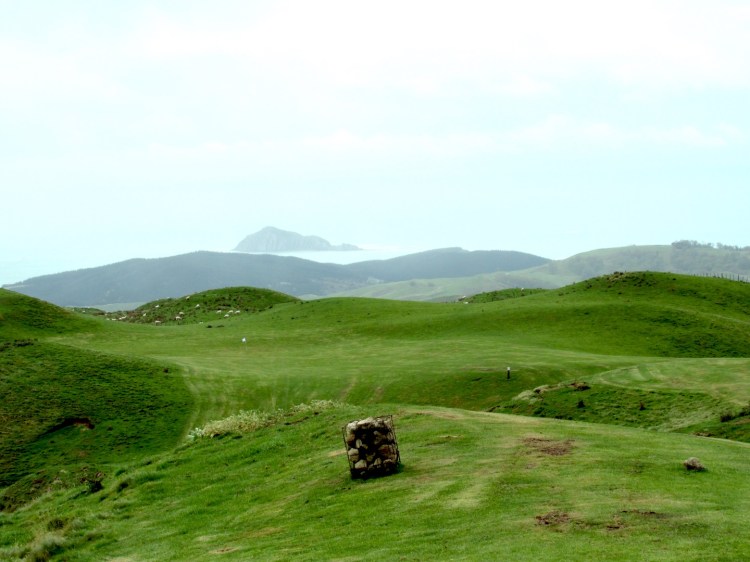
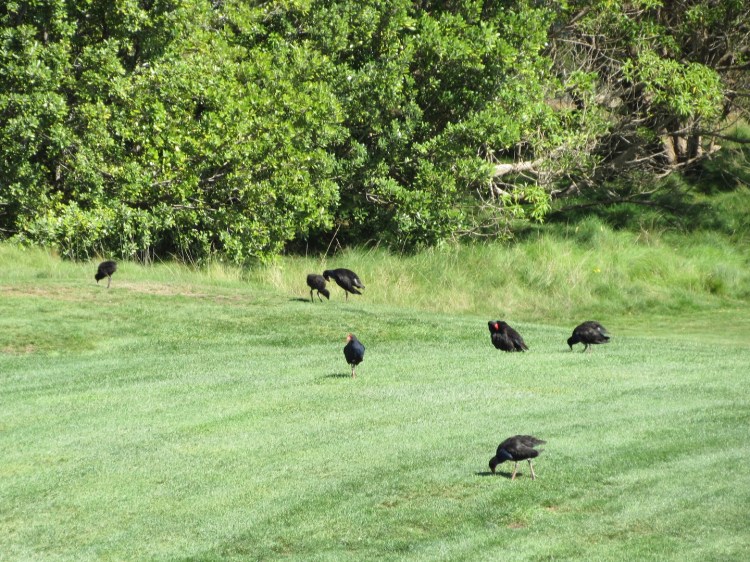
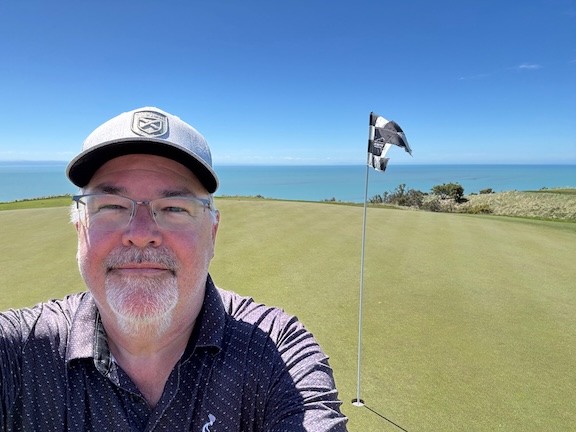
Located just south of Napier – which is itself a 5-hour drive or 1-hour flight south of Auckland – in the wine region of Hawke’s Bay (more on that later), Cape Kidnappers opened in 2004 to universally rave reviews. According to Golf Magazine’s 2026 ranking of the World’s 100 Best Golf Courses, it is currently #65. The par-71 layout teeters for 7,187-yards along 140-meter (500-foot) cliffs overlooking the Pacific Ocean, covering 600 acres of the 6,177-acre property, which is still largely a working sheep and cattle station. Equally impressive as the dimensions and location is the 10-kilometer, 2-meter-high anti-predator fence that surrounds the entire property. Thanks to this fence, the Cape Sanctuary preserve was founded in 2006. The Sanctuary is home to over 1,000 kiwis (the birds, not the people) and 15 of the 550 total takahē left in the wild today (see below for a photo).
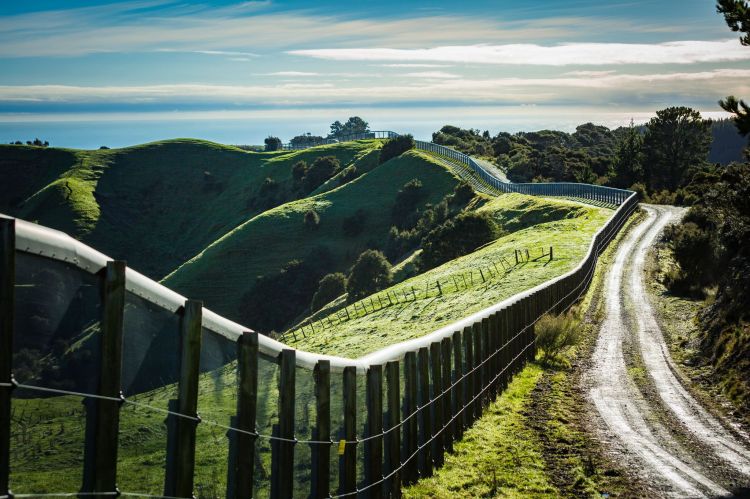
As for the course itself, the first thing visitors will notice is that just driving from the entrance gate to the clubhouse takes about 20 minutes – so don’t cut your arrival too close to your tee time! As you wind your way up a narrow, twisting road to 200 meters above sea level, your anticipation builds as you imagine the breathtaking vistas to come. Arriving at the rustic clubhouse and gazing out across the practice range and final holes toward Hawke’s Bay, you realize your imagination wasn’t sufficient to capture the awesome realization that out beyond the fairways, past the cliffs along Hawke’s Bay and Napier, lies nothing but thousands of miles of open, roiling ocean.
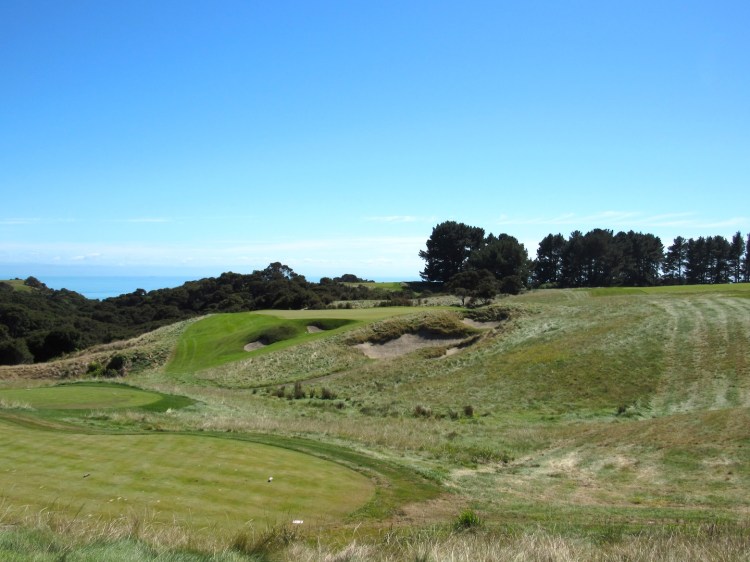
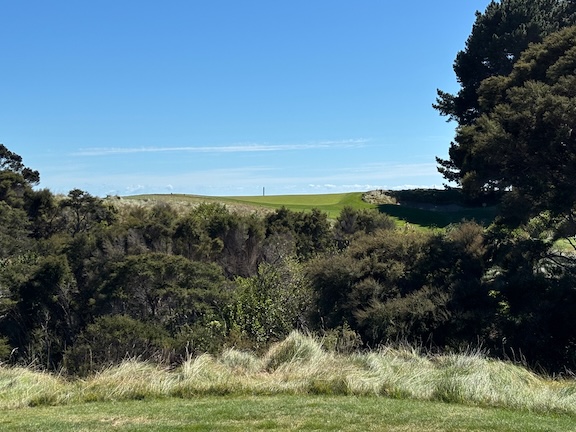
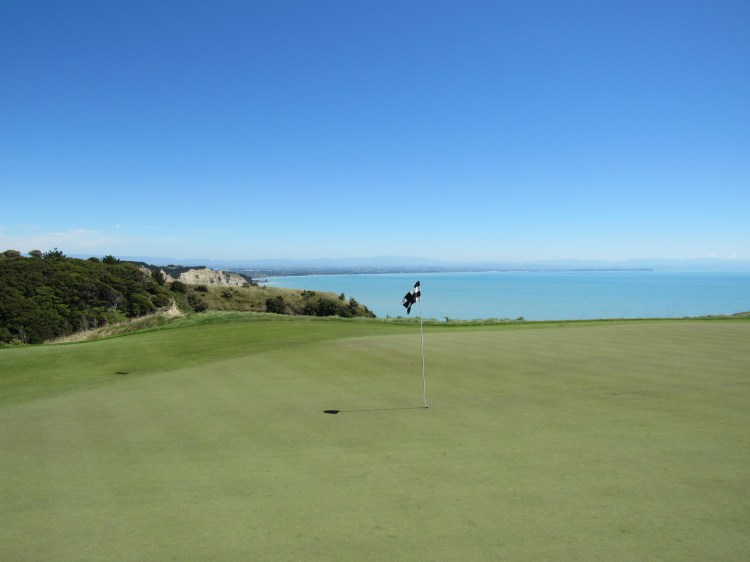
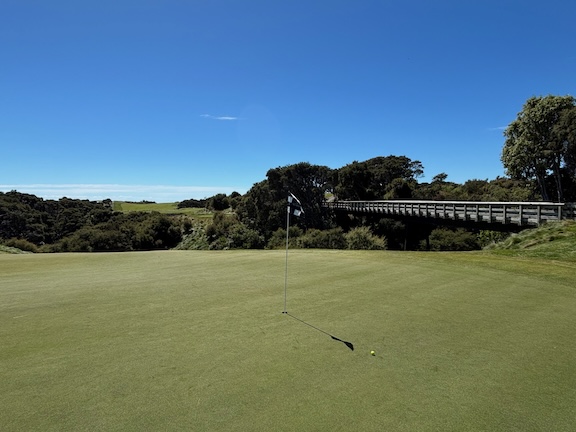
According to Tom Doak, a great course routing “should have a rhythm and a flow, with holes that vary in length, difficulty, and direction.” At Cape Kidnappers, this philosophy is gorgeously executed. The front 9 is mostly inland, but still with some view of the ocean in the distance. The holes run back and forth, generally angled toward the shoreline. The back 9, which plays considerably harder than the front, darts out to and back away from the cliffsides. Whether from tee boxes or greens, holes 10-17 are so visually stunning, that I frankly found it hard to remember that I was playing golf. Even on a somewhat overcast day, I could see snow-capped mountain tops in the distance and clouds of gannets swooping and diving over their nearby nesting grounds.
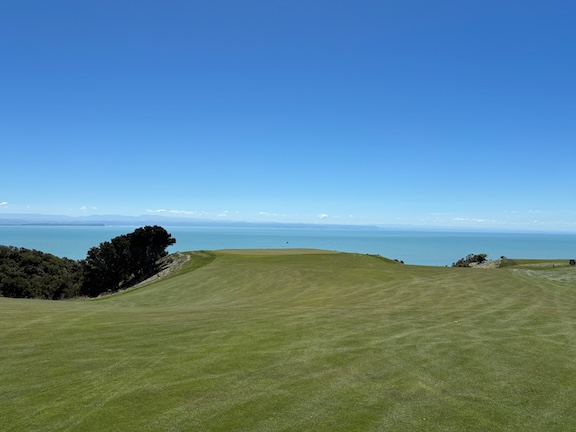
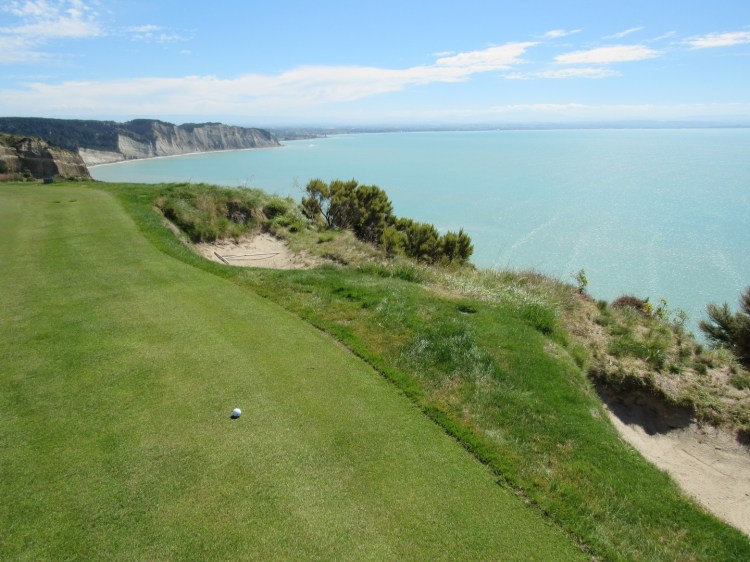
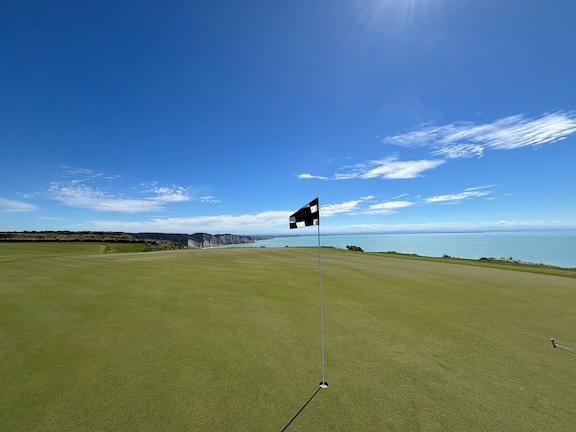
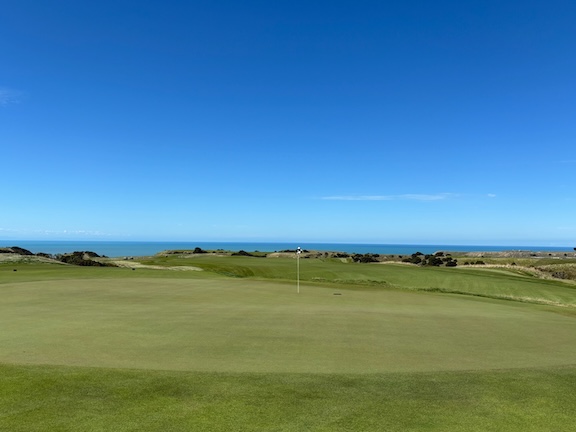
I played my round with Peter Clark, who had grown up not far from where the course now sits, but who had emigrated to France long before it was built. As he walked and I drove (GPS carts are included, but the course is walkable), he pointed out dozens of local landmarks. What was most telling, however, were the reactions of this local boy, who had hiked and ridden dirt bikes all over these shorelines in his youth. On every green and tee box on the back 9, he just kept saying, over and over, “Wow! Just, wow!” Doak’s masterful routing opened vistas even Clark had never seen.
Picking a favorite hole here would be like picking your favorite child. Not a single one feels repetitive or like a “filler hole.” The first of many times Kidnappers takes your breath away is on the 6th Hole, a long par-3 over a yawning ravine to a green perched above the bay. Left here is dead, as is long, and short, so club selection is critical.
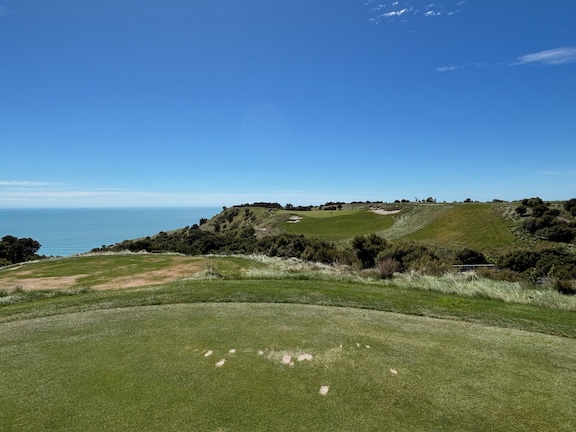
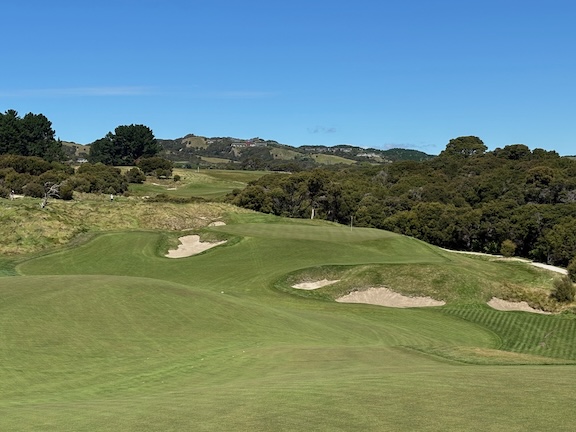
If there’s one aspect of Kidnappers’ design that might be criticized, it’s that the backside is much harder than the front. After a scrappy 41 on the front (with quality rented clubs), I was feeling pretty good about myself, felt like I was just warming up. Then the back 9 kicked me in the teeth. I didn’t have a single par on the back. Fortunately, the golf is so amazing, and the surroundings are so majestic, that I didn’t really mind. For first-timers, the best advice is to take your time and soak it all in: The infinity green on the par-4 12th Hole (aptly named “Infinity”), the short 13th (just 130 yards) dangling over the cliffside to the left, or the back-to-back par 5s on the 15th and 16th, where you not only feel like you’re walking on the edge of the world, you literally are.
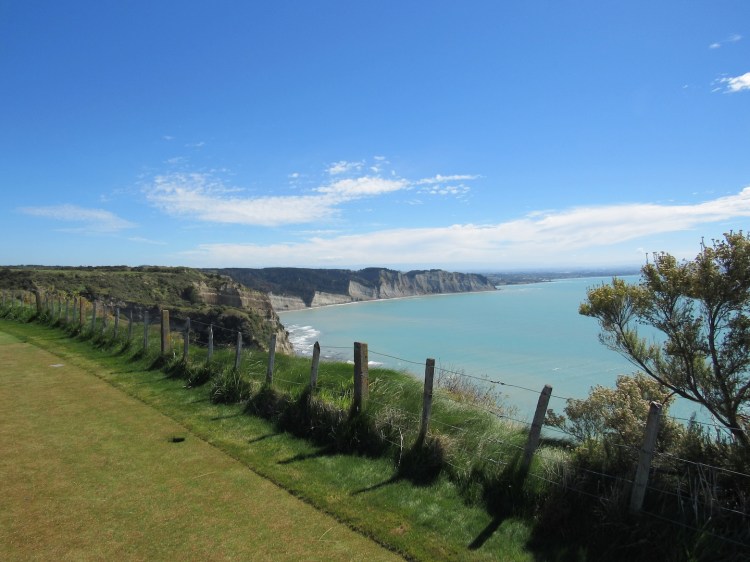
There have been two golf courses in my life when I’ve gotten emotional at the 18th hole, dearly wishing there were 18 more to play. One was Royal County Down. The other, right here. After I hit perhaps the best drive of my day from the awkward 18th tee, I had to fight back tears.
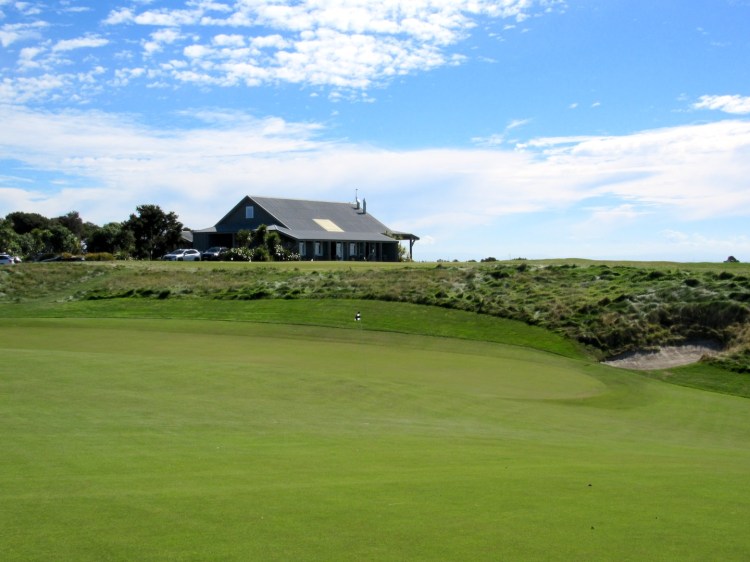
I can’t guarantee such an emotional experience for everyone, but I can guarantee that you will never forget your round at Cape Kidnappers. Many fairways and greens are rollercoaster rides, echoing the waves crashing on the beaches 100 feet below the course. The fescue rough is much denser than it looks – balls that you see bounce in the rough will often be difficult to find, so mark their positions carefully. Blessedly, New Zealand has no venomous snakes, so you can safely search for golf balls that have gone astray, unlike in Australia, where no golf ball is worth an encounter with a viper.
Playing Cape Kidnappers is not cheap, however. $950NZ is the rate for non-Kiwis (which account for 3/4 of play; $450NZ for Kiwis), including a GPS cart and range balls. Caddies are available for another $150NZ (plus gratuity), but must be booked in advance. Excellent rental clubs are available for $75NZ.
Getting There, Staying, and Exploring
For visitors arriving in Auckland, Hawke’s Bay is a bit of a drive – at least 5 hours. The Napier airport, however, is just a short hop in a turbo-prop, leaving more time for golf and exploration. If you’re wanting to play rounds at other courses in this mystical, mythical country—such as Kidnappers’ sister-course, Kauri Cliffs, to the north of Auckland—and have limited time to do so, air travel is a must.
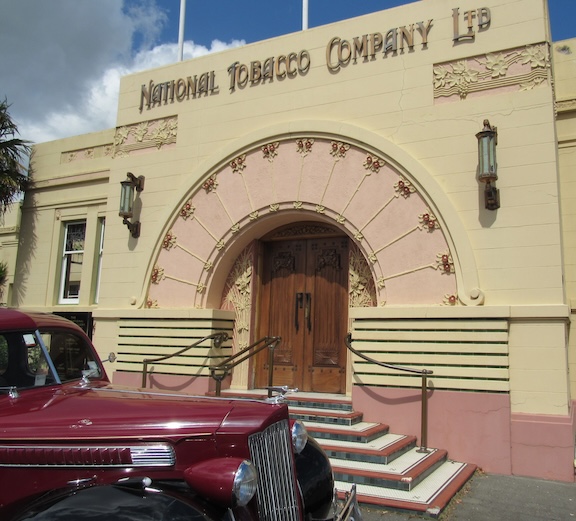
Hawke’s Bay has so much more than just golf. Napier itself is called the Art Deco Capital of the World because nearly the entire city was rebuilt in Art Deco style after a devastating earthquake and fire in 1931. The National Tobacco Company Building is a prime example of Art Deco architecture, and is one of the most-photographed buildings in the Southern Hemisphere. Private walking or driving tours in classic cars can be booked through the Art Deco Trust – well worth the time!
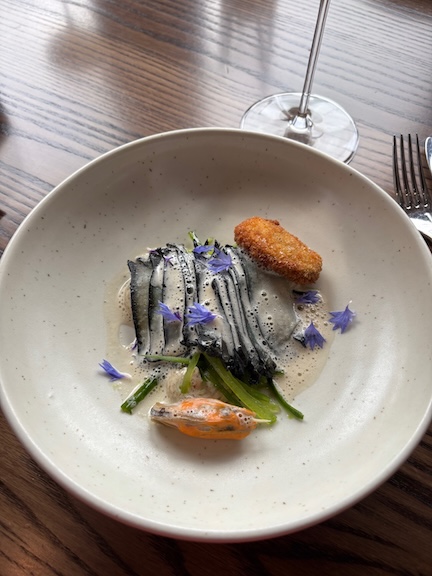
Hawke’s Bay is also one of only 11 recognized Great Wine Capitals of the world. 90% of New Zealand Syrah comes from Hawke’s Bay. One of the most awarded vineyards in the area is the family-owned Craggy Range, whose restaurant is the recipient of three “hats” (the NZ equivalent of Michelin Stars). Every dish here utilizes the dazzling bounty of Hawke’s Bay produce, seafood, and meats. There is a reason why Hawke’s Bay is called the “Food and Wine Country of New Zealand.” Other must-try restaurants include Mission Restaurant at Mission Estate Winery (the oldest winery in New Zealand) and Cellar 495 in nearby Hastings, which gets its name from owner Michael Henley being the 495th Master of Wine in the world. Also in Hastings is the newly opened Restaurant Ari, where the desserts are the stars of the menu.
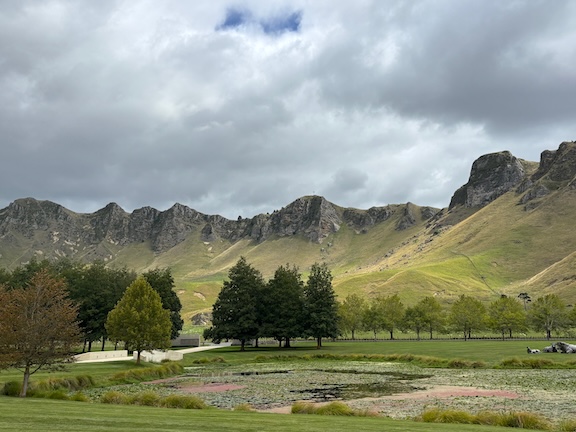
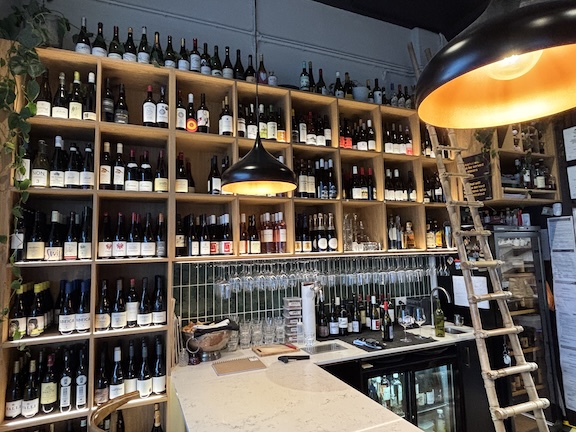
Multiple wine tastings are mandatory. Americans likely associate New Zealand with Sauvignon Blanc, but to be honest, I tasted at least 30 different wines while touring the area, and none was a sauv blanc. The depth and variety of reds in the area were unexpected and sumptuous. (This is where I kept muttering, “Wow!”) And if white wine is your thing, the Chardonnay and Pinot Gris will pair with every seafood dish you try. What makes Hawke’s Bay so ideal for viticulture? The climate and surrounding micro-climates, the variety of volcanic soils, including the legendary Gimlet Gravels region, and the hole in the ozone layer, which is bad for people but fantastic for grapes.
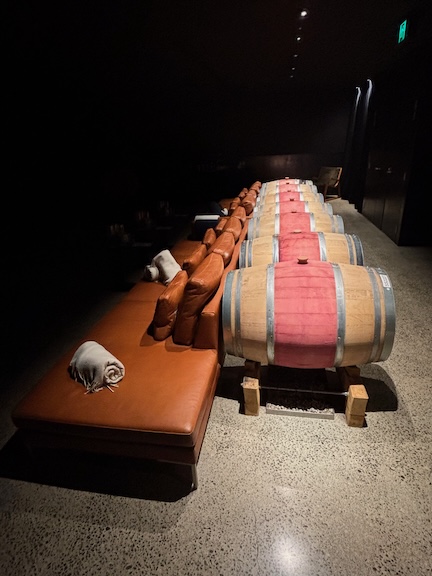
Tastings can be scheduled at all vineyards in the area. Black Barn is a friendly, laid-back vineyard in the heart of wine country with a great staff. For a tasting experience unlike any other, though, visit Smith & Sheth’s Heretaunga Wine Studio, located just behind Porters Boutique Hotel in North Hawke’s Bay. Here, wine guides like Sean Burns will take you on a journey through time and place as you learn about the volcanic eruption in 232 AD that provided the unique terroir of Hawke’s Bay and taste a mind-blowing array of delicious wines (including, if you’re lucky, some right out of the aging barrels).
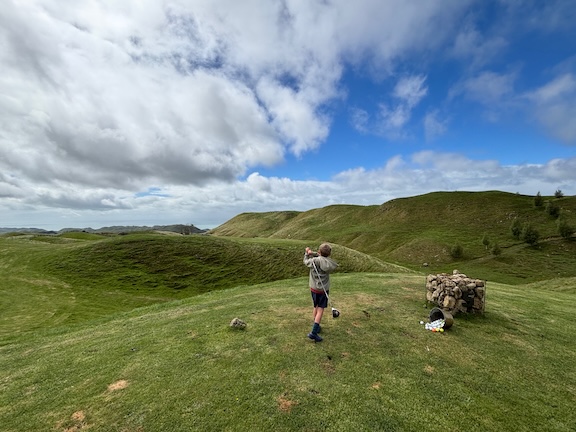
As for accommodations, options are plentiful. The above-mentioned Porters Boutique Hotel is centrally located near wineries, shops and restaurants, including its own lovely Malo and a charming breakfast place called Maina Café. The rooms are large and impeccably appointed, and the front-desk staff are the friendliest I’ve ever encountered. For something completely different, check out Te Aratipi Station. This is a sprawling family sheep and cattle ranch that occupies some of the highest ground in the entire region. The farm has been in Ed Palmer’s family for over 100 years, and today he and his wife Ro have renovated several cozy, stylish cottages ideal for groups and families. Ro and Ed can arrange a wide variety of experiences for you, including actual farm work with the 1,000-head of cattle and 5,000 sheep. Other options include wine tastings, ATV tours of the property, yoga and wellness retreats, a bush/farm restaurant (launching soon), and even a “rough and ready” 9-hole golf course that Ed has mowed into the hillsides of the farm. He’ll take you out on his Can-Am ATV and serve as caddie and guide while you and your group have the whole course – and what feels like the entire country – all to yourself. You can even “look down” on Cape Kidnappers off in the distance from the heights of the Te Aratipi expanse. You will never have another golf experience quite like this one!
And, of course, if you just want to cocoon yourself in the Cape Kidnappers experience, there is Rosewood Cape Kidnappers, a 26-room luxury resort right on the property, with multiple dining options and sweeping vistas of the Hawke’s Bay Shoreline.
Time and space limit the details about Cape Kidnappers and Hawke’s Bay that I can provide here – and this is just one corner of the North Island. In the words of my Kidnappers playing partner Peter Clark, the North Island is “the waiting room for paradise,” by which he meant that until you get to the South Island, you haven’t seen anything yet. So, as I said at the outset, if you are fortunate enough to take the trip of a lifetime to New Zealand, go for as long as you possibly can – because however long you stay, it won’t be enough.
For more information, visit https://www.hawkesbaynz.com

 Midwestern Golf