Featured

TPC Deere Run in Silvis Brings Tour Dreams to Life

TPC stands for “Tournament Players Club.” The TPC network spans North America, and includes some courses in the Caribbean, Latin America, and Asia. Over half of them are private, many more are exclusive resort courses, and a handful have hosted PGA Tour events.

TPC Deere Run in Silvis, Illinois, is the long-time venue of the John Deere Classic, traditional PGA Tour stop the week before The Open (British). It is unique among TPC courses not only because it is a regular Tour host that is fully open to the public, but also because it is easily the most affordable of all TPC courses.

And when I say “affordable,” I mean it. Rates at Deere Run top out at $119 – that’s peak time, inclusive of cart and unlimited use of practice facilities. But savvy and flexible players who are non-local residents can find rates as low as $59. Local residents never have to pay more than $69, and they can play for as little as $49.

Let me repeat that for the readers who just joined us: You can play the self-same course where the pros play every year for less than $60.

The tournament that is today The John Deere Classic was born in 1971 as The Quad Cities Open, at a local private course. The ensuing years as a Tour event were tenuous, to say the least, but after Tiger Woods turned pro and made a splash at the 1996 playing, Illinois native D.A. Weibring negotiated with John Deere and the Tour to design and build a TPC on the banks of the Rock River. When TPC Deere Run opened in 2000, the 7,213-yard par-71 layout was ranked as the 8th Best New Public Golf Course by “Golf Digest.” And it’s been hosting the Tour event ever since.

Playing TPC Deere Run

If you watch the pros on TV, they can make it look like a pushover. Paul Goydos carded a 59 here in 2010—and didn’t win, because several other players went ultra-low, too.

But don’t let the super-humans on Tour fool you: TPC Deere Run is all the course amateur players will ever want. Conditions are impeccable, and the variety of holes is outstanding: Long and short par 3s, 4s, and 5s. Some open fairways, some tight fairways. Over 70 bunkers, and plenty of water. Opportunities for both greatness and disaster.

The variety of holes will allow you to hit – or try to hit – a full array of shots off the tees, though most par 4s on the front set up best for fades. There are seven sets of tees, including two sets of blended tees to allow players of all skill level and all lengths to find a fit for their games, from 5,179 yards up to 7,213 yards. Generous landing areas provide opportunities to approach greens from multiple angles, only a few of which are truly optimal.

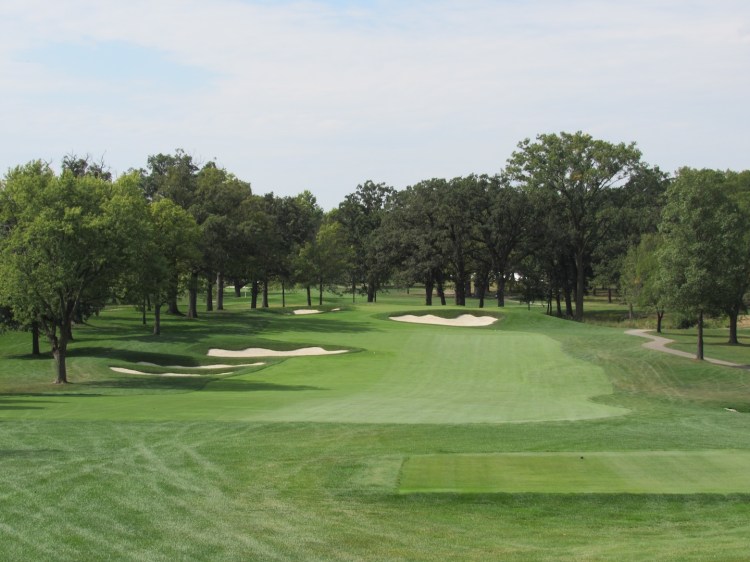
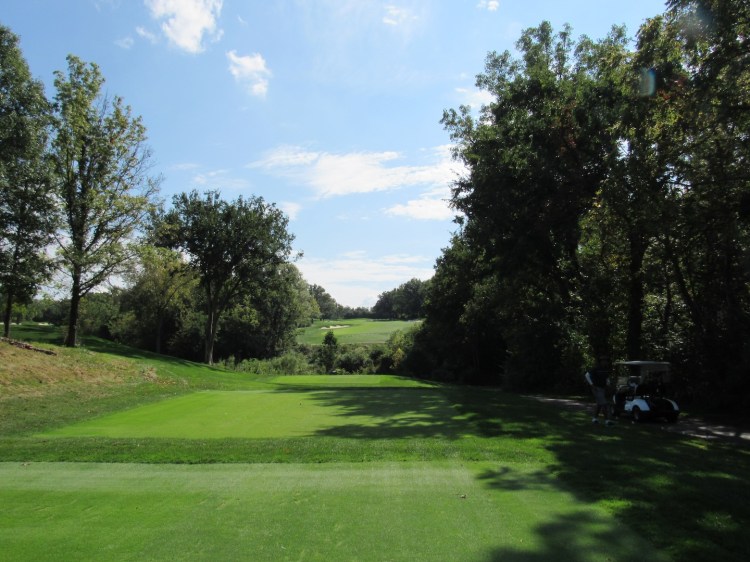
The 561-yard 2nd is one of the favorites of anyone whose played here before. From the elevated tees, the vista is expansive. The Rock River flows serenely in the distance beyond the huge fairway, which bends gently to the right on the second shot. The green is protected by a small desert’s worth of sand, and a small barn behind it harks back to the agricultural roots of the area and the sponsor of the tournament played here.

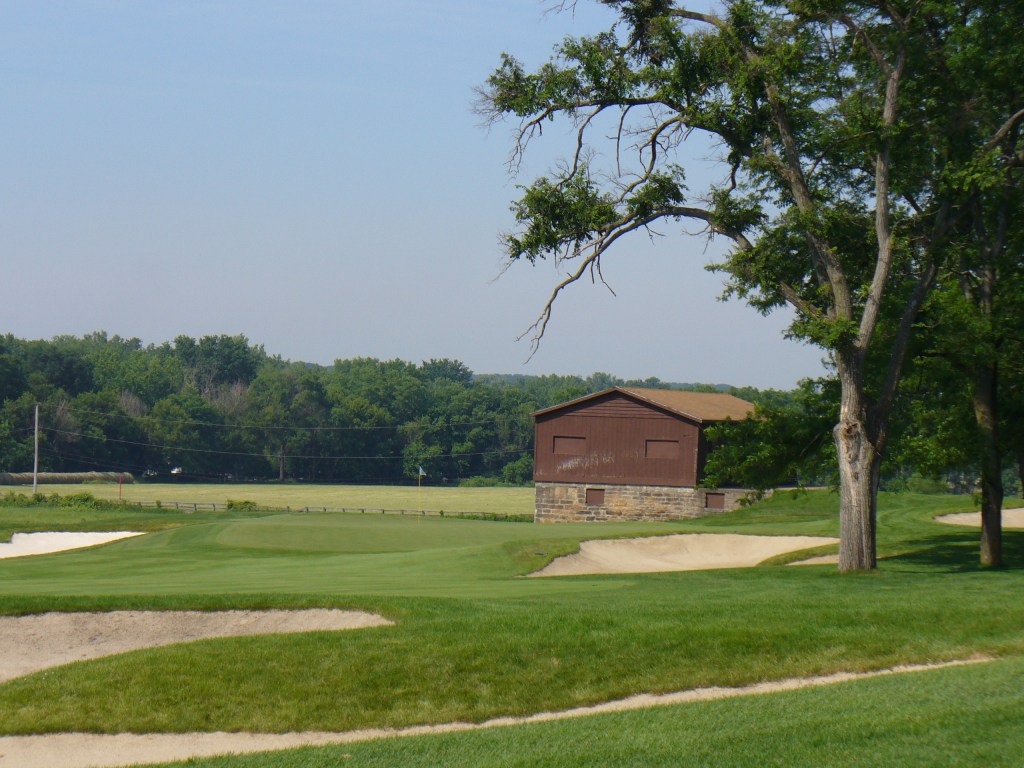
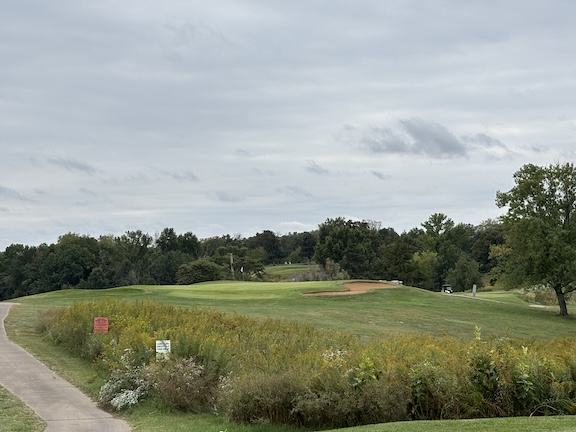
The tee shot on the par-5 2nd at TPC Deere Run is a beauty, and all about position and length.
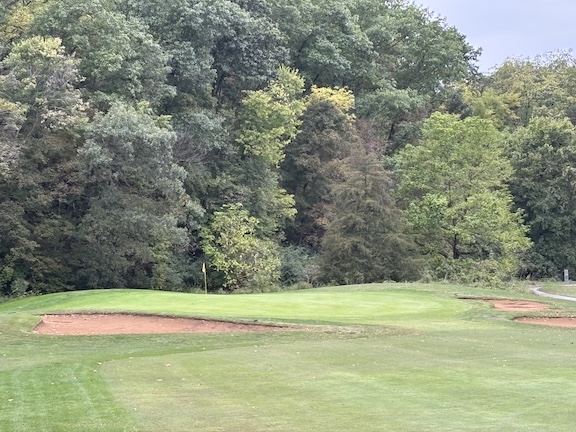
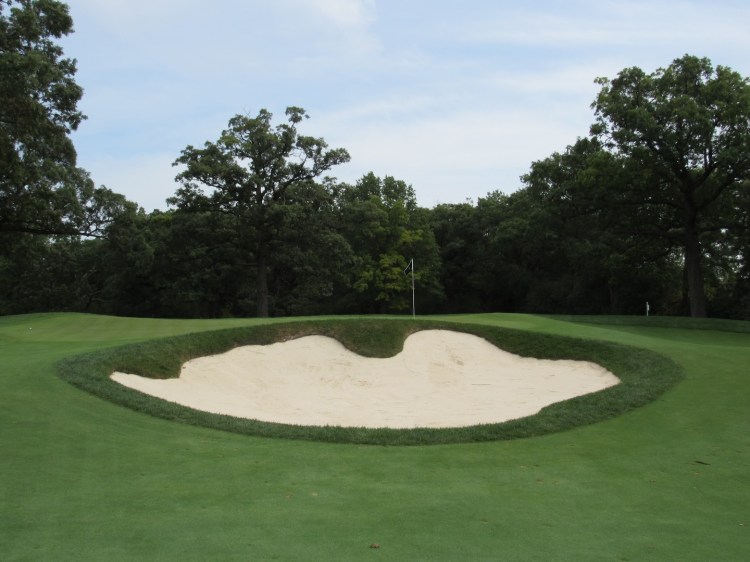
The green on the 2nd hole is a Midwestern classic.

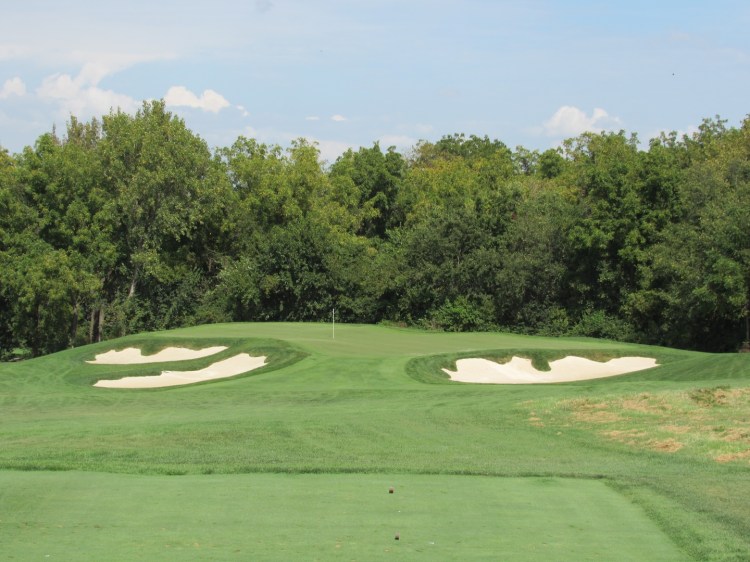
At the 454-yard 4th, you realize that you are in for a day of one gorgeous golf hole after another. The sentinel oak in the center of the fairway makes the tee shot thrilling, and form the fairway, it feels like the river lurks just beyond the putting surface.

The green at the par-4 4th looks from the fairway like it’s ready to fall into the river.

The 158-yard 16th is one of the prettiest short par 3s in the entire Midwest. The green is cut into the bluff overlooking the river. A rock wall runs in front of the green, and the bluff drops away precipitously to the left, making the entire left side a very penal hazard. When the tournament bleachers are still up behind the green, this is a hole that gives anyone the chance to hit a good shot and feel like a pro.

The 158-yard 16th: Can you say, “Aim right?”

The 17th and 18th are two fun closers – the stuff that memories are made of. The 557-yard 17th is a reachable par 5 that plays out of a chute of trees to a wide-open fairway and green complex that allows for run-up fairway woods. The 463-yard 18th has seen its share of drama during the tournament, and amateurs can feel some degree of the same exhilaration by carving in a slight draw to the front of the green and watching their ball trundle back toward the pin. Over-cook it, though, and you’ll find the pond that borders the entire left side of the green; fade it instead, and a tricky pitch or sand save will be required, á la Jordan Spieth’s first PGA win.

The par-5 17th is reachable with two good shots.
Experience the thrill of hitting it stiff on a PGA Tour closing hole.

The word on TPC Deere Run

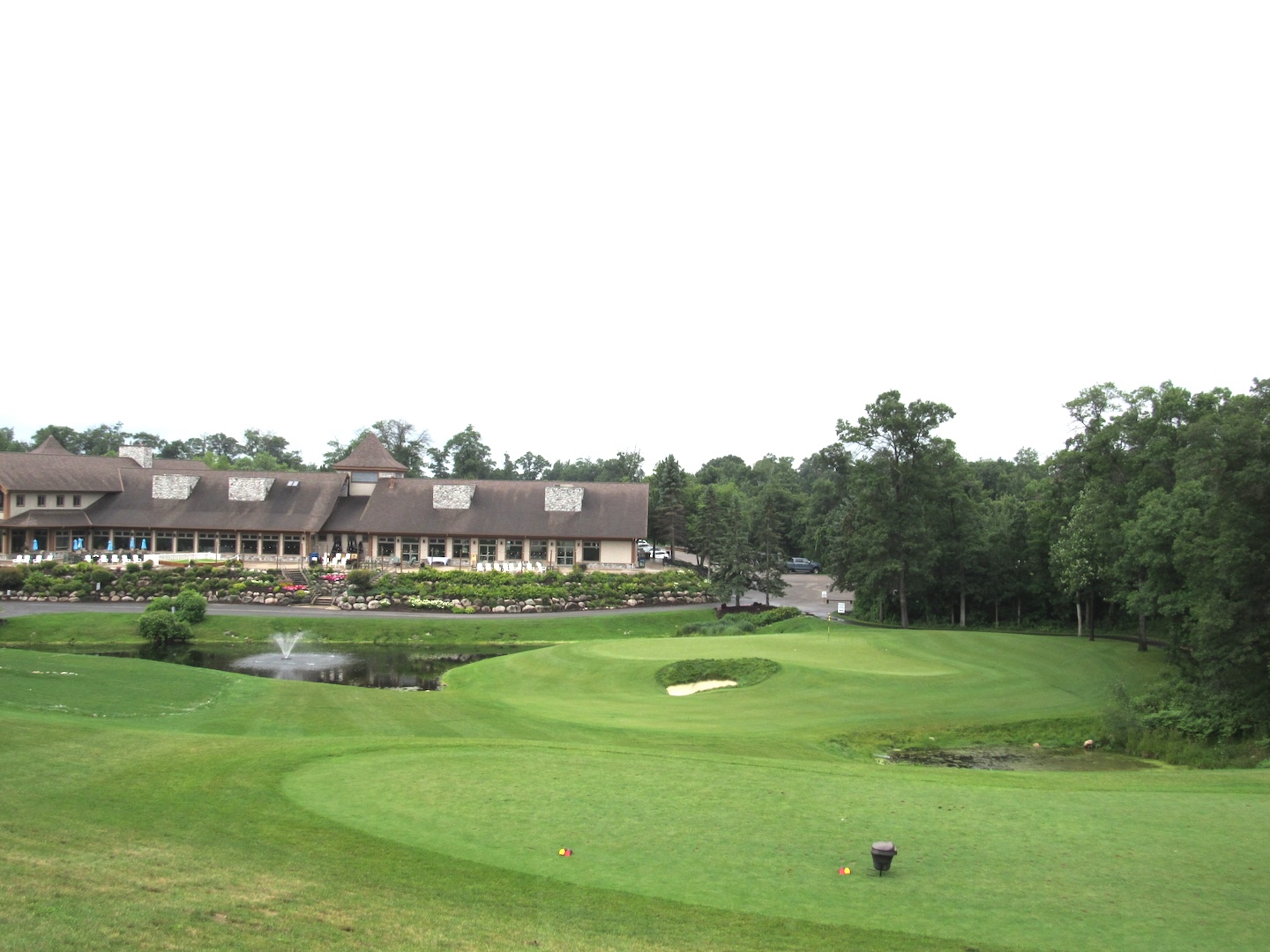
The front side of the TPC at Deere Run is tighter than the back, with nearly every hole framed by trees on all sides. The back nine is more open, with some room along the fairways, but there are many more fairway bunkers in play on the back. There is not an awkward tee shot on the entire course; all the trouble is laid out clearly before you on the tees and approaches (with the exception of the approach on No. 4).

The greens are ideal – receptive but fast – and many are basically pear-shaped, with narrow fronts that make for some devilish pin positions. Despite some tiers and undulations, though, putts within seven feet are generally flat. Most greens are also surrounded by closely shaved run-off areas that will test all the short shots in your bag.

The clubhouse is a grand fieldstone structure, and houses a first-class restaurant and bar, with a lovely shaded patio overlooking the 18th green. The pro shop is consistently rated one of the best in the country, so take some time to browse. The walls are filled with memorabilia from the PGA Tour event that has been played in one form or another in the Quad Cities area since 1971. It is well worth coming early and staying late not only to avail yourself of the luxury of a TPC, but also to bathe in golf history. After all, how often do you get to play where the best in the world play?

The 14th at TPC Deere Run is a short, lovely, and vexing par 4.

(Photos by Andrew Hollingworth & Kiel Christianson)
Featured

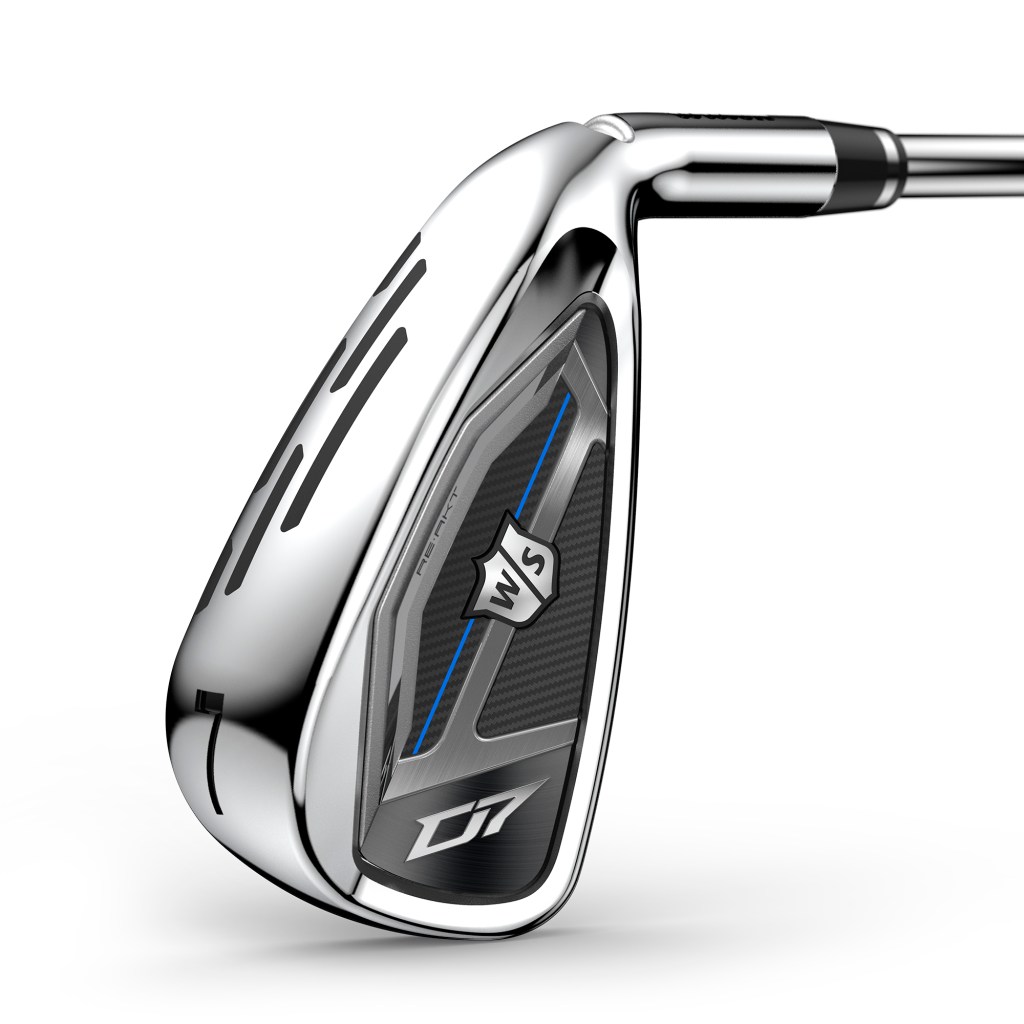
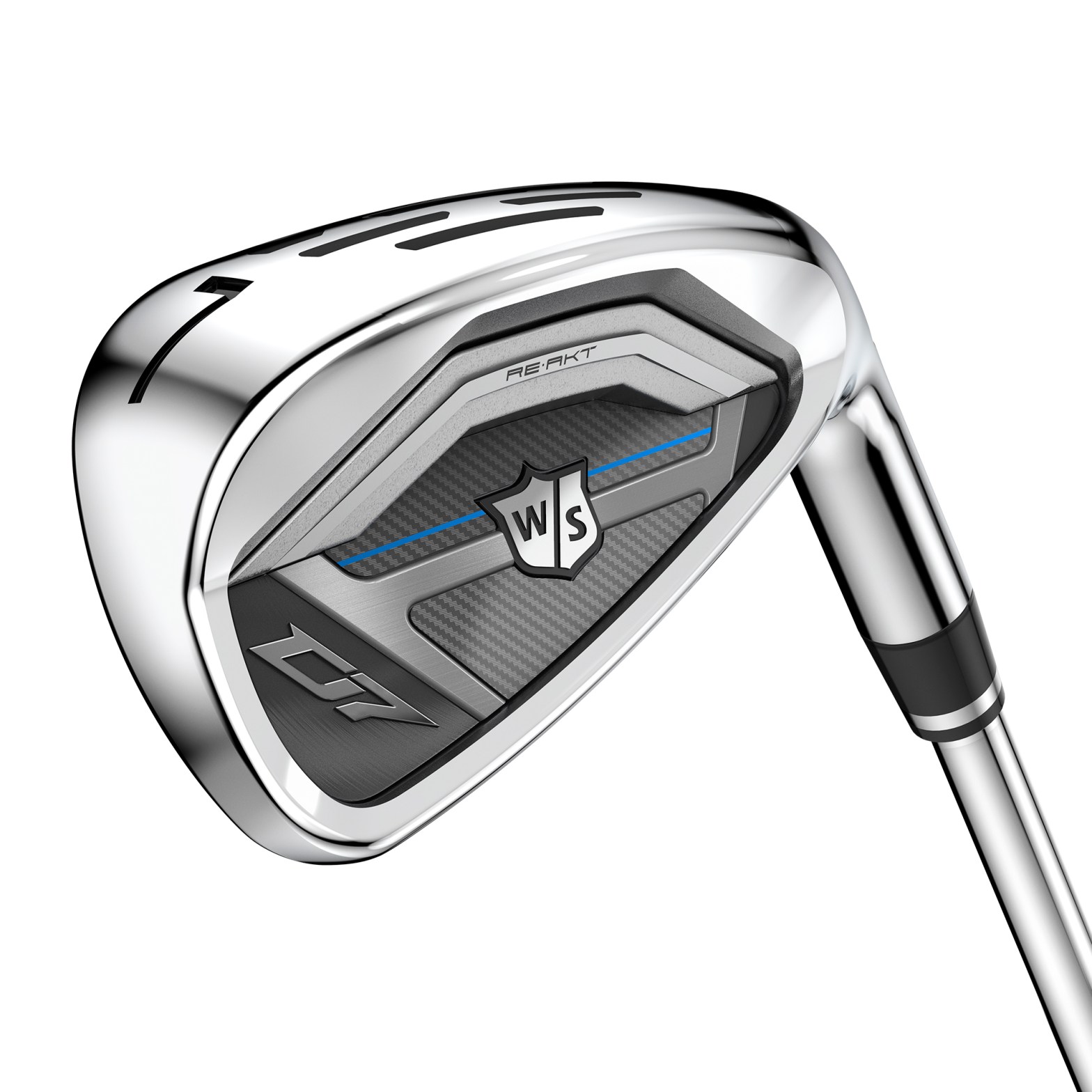
Wilson D7 Irons set pace in “players distance” category

There are a number of iron categories: “tour,” “player,” “game improvement,” “super game improvement.” Then of course there is the distinction between “forged” and “cast” irons.

Another new category has gained steam and fans over the last few years: the “players distance” iron. The target audience for this category is low double-digit handicappers, and maybe even high single-digit players, who find themselves losing distance either on off-center hits or with – ahem – advancing age.

One of the real class acts in this category is the Wilson D7 Iron. The D7s are packed with technology, including progressive “power holes” and progressively thin, very “hot” faces. Best of all, they maintain a more sleek, traditional profile than many irons that straddle the “game improvement” line.

The D7s come in both forged and cast versions. The former, new for 2020, list for $1000 (GW-5), and the latter for a very reasonable $600). It has been many seasons since I switched to forged irons, so I thought I’d take the “working man” version out for a test to see what all the engineering and materials advances over the past decade or so have done to improve feel and performance of more budget-friendly clubs.

Playing the Wilson D7 Irons

I played a set of the Wilson D7s with stock KBS regular flex shafts. I was concerned about that shaft choice, as I normally play stiff shafts. But I have noticed no increase in tendency to hook (which I do at times) or slice (which I almost never do with my irons). The tips of these KBS seem somewhat stiff, so perhaps that’s the reason. To be honest, though, sometimes I wonder whether the differences in stiffness in steel iron shafts is even a thing.

So how did they perform? Let’s cut straight to the chase: I put them in my bag for what I thought would be one test round. Seven rounds later—including a semi-final win in my course’s Match-Play Tournament and my low round of the year just yesterday (75)—they’re still in the bag.

Compared to my usual forged irons (by a major and universally respected iron maker), the Wilson D7s bring several benefits. Tops among these, is their incredible forgiveness. I have mishit a dozen or more shots – fat, thin, toe, high on the face – and on well over half of those misbegotten swings, the ball has ended up on the green (or near it, anyway).

Along with forgiveness, these irons are long. This is expected, given that the lofts are jacked up, averaging 1.5-clubs stronger than “traditional.” In fact, the lofts are even stronger in the D7s than those in the Wilson Launch Pad Irons, which are in the super game-improvement category. This ratcheting up of lofts doesn’t make it harder to get the ball in the air, though, as the center of gravity is as low and as far back as can be managed without sacrificing a somewhat more “players iron” look.

Length isn’t always a plus, though. I was pretty dialed in on my yardages with my old irons. Well, to be honest I was last year. This year, I was feeling like I needed to step on some swings to get them to their “normal” yardages. I blamed lack of practice. I blamed swing changes. I blamed COVID-19. But frankly, it’s probably because (a) I’m getting old, and (b) I wasn’t striking the ball very consistently. The D7s allow me to pull my “usual” club for the “typical” yardage. If I really stripe a shot, it may go long, but aside from on greens that are very hard, this isn’t usually much of a penalty.

The only drawback to the D7 design, as far as I can tell, is their rounded sole (where you’ll find the progressive power holes, configured specifically for each iron). The leading edge of the face is protected from digging in by this sole, which adds a small bit of extra bounce angle to the clubs. Like the Launch Pads, I’m sure the D7s incorporate this design in order to help players avoid fat shots. And, when the turf is soft, it is a useful feature, indeed. But when the turf is baked out, and your swing is a little too shallow, the club tends to deflect off the ground and up into the ball, resulting in thin shots. In dry conditions, you really need to focus on descending into the ball; however, doing so will deloft the face even more and likely add yards. The rounded soles also require some practice with punch shots—a typical strength of mine, thanks to lots of practice—which don’t come out quite as clean as with irons whose leading edges are sharper.

Long story short: “players distance” irons might require some adjustment because they do, in fact, give you extra distance.

Finally, let’s talk about feel. I can’t compare the standard D7s to the Forged D7s, as I haven’t tested the latter. But to be honest, the standard D7s feel plenty soft to me. I can draw and fade them well enough, and I can feel quite clearly when I pure a shot, compared to off-center strikes.

Scorecard

The Wilson D7 Irons are ideal for players who are seeking to maintain distance without sacrificing feel or looks. They’re stable and powerful – so much so that you may find your best shots going a little too far until you recalibrate. Golfers who play well-manicured, softer courses will find the sole design particularly forgiving.

If you’re looking to buy, see below!

Discount Code: WilsonGolf15-8

A few rules to mention:

  • The codes give 15% off all full-priced Golf Items, including Custom. However, outlet items are excluded. 
  • All codes expire 12/31/20

Featured

Wilson Launch Pad Irons elevate the ball and your game

Golf is a lot harder than it looks on TV. Upon hearing of my affection for the game, a friend of mine told me that he had gone to a driving range just one time. I asked him why only once. He said, “I hit a large bucket of balls. Didn’t get one in the air. It just seemed like way too much work.”

It was several decades ago that this friend of mine had tried his hand at golf. Try as I might, I couldn’t convince him to give it another go, with more modern, more forgiving equipment. It was just too late for him.

But it’s not too late for your buddy, or you, for that matter. There is a whole new generation of golf clubs – often called “super game-improvement” clubs – whose sole purpose is to help high-handicapper recreational golfers enjoy themselves more. To help them get the ball in the air.

This is the sole purpose of the new generation of the Wilson Launch Pad Irons ($700 steel shafts; $800 graphite shafts), and their sole is their purpose. Let me clarify.

The irons’ moniker refers to the Launch Pad sole, featured throughout the set, from 4i to PW (and other wedges, which you can buy separately to match). The sole of the club is wide, wider in longer irons and narrower in shorter irons, which keeps turf interaction to a minimum. The idea is for the sole design to reduce chunked shots, while the hollow composite heads allow for a thinner, “hotter” face and move the center of gravity away from the face, which will get the ball in the air faster and with more “pop.” Along with the wide soles, the bounce angle serves to “float” the leading edge above the turf, which, according to Wilson, reduces chunked shots by 73% among testers.

Playing the Wilson Launch Pad Irons

All of this sounds great in theory, but how do they play?

Two of the more common mishits by occasional or high-handicappers are the chunk and the blade. After several range sessions with the Launch Pad Irons, it is very clear how they protect against the chunk: those wide soles and leading-edge bounce mimic hitting regular clubs off a mat. If you hit a little behind the ball, the club tends to “bounce” up off the turf, especially if the ground is firm. If you’re hitting off carpet-like bent grass, you can still chunk the occasional shot, but you almost have to try to do it.

Conversely, if you tend to blade shots – hitting them so thin that they don’t get into the air – you’ll still need to work on your swing to impart a descending—or at least level—blow with the Launch Pad Irons. However, even a more “sweeping” swing produces much higher, much longer trajectories than standard clubs.

My son, a high school player who hits the ball a mile high with his regular clubs, found the short irons in the Launch Pad set to be TOO helpful: shots just skied into the stratosphere. But once he worked into the 6i-4i range, he admitted his surprise at the consistency of the Launch Pads, in terms of both trajectory and dispersal. This made me think that for a lot of players, a blended set of more traditional shorter irons and Launch Pad mid- to long-irons would be worth considering.

As for me, I noticed an immediate increase in the height of my shots: about 5 feet higher across the set compared to my normal irons. As for distance, the Launch Pads may have increased center-struck shots just a bit, but any gain was negligible. Off-center shots were improved by several yards, though—noticeably longer.

Are the Wilson Launch Pad Irons all rainbows and unicorn farts? Not exactly, but no club is. The extra “pop” you experience in distance comes with a literal “pop” in sound. It’s sort of a hollow pop, which takes a little getting used to. The sound matches the heads in a way, whose somewhat rotund profile also takes a short while to grow accustomed to.

And if you do struggle with bladed shots, they won’t fix that flaw; however, you’ll be able to work on swinging exactly the same with your PW as you do with a fairway wood – a shallow, sweeping swing will still get the ball in the air.

One final note: it is true that “game-improvement” irons tend to decrease lofts so recreational golfers will think they’re getting more distance. The Launch Pad Iron lofts are a touch stronger than “normal,” but only by 3-4 degrees (i.e., a club stronger). So your 4i is 21 degrees, which is a typical 3i loft. That’s less than many competitor sets, and even less than many “regular” iron sets these days.

And a final, FINAL note: The stock steel KBS 80 shafts are excellent. I normally play stiff shafts, but requested to test regular shafts, as they seemed to fit the overall goals and design of the Launch Pad heads better. To be completely honest, I have noticed no adverse effects from the change in stiffness – I don’t hook the KBS shafts (in the Launch Pads or the new D7s, which I’ve also reviewed), or find them hard to control, even on full-bore swings.

Scorecard

Altogether, if you’re looking for irons to help you enjoy the game, and work less on hitting the “perfect” shot, the Wilson Launch Pad Irons are a solid bet.

If you’re looking to buy, see below!

Discount Code: WilsonGolf15-8

A few rules to mention:

  • The codes give 15% off all full-priced Golf Items, including Custom. However, outlet items are excluded. 
  • All codes expire 12/31/20
Featured

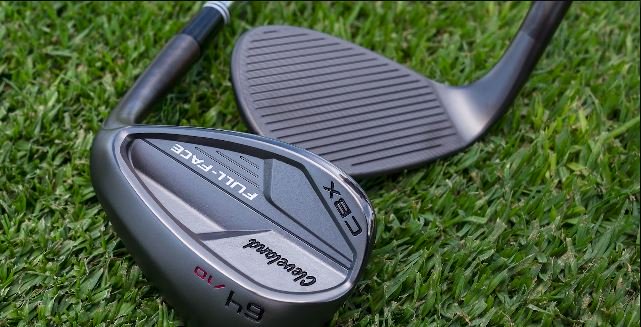
Cleveland Golf CBX Full-Face wedges are forgiving and consistent

Some amateur golfers are just afraid certain clubs. High on the list for most amateurs is the lob wedge. Visions of chunked and bladed shots skitter across the gyri and hide in the sulci of their brains as they address those delicate touch shots over bunkers to tucked pins. And then, well, sometimes that’s exactly what happens.

My son, a high-school junior who plays on his school’s golf team, was a victim of those waking nightmares last year. He was missing greens and having to hit mini-flops to try to get close to save par or bogey. But he just didn’t have a club he felt good about: the sand wedge had too much oomph—and bounce—but the lob wedge he was using (one of my old ones) was digging into the turf.

Enter Cleveland Golf and their legendary wedge designers. I ordered a new 60-degree CBX Full-Face wedge ($150) for my son, and when it arrived, I regaled him with the design features that I thought would engender some confidence in him and fit his short game.

First, as the name implies, the Rotex and laser-milled Tour Zip Grooves on these wedges go all the way across the face—all the way to the edge of the toe. This is a brilliant feature, as it ensures spin even on toe-hits (which my son tends to do). These keep the ball from knuckling out of the rough if contact is widely off-center.

The second feature is the half-cavity design, which moves the center of gravity a bit more toward the toe and also provides rock-solid stability no matter the contact.

The third is the high-toe face, which stretches the toe-end of the club higher than normal, in case the club slides a bit too far under the ball. Even if this happens, you can still make decent contact.

Finally, the range of bounces can fit anyone’s game. On my son’s, we went with a 10-degree bounce, which is around 2 degrees more than most lob wedges. This bounce keeps him from digging into the turf and works well for bunker shots, but still allows him to get the club under the ball on those flop shots.

The skinny on the Cleveland Full-Face Wedges

So how did all this engineering work out for my son? After just one round, the quote that sums it up is, “I really like this lob wedge!”

Almost immediately, confidence grew in the quality of the contact he was making, and he was able to swing more freely, even on those more delicate shots. No more fear.

And the joy of telling my son, “Nice up and down!” is, as they say, priceless.

Featured

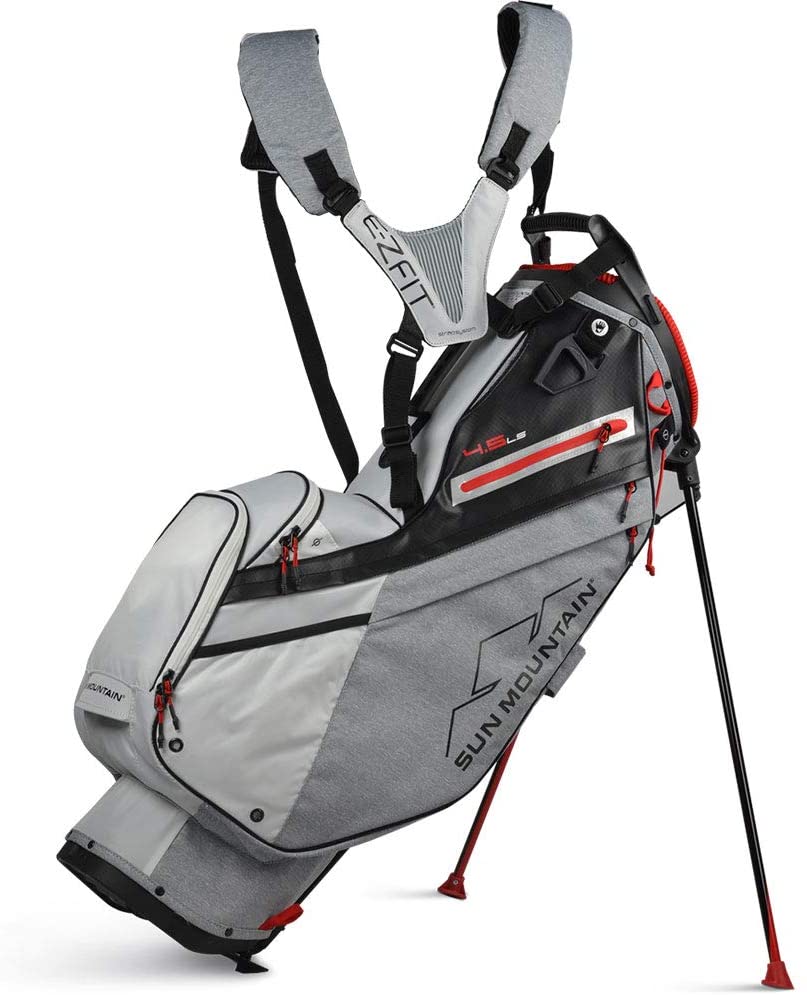
Sun Mountain 4.5 LS 14-Way Stand Bag

I don’t carry my clubs too often anymore—maybe just for a quick evening 9. I walk most of the time, though, using a push cart. So I’ve been looking for a golf bag that is light but spacious enough for me to stow all my extraneous gear—cigar holder, range finder, lots of extra souvenir ball markers and divot repair tools, rain jacket, beverage or two, etc. The Sun Mountain line-up of golf bags is pretty fertile hunting ground for just such a golf bag.

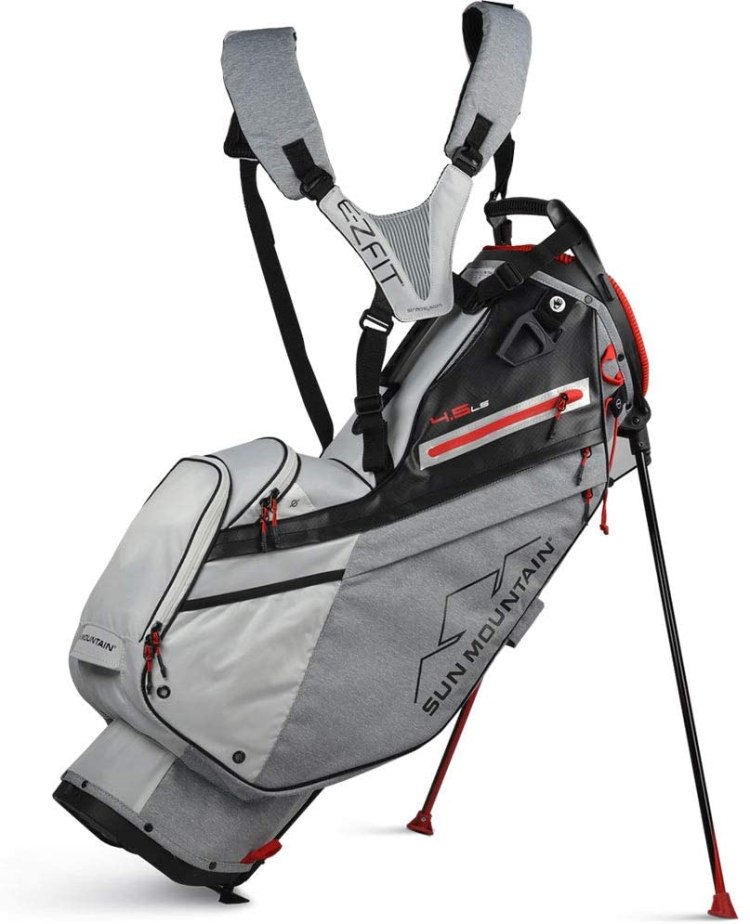
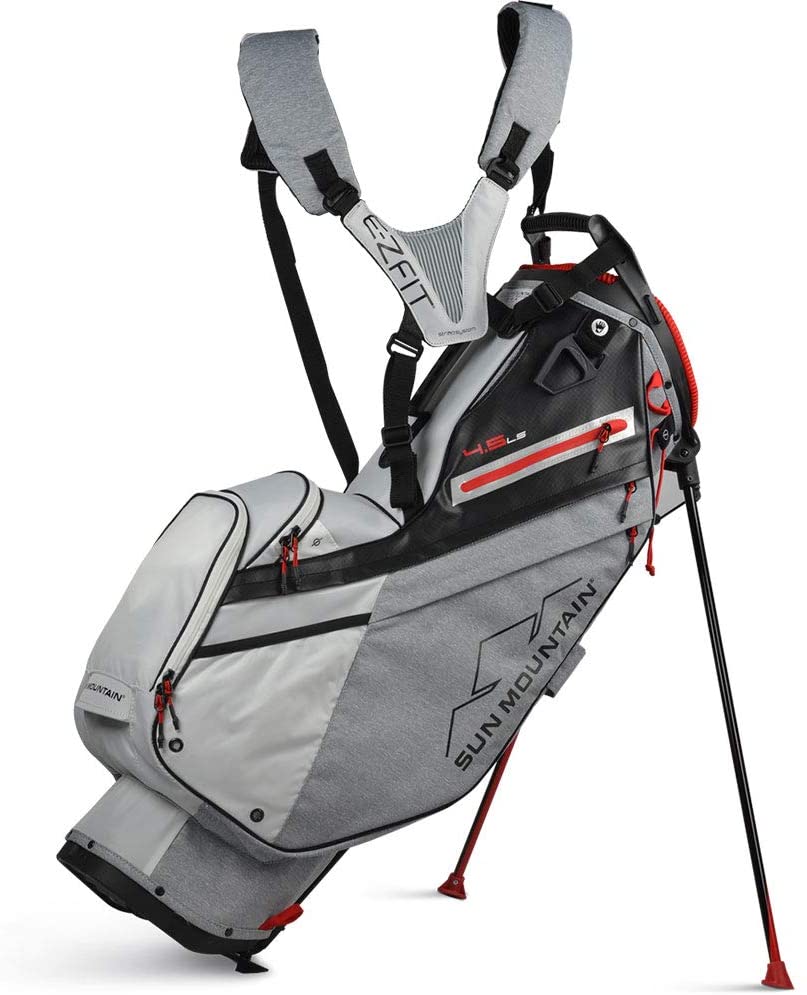
The new 4.5 LS 14-Way Stand Bag ($230) weights just 4.5 lbs. and has 14 full-length club silos, as the name implies. There are 9 spacious pockets and, best of all, the fiberglass legs are amazingly sturdy. The bottom is cart-friendly as well, including pushcart-friendly. There are elastic cords to keep the legs in place when not using them. This bag allows me to carry 9, walk 18, or hop on a cart for a luxurious round now and then.

The best features of the 4.5 LS is the legs: wide feet, sturdy graphite fiber, and a springy retraction action. If something is going to go wrong with a stand bag, it’s the legs. These feel rock-solid, and the springy retraction ensures you don’t have a floppy leg hanging down to catch on your own leg as you’re putting it on your shoulder or your car trunk as you’re loading or unloading it.

Another critical feature of a stand bag is accessible, well-placed pockets. You want to be able to reach some pockets while the bag is still on your shoulders. You also want to make sure that storage space isn’t sacrificed in pursuit of lightness. The bag has, happily, plenty of room for all the necessities and some extras. I can get a rain suit to the big side bag, loads of balls and tees, various cigar paraphernalia, and valuables in a felt-lined, water-resistant pocket. At first, I was skeptical of the efficacy of the cooler sleeve – as opposed to a cooler pocket (with a zipper) – but the open-top sleeve is quite capable of keeping most drinks cool for most of a side even on 90-degree days with 90-degree humidity.

The Skinny on the Sun Mountain 4.5 LS 14-Way Stand Bag

This is a workhorse of a golf bag. It’s suitable for all forms of on-course locomotion, and constructed well enough to last for many, many years. The straps are nicely padded and perfectly positioned, the handles are well positioned and rock-solid. The silos keep club grips from getting jammed up, and those legs won’t collapse on you. In short, however you like to get around the course, this bag will work like a charm.

Featured

Get in the zone with the 2020 Cobra King SpeedZone Xtreme Driver

Press releases for Cobra’s SpeedZone drivers, new for 2020, tout six different performance “zones” which they claim are based on design features of the world’s best sports cars. I’m not totally sure what that is supposed to mean, but these zones are listed as Power Zone, Strength Zone,  Light Zone, Low CG Zone, Aero Zone, and Stability Zone.

That is, indeed, quite a lot of zones. Conspicuously lacking is the namesake “Speed Zone.” But never mind that now. As they say, “the proof is in the pounding.” (Well, no one has said that before now. If you like it, it’s mine. If you don’t, forget you read it here.)

Playing the Cobra King SpeedZone Xtreme Driver

Golf Magazine’s Clubtest 2020 spotlighted the tour-model King SpeedZone ($450) and the SpeedZone Xtreme ($449),  focusing on one specific aspect in which both of them performed better than the competition: ball speed. Specifically, when tested with the swing robot, off-center strikes retained more ball speed than any other driver, displaying nearly no decrement on to-hits compared to center strikes.

When I took the King SpeedZone Xtreme—which is the model geared toward average golfers—out to the practice tee, the feel was what stood out to me first. In particular, the feel was incredibly solid and the sound was remarkable consistent. One thing I really liked about my current driver (at the time) was how well I could tell where I’d struck the ball with it – toe, heel, low, high, center all felt and sounded (and behaved) very distinctly. The King SpeedZone, on the other hand, felt practically the same no matter where I made contact with the ball, and the sound barely fluctuated, either.

So, the question is: do you consider this a good or bad trait? At first, I wasn’t sure. My contact is pretty inconsistent, so the feedback I get from sound and feel help me figure out what my swing flaw du jour is. The SpeedZone Xtreme is SO solid, the differences in sound, feel, and distance are extremely subtle. During my first couple of rounds with it, this sort of threw me off a little.

After playing it six rounds though, I have learned the minute differences between a slight toe-hit and a slightly thin strike. And when I do find the sweetspot, it feels like a perfect hammer strike driving a nail in with one swing. I cannot recall any driver I’ve tested (close to 100) that has felt more rock-solid heel to toe, crown to sole.

What does this solid feel get you, distance-wise? My best swings are rewarded with distances as long or slightly longer than any driver I’ve tested. Honestly though, improvement in overall distance on “good swings” is not dramatic. This said, however, distance on off-center contact—which, much to my chagrin, is a large percentage of my swings—is considerably improved. Where before I’d occasionally toe-hook my driver 200 yards, now even those ugly shots consistently end up 20 yards farther than before. My less tragically awful “bad” swings produce even better results.

The SpeedZone Xtreme has just one extra tungsten weight (compared to two in the SpeedZone), deep in the sole, and it comes in 9.0, 10.5, and 12.0 degree base lofts, with each of these lofts adjustable +/- 1.5 degrees and in draw, fade, or standard bias. My 10.5 degree standard loft really launches the ball high, even when I tee it down a bit. The 458-cc clubhead sets up beautifully behind the ball, without any hint of feeling “oversized” (which it isn’t, but some drivers just look bulkier than others; this one’s sleek). Finally, the stock 60g HZRDOUS Smoke shaft is a powerful, consistent, low-spin engine driving the power.

Cobra King SpeedZone Xtreme Driver: The verdict

I thought I had found a driver last year that would be in my bag for many seasons to come. Well, I was wrong. The King SpeedZone Xtreme is my new go-to, especially on those days when I’m not sure what kind of contact the next swing will deliver (which is, frankly, most days). It’s nice to know that even poor contact will not be penalized as much, and mistakes off the tee will generally be minimized.

Extra Features

The 2020 King SpeedZone Drivers (along with all King SpeedZone irons, fairway woods, and hybrids) include COBRA CONNECT™ Powered by Arccos, the award-winning smart golf system that helps players of all skill levels make smarter, data-driven decisions. Electronically enabled sensors are embedded into the grip, automatically recording the distance and accuracy of every shot so golfers can track performance round-to-round and use analysis to improve practice sessions. Golfers also have access to Arccos Caddie, which utilizes Artificial Intelligence to make better on-course decisions for lower scores.

Featured

“The Old Man and the Green” – Father’s Day Golf Gifts for Dad’s Eternal Pursuit of Perfection

When I was a boy, my dad was always busy working. So busy that he didn’t have time for golf – had never even set foot on a course until he was well into his 70s, when he rode along in the cart with my daughter and me once. He said he really enjoyed that, and it was one of my best later memories of him.

When I was a teenager, one of my strongest memories of Dad was of him growing uncharacteristically sad once and saying how much he envied me for having so much of my life yet in front of me. “There’s so much I still want to do,” he said softly, looking out the car window, “and so little time left.”

Point is, us guys are always chasing something, be it an allegorical giant fish or a literal hole-in-one. We golfers catch our bliss, if perhaps only fleetingly, chasing a little white ball around a verdant pasture for a few hours, spending time with friends or family, pursuing fictional perfection. Really, we’d do about anything just to get back to “even.”

Here are a few gift ideas for the Old Man in your life as he heads out onto the roiling greens and casts his eyes down the fairway in eternal hope.

Good Walk Coffee

Good Walk Coffee is a new coffee company that is specially blended and named for golfers. Does Dad need a tasty, rich pick-me-up to get him out for that first tee time? Try Good Walk’s Dew Sweeper French Roast ($18). If you’re like me, and happy to take a tee time slightly later in the morning, Breakfast Ball Columbia Medium Roast ($15) is ideal. Good walk has other blends, as well as 3-month subscriptions and a nice little shop of swag (hats, tees, ball markers, clubhead covers), all of which is great for decking Dad out in style and taste.

Volvik Marvel and Bridgestone Tour B Golf Balls

One of my favorite activities with my son, besides golf, is seeing superhero movies together. For dads who are fans of the Marvel Universe, Volvik has followed up last year’s wildly popular offering of Marvel Avengers balls with a 5-hero pack, featuring Thor, Black Panther, Captain America, Iron Man, and the Hulk ($22/set). These matte-finish balls are engineered with Volvik’s new oversized high-energy core and are incredibly soft around the green. The colors also really pop against the sky and turf. And he’ll never get confused about which ball is his.

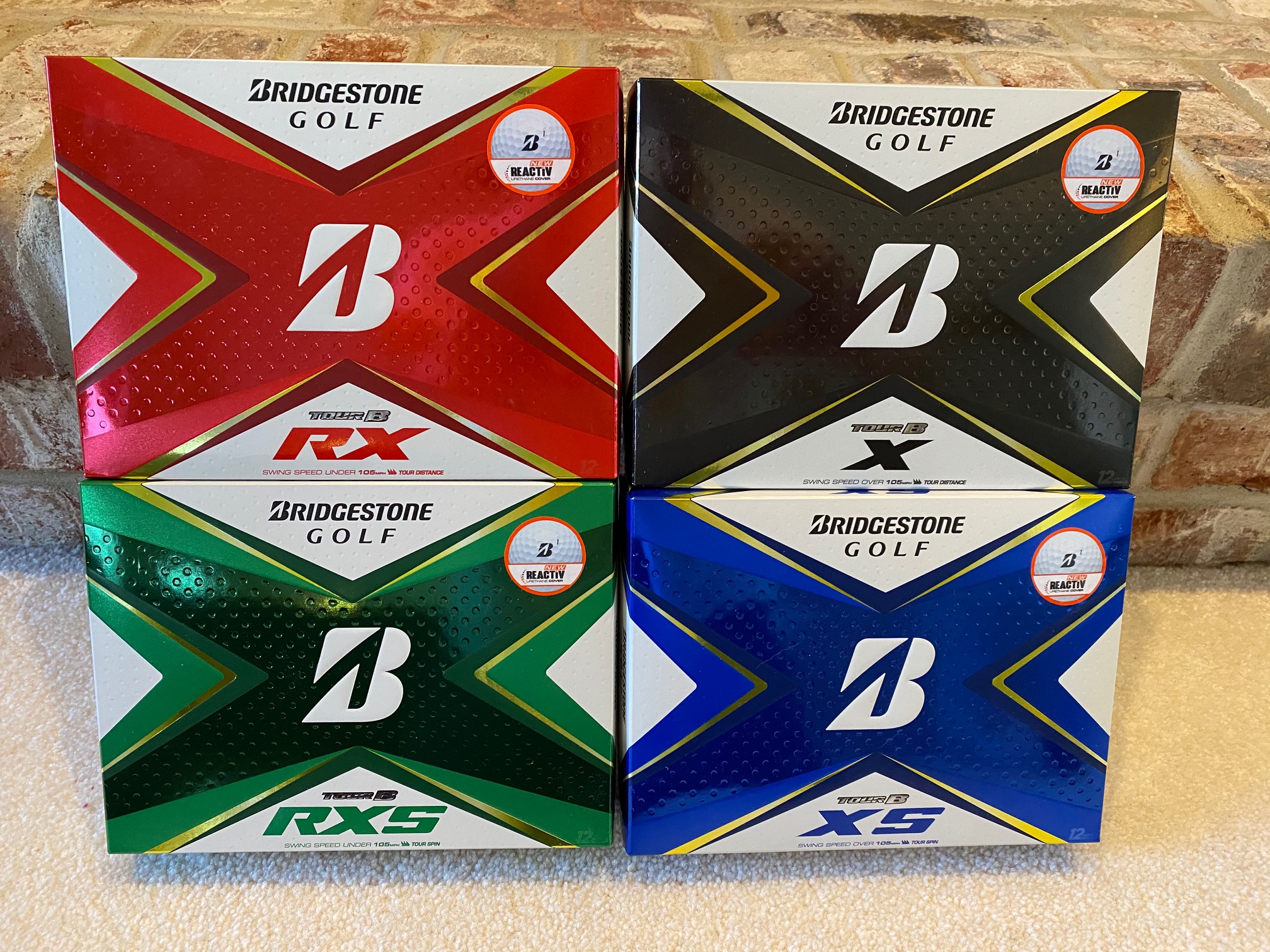
For more traditional dads, Bridgestone’s Tour B line for 2020 ($45/doz.) has been redesigned with the company’s proprietary REACTIV cover to maximize both feel and distance. The Tour B X is played by the likes of Matt Kuchar and Lexi Thompson. The Tour B RX and Tour B RXS are designed for players with swing speeds under 105 mph, which tends to be most amateur dads. You simply won’t find better all-around performance in a golf ball.

Tattoo Golf

Now that Dad is awake and has new golf balls, let’s get him dressed. It’s still chilly in some places, and the absolute best full-zip golf jacket I have ever worn is the new Tattoo Golf Men’s Clubhouse Full-Zip Jacket in black and gray ($70), complete with Tattoo’s distinctive dimpled golf-ball-skull and cross-irons logo. I’ve worn mine for several rounds now, and I have never had a golf jacket that maintained the exact level of comfortable warmth and breathed so well. The price is right, too! Seriously, I cannot overstate how good this jacket is. If Dad would rather have a new pair of shorts, Tattoo has a new line out for 2020 that will ensure Dad looks good no matter how his game is.

Royal Albartross, ASICS, and ECCO Golf Shoes

Next, shoes – because shoes make the man!

ASICS DUAL-COURSE Duo BOA

The growing juggernaut Srixon/Cleveland Golf/XXIO has recently announced a partnership with athletic shoe manufacturer ASICS and the joint development of their flagship golf shoes, the GEL-COURSE Duo BOA ($180) and GEL-COURSE Glide ($130). Both models look and feel like ASICS gym shoes. The BOA features its namesake lacing system, which consists of wire laces that tighten and loosen with a dial on the side of the shoe, and also have softspikes. The Glides are spikeless with traditional laces. Both models are also waterproof. I took my pair of Duos out of the box to walk 18 holes with my son. Conditions were extremely soggy, but my feet stayed dry. Equally impressive, my feet experienced no fatigue or hotspots despite it being only my second round walking of the season. The arch support and padding are what you’d expect from the best athletic shoes. The BOA lacing system seemed to work a little loose during the first 4 holes, but a quick turn of the dial re-tightened them. And after those first holes, they stayed snug throughout the remainder of the round.

ECCO BIOM COOL PRO

Although all golf shoes are becoming more comfortable, ECCO still holds the Number One spot in “Most Comfortable Right Out of the Box.” ECCO doesn’t make the lightest golf shoes, nor the cheapest, but sliding on a pair of ECCOs is one of the great pleasures of the game. The new BIOM COOL PRO shoe ($230) is no exception: it has a wrap-around Gore-Tex design that actively ventilates your feet as you walk. The yak-leather outer is amazingly soft, and the sole features little tunnels running all the way through which make them lighter and “springier” than any previous ECCO model I’ve ever tried (and that’s a lot of them). I wore my BIOM COOL PROS during a hot but beautiful round in the Bahamas in January (before the world shut down) and several times since (walking all the way), and I cannot believe how cool and dry my feet stayed.

Royal Albartross

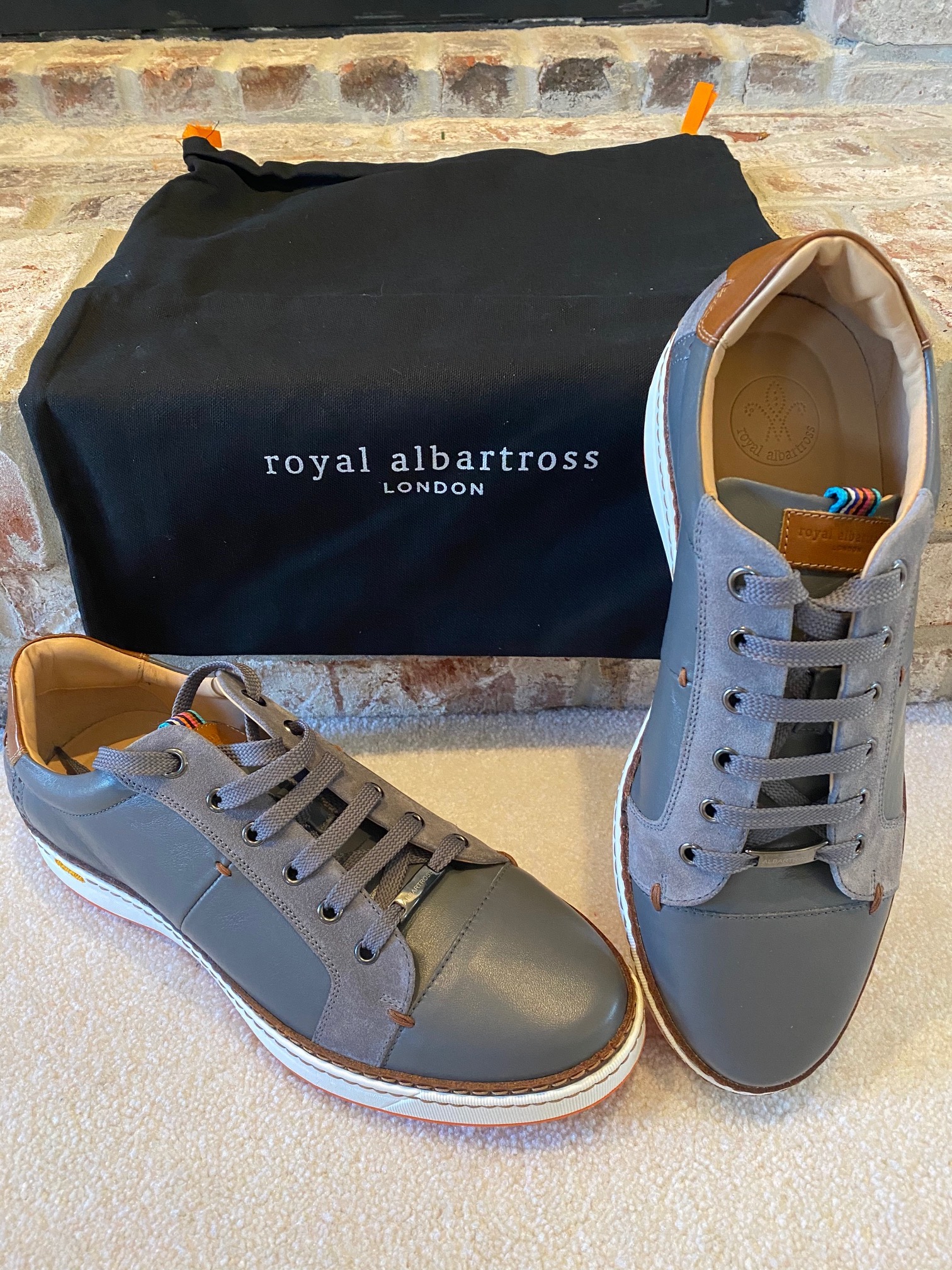
When the name Royal Albartross appeared in my inbox, I had to admit that I’d never heard of it before. Wow, was I missing out! Royal Albartross is a premium golf and lifestyle brand from London that offers handmade golf shoes, belts, and bags. And when they say “handmade,” they mean it. Their products are constructed of the finest Italian leathers and stitched together by craftsmen in Italy and Portugal. The results are exquisite. When I got my peasant paws on a pair of Cutler Greys ($230), I literally ran around my house and showed my wife and two kids how gorgeous they are—they even came with their own cloth shoe bag! With leather outsole, insole, and trim, The Cutler represents a brilliant blend of fashion sneaker and spikeless golf shoe fit for the fairways and grill rooms of even the poshest private club. I have taken to wearing them on walks around my neighborhood during this time of social distancing, because they honestly make me feel better about myself. I will wait to wear them on the course until the vernal pools dry up and, I hope, fellow golfers can get close enough to admire the workmanship. In the meantime, I’ve got my eyes on the Saxon Claret model ($259), new for 2020—absolutely beautiful. I guess I’m a shoe person now.

Dune Jewelry Divot Repair Tool

Time to get a little sentimental. Do you and Dad have a favorite course? Or maybe a special beach? Dune Jewelry has an ever-expanding “bank”of sands from around the world, including golf course bunker sand, that they use to fill all manner of gorgeous women’s jewelry. The Hamptons Rope collection, a co-collaboration between Ann Liguori and Dune’s founder Holly Daniels Christensen, make great Father’s Day gifts. Dune even has some treasures just for golfers. The new Divot Repair Tool ($30) is both sleek and functional. Fill it with sand from St. Andrews Beach to commemorate a trip to The Birthplace of Golf. Or with sand from Hawai’i to remember a wedding or honeymoon. Or even send in your own from the beach at a family cabin. There are ball markers ($30) and wine stoppers ($40) too, which are all also very cool. Speaking of weddings in Hawai’i, I have a ball marker with sand from the beach where I got married over 25 years ago. Reminds me to keep things in perspective on both good and bad days.

Sun Mountain 4.5 LS 14-Way Stand Bag

Lots of states are limiting playing groups to twosomes. And some are not allowing carts. What better time for Dad to start getting more exercise and walking 9 or 18 holes? The Sun Mountain line-up of golf bags is tough to beat. You can find something for pretty much any golfer’s needs. My new 4.5 LS 14-Way Stand Bag ($230) weights just 4.5 lbs. and has 14 full-length club silos, as the name implies. There are 9 spacious pockets and, best of all, the fiberglass legs are amazingly sturdy. The bottom is cart-friendly as well, including pushcart-friendly. There are elastic cords to keep the legs in place when not using them. I love carrying 9 for exercise and walking 18 with a pushcart. This bag allows me to do both without undue burden on my back or shoulders.

Arnold Palmer Framed USPS Stamp

What better way to tell day that he’s “The King” in your eyes than with the Arnold Palmer Framed Stamp ($40)? The USPS introduced Arnold Palmer stamps this year, and this framed artwork features an enlarged version of the stamp along with an insert of one of the actual stamps. It also includes day-of-issue information. I’ve got mine hanging in my office to remind me to “Swing my swing.”

Flying Dog Night Putting Pale Ale

This year is the 40th anniversary of the release of “Caddyshack,” a movie that taught us how integral wise cracks, obscene amounts of cash, and a cart full of C4 are to golf. Also integral to the game is a nice, cold adult beverage. Flying Dog, America’s most disobedient brewery, has introduced Night Putting Pale Ale in honor of this monumental anniversary. Night Putting is a medium-hopped ale with a 5.5% alcohol content. It’s crisp and light and easy to drink by itself or with a hot dog at the turn. Dad will thank you after every delicious sip.

Mr. Wizard by Jeff Wallach

For rainy days—or as a companion to Night Putting Pale Ale on a quite evening at home—how about a great golf read for Dad? Golf fiction can be hit or miss, but the debut novel by veteran golf and travel writer Jeff Wallach is a definite hit. It interweaves a story of two brothers trying to unravel their genetic history, deal with their wild mother, and figure out who they are along the way. Lots of twists and turns along a rich golf backdrop (Open Books, $18, paperback).

I hope by the time it’s Father’s Day, we’re finding ourselves and our nation to be safer and progressively more widely opened. After all, there’s a lot of golf to play in this world, and precious little time. My golf rounds with my own kids are one of the few things keeping me sane over the past months. I wish nothing less than that sort of joy for every one of my fellow fathers out there as we chase the sun, trying to stay as close to even as we can.

Be well, play good golf, and keep in touch.

Featured

Mother’s Day golf gifts fit for the Queen of the Pandemic

We’ve been stuck inside for a while. And for the good of everyone, we should largely remain inside for some time to come. But golf is one of the few social activities that lends itself to social distancing. Stand apart at the tees, hit your tee shots, walk after them, see you at the green. Maintain distance putting. Simple.

Now that courses are opening up in a majority of states, Mom deserves some time away from you—some time with her friends on a nice walk under the late-spring sunshine. And she deserves a little thank you from you for holding the realm together during this pandemic.

Here’s a list of our favorite golf gifts for Mom this Mother’s Day.

Good Walk Coffee

There’s a foursome of ladies at my home course that usually get the first tee time of the day on weekends. They always walk. We call them The Borg, after the inexorable, unstoppable alien foe on “Star Trek: Next Generation.” Heaven help you if you’re in front of them, because if you dawdle to look for a lost ball, they will catch you, and you will be assimilated.

These fast-walking, straight-hitting, never-stopping women always have their coffee travel mugs with them. Good Walk Coffee is a new coffee company that seems to be specially made for golfers like The Borg. You want that tasty, rich pick-me-up to get you out for that first tee time? Try Good Walk’s Dew Sweeper French Roast ($18). If you’re like me, and happy to take a tee time safely behind The Borg, Breakfast Ball Columbia Medium Roast ($15) is ideal. Good walk has other blends, as well as 3-month subscriptions and a nice little shop of swag (hats, tees, ball markers, clubhead covers), all of which is great for decking mom out in style and taste.

Volvik and Bridgestone Golf Balls

Is Mom a fan of the Marvel Universe? Maybe she just likes seeing some of the actors all heated up? In any case, Volvik has followed up last year’s wildly popular offering of Marvel Avengers balls with a 5-hero pack, featuring Thor, Black Panther, Captain America, Iron Man, and the Hulk ($22/set). These matte-finish balls are engineered with Volvik’s new oversized high-energy core and are incredibly soft around the green. The colors also really pop against the sky and turf.

For more traditional Moms, Bridgestone’s Tour B line for 2020 ($45/doz.) has been redesigned with the company’s proprietary REACTIV cover to maximize both feel and distance. The Tour B X is played by the likes of Matt Kuchar and Lexi Thompson. The Tour B RX and Tour B RXS are designed for players with swing speeds under 105 mph, which tends to be most moms AND dads. You simply won’t find better all-around performance in a golf ball.

TecTecTec ULT-X Rangefinder

Rangefinders have really grown on me over the years. I used to love the thrill of the guess, but now I enjoy verifying the yardage with laser precision. One of the more advanced rangefinders on the market is the ULT-X by TecTecTec ($250). It’s lightweight, uber-precise, and has an elevation mode that is easy to turn on and off. Doing so is accomplished by pulling the lens housing out or pushing it in. When the elevation mode is engaged, a bright yellow band is revealed, so players like my son, who play in tournaments in which measuring elevation is not allowed, will be less likely to forget to turn it off. I’ve also recently found that another handy use of the ULT-X is keeping an eye on other golfers around the course to maintain social distancing. You can ID friends from 100+ yards away and wave – that’ll have to do for now.

Royal Albartross Golf Shoes

So I received a pair of Royal Albartross golf shoes earlier this year, and I literally ran around the house showing everyone. I mean, they are hand-made in Italy of the finest leather – seriously the nicest shoes I own of any kind. Now, I don’t want to play into stereotypes, but if I get this excited about Royal Albartross golf shoes, Mom is going to go crazy.

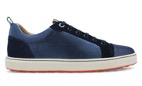
Royal Albartross of London has three new styles for this Mother’s Day. The Amalfi ($299) is a laced sneaker with perforated upper leather.  The soft, breathable leather lining and the lightweight Apex sole is designed for multi-directional traction. Available in white, black and navy, the Amalfi is handmade in Portugal.

The Chelsea ($199) is a slip-on loafer with tassel fringe available in tri-color patterns with white and black base colors. The ergonomic insole is designed to provide support and breathability, and is extremely resistant to lateral slipping. 

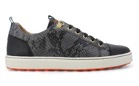
The Sahara ($299) features a snake print, leather upper with gold/rose eyelets.  Its ultra-cushioned insole unit and lightweight VIBRAM® Pro Golf out-sole provide excellent stability.

Swiftwick Golf Socks

Mom’s going to need some socks under those posh shoes. The best golf socks on the market are by Swiftwick, and my favorites (which also come in women’s sizes) are the new Maxus Zero-Tab golf socks ($12), but the ASPIRE and FLITE XT (pictured) are pretty sweet, too. Swiftwick’s offerings are all compression socks that wick moisture, improve circulation, and promise no blisters.

AHEAD’s Kate Lord Line for 2020

Well, shoot. Now that Mom’s going to need a couple of new golf outfits to wear with her posh kicks and comfy socks. AHEAD’s Kate Lord Line introduced a number of new styles for 2020 at the PGA Show in Orlando. “Our Kate Lord styling is perfect for the customer who wants great, easy-to-wear pieces for both on and off the course,” said Scott Stone, National Sales Manager, Golf. Colors include Iris, Limelight, and Poppy, and styles include sleeveless and sleeved polos, skorts, quarter-zips, and shorts. It’s pretty easy to mix-n-match an entire month’s worth of outfits on their website.

Dune Jewelry by Ann Liguori

I’ve written about Dune Jewelry before, and it’s still the most innovative line of keepsake jewelry I know of. Dune has a massive and ever-increasing Sandbank from which they draw sand and stone and crushed shell from beaches, lakes, and other landforms all over the world and incorporate into their fine jewelry. This year, there’s also a Dune Golf Collection, which includes ball markers and divot repair tools also filled with sand. You can search their giant repository for locations or send in your own sample (you know, that little vile you snuck out of Augusta National that one year?) and have it used in Dune’s stunning creations. In the past, I’ve gotten a ball marker for me and a necklace for my wife (The Hamptons Rope Collection) with sand from the beach where we were married. This year, I’m getting her the new Luxe Marquis earrings ($180) filled with sand from Japan, where we used to live. Seriously, there is nothing more meaningful than giving her not only beautiful jewelry, but jewelry filled with a little piece of a place that the two of you have shared.
Mr. Wizard by Jeff Wallach

Golf fiction can be hit or miss, but the debut novel by veteran golf and travel writer looks intriguing. It interweaves a story of two brothers trying to unravel their genetic history, deal with their wild mother, and figure out who they are along the way. Lots of twists and turns along a rich golf backdrop (Open Books, $18, paperback).

They you have it. Gifts to pamper the Queen of the Pandemic from the time she wakes up until the time she goes to sleep. This is the least you can do for her.

2025 Holiday Gift Guide: Don’t let the Grinch play through!

In last year’s Holiday Gift Guide, I fretted about prices increasing. According to The Budget Lab at Yale University, the concern was warranted. The lab’s research shows that leather products, wearing apparel, and metal products – categories central to the golf industry – are three of the top four that have been hit hardest by tariffs.

But hey, if little Cindy-Lou Who taught us anything, it’s to not let the Grinch steal your holiday spirit. So let’s circle around the 18th green, join hands, sing a joyful song, and dream of a feast of roast beast.

Srixon Ryder Cup Golf Balls

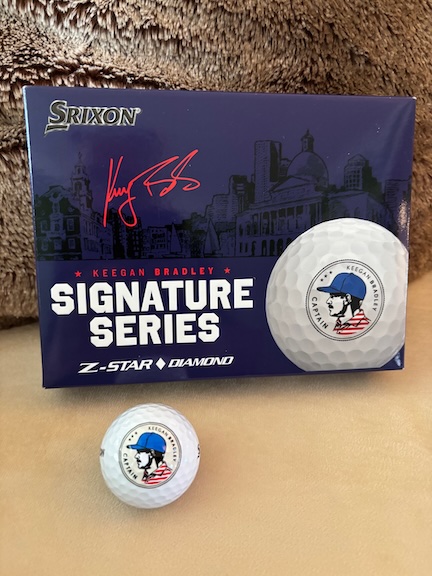
Ok, sure. The U.S. Ryder Cup Team once again double-bogeyed. But something good came out of it: The Keegan Bradley Signature Series Z-Star Diamond Ball ($50/doz.). I’ve been playing these since I received a dozen just before the Ryder Cup teed off. They perform beautifully, and to be honest, the somewhat campy logo of Captain Bradley in profile (porn-stache and all) makes them super-easy to identify, even in neighboring fairways (where I often find myself).

“Anybody order a pizza?” –Keegan Bradley (if golf hadn’t worked out for him, maybe)

Maxfli Tour Golf Balls

One of the surprises in the golf ball market in recent years has been the consistently high ratings earned by the Maxfli Tour family of golf balls. The 2023 models were widely praised when they first came out, and the 2025 versions have for the most part maintained the adulation. I’ve enjoyed playing the Maxfli Tour balls, but the Maxfli Tour X balls tend to receive the highest ratings of the three available models, often ranking near the top of distance and quality measures by multiple testing labs. The best part, perhaps, is the pricepoint: if you buy a few dozen at Dick’s Sporting Goods, you can get them for as low as $30/doz.

TRUE Linkswear

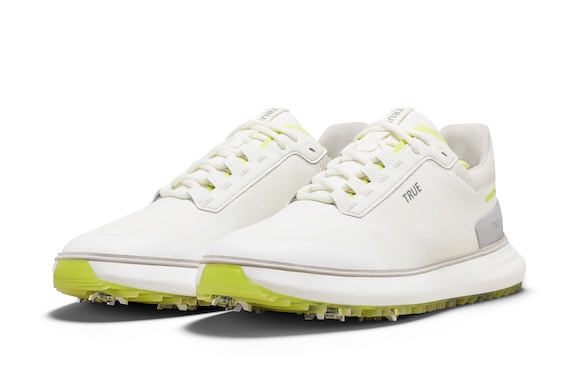
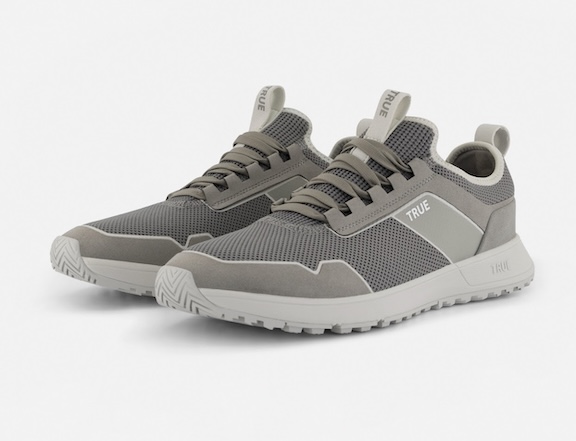
If you’re never heard of TRUE Linkswear, you’re missing out. I have five pairs of TRUE golf shoes, and I get more compliments on them than any shoes I’ve ever worn (golf or otherwise). The combination of styling, attention to detail, and comfort are tough to beat. All of them have excellent padding and, importantly, a nice, wide toe-box. Prices range from low $100s to low $300s. TRUE Linkswear also offers a large line of polos, hoodies, shorts, pants – pretty much any accessory you need to look like a Tour pro on the course, no matter how you play.

Bushnell

The Bushnell A1-Slope Laser Rangefinder ($300), which debuted in February 2025, embodies the precision and quality one associates with the name “Bushnell.” It is by far the smallest and lightest rangefinder I have ever used. Pinseeker and JOLT technology provides instant tactile feedback when the target is locked, the slope yardage is easy to see and read, and the BITE magnetic skin is great if you don’t want to take it in and out of the sturdy case. A final innovation that is rare in the market is the rechargeable battery (cord included), though one charge has carried me through an entire golf season(!). This might be the last rangefinder I ever use.

Sub70 Golf JB Sugar Skull Wedges

The Sycamore, Illinois-based boutique clubmaker Sub70 Golf is without question one of golf’s most-respected companies. Sub70 doesn’t release any new clubs or lines without ensuring through scrupulous testing that the new clubs are improvements over their previous models. They don’t pay any tour pros to play their sticks, but several pros do. Sub70 also offers free fittings at their homey HQ in Sycamore. (They’ll even mix you a cocktail!) And if the fitting results show your clubs work as well or better than theirs for your swing, they tell you that. Integrity, honest, quality – what more could you ask for?

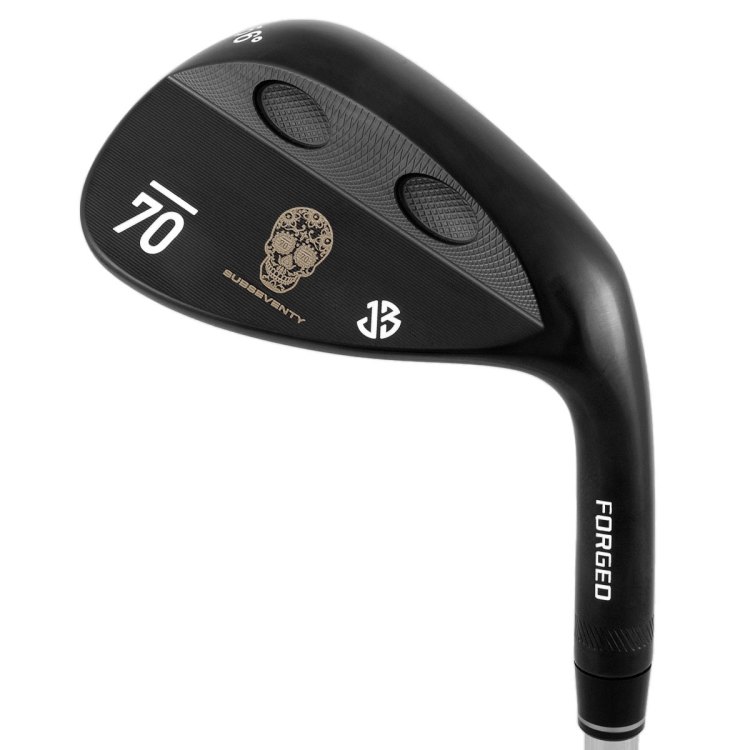
The Sub70 JB line of wedges ($125) include the iconic Sugar Skull wedge. Designed for golfers with a variety of techniques and who play in a range of conditions, the Sugar Skull maximizes versatility and feel. Finishes include black and “natural,” and lofts run from 46 to 64 degrees. Laser engraving is available, which can be customized if you don’t want the original Sugar Skull. But if you do, you can also get a matching Sugar Skull cap ($35).

L.A.B. OZ.1i HS Putter

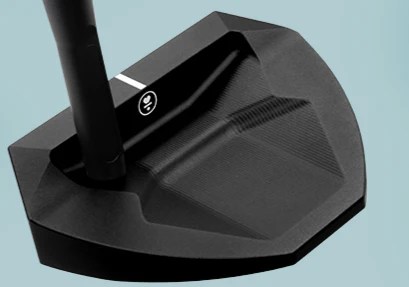
L.A.B. Putters have taken golf by storm, from the PGA Tour all the way to your local muni. If you aren’t familiar with the name, you have nonetheless likely seen their large, rather unconventional putter heads and wondered what the big deal is. What sets L.A.B. Putters apart is their balancing. Putters can be “balanced” several ways. If you balance your putter on your finger, lying the shaft perpendicular across your outstretched digit, you can determine its weighting scheme. If the face points upward, it’s “face-balanced.” If the toe hangs straight down, it’s “toe-balanced.” If the toe hangs down at an angle, there is some degree of “toe-hang.” L.A.B. stands for Lie Angle Balanced. Company founder and L.A.B. inventor, Bill Presse, was a mini-tour player who wanted to simplify his putting stroke. He reasoned that lie-angle balancing would most easily allow the putter to balance such that the face is dead-square with the target line, promoting a consistently square face at impact.

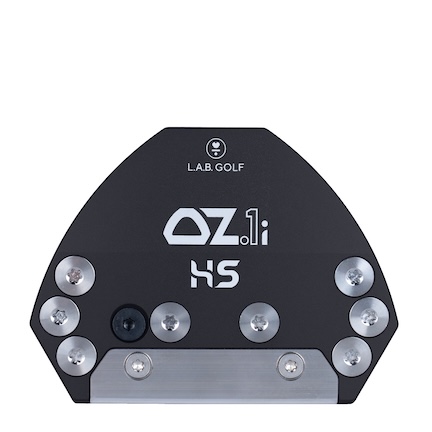
The first L.A.B. models were all center-shafted, which can take some getting used to. In 2025, they came out with the OZ.1i HS, the first heal-shafted L.A.B. offering. At $499, this putter is not for the budget-conscious golfer. But when I began playing it and rolling the rock exactly where I was aimed over and over again, the value became immediately clear. If you can, you NEED to give a L.A.B. putter a try!

REVL Grips by SuperStroke

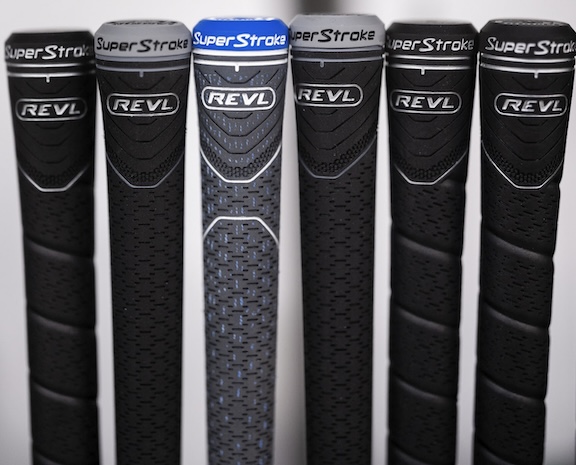
The off-season is a great time to get your clubs re-gripped. And when you re-grip, there’s some big news in the equipment world that you should consider: SuperStroke, the maker of the most widely-used putter grips on Tour, purchased the legendary Lamkin Grips in May of 2024. In 2025, they combined SuperStroke’s Tour-proven design principles with Lamkin’s tried-and-true engineering to produce the REVL line of grips. You may have seen commercials for these grips during recent golf broadcasts. Let me say that the hype is completely well-deserved. I regripped my entire set with the REVL Comfort, one of three distinct models in the flagship line, half-way through the 2025 season. The Comfort is an all-rubber, quasi-wrap design that seems to just guide me to putting my hands in the right positions. This is the first time I’ve had the same grips on all my clubs at the same time in maybe 30 years, and I carded more sub-80 rounds with them than ever before. I don’t know if it’s the grips, or if by some miracle I’ve figured something out about my swing. But either way, I have never felt more confident when I take my grip and stance, so I don’t foresee playing any other grips in the near future.

Fuzzy’s Ultra-Premium Vodka

The day before Thanksgiving, we lost 2-time major champion and all-time character Fuzzy Zoeller. He was just 74 years old. In 1979 Fuzzy Zoeller burst onto the scene with his surprise win at the Masters. He won the U.S. Open in 1984. If you feel like reminiscing about Fuzzy, you could give his eponymous Fuzzy’s Vodka a taste.  It is made from 100% American corn, five times distilled and ten times filtered, and a portion of each batch is rested in new American oak barrels. The result is crisp, smooth, and incredibly clean – far better in my view than any Russian vodka. (Get Russia out of Ukraine and out of your liquor cabinet!)

My bottle of Fuzzy’s Vodka, autographed by the legend himself. It will never be opened.

Not gonna lie – 2025 has been challenging in many ways. But let’s try to make Cindy-Lou Who proud and find some joy and brotherhood this holiday season. Giving the gift of golf always makes me feel better. I hope some of the items above will help you feel better, too. Happy Holidays, and bring on the roast beast!

Mizzou’s Gustin Golf Course Surprises at Every Turn

Columbia, Missouri, is known as the location of the state’s flagship public university. And to its faithful fans and alumni, The University of Missouri is known as MIZZOU. During the Tigers’ sold-out SEC football games at Faurot Field at Memorial Stadium, you can hear half the avid fans cheering “M-I-Z” and answered by the other half responding “Z-O-U!” one-third of a mile away at the A. L. Gustin, Jr. Golf Course. Despite its proximity to the stadium, and to the heart of campus itself, the course is surprising to many, even to many university community members.

Gustin Golf Course occupies 127 acres just off Stadium Boulevard. The land was donated by A. L. Gustin, Jr. in 1959 and specifically earmarked for a golf course. Golf course architect Floyd Farley laid out a 6,508-yard, par-70 course that relies on blind landing areas and narrow driving corridors to challenge players of all levels. A number of sharp doglegs, hidden hazards, and dense woods take driver out of the hands of most of today’s long-hitters, placing a premium on accuracy and local knowledge. In short, Gustin reveals surprises at every turn – and there are a LOT of turns.

The development of Gustin Golf Course into an SEC-worthy university course has been, shall we say, deliberate. Although the course opened in 1959, the clubhouse dates only from 1997. According to Aaron Wier, Director of Golf Operations, much of the irrigation system still dates from the 1970s-80s. Wier also notes that many students who play often don’t realize the course, with its well-conditioned Bermuda grass tees, fairways, and greens, is in their backyard. “I’ve proposed that students be granted access to the course as part of their recreation facility fees,” says Wier. “I’d love it if students could come play for free with just their IDs.”

When he heard that my son and his buddy, both seniors and avid golfers, were visiting for the first time, he shook his head and said, “See? Many students don’t know we’re right here. Better late than never, though!”

Playing A. L. Gustin Golf Course

Given the course’s modest 6,508-yard length from the back tees (rating 71.4, slope 125), Gustin doesn’t overwhelm with length. There are just two par 5s, and only one of those is barely over 500 yards. There are, however, four 400+ yard par 4s if you play from the tips, which first-time visitors absolutely should not do. Why? Well, even from the 6,024 gold tees, players unfamiliar with the course will find themselves asking over and over, “What’s the line from here? Where’s the green?” In fact, the first non-par-3 green players can see from the tees comes on the 18th hole, where the blessedly open tee shot still has to contend with the thickest rough on the entire layout.

Some hallmarks of the Gustin Golf Course are visible from the par-3 2nd Hole’s tee: a table-top green and a pollinator patch.

There is a 500+ yard gap between the back tees and the next-most forward (gold) tees, which results in a half-dozen par-4s of about 350 yards or less from the gold tees. One might think, then, that long-hitters would be launching their drivers like howitzers. But all these shortish par 4s feature sharp doglegs, sloping fairways, and blind hazards, making shorter clubs the wiser choice for nearly everyone.

The layout opens with one of the two par 5s, which tumbles down from an elevated tee and then climbs gently back uphill to a table-top green. This putting surface, like most of the others, does not break as much as it appears it should. The fairways, on the other hand, break plenty. The 400+ yard par-4 3rd Hole is the first introduction to the devilish fairway contouring. This is the #1 handicap hole because of the convex fairway that bends right and drops severely off into the underbrush to the right. Tee shots should hang left, but even these tend to wander into the rough if too far left. This was the first of many holes where one or more of our foursome thought we had hit perfect drives, only to crest a hill or round a bend and discover that our balls had ricocheted into trouble.

There are a few unique holes – quirky, even – on the front and on the back. On the front side, the par-3 5th Hole actually has two greens, which can be put into play on alternating days to lend a radically different angle and feel to the tee shot. Rather unintuitively, the farther green makes for the easier shot, as the pond right of the shorter green is taken mostly out of play.

The dual greens on the par-3 5th Hole provide flexibility in course set-up.

The short par-4 7th Hole is perhaps the quirkiest on the course. Here, the black and gold tee boxes are located back in the woods, raised above the fairway on a wooden platform. That’s right, players drive out of a narrow chute through the trees off of mats. To the uninitiated, this feels rather claustrophobic.

Teeing off from mats through the woods on Hole 7 is certainly a unique feature of Gustin.

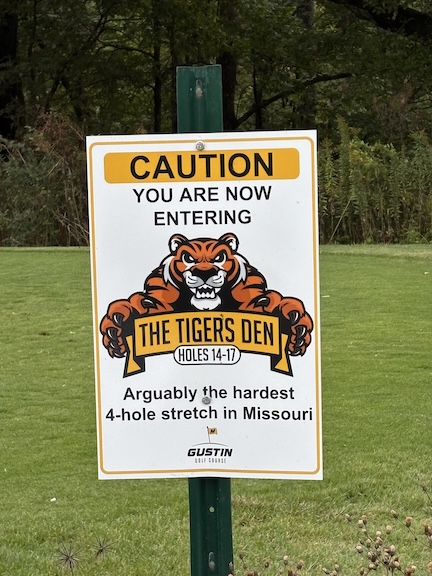
The highlight of the back nine is the “Tiger’s Den” – holes 14-17, which a sign on the course touts as “arguably the hardest 4-hole stretch in Missouri.” Whether or not that description is accurate, it is noteworthy that only one of these (the 15th Hole is 467 yards from the tips) is considered “long” by today’s standards. The 14th and 16th holes are both quite “short” for longer hitters, but, as we found out, they are still plenty hard.

The claim is certainly worth a discussion!

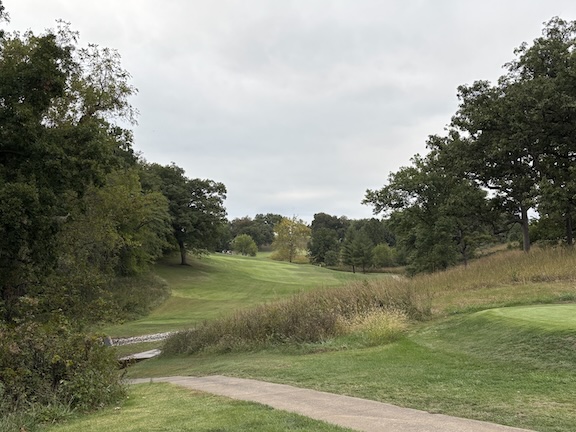
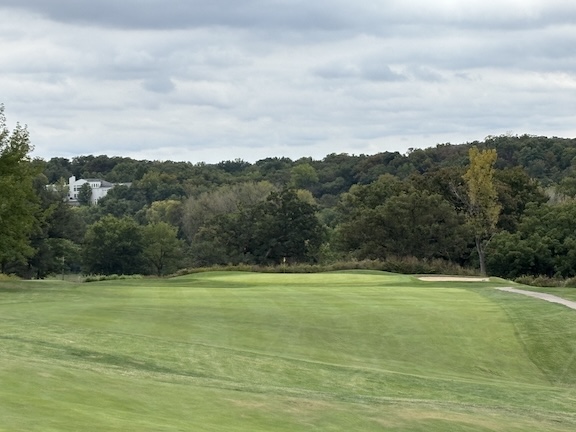
The difficulty comes from the old-school design philosophy. The 14th Hole is a dogleg left, but the fairway cants steeply to the right, which makes it hard to hold the fairway and also makes the second shot to the elevated green tougher than expected. At the longer 15th Hole, the tee shot is up and over a hill to a completely blind landing area that is much farther left than is apparent from the tee. Three “solid” drives in our group were found to have scampered into the woods on the right. At the short 16th Hole, with its sharp dogleg right, the green lies less than 300 yards away as the crow flies. But big hitters who want to go for it must first elevate their drive quickly to carry massive trees and then not hit it too far, as balls that go through the fairway may be lost.

The tee shot on the par-4 15th Hole is one of many where first-timers will ask, “Where am I supposed to aim?”

Finally, the par-4 17th Hole punishes with one last totally blind tee shot. There is even a defunct periscope at the tee that was once used to check whether the group ahead was still in the landing zone. After a round of blind shots like this—and escaping the Tiger’s Den—it is a relief to get to the 18th and finally be able to see where you need to hit it.

A.L. Gustin Golf Course: The Verdict

Mizzou’s Gustin Golf Course presents players with plenty of surprises. From Stadium Boulevard, you can hardly tell it’s a golf course. The 127 acres are far more than just a place to play golf, too. Gustin was the first collegiate golf course in the nation to be named an Audubon International Cooperative Sanctuary in 1997. Director of Golf Wier reports that the rolling, pristine prairieland is the birthplace of some 3,700 fledgling bluebirds annually. There are also nine pollinator plots (the course is a member of Monarchs Forever) and four bee hives on the land (with plans for more). At times, it feels like you’re playing golf through a nature preserve just on the edge of campus.

With public weekend green fees topping out at around $35, rates are extremely affordable, even for many students (who receive a discount). Carts are $20, but walking is allowed. (The numerous hills, though, would make for a challenging walk!) The course does just over 25,000 rounds a year, but if you play on a football game day, when most of the city is at the game or watching it at the numerous college bars, you might have the links mostly to yourself – and you will be able to hear the cheers from the fans drifting through the trees: “M-I-Z…!”

One of only two par 5s on Gustin, the approach to the 12th green is also one of the few that is wide open and inviting.

Dubsdread: Cog Hill #4 is Perennial Top Public Course in Illinois

Since the mid-1990s, golf has witnessed the widespread development of far-flung golf resorts constructed according to a “build it and they will come” philosophy. The idea is that dedicated golfers will travel to the ends of the earth to play great layouts. Today’s golfing public sometimes forgets, however, that the best courses are often within easy reach of major population centers, allowing even players of modest means to hop in a car or bus or train and access world-class golf. This latter philosophy was held by Joe Jemsek, the “Patriarch of Chicago Public Golf” when he purchased the two existing courses at Cog Hill in Palos Park, Illinois, and embarked on a lifetime mission to turn the facility into the pinnacle of Midwestern public golf.

The first course at Cog Hill was opened in 1927 by the three Coghill brothers, John, Martin, and Bert. The original David McIntosh design was joined in 1929 by a second course, also by McIntosh (with Bert Coghill). In 1951, Joe Jemsek purchased Cog Hill, and he hired famed golf architect Dick Wilson to renovated Cog Hill #1 in 1963. Cog Hill #2 received a facelift in 1995 from Joe Lee and Rocky Roquemore. Also in 1963, Jemsek contracted Dick Wilson to construct Cog Hill #3, often called “The Ravines” in recognition of the numerous forced carries. Despite the burgeoning success of these three courses, Jemsek dreamt of a public-access layout to rival the famed private clubs in golf-rich Chicagoland. This dream came to fruition in 1964, with the opening of Cog Hill #4, nicknamed Dubsdread. The Dick Wilson and Joe Lee design soon became host of multiple prestigious amateur and professional tournaments. In 2008, Rees Jones thoroughly renovated “Dubs,” and it hosted the BMW Championship on the PGA Tour several years thereafter, cementing Cog Hill’s legacy as a Tour-quality public-access facility, with Dubsdread perennially ranked as the top public course in Illinois and one of the best public courses in the entire nation.

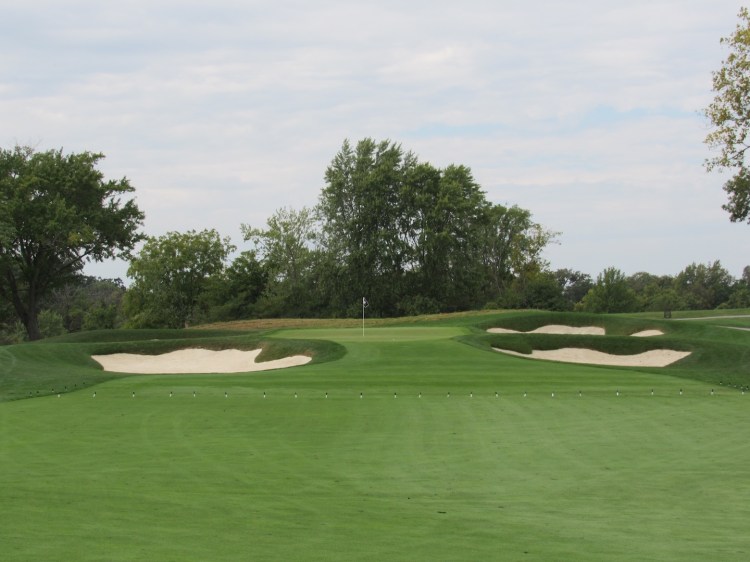
The tee of the par-4 4th Hole on Dubsdread is typical of many holes here: The course is all in front of you, and even semi-straight hitters will find safe harbor off the tees. But the second shot — that’s where the challenge lies.

Playing Dubsdread

Chicago’s blue-collar bona fides were perhaps most succinctly captured by poet Carl Sandberg, who called the city “Toolmaker, Stacker of Wheat…City of the Big Shoulders.” Pulling into the parking lot at Cog Hill, this working-class ethos was visceral – a dozen high school busses crowded the lot, as a day-long boys’ and girls’ golf meet was underway on Courses #1 and #3. Despite Cog Hill being one of the most storied and respected public golf facilities in the nation, the place is distinctly unpretentious. Although the facility boasts an august, historical clubhouse, heated year-round practice bays with Top-Tracer technology, and the top-ranked courses, no one puts on airs. The staff were unfailingly friendly, patient, helpful, and down to earth. Even the prices for apparel and gear in the well-stocked proshop in the “2-4 building” (there is a separate proshop for courses #1 and #3) were reasonable.

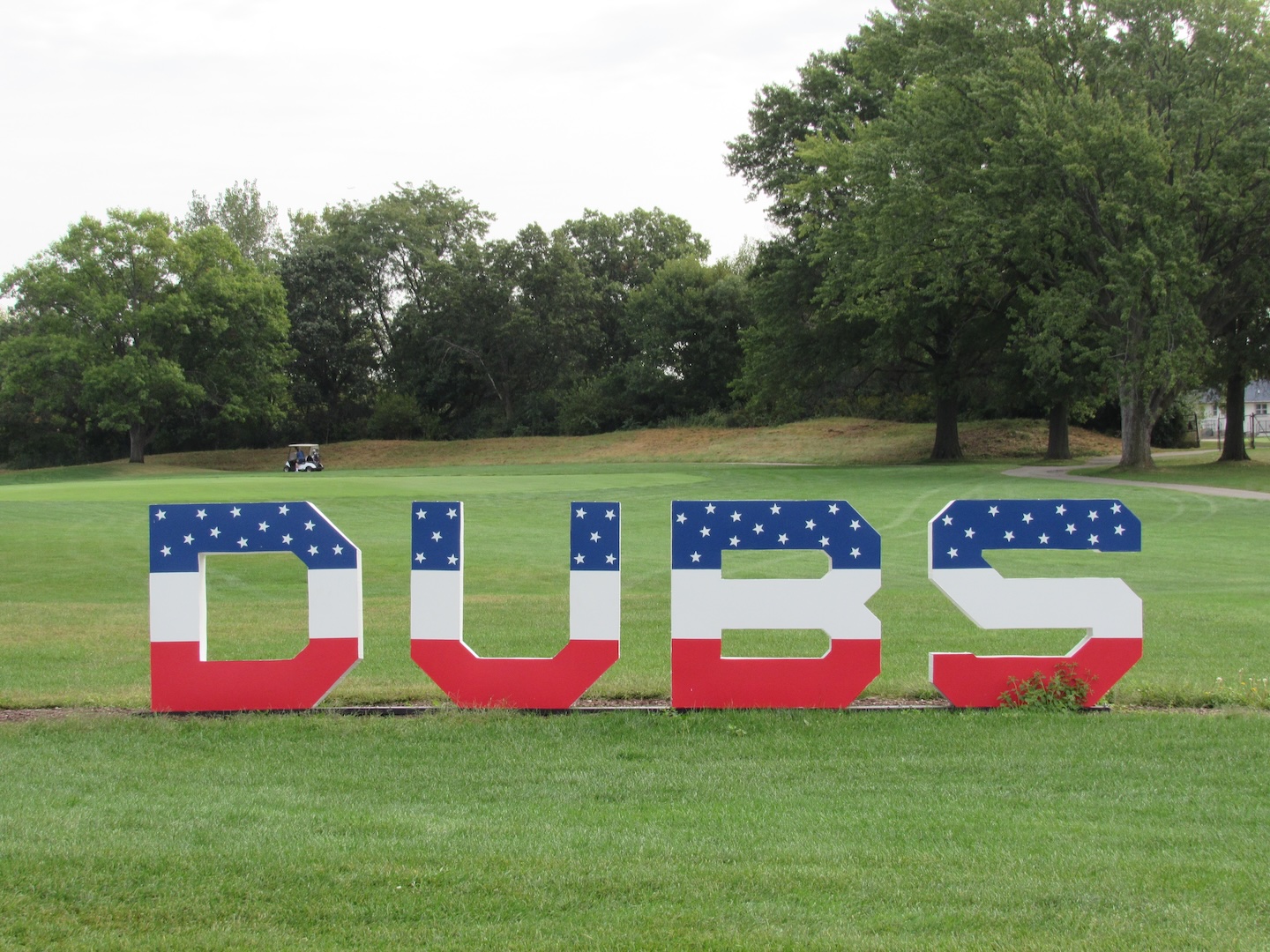
The moniker of Cog Hill #4, “Dubsdread,” stands as a warning to “dubs” – players with limited skills (a.k.a. duffers) – that they might be in for a long day. This is 100% true if players don’t choose the appropriate tees for their skillset. From the champaionship Black tees, “Dubs” stretches to 7,554 yards with a rating of 78.0 and a slope rating of 153. I frankly don’t think I’ve ever played a course with ratings this severe. Fortunately, the yardages of the remaining 6 sets of tees (including a Blue-White Combo of 6,564 yards) shrinks down to 5,422 at the forward-most tees.

We played the Combo set, which was perfect for my own 9-handicap and my buddy’s 2-handicap. What became immediate apparent is that Dubs is very much a “second-shot course.” For me, keeping the ball in play off the tee usually leads to low-scoring rounds. Remarkably, I didn’t lose a single ball off the tee on Dubs. Yet I did not score terribly well, as most of my approach shots failed to find the greens, or, when they did, they left massive putts over dramatic undulations.

The tee shot on the par-5 15th Hole is one of the few on Dubsdread to inspire real dread on your drive.

There are 89 bunkers on Dubs, all of which have recently been rebuilt and filled with snowy-white sand from Ohio (where the best bunker sand in the world is found). According to Troy Newport, General Manager of Cog Hill, the granular structure of this sand is such that it sort of locks together and doesn’t wash down the faces of the bunkers, even during midwestern gutter-washers. I can attest to the bunkering’s impeccable grooming, given that I found myself in greenside bunkers on at least half of the holes. The bunker design throughout is epitomized by the one fronting the 5th green – steep faced craters that usually leave you with little to no view of the putting surface.

This bunker on the par-5 5th Hole epitomizes the bunker design. (And yes, I did end up in it.)

One of the striking features of Dubsdread is the brutish collection of par 3s. From the Black tees, these measure 224, 240, 216, and 215 yards. From the Combo tees, they are a much more reasonable 161, 173, 178, and 174 – still, none are pushovers.

The 216-yard, par-3 12th Hole

Another memorable feature are the greens, with their amorphous shaping and vexing contouring. Consider the par-4 7th, where deep bunkers nestle into the “crooks” of the cruciform putting surface. We played on a Monday, yet it seemed nearly every pin was in a “Sunday” position, tucked behind traps and set into slopes. Two lessons were learned, though not as quickly as they should have been: Keep the ball below the hole and ALWAYS take an extra club to make sure you clear the sand.

The par-4 7th Hole — typical of the heavy bunkering and unique green shaping on Dubsdread

If there is one hole on Dubsdread that symbolizes the idyllic nature of Cog Hill, despite its location on the outskirts of America’s third-largest city, it is the par-5 11th. From the back tees, this 607-yard monster is a test for even the best players in the world. No matter which tees you start from, though, everyone ends at the remarkable green, which is perched high above the surrounding county, presenting an endless vista across the brilliant green tops of hardwood trees. The atmosphere is diametrically opposite the gritty Chicago that Sandberg described.

The view over Cook County from the 1tth green looks more like northern Michigan than northern Illinois. (After you extract yourself from one of those bunkers, take a moment to enjoy the view!)

Dubsdread: The Verdict

Dubsdread is the unrivaled king of Chicagoland public golf, and Cog Hill is the archetype for multi-course facilities in major metropolitan areas. When asked whether there are plans to bring more Tour events to Cog Hill #4, GM Newport says management is open to it. But the planning would need to take into account the Jemsek family’s dedication to providing the highest-caliber public golf in the state for the residents of the Chicago area.

Green fees range widely across the four courses, with Dubsdread running between $149-$204 in 2025. The other courses, however, are more budget-friendly. The Ravines (#3) maxes out at $92, and the other two range between $40 and $80.

If Cog Hill were a remote boutique destination, these rates would all be considerably higher. As it is, their accessibility and laid-back atmosphere invite players of all levels to step out of Carl Sandberg’s “stormy, husky, brawling” city, roll up their sleeves, and flex their broad shoulders to play a round in a literal urban golfing paradise.

The approach on the bruising par-4 16th Hole varies tremendously in difficulty depending on pin position.
The 18th green threatens you with water, but also beckons you with food and drink in the historic clubhouse just behind it.

L.A.B. Putters – “Feels like I’m cheating!”

I’ve been writing about golf equipment for almost 30 years. In that time, I have tested and reviewed close to 100 putters, ranging from household name brands to boutique start-ups. Many – by which I mean most – new putter companies fail within a few years. But every now and then, one of these plucky newcomers really moves the needle and shakes up the market. L.A.B. Golf is one of these movers and shakers. L.A.B.’s radical designs and precision engineering are creating tsunami-like waves through all levels of the game, from weekend warriors to the PGA Tour.

What sets L.A.B. Putters apart is their balancing. Putters can be “balanced” several ways. If you balance your putter on your finger, lying the shaft perpendicular across your outstretched digit, you can determine its weighting scheme. If the face points upward, it’s “face-balanced.” If the toe hangs straight down, it’s “toe-balanced.” If the toe hangs down at an angle, there is some degree of “toe-hang.” L.A.B. stands for Lie Angle Balanced. Company founder and L.A.B. inventor, Bill Presse, was a mini-tour player who wanted to simplify his putting stroke. He reasoned that lie-angle balancing would most easily allow the putter to balance such that the face is dead-square with the target line, promoting a consistently square face at impact.

A number of design features combine to create this lie-angle balancing. In L.A.B.’s first models, a key feature – along with numerous adjustable weights and an aluminum chassis wrapped around a steel putterhead and insert – was center-shafting. In other words, the straight shaft was inserted into the center of the putterhead. Combined with some radical head shapes (think branding irons – big branding irons), the initial L.A.B. putters were easy to recognize.

The unique profile of the original L.A.B. offering was polarizing, however. Even golfers who appreciated the consistency with which they stroked their putts were sometimes put off by the head shape or size. The center-shafting, too, if you’re not used to it, can make alignment tricky. In 2025, L.A.B. introduced its first non-center-shafted model, the OZ.1i HS ($499), where “HS” stands for “heel-shafted.”

Playing the L.A.B. OZ.1i HS

I recently played the undisputed king of public golf in Illinois, Cog Hill #4, a.k.a. Dubsdread, where the greens are fast and dramatically contoured. Before the round, I met up with an old buddy of mine who is currently a 2-handicap. When he arrived, he couldn’t wait to show me his L.A.B. DF3 Putter, a smaller, slightly less radical version of the original L.A.B. DF2.1. “This putter shaved two strokes off my score,” he said. “I feel like I’m cheating!”

I then pulled the L.A.B. OZ.1i HS out of my bag and asked, “Have you seen their new heel-shafted model?” (OK, so I can be a little smug sometimes. But this situation called for smugness!) He took it to the practice green and proceeded to run in 3 6-foot putts in a row. We both just smiled and shook our heads at the consistency. And he had to admit that the heel-shafted design fits the eye more naturally than the center-shafted version.

The ball comes off the steel insert incredibly softly, allowing for confident, even aggressive, strokes. Within 8 feet of the cup, the OZ.1i HS instills incredible confidence: I just set the putter behind the ball on the line I want it to begin on, take my stance, and swing – as long as I don’t get handsy, the ball rolls exactly on-line. Even my misses go where I want them to – can’t blame a misread on the putter!

Between the exquisite lie-angle balancing, the Press pistol grip, and the premium steel shaft, I’m not sure I’ve ever tested a putter that immediately fit my eye so well. During the last few rounds with the OZ.1i HS, I feel like everything inside 10 feet should drop, and 3-putting is basically a foreign concept.

For players with exacting standards, L.A.B. offers myriad custom-fitting options on their website and a variety of putterhead shapes (including an Anser-style blade) and colors (the purple ones are back!). There are even shaft options that can add close to $400 to the price tag. Although it is true that L.A.B. Putters aren’t cheap, developing supreme confidence on the green is nearly priceless.

Sub70 JB Sugar Skull Wedges: Scary-good

If you’ve never heard of Sub70 Golf, you’re in for a treat. This boutique clubmaker based in Sycamore, Illinois, has been producing clubs that are of the highest quality, but at a very reasonable price-point. As I detailed in the profile linked above, the philosophy at Sub70 is “If it isn’t better, don’t release it.” In other words, unlike the big-name companies that pump out “new and improved” models once or even twice a year, Sub70 only releases new clubs when their own testing confirms that the new designs are actually better than the previous ones.

Although golf season is most of the Midwest is winding down, Spooky Season is here. Leave it to Sub70 to offer wedges that both play and look scary-good. The JB Sugar Skull Wedges ($125) feature a laser-etched Sugar Skull and boast exquisite feel and control. The Sugar Skull logo depicts “la calvera,” the traditional symbol of Mexico’s Day of the Dead.

Aside from the unique artwork, these wedges are deadly around the greens, too. They are forged from 1020 carbon steel with milled grooves. The JB Wedges are designed for versatility and creativity, accommodating the most skilled shot-makers.

Sub70 offers several model options to fit any player’s preferences. All wedges come in a “straight” or “taper” shaft version, the JB 2 Wedges have a more squared leading edge, and the Full Groove versions feature grooves stretching the entire clubface from heel to toe. There are also multiple finish options, including black, raw, and satin.

Playing the Sub70 JB Sugar Skull Wedges

Before putting the JB Wedges into my bag, I was pretty comfortable with my wedge spacing, which consisted of a 52-degree, 56-degree, and a 59-degree. When I received the 60-degree and 50-degree Sub70s, I worried about their fit.

As it turns out, adding a couple degrees on either side of the 56-degree was what I needed. With my PW handling shots 130 to 140 yards, I needed something to cover 120 yards comfortably. My 52-degree had been coming up a bit short and I was choking down on the PW with inconsistent results. The 50-degree filled that gap perfectly. And the rusted “raw” finish makes it look like a real battler.

On the other side, the black-finish 60-degree has taught me to truly love the flop-shot. I have hit more flops since putting the Sugar Skulls in my bag than in the previous year combined, saving strokes every round.

My short game is key to my scoring – the rounds where I get up and down from everywhere are the ones where I go low. After putting the Sub70 JB Sugar Skull Wedges into play, I strung together three rounds in a row in the 70s – something I’ve never done before in my life. Maybe I can’t give the wedges all the credit, but they deserve a bunch of it.

So if you’re looking to strike some fear into the hearts of your opponents, Sub70’s Sugar Skull Wedges might just do the trick.

May your Ryder Cup be Filled with Cool Merch

The Ryder Cup rolls around every two years, and golf fans anticipate it as eagerly as Olympians await the Olympics or soccer fans crave the World Cup. With the Ryder Cup being held at Bethpage Black this year, and Keegan Bradley representing a new generation of US team captains, golf equipment and apparel companies are rolling out a cornucopia of Ryder Cup merch to commemorate the revered trans-Atlantic spectacle.

Here are some hand-picked treats from the bounty of gear and apparel commemorating the 2025 Ryder Cup.

Keegan Bradley Signature Series Golf Balls by Srixon

Captain Bradley stands as a transition in US Ryder Cup Team captaincy. Unlike most of the more “senior” captains in recent history, he’s been playing so well this year on Tour, many pundits said he should pick himself for the team and be a playing captain. In a move that was typical of the integrity he has always shown on the course, Keegan did not put himself on the team, so that he could focus on just being the captain. In order to support Team USA, and to honor Keegan as a long-time Srixon Staff Member, the company is releasing the limited-edition Keegan Bradley Signature Series Z-STAR DIAMOND Golf Balls ($50/doz.). Each commemorative ball showcases a captain-inspired logo wrapped in a red, white, and blue motif reflecting Keegan’s patriotic spirit. Complementing this is the limited-edition packaging that pays homage to Bradley’s Boston roots, complete with a detailed skyline illustration celebrating the city’s rich history and character.

Bridgestone Golf Limited Edition PBR Kit

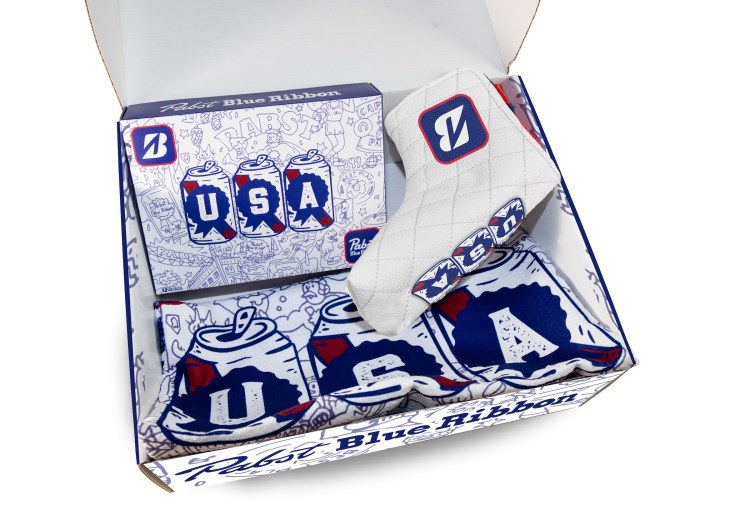
For the 2025 Ryder Cup, Bridgestone golf is re-releasing a collaborative golf kit with Pabst Blue Ribbon. Available exclusively online ($100), the kit includes 1 dozen limited edition TOUR B RX golf balls with PBR logo, custom PBR towel, and a custom PBR putter cover (blade-style). The “King of Beers” is all-in for Team Red White and Blue!

AHEAD Headwear

Maybe special-edition golf balls aren’t for you because you’ll “just lose them anyway.” Maybe a cap or some other commemorative headwear is more your thing – you know, a keepsake that won’t end up at the bottom of a pond? AHEAD has you (and your scalp) covered with an entire line of Ryder Cup caps ($38).

SuperStroke Ryder Cup Putter Grips

SuperStroke, the winningest putter grips on Tour, are introducing the commemorative, limited-edition Zenergy 2025 Ryder Cup putter grips ($35), with red-and-blue graphics for Team USA, and gold-and-blue graphics for Team Europe. The grips come in 5 styles/sizes, to fit most, if not all, players.

Just one week until the fireworks at Bethpage Black. Grab some limited-edition gear before it runs out, and enjoy the spectacle that is The Ryder Cup!

Hot Summer Golf Gifts

It’s been a hot summer, but my golf game has been hot and cold. Those of us doggedly pursuing lower scores through the heat and humidity deserve some treats in these waning dogdays, don’t you think?

I’ve rounded up some of my favorite golf gift ideas to help pull you out of the doldrums, celebrate a late-summer birthday (like mine), or just pamper yourself a little before the season ends.

Bushnell

The Bushnell A1-Slope Laser Rangefinder ($300), which debuted just this past February, embodies the precision and quality one associates with the name “Bushnell.” It is by far the smallest and lightest rangefinder I have ever used. Pinseeker and JOLT technology provides instant tactile feedback when the target is locked, the slope yardage is easy to see and read, and the BITE magnetic skin is great if you don’t want to take it in and out of the sturdy case. A final innovation that is rare in the market is the rechargeable battery (cord included). This might be the last rangefinder I ever use.

TRUE Linkswear

If you’re never heard of TRUE Linkswear, you’re missing out. I have five pairs of TRUE golf shoes, and I get more compliments on them than any shoes I’ve ever worn (golf or otherwise). The combination of styling, attention to detail, and comfort are tough to beat. Some of my TRUE shoes have metal aglets. Others have eye-catching sole designs that also provide outstanding traction. All of them have excellent padding and support and, importantly, a nice, wide toe-box. Prices range from low $100s to low $300s. An unexpected luxury of TRUE shoes is that every pair comes in its own mesh and canvas carrying case, which is great for golf trips. Now TRUE Linkswear also offers a large line of polos, hoodies, shorts, pants – pretty much any accessory you need to look like a Tour pro on the course, no matter how you play.

Arcade belts

Speaking as a dad myself, I can attest to an odd fact of male aging: Even as our waistlines expand, our need for belts increases. I don’t know why. I don’t make the rules. All I know is that if you don’t want to flash plumber’s butt every time you get your ball out of the hole, a nice snug belt is a must. My recent favorite belts are Arcade Belts. These elastic, fabric belts with a unique buckling mechanism are super-comfortable and even machine-washable, as the buckles on most models are plastic. (This also means they’re excellent for air travel, as you can leave them on going through TSA.) Arcade has three styles specifically designed with golf in mind: Motion, Futureweave, and Momentum. The only note is that the plastic buckles are slightly chunky, so if your belt loops are narrow, it might be a chore to guide the belt through.

Sub70 Golf JB Sugar Skull Wedges

If you’ve never heard of Sub70 Golf, you’re missing out. The Sycamore, Illinois-based boutique clubmaker is without question one of golf’s most-respected companies. Sub70 doesn’t release any new clubs or lines without ensuring through scrupulous testing that the new clubs are improvements over their previous models. They don’t pay any tour pros to play their sticks, but several pros do. Sub70 also offers free fittings at their homey HQ in Sycamore. (They’ll even mix you a cocktail!) And if the fitting results show your clubs work as well or better than theirs for your swing, they tell you that. Integrity, honest, quality – what more could you ask for?

The Sub70 JB line of wedges ($125) include the iconic Sugar Skull wedge. Designed for golfers with a variety of techniques and who play in a range of conditions, the Sugar Skull maximizes versatility and feel. Finishes include black and “natural,” and lofts run from 46 to 64 degrees. Laser engraving is available, which can be customized if you don’t want the original Sugar Skull. But if you do, you can also get a matching Sugar Skull cap ($35).

REVL Grips by SuperStroke

Conservatively, 60% of players I meet need new grips on their clubs. People tend to put off re-gripping their set like they’re putting off getting their teeth cleaned. I’m hear to tell you right now that the single best thing you can do for your game is to check your grips and re-grip them if they’re even the slightest bit slick.

And when you re-grip, there’s some big news in the equipment world that you should consider: SuperStroke, the maker of the most widely-used putter grips on Tour, purchased the legendary Lamkin Grips in May of 2024. This year, they’ve combined SuperStroke’s Tour-proven design principles with Lamkin’s tried-and-true engineering to produce the REVL line of grips. You may have seen commercials for these grips during recent golf broadcasts. Let me say that the hype is completely well-deserved. I regripped my entire set with the REVL Comfort, one of three distinct models in the flagship line, a couple weeks ago. The Comfort is an all-rubber, quasi-wrap design that seems to just guide me to putting my hands in the right positions. This is the first time I’ve had the same grips on all my clubs at the same time in maybe 30 years, and I’ve played three rounds with them, carding 77, 78, and 78. I’ve never shot three consecutive rounds in the 70s before. I don’t know if it’s the grips, or if by some miracle I’ve figured something out about my swing. But either way, I have never felt more confident when I take my grip and stance, so I don’t foresee playing any grips other than SuperStroke’s in the future (including the SuperStroke Incredible Hulk putter grip I just put on!)

Wilding Brands Beverages for On and Off the Course

My daughter lives in Colorado, and every time we visit her, my wife and I are blown away by the sheer variety, not the mention the quality, of Colorado-brewed libations. Wilding Brands was founded in 2024 by Colorado craft beverage veterans Eric Foster (Stem Ciders), Charlie Berger (Denver Beer Co.), and Brad Lincoln (Funkwerks), and they’re bringing fresh energy and innovation to the craft beverage space. With the recent acquisition of Great Divide and a growing lineup of tasty, refreshing products, they’re quickly becoming a go-to name in modern craft beverages.

A recent sampling from the Wilding Brands’ catalog includes these highlights:

Howdy Beer – This is a crisp, easy-drinking Western Pilsner brewed with American barley and Liberty hops. Howdy is a canonical beer that is ideal for sunny rounds or post-game hangouts. It goes down really smooth, yet it’s far more flavorful than your typical big-brand suds. (Available online via Total Wine.)

Great Divide’s Yeti Series – Flavor-forward IPAs and the iconic Imperial Stout, made for golfers who like bold taste in their bag. The Imperial Stout is rich and flavorful. It’s a bit heavy for my tastes on the course, but pair it with a hearty meal after your round. <Chef’s kiss!>

Stem Ciders – I’m big on ciders, partly because they feel lighter and brighter than beers, anf are therefore perfect for hot days. I’ve tasted the hibiscus, dry, and pear ciders by Stem, and they’re all excellent. The pear is my personal favorite.

Easy Livin’ Hop Water – If you love IPAs, but either can’t or don’t want to drink beer (on or off the course), these hop-forward, zero-proof refreshers deliver the taste of craft beer without the alcohol. They’re ideal for staying sharp and hydrated through all 18 holes.

So wet your whistle and enjoy. There’s still a little summer left!

TRUE Linkswear: More than snazzy golf shoes

My car trunk is full of golf shoes. Like, 25 pairs, maybe 30. My buddies laugh, but write a lot about golf shoes. And I like to match my shoes with my outfit for the day. Because I walk most rounds, I like to rotate shoes to cut down on potential blister hot spots or sore feet. My clubs and pushcart still fit, so lay off!

I will admit, though, that several pairs of shoes get picked out of the pile more than any others these days – my five pairs of TRUE Linkswear golf shoes. Never heard of TRUE Linkswear? Well, you’re missing out. This relatively new golf shoe and apparel company, founded in 2009, has come up with a unique approach to building the best shoes, and they keep coming out with hit after hit. Now they have several lines of apparel, too.

What’s makes TRUE unique? A few core, foundational features are the bedrock of every TRUE shoe model.

First is a Zero Drop Footbed. Most golf shoes have heels in them, making your feet unlevel. The TRUE philosophy is that golf shoes should feel like you’re playing barefoot, so your toes, ball, and heel should all be on the same level. According to TRUE, this improves stability, balance, and posture. All I know is that after walking 18 holes in any of my pairs of TRUE, my feet feel completely unstressed and totally fresh.

TRUE OG3 (my current favorite!)

Second is a versatile tread that provides traction on the course but feels just as natural off the course. TRUE did just unveil their first soft-spike spiked shoes, the Lux2 Player (MSRP $219) and the Lux2 Maven (MSRP $319), but I’ve never felt a need for more traction than the standard spikeless soles on other models provide.

TRUE Lux2 Player

Fourth is incredibly lightweight design. Every single pair I own feels about half the weight of what I would expect looking at them.

Fifth, and for me, most important, is a natural width toe box. Most golf shoes narrow towards the toe, squishing your piggies together like Vienna sausages in a can. The most painful, least enjoyable rounds of my life have been those few times when an overly snug toe box has pushed my toes into a position where one toenail digs into the side of another toe. Don’t spend too much time imagining that – it’s not a pretty sight, and it’s even a worse feeling. The toe boxes of every one of my TRUE shoes allow my toes to breathe and bend naturally and comfortably.

Beyond these core principles, there are a number of other great details TRUE builds into various models. She laces are textured, so they don’t come untied. Some laces have metal aglets, which I just think look cool. Souls often have big T or even “TRUE” formed into them somewhere, which, again, just looks cool. There’s always a sturdy heel tab to help pull them on. And each pair comes with its own shoe caddy bag, which is very useful when traveling (keeps dirt and grass from from getting on your clothes in your suitcase).

TRUE Knit Four — these look just as good off the course as on

In the past couple of years, TRUE Linkswear has branched out beyond golf shoes, adding slides, caps, quarter-zips, hoodies, T-shirts, polos, shorts, pants, gloves, socks, etc., etc. to their website. There are frequent sales, as well as limited-edition packs for holidays and other special events. My TRUE Linkwear shoes and apparel are not only my favorites, but they even stand up to the scrutiny of my 21-year-old son, who has been eyeing at least one pair of my TRUE shoes to take back to college with him. As soon as he reads this article, I have a feeling I know what will be on his Christmas

Cragun’s Resort in Brainerd Unveils The Dutch Red Nine

In 1955, Dutch Cragun graduated from the University of Minnesota. He called his father and asked if he could make a living running the family’s small fishing resort on the shores of Gull Lake in the heart of the Brainerd lakes region. His dad said, “Hell no.” Nevertheless, Dutch headed north and began a legendary process of renovation, acquisition, and expansion.

By 1997, he’d acquired enough land to solicit bids on a championship golf course from two of the biggest names in golf course design at the time: Robert Trent Jones, Jr., and Rees Jones. The two famously combative brothers were set for a showdown on Gull Lake when Rees pulled out and RTJ, Jr., traveled all the way from Siberia to survey the property.

In 1998, Cragun’s Legacy Course opened. In 2000, Jones added a third nine. In 2020, Dutch wanted to expand further – the resort comprises over 1,000 acres today, after all. He asked three course architects to submit plans. Former (British) Open Champion and Minnesota native Tom Lehman came to town to watch his son compete in the Minnesota State Amateur. The then-86-year-old Dutch approached the fellow University of Minnesota grad and asked if his firm might be interested in submitting a plan. Within two months, Lehman’s firm had a plan, and after two days of talking, Lehman was “all in” – not just for the new course, but also for a radical redesign of the original 27 holes.

In 2023, The Lehman 18 and The Dutch 18—the Dutch White and Dutch Blue Nines—were put fully into play. Just this year (2025), a radical facelift of the final 9, The Dutch Red, was completed—and just like that, the “Dutch 18” is the “Dutch 27.” Equally as newsworthy, Dutch Cragun sold Cragun’s Resort on Gull Lake in April to the local consortium Leisure Hotels & Resorts. With an influx of new capital, and an energetic, visionary quartet of new owners, the classic family and golf resort is positioned to reign over the Brainerd Lakes area.

Course map, Cragun’s Resort

The Dutch Blue, Red, and White

Unlike the orbital Lehman 18, all three nines on the Dutch 27 are walkable. The Red-White combination is scheduled to host the CRMC Championship, a prestigious PGA Tour Americas event, for the next three years. According to Eric Martin, Head Golf Professional at Cragun’s, “We’re working to host a Korn Ferry Tour event, eventually.”

All possible combinations of nines play just over 7,000 yards from the championship tees, and for the CRMC, they can be stretched out a bit more. The hope is that one tee box for the tournament will actually play from the patio of the clubhouse. “We’re waiting on final Tour approval of that,” says Martin. “It’ll be so cool if it goes through.” The 2025 CRMC Championship (August 24-31) will be played over the Red-White combination (par 71), putting the just-opened Red Nine to the test. “We’re excited to see how the pros play it,” says Martin. “There are some great risk-reward holes out here.”

It’s rare for a golf resort – and at Cragun’s, the golf is front and center, even though the fishing and watersports are outstanding, along with a host of family recreation options – to have 45 holes that are essentially by one designer but with such different feels. Whereas the Lehman 18 has revetted bunkers, the Dutch 27 has sprawling, natural-looking bunkers with thick fescue “eyelashes.” As the starter warns at the first tee, players should keep their eye on all balls heading toward bunkers, as they can disappear in the blink of a human eyelash; you’d rather your ball gets into the pristine white Ohio sand. And if you do find your ball in those eyelashes, your best bet is to just wedge it out. Trust me.

My ball, Dutch Blue Hole 3 — a long par 3 with trouble all around. My stance was in the bunker, the ball was thigh-high. I was lucky to chop it out and make bogey. Sand would have been much better!

The large-scale renovation of all 27 holes, though, was geared towards, “making the course more playable,” according to Lehman. “We focused on creating width,” he stressed, “There were a lot of places where a mishit would make the next shot unplayable.” Increasing playability required removing a large number of trees, as well as removing bunkers from areas 180 yards out and to the right of the tees. “Who were those bunkers meant to punish?” asked Lehman. “Average players. Golf is hard enough without punishing the people you want to enjoy the course the most.”

The Dutch Red (par 36) is “much more playable” than the Dutch White or Blue, according to Martin, with whom I played a recent round on the Blue-Red combo. Because I’m a contrarian at heart, I score several strokes better on the Blue than on the Red, however. Whereas the Blue course plays around Stephen’s Lake, as does the Lehman 18, the Red-White combo offers players who can only play 18 holes the best chance at scoring. Martin reports how multiple Cragun’s members who have been somewhat brow-beaten by the Lehman 18 come in the next day to report shooting their “best score ever” on the Red-White combo. So it will indeed be interesting to see how low the pros can go.

After getting off to a gentle start, the Dutch Red Nine presents players with a drivable par 4 at the 4th Hole, with deep, ravenous bunkers well short of the green. Any mis-hit off the tee will likely leave you with a 60-yard bunker shot to an elevated green.

Dutch Red, Hole 4 — Can you carry those cross-bunkers from the tee?

The 620-yard par-5 8th Hole will be a real test for the pros. Not only is it long, but the green complex is devilish – small and elevated, with a rocky waterfall hazard to the right. Anyone who goes for this green in two shots had better have exquisite control over their fairway woods or hybrids. I know it can be done – I watched Head Pro Martin do it (from the blue tees, not the tips—still impressive!) – but playing for PGA Tour Americas money…we’ll see.

Dutch Red, Hole 8 — Which pros at the CRMC Championship will go for this tiny green in two?

Perhaps the most memorable hole on the Dutch Red is the teeny, tiny 118-yard 9th, with its 40-foot elevation drop from tee to green, its crescent-shaped teeing ground that alters the angle of play radically from day to day, and its tiered green that falls away behind into a pond. Personally, if I were on a golf trip, I’d schedule my rounds to end on this hole, where the group can finish with an epic closest-to-the-pin competition for all the money and bragging rights.

Dutch Red, Hole 9 — My advice? Install a video camera and advertise $20,000 hole-in-one prize here. Imagine sitting on the Legends Patio and watching someone hole it!

The pros, however, will close on the Dutch White, which crescendos with a lovely, reachable par-5 with a green partially fronted by a serene pond and framed by the ruggedly handsome Legends clubhouse.

The par-5 closer on the Dutch White Nine will provide lots of drama to close the CRMC Championship.

All rates on the Dutch 27 and Lehman 18, which can run as low as $60 to as high as nearly $200 depending on time and various discount deals, include GPS-equipped cart and range balls. There are always beverage carts circulating, and the patio at the Legends clubhouse bar and grill is the perfect place to enjoy a house cocktail and lunch or dinner as you watch players come in.

Cragun’s Resort

In Legends, the wraps or the wings are excellent choices for a post-round snack. If you hanker for something more upscale, head over to the main resort buildings to Irma’s Kitchen, where Northwoods ingredients meet gourmet preparation. The seared duck breast was spectacular, and the view from the outdoor deck over the lake serene.

Duck breast at Irma’s Kitchen

Behind the main lodge is a large marina, with pontoons and other flavors of floating fun available for rentals. The fishing on Gull Lake is, according to local sources, the best in the area, with its almost labyrinthine collection of bays and inlets. Book the dinner cruise for both the delectable prime rib and a luxurious tour of the lake.

For some family-friendly golf fun, the Nice9 course is a 9-hole par-3 course that is reversible, playing clockwise one week and counter-clockwise the next. It’s actually a very nice challenge for all skill levels, with a few holes that are definitely not pushovers, and “some of the best greens on the property,” according to Head Pro Martin. Pro tip: If you purchase the Rec Pass during your stay, it includes unlimited walking and play on the Nice9 – I mean, drop the kids off in the morning and pick them up at dusk!

First green, Nice9, playing in the White direction. (Red direction tees can be seen in the background.) Not a cakewalk if you hit into the bunker in the middle of the green!

Golfers and families alike are recommended to consider renting one of the several entirely renovated houses on property. These have multiple bedrooms and baths, generous kitchens and common areas, and former garages renovated into poker and poll rooms. I can imagine a boys’ trip with golf, fishing, pool, and poker on the docket during a winner-take-all battle royale long weekend. The new ownership team will be focusing their efforts on updating the lodge and cabins on the property as well. As Martin points out, “The golf courses are in fantastic shape now, aside from some cosmetics like signage. So the first priority is updating the accommodations.”

In short, Cragun’s Resort offers a veritable cornucopia of Northwoods activities year-round (ice-fishing and cross-country skiing, anyone?). For those really looking to exploit the area’s under-rated and oft-overlooked northern Minnesota golf courses, The Gravel Pit short course is across the street, and Madden’s at Gull Lake’s The Classic are highly recommended, along with several other area gems. Cragun’s alone does between 50,000 – 60,000 rounds per season, so demand in the entire area for quality golf is enormous.

Residents of and visitors to the Brainerd lakes region can be awfully glad Dutch Cragun didn’t listen to his father when he came north to take over the family resort. Tom Lehman calls Dutch “a Minnesota treasure,” and what he’s built at his namesake resort is priceless. Fortunately for us, and for the world of golf, he’s shared his bounty with the rest of us, and under new ownership, his legend and legacy will thrive for decades to come.

Fishing is pretty great on Gull Lake, too!

The Cullan at Mineral Mound: Gem of the Kentucky State Parks

Long before the land on the shores of Lake Barkley, Kentucky, was a golf course – or even before it was a state park – it was the family farm of Willis B. Machen, grandfather of Zelda Sayre Fitzgerald. The tempestuous Zelda was a celebrated writer and the wife of author F. Scott Fitzgerald. One of my favorite F. Scott Fitzgerald stories is The Diamond as Big as The Ritz. Although that story is set in Montana (and is actually extremely dark), I couldn’t help but think about it as I played The Cullan at Mineral Mound State Park: the golf course is a real gem, and since it is a golf course, it is technically bigger than The Ritz-Carleton Hotel.

The Kentucky State Parks system consists of over 45 parks, with a dozen golf courses sprinkled throughout the parks across the state. The Cullan is one of the newest and was designed by renowned golf course architects Dr. Michael Hurdzan and Dana Fry (who also designed Erin Hills, site of the 2017 U.S. Open and 2025 U.S. Women’s Open).

The par-72 layout measures 6,561 yards from the back tees, up to 4,411 yards from the most forward tees. The 600-yard gap between 1 Tees and 2 Tees is a bit large, making the decision about where to play tricky. Because the course is hewn out of dense hardwood forests, and several holes on the front side include carries over the waters of Lake Barkley, there are a fair number of “target golf” holes, along with plentiful blind landing areas. The best advice, then, is for even longer hitters to play the 5,964-yard 2 Tees. In the words of the starter, “Big and strong is not your friend here. Leave your driver in the bag on a lot of holes. Just find that 150-yard marker and hit the club that will get you there.”

Although it is very true that precision is more important here than power, this advice doesn’t hold for every hole – prudent use of the long-ball will serve players well, as long as the ball stays in play (which is easier said than done).

Playing The Cullan at Mineral Mound

I’m going to be brutally honest here: I shot my worst score in two years on The Cullan. This is a course where local knowledge REALLY pays off. As mentioned, there are blind landing areas off the tee, blind landing areas for second shots on par 5s, blind approaches to greens, blind hazards. Toss in the blinding rainstorm we finished our round in, and it felt like about a dozen more rounds would’ve been needed before the scales could fall from my eyes.

The rocky ditch on Hole 1 on The Cullan at Mineral Mound demands some strategic yardage calculations.

Despite the advice above that power isn’t paramount here, the opening nine actually do demand some muscle. Hole 1 is a short par 5, but there is a rocky ditch cutting across the fairway, so if you lay too far back off the tee, the ditch becomes an issue on your second. Holes 2, 4, and 5 likewise require some controlled strength. All are cape holes, with elevated tees, carries across water or valleys, and fairways angled from right to left about 90-degrees from the teeing grounds. So long draws off the tee will put you in great position—flare your tee shots to the right, or hit them dead straight, and you’ll end up in fairway bunkers or woods; don’t take enough club, and you’ll be wet.

The short par-4 2nd Hole on The Cullan requires a decent carry — but not too decent!

The advice to find the 150-yard marker also misleads at the short par-4 18th. I followed the advice, hitting a hybrid basically next to the 150-yard marker. When I arrived at my ball, I realized the 90-degree dogleg right required a tee shot 40 yards past the 150-yard stake just to see the green. Again, local knowledge is critical here.

The 452-yard, par-4 17th Hole is the longest par 4 on the course, but it is literally the first comfortable driving hole for first-timers. There’s finally enough room to feel like you can freely swing your driver, rather than aiming it.

Despite the difficulty of play associated with such a hilly, woodsy, target-y design, the land and waters of Lake Barkley are quite lovely. The Bermuda fairways and bentgrass greens were in good early-season shape, and the white-sand bunkers were well maintained. And several holes are truly memorable.

The aforementioned Hole 2 is just 306 yards from the tips, but a strong, controlled draw will get you around the trees to the blind landing area just short of the green. As noted though, a big straight ball will sail over those bunkers across the fairway.

The 389-yard, par-4 5th is another cape hole where a powerful draw really helps. Blind tee shots even continue at the downhill par-3 7th, where the green might be occluded by the end of the tee elevated tee box, depending on which tees you play.

The par-4 5th Hole at The Cullan is yet another cape hole that demands careful club selection and accuracy.
I had to walk up to the front of the Number 2 tee box to see the green at the par-3 7th Hole — could only see treetops from the tee blocks.

The par-5 13th consists of one blind shot after another. My layup over a hill to what I thought was the center of the fairway, apparently found a steep hillside and ran into the woods. The longest of the par 5s, this triple-dogleg is practically unplayable on your first visit here – you simply can’t tell where to aim from tee to green.

The Cullan, Hole 16

The par-3 16th plays over water to a wide, shallow green, capping off a nice, varied collection of one-shotters. And again, the long 17th is really the first and only tee shot where newbies are likely to feel comfortable, because even though the fairway is lined on both sides by thick woods, it is wider than the other fairways on the course—you’ll probably even see your ball land!

Hole 17 at The Cullan: Finally, a stress-free driving hole!

The Cullan at Mineral Mound State Park: The Verdict

The Cullan is a scenic course that demands control off the tee. Length will be rewarded, but selectively. Greens are often elevated, and going long at most of them usually results in a lost ball. This layout was carved out of the state park forest, and most holes are isolated from their neighbors, with long drives between greens and tees. Given these distances and the extremely hilly topography, it is not walkable, unfortunately. Because familiarity with the course will undoubtedly help scoring, I would recommend booking two rounds here — you’ll probably enjoy your second one much more (and lose far fewer balls!). If you want to play more, or are looking for nearby alternatives, I recommend Kentucky Dam Village State Park Golf Course in Calvert City (about 30 min. away). This course was laid out by the legendary golf course architect Perry Maxwell, and it requires considerably less local knowledge, as most of the holes are right in front of you. The cabins at Kentucky Dam Village are comfortable and affordable, too.

Finally, a word about the course’s moniker, “The Cullan.” The course at Mineral Mound was renamed posthumously after Cullan Brown, who had a distinguished amateur career nationally, internationally, and at the University of Kentucky. A posthumous inductee into the Kentucky Golf Hall of Fame, Cullan grew up playing at Mineral Mound. As his playing career was really taking off, he was diagnosed with cancer in his leg, and he died shortly thereafter. By all accounts, the young man was not only a fantastic player, but also a fantastic person, with a heart as big as The Ritz.

Course namesake, Cullan Brown. May his memory be a blessing.