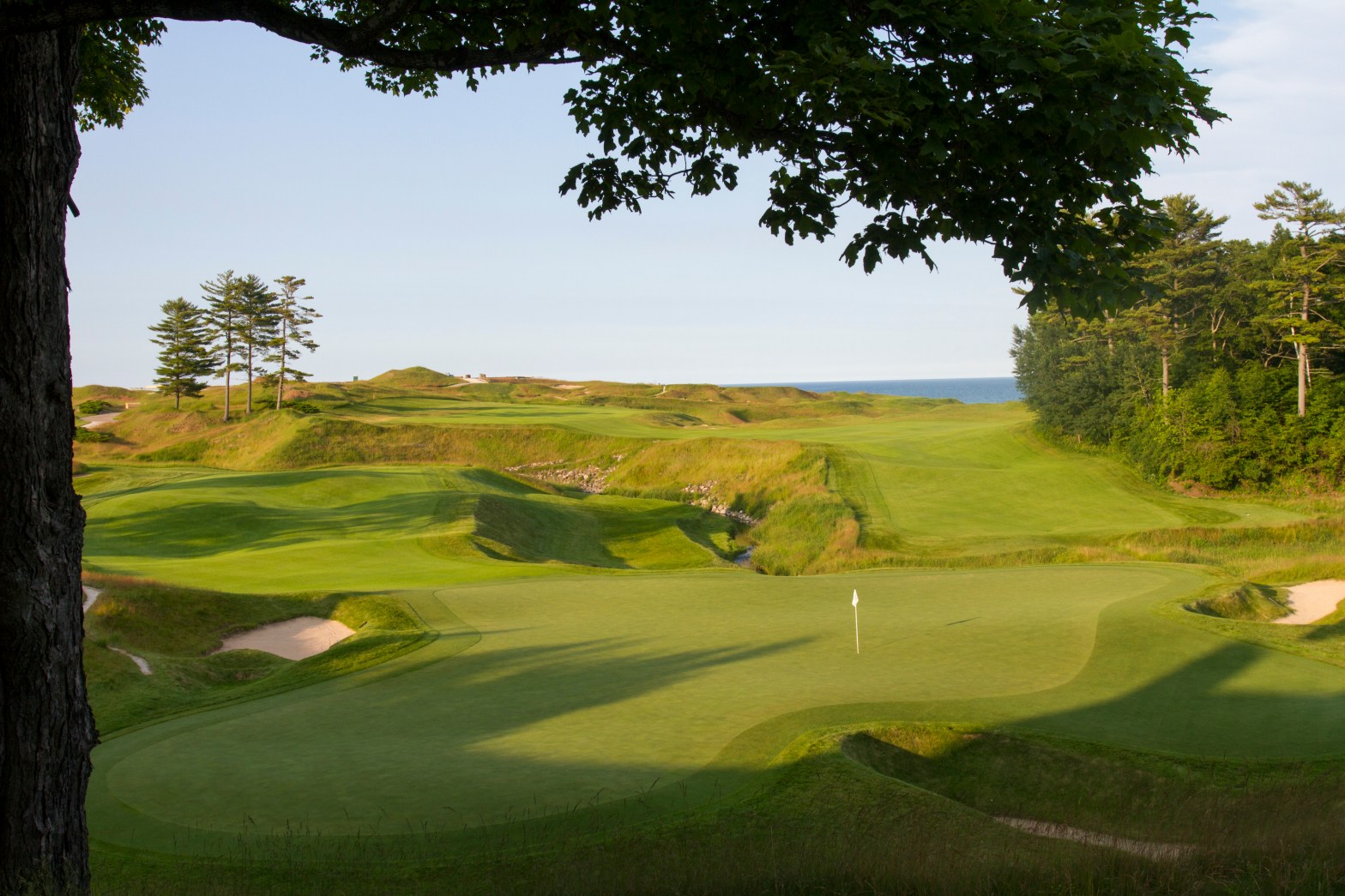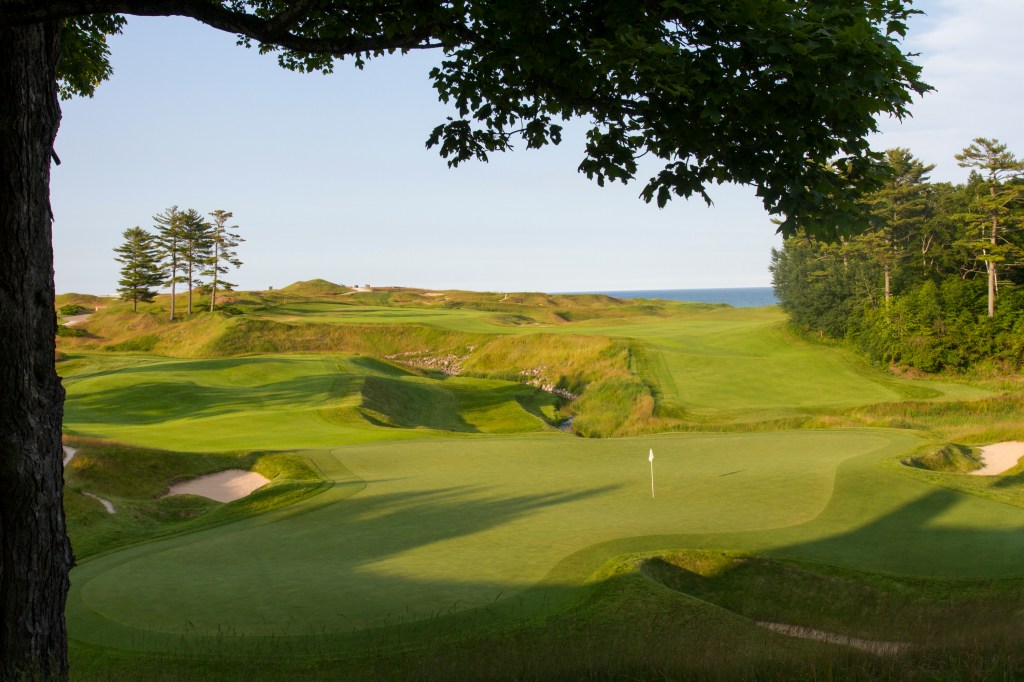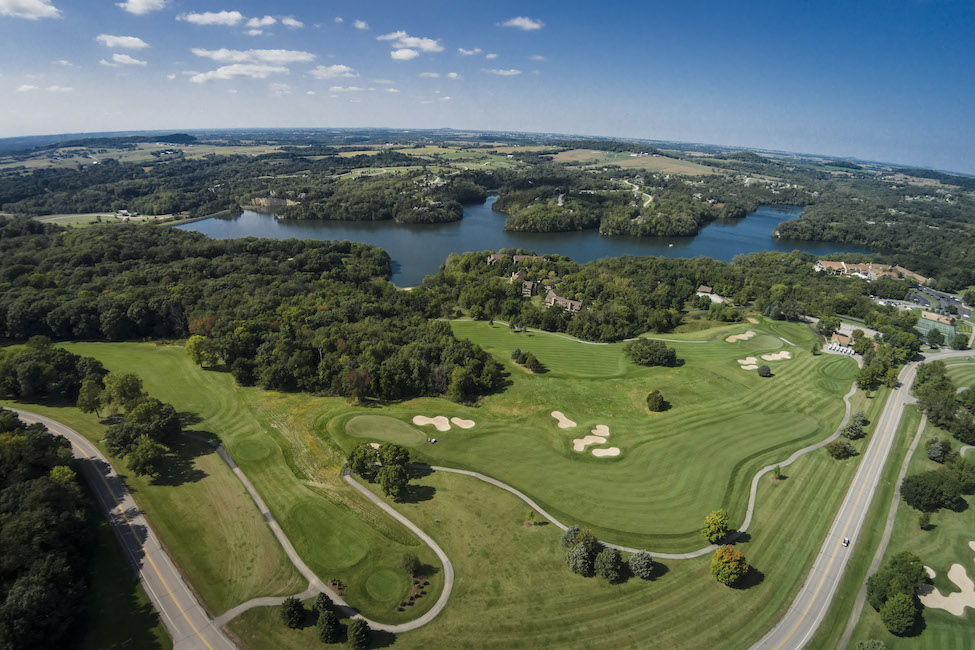
The General rules over The North and The South at Eagle Ridge Resort and Spa

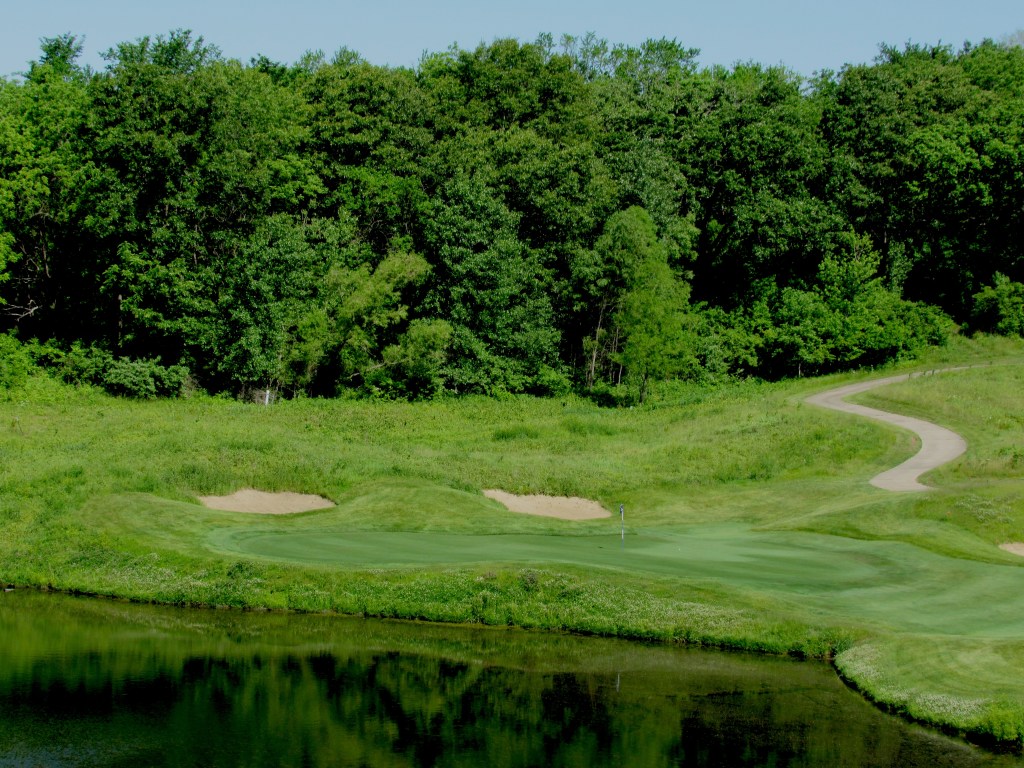
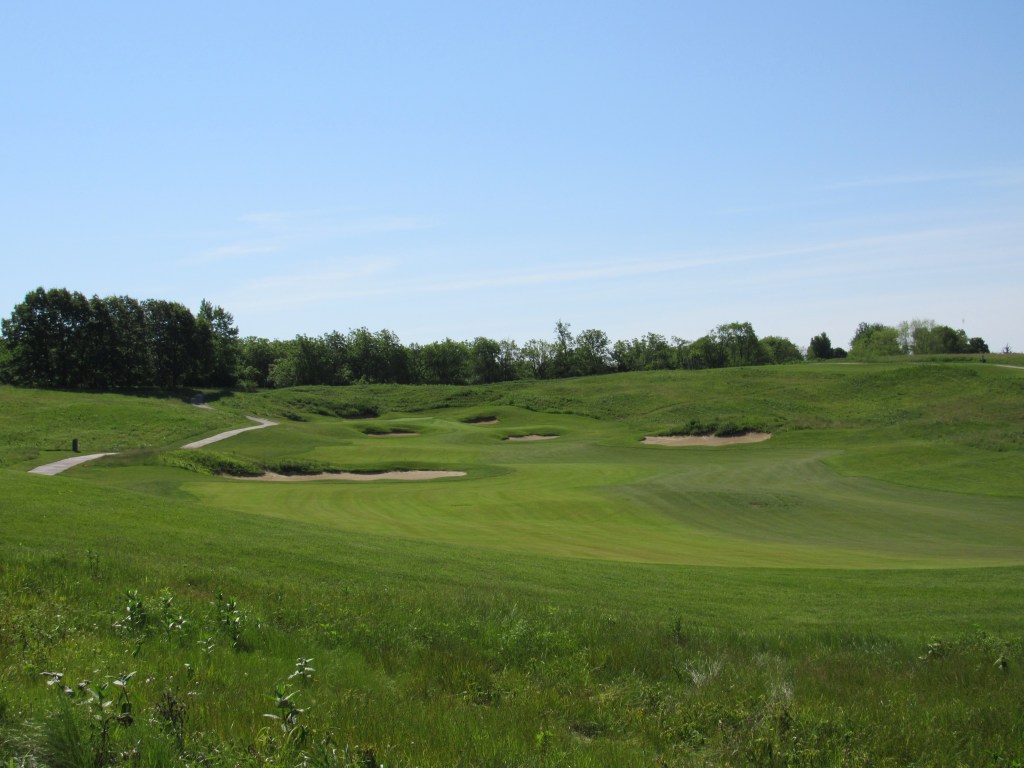
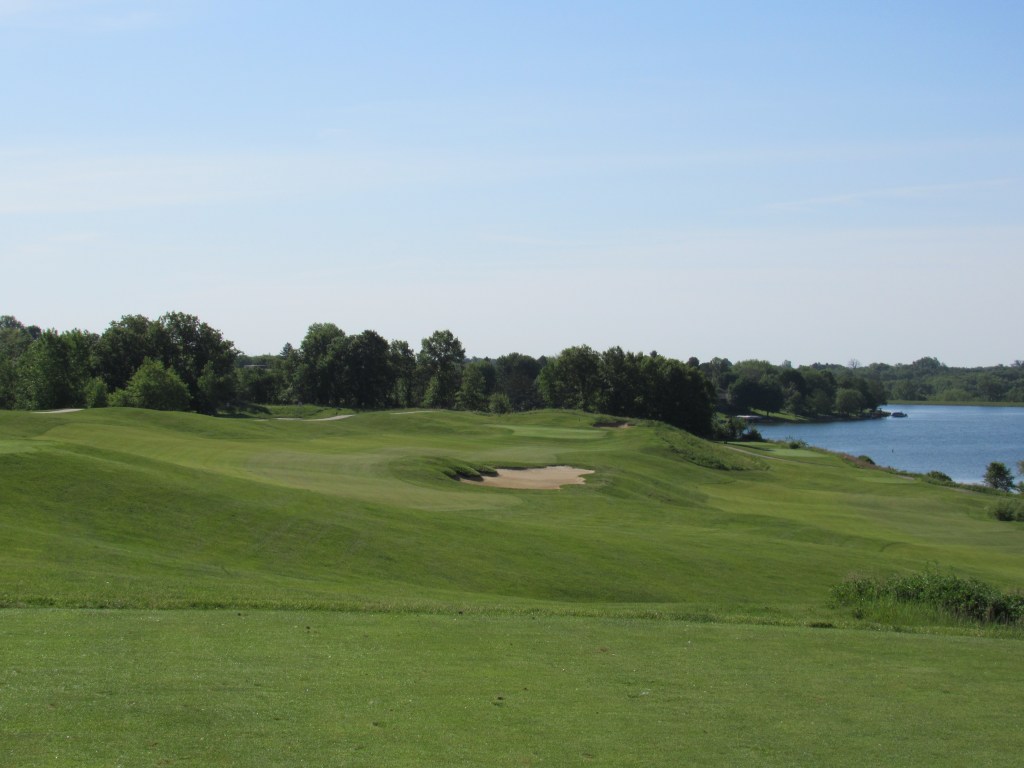
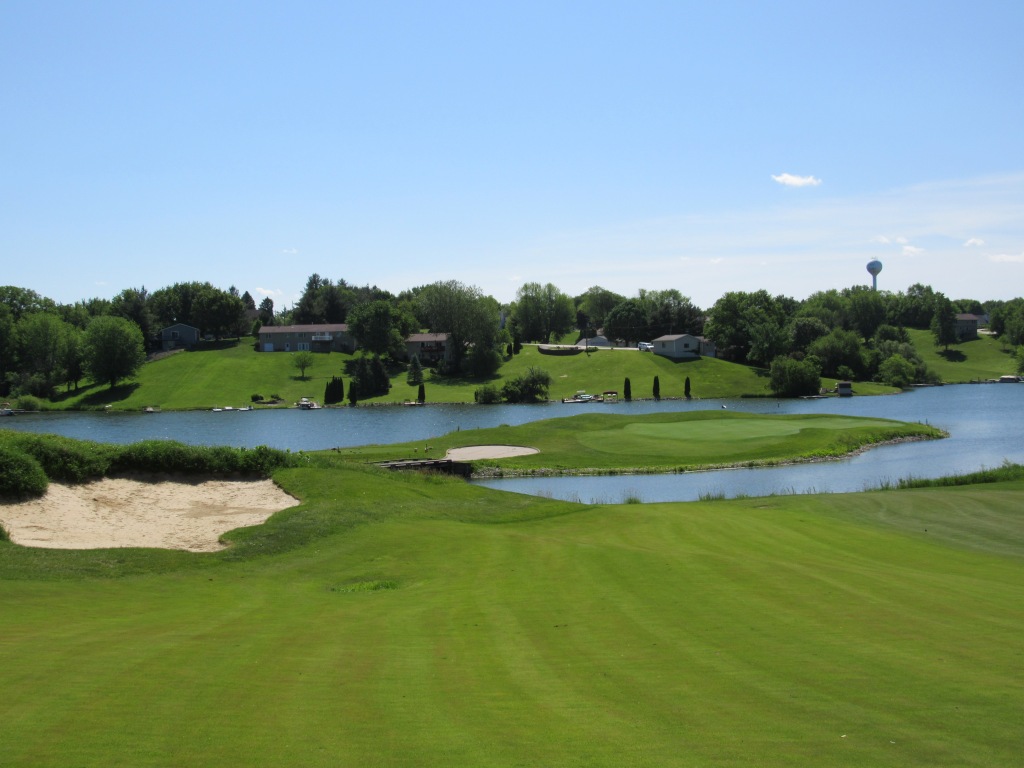
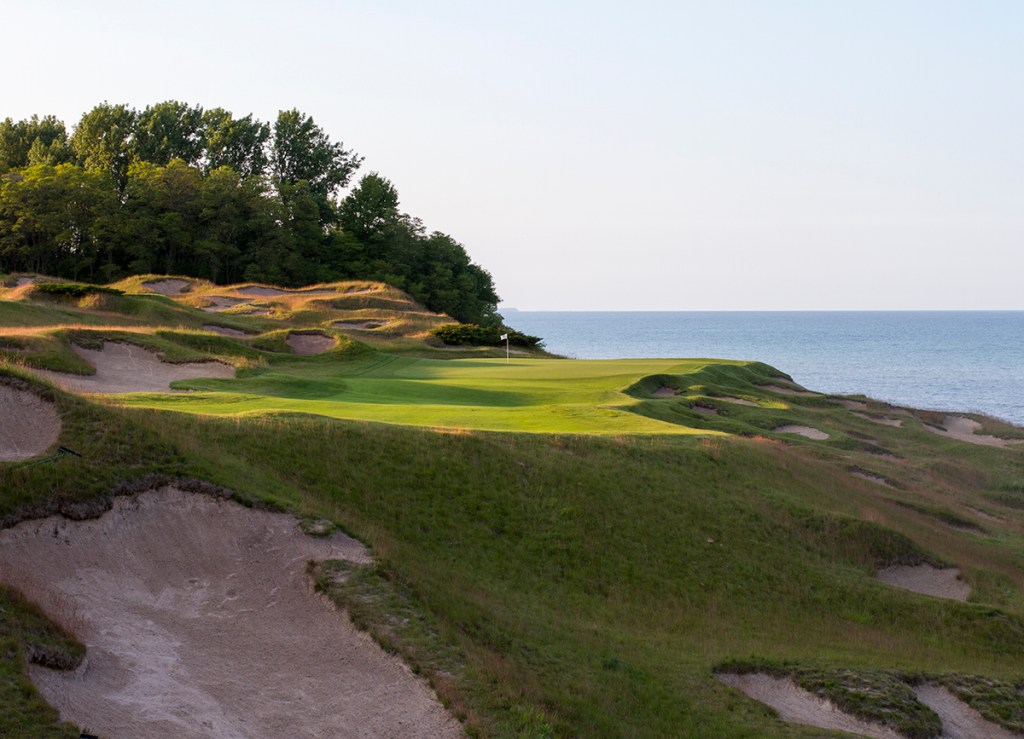
The General at Eagle Ridge Resort is the centerpiece of the Eagle Ridge Resort. The 6,820-yard Roger Packard and Andy North design is the newest of the four golf courses at the sprawling four-season resort just outside the historic town of Galena, and it’s the track that guests plan their golf vacations around. The resort’s other two 18-hole courses, The North Course (6,875 yards) and The South Course (6,727 yards), along with the 9-hole East Course (2,648 yards), all traverse the same heaving and plunging “driftless zone” topography unique to this northwest corner of Illinois. But it is The General that takes the best advantage of the dramatic landscape, presenting golfers with hole after hole after hole characterized by two words that sum up the very best resort golf: “Fun!” and “Wow!”

The golf courses at Eagle Ridge Resort and Spa take full advantage of the unique “driftless zone” topography.

In talking with some of the resort management before I teed it up on the North, South, and General Courses, a frequent comment I heard was that The South (or North) was equally deserving of praise as The General, which is true. Lots of locals and regular vacationers at Eagle Ridge say The North, in particular, is their favorite. But The General has that wow-factor: It’s all carry off the tee – if you can get off the tee, you’re golden. But even if you don’t get off the tee, you’ll have fun trying. Because therein lies the very secret to The General’s brilliance: It allows you to enjoy those tee shots.

The 357-yard, par-4 5th on The General, with its 100-foot drop. “This is crazy!” — author’s son

The North Course, opened in 1977, and The South Course, opened in 1984, are both stout tests, with narrow fairways snaking through dense woods. But the combination of elevation changes and multiple doglegs have the effect on both of these older layouts of taking driver out of the hands of longer hitters or severely penalizing crooked hitters. In the yardage books, there are numerous holes on both courses where the “preferred” landing area lies around 225 from the regular men’s tees. Moreover, many of these landing areas are blind or semi-blind – over hills, around corners, or uphill from the tees – so players don’t quite get to enjoy watching their balls land safely in the fairway (or see where the balls go if they are offline).

Over the past few years, though, Both North and South have widened a bit. “Lots of trees have been taken out,” says Colin Sanderson, Director of Sales and Marketing, “many because of damage from the emerald ash borer.” So players who haven’t visited for several years need to return to experience the kinder, gentler North and South Courses.

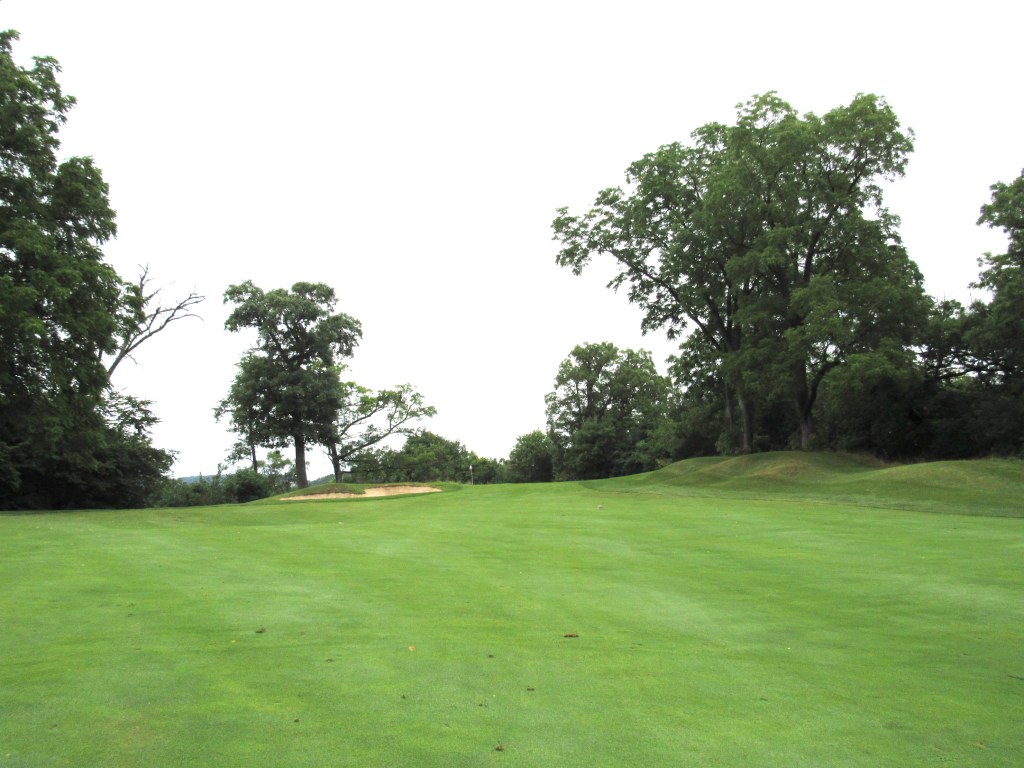
The General opened in 1997, and the input from 2-time U.S. Open champ Andy North produced a somewhat different philosophy. Here, almost every features an elevated tee with broad, clear views out over the fairways below. Players get to watch drive after drive sail majestically out over generous, beautifully framed landing areas. Rarely is anything hidden – not bunkers, not hazards, not water – so even first-time players can see the lines they should try to take. One notable exception is the fiendish 398-yard 7th, where a pronounced draw is required around a fescue-matted hill on the left. Long, straight drives are likely to be lost beyond the fairway’s bounds.

Tee shots are king on The General. The daunting 370-yard 8th plays all uphill, but all the glory and trouble are directly in front of you.

The General is still a stern test for golfers of every playing level—one of the best tests in the state, according to several publications. But it is the sort of test you do not have to study for during multiple rounds. During my two visits to Eagle Ridge, I ran into dozens of groups of golfers, all of whom had been coming back to the resort year after year for 12, 16, 20, even 25 years. Without fail, these players said their favorite course was The General, but the ones who’d been coming back the longest were also more likely to express appreciation for The North and The South Courses as well – they just take time to grow on you. Sanderson, who has been with the resort for about 15 years, admits that The North is his favorite, and the tree-thinning is one of the reasons.

Highlights from The General

The General, named after former Galena resident Ulysses S. Grant, grabs your attention and imagination from the very first hole – which used to be the 10th. The nines were flipped recently for a few reasons. One of the major ones is that the former 9th, now the 18th, plays uphill to a green tucked directly below the clubhouse’s new cantilevered deck, which stretches out behind the completely renovated Highlands Restaurant and Lounge 289. It’s one of the most memorable closing holes I’ve played in Illinois—with a tee shot over a wide ravine to a narrow fairway bordered by trouble on both sides. Now diners at the clubhouse can share in some of the memories.

nThe tee shot on the 410-yard 18th seems infinitely harder now than it did when it was the 410-yard 9th.
The “new” 18th Hole at The General

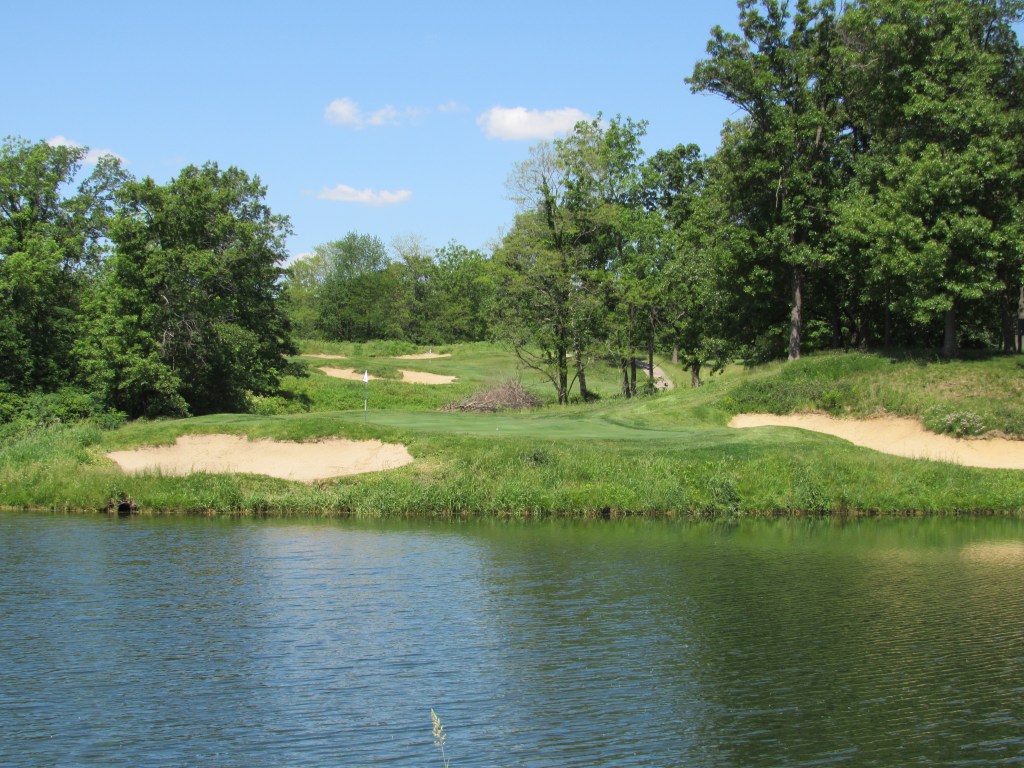
One of the consequences of reversing the nines, however, is that the lovely downhill 10th used to be a gentle opening hole. Now the 1st hole is 396 yards from the back tees, playing over a pond to an uphill fairway – this is one of the five toughest tee shots on the course, and it serves as quite a welcome. The second shot here isn’t any easier—in fact, it is arguable harder than the drive. The green falls off on both sides and the back, so any shots that miss the green may end up lost.

The opening tee shot on the 396-yard 1st of The General is a fine how-do-you-do.
And the approach on Hole 1 doesn’t get any easier than the drive. Is there even a green up there?

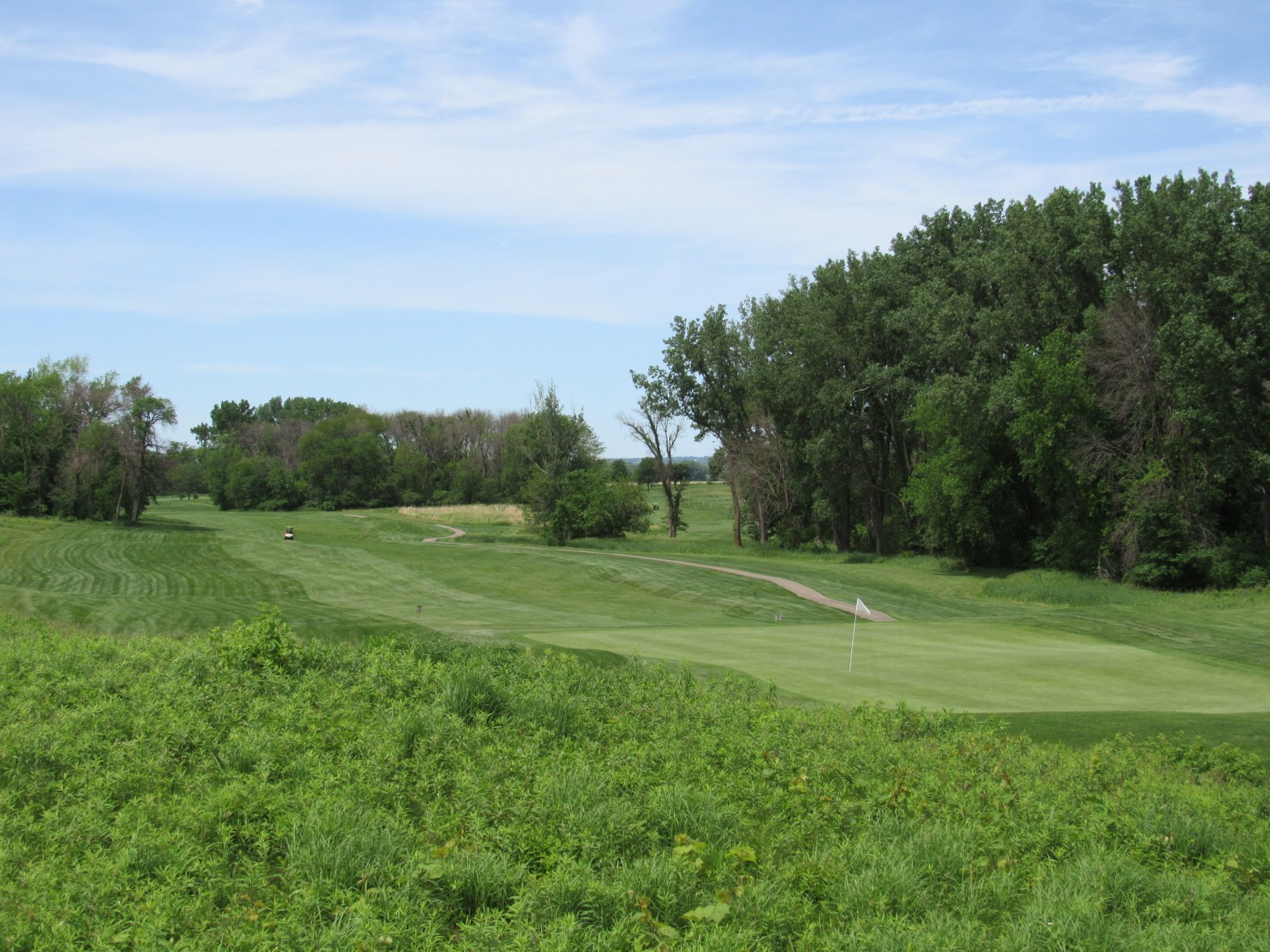
It is the tee shots at The General that players will remember the most, though. My notebook is filled with the phrase, “Another great driving hole!” The reason is that, with only a couple of exceptions, the landing areas are fully visible off the tees, as is the trouble you want to avoid. The most memorable is certainly the 357-yard 5th hole, where a nearly 100-foot drop from tee to fairway allows bombers to try to play it like a par 3. If you’re going to allow mulligans, do it here until you succeed in really sending one out—and down—Into the fairway.

The group ahead of you looks like ants on the 5th green from the tee box.

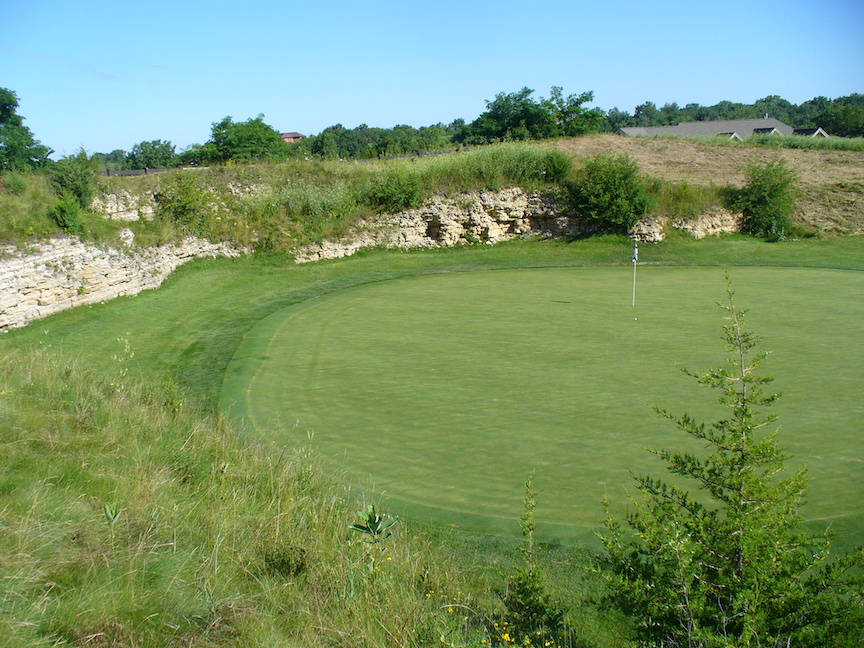
The green complexes are also memorable, with pristine putting surfaces. Take the green at the 372-yard 17th, which is cut into an amphitheater of limestone, the likes of which I’ve never seen anywhere else. Several other greens require precision as well, with trouble on all sides. The 13th only plays 374 from the tips, but miss the green anywhere, and you might not have any chance at all to get up and down, even if you do find your ball.

Don’t miss the 13th green on The General. Just, don’t.
12The limestone-encircled 17th green on The General is a great golf hole and a great place for an ambush.

Finally, the collection of par 3s are only the 10, 11, 17, and 18 handicap holes, but all are visually intimidating, and all demand careful consideration in pulling the right club.

The 170-yard 12th looks easy, but none of the three players in front of us hit the green. Choose your club wisely.

There is a reason that The General is perennially named among the top 10 best public courses in Illinois. Having played several of the higher-ranked courses myself, I would say it deserves all the accolades.

Above the 15th green on The General

Highlights from The South Course

The South Course challenges first-timers with difficult club selections off the tees. Fairways curl around doglegs and disappear over hills, sometimes resulting in well-struck shots ending up in poor positions (or lost). There is an abundance of left-to-right doglegs with dense woods on the right of the fairways, setting up for confident fades but punishing slices severely.

This is not to say The South Course is not enjoyable – it has some very fun holes, and if your tee shots generally end up in the short grass, some of the approach shots will stay with you for a long time. It’s just that if you are unfamiliar with the course, you’ll need to pick a line and a club based on the yardage book, and hope the ball goes where you aim.

The 406-yard closing hole is probably the most fun to play, as it is one of the few holes with a landing area that is wholly visible from the tee. Club choice is still key, though, as a stream cuts across the fairway about 250 yards down the hill. If you want to carry it, you’ll need to drive cover least 280 yards in the air.

Hole 18 on The South Course tumbles downhill to a creek and then rises again up to the green.

Highlights from The North Course

The North Course is the best one to start out on to get a feel for the landscape and the large greens. After a wide-open first hole, the fairways tighten back up on the 533-yard, par-5 2nd hole, where the S-shaped fairway calls for a controlled draw around a row of towering trees.

Follow the straight and narrow to the 5th green on The North Course.

The fun really begins on the 165-yard, par-3 8th hole, which plays 50+ feet downhill to a massive green partially obscured by the edge of the teeing grounds. To the left of the green is a picturesque natural limestone stack, and, when you head down the hill, you realize you were also teeing off over a small inlet of Lake Galena. This is one of the most memorable holes on any of Eagle Ridge’s courses, and one of the prettiest one-shotters in the state.

The 165-yard 8th Hole on The North Course has it all: elevation, sand, rocks, trees, and water hiding below the teeing ground.

On the back nine, The North Course opens up off the tee, starting out with a the 512-yard 11th hole, which is reachable in two. But take heed of the barn left of the fairway and green, which sports countless pockmarks and broken windows from wayward hooks.  The 16th (180 yards), 17th (439 yards), and 18th (420 yards) holes are three artfully designed closing holes that will beckon you back to this original layout. Even though The General has the wow-factor, The North Course is well worth more than one round.

Appreciating the design of Hole 17 on The North Course

Summing up golf at Eagle Ridge Resort and Spa

Eagle Ridge Resort is the original Illinois golf resort, and it is still the king. In 2018, Mark Klausner took over Eagle Ridge Resort and Spa, and improvements have been underway ever since. “Coming from the ‘inner’ south side of Chicago, quite by happenstance, Kathy and I ‘discovered’ The Galena Territory,” says Klausner, who moved his wife and six kids to Galena some 20 years ago. “As a serial entrepreneur,” explains Klausner, “I was most fortunate to be at the right place at the right time. Ensured that the finest staff continued in their employment, I proceeded with the greatest venture of my career. Kathy and I proceeded in our quest to expand the horizons of Eagle Ridge Resort and make it even a greater place.”

“We’re trying to get the courses back to how they were originally designed,” said Sanderson. “The native grasses and scrub had grown up all over, and players were losing balls right off the first tee. No one wants to spend their day looking for balls. We’re filling in nearly all the bunkers on the East Course, too, to make it more fun for families to play.”

These measures are reviving the true spirit of resort golf, striking the perfect balance between challenge and fun, so that guests will return year after year. Even if you don’t golf, there is so much else to do on the expansive resort property itself and in the historic Galena area. For more details, see the companion article about Eagle Ridge Resort and Spa here.

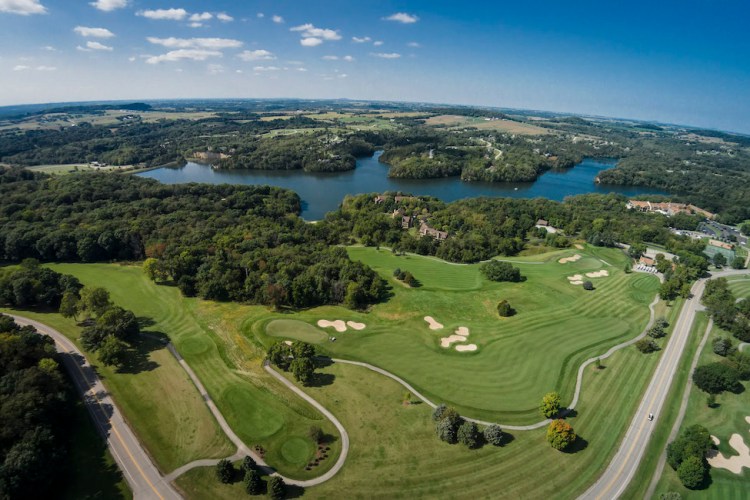
Aerial view of Eagle Ridge Resort and Spa (courtesy of Eagle Ridge Resort and Spa)

Eagle Ridge Resort and Spa: The original Illinois golf resort

In the early to mid-1800s, Galena, Ill., was the most prosperous and important city in “the West” – much more so than a quiet lakeshore trading post 170 miles to the east named Chicago. Galena was a bustling riverboat and lead mining city, with 14,000 inhabitants, famous for its related, often scandalous, industries: alcohol (Red Stripe Beer actually originated in Galena), tobacco, “hospitality,” and politics. Ulysses S. Grant had a home here (which is now a museum), and the DeSoto House Hotel, the largest hotel in “the West” when it opened in 1855, was the site of famous speeches by both Stephen A. Douglas and Abraham Lincoln. The ironwork balcony that both stood upon during their historic orations still looks out over Galena’s main street. Along with Grant’s home, there’s a Civil War encampment, the oldest wood-structure home in Illinois, and several historic mansions offering tours. The Galena River, once the lifeblood of the town, silted up in the early 1900s due to lead-mining activities, and now is largely contained by a bulwark of levies and, on occasion, massive steel flood gates at the entrance to the postcard-perfect downtown. Clues to the rich, industrious, and boisterous past remain on historical markers and signs throughout town. Multiple options exist for Galena “ghost tours” for tourists who have an urge to try to meet some of the city’s past residents.

The surprisingly rich history of Galena is not the only thing that makes this northwestern-most corner of Illinois unique. The topography of this “driftless zone” is characterized by bluffs, hills, valleys, and exposed rock outcroppings, due to the fact that it escaped glaciation during the last ice age. (The only other area in the otherwise flattest state in America that was not scraped flat by ice is the very southern tip.) As such, the Galena territory is the only place in Illinois where you’ll find downhill ski slopes. It is also the location of the first, and largest, true golf resort in the state, Eagle Ridge Resort and Spa.

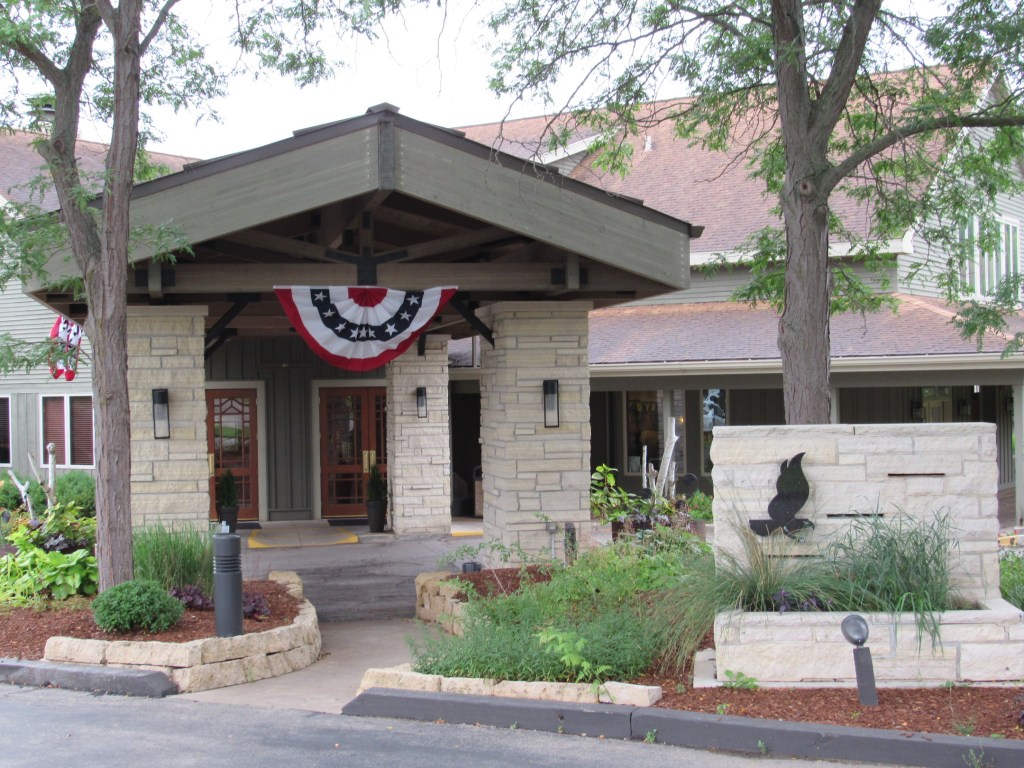
Eagle Ridge Resort and Spa Entrance

Eagle Ridge Resort comprises over 200 homes and villas, 80 hotel guest rooms, the 3,500 square-foot Stonedrift Spa, and 63 holes of the best resort golf in the state, along with tennis, swimming, marina, fishing, equestrian center, several dining options, the aforementioned ski slopes, and nearby attractions including ziplining and craft cocktails. The sprawling 6,800-acre grounds of Eagle Ridge, with all the hills and valleys—and even a waterfall—feel more like northern Michigan than northern Illinois.

The waterfall on the Eagle Ridge Resort and Spa property (where fishing is good, I’m told)
Eagle Ridge Resort and Spa lobby

New owner, lots of improvements

In 2018, Mark Klausner took over Eagle Ridge Resort and Spa, and improvements have been underway ever since. “Coming from the ‘inner’ south side of Chicago, quite by happenstance, Kathy and I ‘discovered’ The Galena Territory,” says Klausner, who moved his wife and six kids to Galena some 20 years ago. “As a serial entrepreneur,” explains Klausner, “I was most fortunate to be at the right place at the right time. Ensured that the finest staff continued in their employment, I proceeded with the greatest venture of my career. Kathy and I proceeded in our quest to expand the horizons of Eagle Ridge Resort and make it even a greater place.”

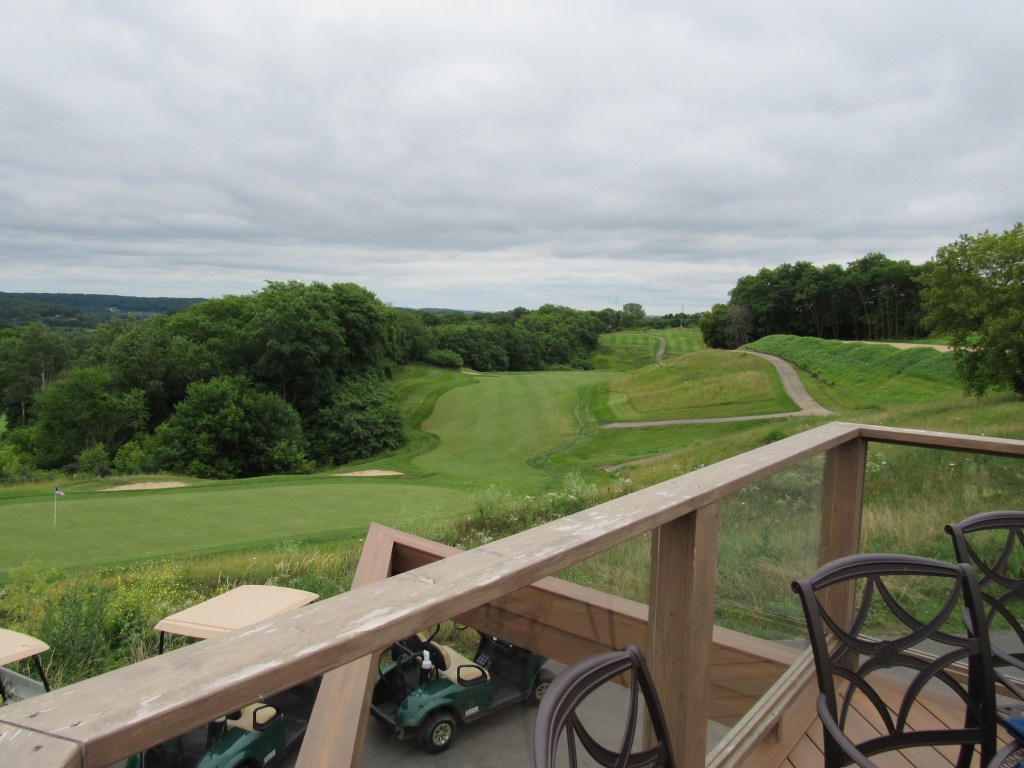
This venture has been multi-faceted to date, with a significant amount of work taking place at the clubhouse perched above The General. The pandemic lockdown provided an unprecedented opportunity to hire all local contractors to completely renovate the old Spikes and Woodstone restaurant into the Highlands Restaurant and Lounge 289. Included in this project are almost too many changes to list. First, the old restaurant was completely rebuilt. The old outdoor patio was enclosed to create a private dining area, and a new cantilevered deck with seating for 45 and sliding garage doors was added to look out over the 10th tee and 18th green (formerly the 1st tee and 9th green, but the nines have been flipped to provide a more dramatic closing experience). Lounge 289 was the old proshop. Now, after adding 30 extra feet to it, it is a homey, happening 19th Hole. Relive your round at The General with your foursome while splitting a massive Bavarian pretzel, fall-off-the-bone Buffalo wings, and a pitcher of Leinenkugel Screaming Eagle Ale, brewed exclusively for Eagle Ridge.

The new clubhouse deck at The General invites diners to watch groups come up to the tricky 18th green.

Downstairs now houses a greatly expanded Golf Shop with easier access and a wider selection of everything. My son, a high school golfer, said, “This might be the nicest pro shop I’ve ever been in.” Finally, the General Store, renamed The Country Store, was moved up to the Highlands complex and includes a convenience along with coffee, pastries, and light breakfast fare.

Whew! That all seems like a lot, but the facelift is not stopping there. Work on the new stand-alone Stonedrift Spa is underway, after a considerable planning and permitting process. According to Colin Sanderson, Director of Sales and Marketing, the spa alone will be approximately a $2.5 million project. The new spa will sit on the site of the old General Store, across the street from the Inn. It will be about 2.5 times the size of the current spa and will add hair and make-up rooms (for the resort’s robust wedding clientele – there’s even an in-house wedding boutique). There will also be a separate Men’s Relaxation Room and a dedicated Bride’s Room.

Rendering of the in-progress Stonedrift Spa (courtesy Eagle Ridge Resort and Spa)

My wife was lucky enough to enjoy a signature Swedish massage in the current spa and returned extremely relaxed. A separate Men’s Relaxation Room will be welcome, though, as she felt a bit self-conscious in the current coed room, in which a few male golfers were lounging as well. Even so, “The spa was very down-to earth,” she reported. “It wasn’t at all stuffy, which was nice. Everyone was so friendly and relaxed.” Precisely how a spa should feel!

Along with improvements and expansions in the facilities, Eagle Ridge as a whole is moving toward going green. Solar panels have been installed throughout the resort that will provide energy to all buildings. As for golf renovations, the exteriors of both the North Course and South Course clubhouse have been redone. Most of the sand bunkers on the short East Course are being converted to grass bunkers. At The General, all the bunkers have been redone. But the big change is that the two nines have been switched in order to take full advantage of the former 9th hole (now the 18th), which requires a long carry over a deep gulley to a fairway that snakes and rises rather dramatically up to a green hunkered into the hillside below the newly refurbished clubhouse.

The “new” 18th Hole at The General (formerly the 9th Hole).

Eagle Ridge Resort and Spa soaring again

We all hope that the pandemic is winding down, but there are no guarantees. “We’re the original ‘socially distant’ vacation destination,” notes Colin Sanderson, “thanks to our family vacation homes.” My family and I were treated to one of these idyllic retreats in the woods, complete with screened-in porch and a Jacuzzi in back. It was a perfect home base not only for golf and spa, but also a zip-lining excursion at Long Hollow Canopy Tours. Long Hollow’s basecamp is just a few minutes off of the Eagle Ridge property. The zip-line tour is guided by extremely competent and fun experts along a progressively longer, higher, and faster series of cables strung through Galena’s dramatic and picturesque valleys and ridges. (I believe I hit 50mph on the longest line.)

The author’s son enjoying a Long Hollow Canopy Tour

Along with zip-lining, there’s a host of activities at Eagle Ridge itself and in the Galena area. “Guests of Eagle Ridge Resort and Spa have miles of nature to hike, bike, golf, fish, kayak, canoe, horseback ride, and even take a hot air balloon ride,” says Sanderson. “They can order in pizza or anything from our restaurants and enjoy the great outdoors without worrying about coming into contact with others.”

Homes can be booked directly online, and families can bring pets, celebrate family events together, or even spend some mid-week time e-learning and working while being close to nature and all the activities the resort has to offer.  In addition to the private homes, Eagle Ridge Resort and Spa guests can stay in the Inn, as well as enjoy a wide variety of open-air dining options.

One of the houses available for rent at Eagle Ridge Resort and Spa — complete with Jacuzzi tub out back!

“Our new ownership, unlike previous owners, is re-investing the money we are making and putting it back into the resort,” says Sanderson. This stewardship and all the improvements will ensure that Eagle Ridge Resort remains a yearly destination for golfers and families throughout the Midwest. Now that things are opening up again, I ran into several groups who have been visiting every year for 25 years. It is easy to see why: There is honestly nothing else like Eagle Ridge Resort and Spa and nowhere else like Galena anywhere else in Illinois.

Aerial view of Eagle Ridge Resort and Spa (courtesy of Eagle Ridge Resort and Spa)

Mistwood Golf Club: Private club experience, public course rates

“O Romeoville, Romeoville, where the hell art thou Romeoville?”

Mistwood’s stone bridge and Performance Center add some romance to the golf experience.

That’s how I tried to identify a route to Mistwood Golf Club on my phone. Siri, however, just got confused. “Artificial intelligence,” my ass.

Anyway, once I got the directions sorted, I headed north to an area I perhaps unfairly associate with over-crowded, expensive courses with a pace of play best described as glacial: Chicago.

I soon discovered that none of my prejudices against Chicago golf are applicable to Mistwood Golf Club. The Raymond Hearn design opened in 1999 and in 2012-2013, all 18 holes were reimagined and redesigned by Hearn in a multi-million dollar upgrade of the entire facility. Owner Jim McWethy sought to turn Mistwood into the premier public golf course in the Chicago-land area, and when GOLF Magazine named Mistwood as the “Best U.S. Renovation You Can Play” in 2013, McWethy was well on the way to this goal.

The Mistwood Golf Club clubhouse overlooks the expansive practice green and course.

Mistwood’s motto is “Public course, private experience,” and it could not be more apt. The club has about 150 members, but is open to the public at all times, and most play is public daily-fee. Greens fees range during peek season from $65 weekdays after 2pm to $110 weekend mornings, with generous junior and senior discounts. All rates include cart and range balls at the Performance Center, but walking is allowed at all times and is $15 cheaper.

Let’s talk about the Performance Center. Mistwood GC boasts the only indoor/outdoor golf practice and clubfitting facility among the Top 100 courses in the Midwest. There are two heated hitting bays and both mats and grass hitting areas with tables behind and a stocked bar and full pub menu inside with service outside. The fitting center includes a putter fitting studio, which is, again, one of the only such facilities in any public course in the Midwest.

Mistwood’s Performance Center is second to none in the Midwest.

Lest you think the Performance Center houses Mistwood’s only source of libations and victuals, note that the clubhouse itself houses McWethy’s Tavern and the Great Hall. The former is the epitome of a clubhouse sports pub, and the latter hosts events for up to 260 guests, and both feature panoramic views of the course. It is a facility ideally designed for indoor and outdoor weddings. After a round (or any time, really), take the opportunity to sample the amazing lamb burger or tuck in to an all-you-can eat fish-n-chips dinner.

The Great Hall in the Mistwood Clubhouse is ideal for wedding receptions and other events.

Although the course is gorgeous from the vantage of the clubhouse, it is truly something to behold as you play it. Nearly every hole challenges players with shots along or over water of some sort. Sight lines off of tees can be tricky, especially for first-timers, and the land pitches and rolls on every hole in mostly delightful–though sometimes vexing–ways. From the par-5 8th hole onward – with its crazy sight lines off the tee, water all down the right, and wild, snaking, two-tiered green – there is no let-up in difficulty or beauty.

The 8th green at Mistwood GC is both beautiful and devilish. Off the tee, the split fairway of the 8th hole offers a lot of options.

The 183-yard par-3 9th hole, which plays up to the clubhouse to a large, relatively flat green, is a quirky joy. It’s a great birdie opportunity, if you can find the green, before you head out to the watery back nine. From the back tees, though, it is a brute if the wind it right (or wrong).

The par-3 9th hole at Mistwood GC is a welcome birdie opp.

From the 369-yard 13th hole through the 166-yard par-3 17th, the holes ring Loch St. James (where I’m told the fishing is excellent). This is called “Kelpie’s Korner,” and even without a mythical beastie prowling the ever-present water, it can be a horror show if your swing is off. The 583-yard 15th is the number one handicap hole for a reason. It’s a monstrous cape hole where you should pick your line carefully, and then adjust to be more conservative–the carry is always longer than you think.

Golfer beware! Make sure you’ve got plenty of golf balls in your bag as you enter Kelpie’s Korner.

The par-3 14th plays 233 yards from the tips. So choose your tees (or combination tees) carefully!
The par-3 17th marks the end of Kelpie’s Korner — just carry the wetlands and split the trees, and you’re home free…

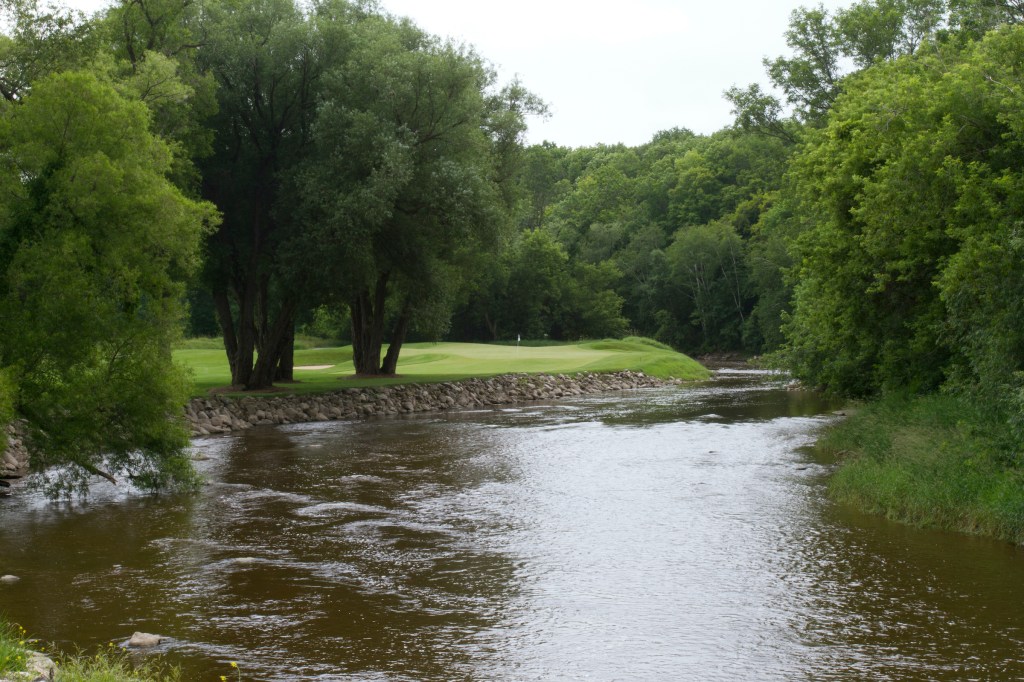
The course culminates on the 527-yard par-5 18th, where the fairway slithers between water right and bunkers left up to a rushing stream in front of the green (where a few years ago, I actually spotted a den of what I believe were mink on the opposite bank)

Your final approach to the green of the par-5 18th at Mistwood GC needs to carry a rushing stream and any wildlife that may be prowling thits banks.

Conditioning at Mistwood is impeccable, and the greens are fast and true. This summer, torrential rain tested the drainage. Aside frome a few low areas that collected water, playability remained remarkably consistent, considering the relatively low land and high water table. Not only does the course offer a discount for walking, but the modest elevation changes and reasonable placement of tees and greens make the layout quite walkable. Course length reaches from 5,332 yards from the forward tees up to 7,005 yards from the back tees. There are five sets of tees and seven combination tees, all with handicap ratings, making Mistwood both enjoyable and challenging for players of all skill levels, including the very best. Mistwood GC just hosted the 90th Illinois State Amateur Tournament, testifying to its stature as one of the best in the state.

Mistwood GC is an excellent walking course — not a bad swimming course, either, to be honest.

For Chicago-area golfers who want to keep swinging year-round, Mistwood also operates the Mistwood Golf Dome in nearby Bolingbrook, where you can order food and drinks and hit balls while every shot is tracked to within a foot using TopTracer technology. Groups have been known to stay for up to nine hours here.

Mistwood Golf Club is a storybook golf escape that feels a thousand miles from the city, even though it is just a short drive from Chicago’s Miracle Mile. It’s also easily accessible for visitors from downstate, situated just off of I-55 as it is. The staff are among the best, friendliest I’ve ever encountered anywhere. They make visitors feel like they’re a part of one big happy family, which is precisely the way Jim McWethy wants it to be.
The sun goes down on another storybook day of golf at Mistwood GC.

Stoatin Brae at Gull Lake View Resort in Augusta, Michigan: One of the best in the nation

The year was 1963. Darl Scott, the golf course superintendent at Gull Lake Country Club in Kalamazoo, Michigan, decided to build his own public access course, the West Course at what would grow to become Gull Lake View Resort. Over the ensuing decade, the Scott family would build their East Course, followed by the Stonehedge North and South courses. In 1988, the family bought the popular William Mitchell designed Bedford Valley, site of multiple Michigan Opens.
Despite the collection of outstanding courses already comprising Gull Lake View, in 2018, the Scott family collaborated with Renaissance Golf Design (Tom Doak’s design company) and its panel of senior associates, Brian Schneider, Eric Iverson, Don Placek, and Brian Slawnik. The result is Stoatin Brae – “Grand Hill” in Gaelic. The 6,742-yard, par-71 layout, located on a ridge of the highest land in Kalamazoo County, is indeed grand, and it is collecting national awards and “must-play” list designations like Meryl Streep collections Oscars.

Stoatin Brae at Gull Lake View Golf Resort (courtesy Gull Lake View Resort)

Gull Lake View: Pure golf resort in Pure Michigan

Gull Lake is situated in the Richland/Augusta area of southeastern Michigan. The lake is 1 mile wide by five miles long and is an angler’s dream, teaming with rainbow and lake trout, salmon, small mouth bass, and bluegills. It’s 16 miles from Kalamazoo, with two casinos (Firekeepers, Gun Lake) within 30 miles. This is all to say that there’s plenty to do, if you feel you need more than golf at Gull Lake View Resort’s six courses. During our visit, we saw dozens of groups—boys’ trips and couples—and to be honest, they all looked thoroughly golf-obsessed. After rounds on the links, they were tossing money down on the expansive putting greens in post-round contests. After that, they were sitting around firepits and on patios outside the dozens of well-appointed condos and houses enjoying cigars, bourbon, and tales of the day. Over dinner at the resort’s Charles and Darl’s Smokehouse (where the wings are some of the best I’ve ever eaten), my 17-year-old son and I overheard one group talking about their 54-hole day. We were sore after 36, but I think several rounds of drinks had soothed their muscles. Witnessing two days of the camaraderie and joie de golf vivre all around us, my son said, “This is the perfect place for a group of friends. I hope I have a bunch of friends who like to golf when I get older.” Me too, son, me too.

One of the spacious houses at Gull Lake View Resort — 2 bedrooms with 2 queen beds, two baths, full kitchen.

Stonehedge South and North

As described already, Gull Lake View Golf Resort is a family affair, and the family did an outstanding job routing Stonehedge South and North through the rolling, wooded landscape. Both courses have an authentic “Northern Michigan” feel, despite being in the southern third of the state. There are towering pines and hardwoods and dizzying elevation changes. The “stonehedge” moniker derives from the stone walls that snake through both South and North courses, from which players (thankfully) receive a free drop by local rule.

Stonehedge South has the trickier and slicker of the greens – there’s a steep learning curve. The breaks are very subtle, mixed in with some dramatic undulations. I failed to make a putt outside 4 feet until the 435-yard, par-4 18th hole, where I finally sank a birdie putt that made me eager for my afternoon round on the North. The South plays between 5,087 and 6,628 yards with five sets of tee boxes. Although there is OB on several holes (e.g., 1-5), choosing the correct set of tees will keep you out of most of the trouble. The stretch from the 490-yard, S-shaped par-5 7th through the 374-yard 15th might be the most enjoyable stretch. The second shot on the 7th is blind, and the green is tucked behind two massive bunkers if you want to go for it in two. The 396-yard 11th and 321-yard 12th both play down into a valley and then substantially back uphill to the greens. Neither my son nor I could do better than bogey on either hole, yet my notes still say, “So much fun!” It is indeed the mark of a good course if you can have fun playing it even when you’re struggling.

Top to bottom: Stonehedge South Hole 2, Hole 12, Hole 7, Hole 4,

Stonehedge North stretches from 4,991 yards up to 6,712 yards, and although its slope and course rating would suggest that it is harder than the South, both my son and I played it better (my son carded his first sub-80 score, in fact—a 77). Maybe we were just warmed up? The routing here is also quite expert, with three par 3s, 4s, and 5s per side – why don’t more courses do this? – so there are more chances to impress with both length and variety. The par 3s are especially varied, ranging at the tips from 207 yards (8th) to 157 yards (11th). The 173-yard 17th is maybe the most memorable, though, with about a 50-foot drop over fescue and bunkers to a steeply back-to-front canted green—Pure Michigan golf. The North Course offers a peaceful, seamless set of holes ranging from thick woods to open grasslands. There’s a “tasteful” smattering of water throughout, mostly on approaches and around greens, along with prudent bunkering. Modern-day architects would be wise to follow the Scott family lead and consider more grass bunkers as cheaper alternatives to sand bunkers.

Top to bottom: Stonehedge North Hole 14, Hole 17, Hole 16, Hole 11, Hole 10, Hole 7, Hole 3.

New kid on the Scott Block: Stoatin Brae

Renaissance Golf created a real beauty atop the highest point in Kalamazoo County. Ranging from 4,943 to 6,742 yards and at par 71, Stoatin Brae is grand indeed. There is not a tree on the course proper, just around the edges. With its heavily-fescued, windswept conditions, it feels a bit like The Loop at Forest Dunes, another Renaissance Golf creation. And, given the layout’s lofty perch above the Kalamazoo bottomland, Stoatin Brae also recalls echoes of The Pete Dye Course at French Lick Resort in Indiana. This said, Stoatin Brae is a bit more refined than The Loop and much, much less expensive than The Dye Course.

13th green on Stoatin Brae with several other holes fanning out across the hill behind.

Stoatin Brae opened fully in 2017 to rave reviews. It’s made the “Top 100 You Can Play” lists in both GolfWeek and Golf Magazine. As Bill Johnson, Gull Lake View General Manager describes construction, “We didn’t move hardly any earth here. The idea was to just set the course on top of the hill.” Indeed, the minimalist design takes full advantage of the firm, well-drained, sandy soil atop the hill, along with the constant winds. The greens are slower than on the Stonehedge courses, but they also tend to be crowned and firm, which tests your chipping game. Angles are the key into these greens, and staying below the hole will pay off in the end. The first two holes, a 359-yard par 4 and a 225-yard par 3, don’t have a single sand bunker between them. Distances between greens and tees are short, and like all great Scottish links, the course is extremely walkable, with a routing that affords multiple passes near “The Bunker,” the poured concrete hallway house built into the side of a hill.

“The Bunker” on Stoatin Brae

Stoatin Brae crescendos on the back side, where one hole after another offers downhill shots, uphill shots, blind shots, birdie opps, and bogey threats one after another. The 548-yard closer is one of the most fun I’ve played in a while, with a narrow fairway snaking through the fescue to a turtle-back green. As evidence of how the wind and angles affect play, consider that I just missed birdie on 18 the first time out, but triple-bogeyed it the second time – and frankly, I felt like I didn’t play it much worse the second day.

Top to bottom: Stoatin Brae Hole 14, Hole 11, Hole 9.

Despite the love Stoatin Brae has received from golf media, it and Gull Lake View Resort are still sort of a “sleeper” destination in golf-rich Michigan. Chicago-land golfers can be hammering drives at Gull Lake View in less than four hours, and hammering BBQ and beers at Charles and Darl’s four hours after stepping onto the first tee. Johnson notes some big plans for the panoramic site of Stoatin Brae including an expanded wedding and event venue and larger practice range. And in what might be one of the best membership deals in all of golf, members can play all six resort courses with one membership. When my son and I heard this, he turned to me and asked, “Why don’t we live here?” And I have to admit, I asked myself the same question.

How Golf Can Save a City: Harbor Shores in Benton Harbor Michigan

Harbor Shores, 10th tee

The idyllic Lake Michigan shoreline town of Benton Harbor, Michigan, became a major industrial site during WWII, when hometown Whirlpool and other manufacturers were enlisted by FDR to make parts for fighter planes. In the 1950s and 1960s, these same companies produced many of the home appliances and auto parts that fueled America’s post-war boom.

Then came the 1970s: companies moved their production overseas, over 6,000 well-paying jobs disappeared from Benton Harbor in an 18-month period, and the city’s population dropped from 30,000 to 16,000 within a decade. The exiting companies and people left behind mountains of trash and vast fields of toxic waste. According to Joshua Doxtator, PGA Professional and General Manager of Harbor Shores, the Paw Paw River, which meanders through Benton Harbor and Harbor Shores Golf Club, “was so overgrown and clogged with garbage, you couldn’t even see it from the air. You would have never known it was there.” Today, there are kayak and paddleboard rentals on the river, and a hundred species of birds.

What triggered this revitalization of the land and the area in general? The simple answer is “golf.”

This is what Harbor Shores looked like before the land was reclaimed for a golf course.

“Where am I supposed to build a course?”

Aside from the windblown linksland of Scotland some 800 years ago, golf doesn’t just happen. (Even 800 years ago, golf had help from sheep and bored shepherds.) And a championship-caliber golf course doesn’t just emerge from the sludge of a toxic wasteland without a lot of work and help from the greatest golfer of all time. Jack Nicklaus was brought in in the early 2000s to take a look at the site where a group of local community leaders hoped a world-class golf course would anchor an entire city’s revitalization.

“Where am I supposed to build a course?” said Nicklaus the first time he was shown the site. The Golden Bear’s reaction was understandable. “All the land from the clubhouse through the first green was an auto wrecking yard,” Doxtator says as we putted out on Hole 1. Holes 4 and 5 were a dumping site for a company that made automobile brakes. Holes 14 and 15 were a former Superfund site once occupied by a company that used radium and mercury to manufacture components for fighter planes. Near every tee box today, you’ll find photos of what the land there looked like pre-golf – the transformation is miraculous.

Signs near every tee box remind golfers what the land used to look like.

Nothing like Harbor Shores anywhere else

Thanks to Herculean engineering and vision—and a $500 million investment—the 6,852-yard, par-71 championship golf course today runs across four remarkably diverse and beautiful terrains including a photogenic setting along the coastal dunes of Lake Michigan. Holes 1-6 occupy an inland terrain with occasional appearances by the now-pristine Paw Paw River. Holes 7, 8, and 9 wind along a dramatic exposed dunes-scape with panoramic views of Lake Michigan, especially on the devilish 7th green. Holes 10 through 13 play through woodlands, rolling hills, and ravines. To close, Holes 14 through 18 return to the Paw Paw River, Ox Creek, and its wetlands. It’s like playing through the best terrains Michigan golf has to offer, all in one round.

Michigan has some of the greatest golf terrain anywhere in the U.S., with more exellent affordable and accessible courses than any other state. But you would be hard-pressed to find any course, even in the embarrassment of golf riches that is Michigan, with 18 more memorable holes. There is not one hole in the entire Nicklaus design that resembles any other hole on the course. No wonder Jack has called it one of his 18 all-time favorite projects. (Speaking of Jack, as you head from the half-way house to the 10th tee, take a peek over the edge of the wooden bridge—you might spy another Jack, a gigantic snapping turtle. If you do, know that he LOVES hot dogs but doesn’t care much for bread. So share accordingly.)

Jack, the snapping turtle. Share a bit of hot dog at the turn.

Playing Harbor Shores

Harbor Shores Golf Club opened in 2007 and hosted the KitchenAid Senior PGA Championship in 2012, 2014, 2016 and 2018, and will host the event in 2020, 2022 and 2024. KitchenAid Senior PGA Championship winners at Harbor Shores have been Roger Chapman, Colin Montgomerie, Rocco Mediate, and Paul Broadhurst.

The approach on the 566-yard, par-5 5th Hole at harbor Shores.

The notoriety of hosting a Champions Tour major comes at a cost, however. “We suffer from the misconception that we’re private,” explains Doxtator. Indeed, the first-class practice facilities, fully stocked pro shop (check out the barware for sale, btw), the cuisine at Jack’s Place, and the absolutely pristine conditions all do belie the daily fee nature of Harbor Shores. The greens fees, on the other hand, suggest a luxurious experience, ranging from $90 during shoulder seasons up to $175 during peak season. One option is the $375 Score at the Shore, which gets you one day of unlimited golf and unlimited food and beverage.

Given the difficulty of Harbor Shores, and the value of local knowledge in navigating the labyrinthine routing through wetlands, woods, and neighborhoods, that all-day option might just be the best deal in town. Despite being only 6,734 yards from the championship tees, the par-71 course rates a whopping 73.6 and has a slope rating of 146 (and maybe the longest stretches of wooden bridge cartpaths on Michigan). Fortunately, there are six sets of tees or combined tees. But even the 6,159 gold tees present perhaps the most difficult challenge I’ve faced on any course in several years.

What, exactly, makes Harbor Shores so difficult? Imagine a hybrid of Harbor Town Links (where Phil Mickelson won the 2021 PGA), with water and wetlands on basically every hole, combined with Northern Michigan-style woods and elevation changes, all woven together by Jack Nicklaus, whose courses always rank as some of the most difficult in the nation.

“This is a second-shot course,” said Doxtator as we began our round. “Distance off the tee isn’t critical on most holes.” My son and I found this to be very true; however, we also quickly found out that if our tee shots were slightly off line on many holes, they were either unplayable or lost. Even on the relatively benign 318-yard 3rd hole, any careless swing could bring the Paw Paw River, which runs from tee to green down the left side, into play.

Water lurks everywhere at Harbor Shores, even on the 137-yard 11th, the easiest and shortest hole on the course.

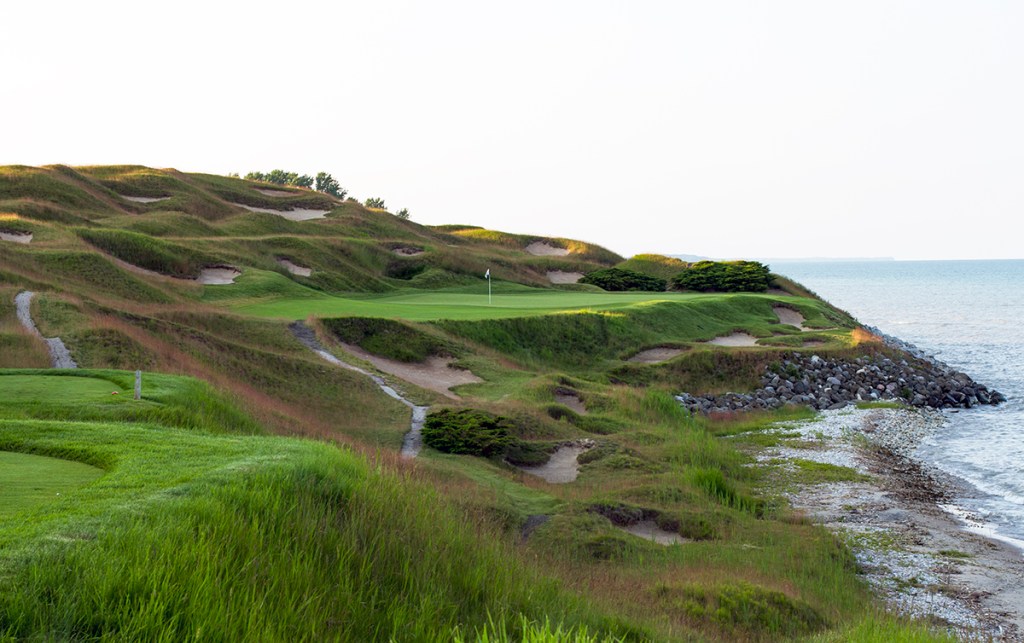
Doxtator’s admonition to attend carefully to second shots was well founded, as the green complexes are some of the most dramatic you will find. The 430-yard 7th hole is perhaps the most picturesque. Here, a necessarily big drive must hug both water and sand on the right in order to keep as far away as possible from fescue-covered dunes that tower on the left and obstruct the view to a dramatically elevated green. Said green is not nearly as deep as it appears from below in the fairway, as it drops off down to a Lake Michigan beach immediately past the putting surface. However, when and if you finally successfully summit the dune to putt, you’re treated with a stunning view of Lake Michigan. The 7th Hole was one of three holes carved off from a state park for the course. Residents weren’t thrilled about this and sued, but the Michigan Supreme Court finally ruled in favor of Harbor Shores.

The 7th Hole at Harbor Shores ends at a green perched above Lake Michigan. (Courtesy Harbor Shores)

As splendid as the 7th green is, it isn’t the most famous. During the 2016 Senior PGA, Johnny Miller was critical of the green at the 530-yard 10th hole. To be fair, this green is perhaps the most dramatic I’ve ever seen: it’s got two tiers and the upper tier is about 7 feet higher than the lower tier, with a veritable ski-slope between them. Miller was standing on the bottom tier and proclaimed, “You can’t putt this. There’s no way to putt it.” Nicklaus took offense and asked, “You want me to show you how to putt it?” So Jack trundled town the slope, tossed down a ball, barely set his feet, and smacked his putt up the slope and into the hole, some 60 feet away. The crowd went crazy. You can see the video here for yourself — it truly is one of the most amazing alpha-male moments in golf.

The (in)famous 10th green at Harbor Shores.

As luck (or lack thereof) would have it, my son had the exact same putt. Unlike Jack’s, his ball did not crest the incline, and as a result, it rolled back past him and off the front of the green. I told him how fun it was to have been able to try the famous putt himself, but he was not as impressed by the moment as I.

My son, Erik, standing where Jack made the putt in 2016, and where Erik himself would miss the same putt the next day.

The Inn at Harbor Shores

Opened in 2010, The Inn at Harbor Shores is a 92-room luxury hotel on the St. Joseph River that features 14 luxury suites, two top-floor condominiums, and a rooftop meeting space. The Inn offers a selection of dining options (including Plank’s Tavern on the Water, Torch & Tapas, and Rise & Vine), a full-service spa, indoor and outdoor pools, fitness center, state-of-the-art meeting rooms, and wedding venues for up to 300 guests. Next to the Inn, guests and locals may enjoy a 100-slip deep-water marina that can accommodate boats up to 90 feet long; sport fishing charters are available here for a real surf-n-turf experience. The rooms are luxurious and appointed with every fine detail. As for the dining fare, both my son and I highly recommend the Wagyu beef burger at Plank’s – without question the most delicious burger we’ve ever tasted. Nearby downtown St. Joseph boasts a charming business district full of eateries, art galleries, and gift shops.

The view from our room at The Inn at Harbor Shores, looking toward the marina.

Between the championship golf course and the luxury resort and spa, Harbor Shores has pulled Benton Harbor out of the abyss. The photos on each hole of what the property once looked like emphatically drive home the dramatic transformation of the land. The sculptures at each tee box commemorating all 18 of Nicklaus’s major wins (including US Amateurs) convey the deep sense of pride in the course’s partnership with the greatest of all time. Harbor Shores deserves mention in any list of “Best Of” in a state brimming with spectacular golf. Any golfer who plays it will immediately remember nearly every hole, as well as the numerous balls they probably lost. Harbor Shores is no pushover, for sure, but neither is Benton Harbor – thanks to golf, the city is fighting its way back.

Signs and sculptures commemorate each fo Jack Nicklaus’s 18 majors (including 4 US Amateur titles).

The 6th greeen at Harbor Shores. It is hard to believe that this land was once toxic.

Honma TR20 460cc Driver is a “forgiving” “beast”

Japan is home to dozens of high-end, high-quality golf club manufacturers, only a few of which have most Americans ever heard of. Honma has been in the golf club business for over 60 years now, but they remain largely unknown to most American recreational golfers.

That’s too bad, given that Honma produces some very impressive sticks. I lent the last Honma driver I tested and reviewed to a buddy of mine—a scratch-handicap who bombs his drives. He hit it well but needed an X-stiff shaft. So he lent it to his father, a 65 year-old club pro who loved it so much that I’ve never seen it again.

Happily for me, I got my grubby mitts on a Honma TR20 460cc Driver ($599) – a model that came out in 2019/2020. I had long been intrigued with this model, as it sits firmly a-straddle the “player” and “game-improvement” categories. It’s got an ET40 carbon crown and a carbon sole surrounding a titanium frame, all of which combines into a light, immensely strong clubhead, whose Ti face features vertical grooves and variable thickness. There are three adjustable weight ports on the sole, and a no-rotation adjustable hosel that keeps the spine of the Vizard shaft precisely positioned no matter how you adjust the lie and loft.

What does this all mean? Well, in February, 2021, the top golf-testing website MyGolfSpy.com ranked the TR20 as the Most Forgiving driver it tested. And in the most recent Golf Magazine equipment testing, one of the club testers was quoted as saying, “This driver is a beast!” So what all the engineering—and some rather substantial coin—will get you is a powerful beast of a driver that will still do its level best to keep you in, or at least around, the fairway.

Playing the Honma TR20 460cc Driver

As I say, I was chuffed to get the TR420 into my hands and onto my home course. From the very first drive – long and down the middle – I could feel the exquisite feedback from the face, up through the Honma Vizard TR20-60 S-flex shaft, and into said hands. Contact in the sweetspot is so pure, I worried for a split-second that I had completely missed. If it weren’t for the sound, which is somewhat singular, I would barely have known I’d hit the ball. Contact toward the toe or towards the heel was similarly identifiable. I quickly got to the point where I would hit my drive, tell myself something like, “1-inch toward the toe” or “1/2-inch toward the heel and a ¼-inch low.” Then I’d check the ball mark on the clubface to see how accurate I was. The feel was so precise, those descriptors were remarkably accurate. My playing partners got irritated, to be honest, because I kept showing them.

But what of that forgiveness in the off-center hits? Well, here’s an example: The 330-yard 13th hole of my home course plays rather steeply uphill to a more level plateau that rises only slightly to the green. I blasted a drive with the TR20 into a faint breeze, and I felt the contact was perhaps half-way off the sweetspot – a bit of a toe-hook. The ball climbed into the breeze, carried the bunker some 210 yards up the right side of the fairway, and disappeared as it drew toward the center of the fairway. Once I walked up the hill (and caught my breath), I saw my ball 40 yards short of the green. Imagine if I had made pure contact!

The Verdict

The Honma TR20 460cc Driver lives up to its billing as both “a beast” and as “most forgiving.” Think: The Incredible Hulk in Endgame. I can think of no driver I’ve ever hit with better feel and feedback. And it’s plenty long—plenty. None of Honma’s gear is cheap – but no premium equipment is. So don’t let lack of name recognition deter you if you’re looking to upgrade your clubs. Honma knows what it’s doing.

Golf Gifts for Father’s Day 2021: Vax-up & gear-up

Father’s Day 2021 feels much more hopeful than Father’s Day 2020. We have vaccines, and we now know that outdoor activities – like golf – are extremely safe. So the best thing you can do for Old Dad this Father’s Day is make sure he’s fully vaccinated. The second-best thing you can do for him is shower him with golf gifts. Here’s a selection of our favorite gear this year!

Arnold Palmer Umbrellas by Weatherman

The Arnold Palmer Umbrella Collection by Weatherman offers shelter from the rain for golfers and non-golfers alike. The Arnold Palmer Classic Golf Umbrella ($89) has Arnie’s trademark color pattern and measures 68”. That’s big enough to keep a threesome dry, if you like each other well enough and don’t need to socially distance anymore.

PUMA Arnold Palmer Collection

Speaking of Arnie, PUMA has come out with its second collaboration with Arnold Palmer Enterprises, a collection of apparel and accessories that embodies The King’s timeless style as it would come to life today. The PUMA Golf x Arnold Palmer Collection celebrates the life and excellence of golf’s global icon through nostalgic pastel colors, unique prints, and personal detailing on each piece. Caps run $35, polos around $85, and quarter-zips around $140.

Ocean Tees

Plastics may be necessary for some things, but golf tees ain’t one of them. And chopping down hardwood timber for tees doesn’t seem quite right, either. Enter Ocean Tees, made from Moso bamboo farmed exclusively in the company’s 100-hectare plot in Jiangxi Provence, China, under strict environmental controls. This kind of bamboo is 4x stronger than hardwood. The packaging is even made from recycled (and recyclable) material. The tees come in short, long, mixed, and “castle” versions (4 British pounds per box online, and they accept PayPal). I’ve found the castle tees to be most durable in dry turf conditions where even my previous plastic tees snapped every few drives—and the height is ideal for my driver. If you feel like exploring the Ocean Tees website further, you’ll find that they also sell golf apparel. Their polos, sweaters, and other apparel (from 49 British pounds) are produced in the only factory in Europe that meets Greenpeace’s textile procurement standards. The apparel is woven from blends of organic cotton and proprietary degradable elastane. None of the process or packaging contains any virgin plastic, either.

BIG MAX Blade IP Push Cart and Dri Lite Sport Bag

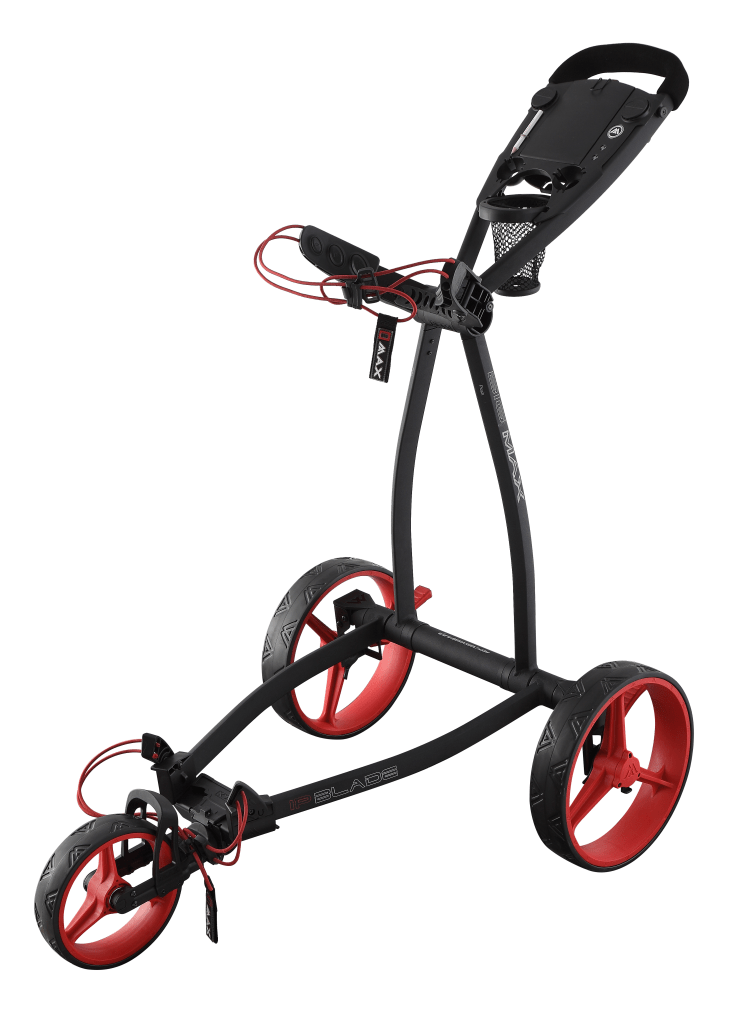
With walking rounds more popular than ever, Europe’s #1 push cart and golf bag brand BIG MAX is ready to make this Father’s Day memorable for golfing Dads across the country with the Fold Flat Blade IP push cart and Dri Lite Sport Golf Bag. The Blade IP has won multiple awards for its compact folding mechanism. Perfect for a Dad who needs their push cart to take up as little room as possible in the trunk of the car or when packed away. The IP’s ultra-flat design leaves it less than 5” deep when folded and features a host of practical features, stylish looks and a 5-year manufacturer warranty ($349.99). The Dri Lite Sport is a water-resistant cart bag that constructed from 100% waterproof fabric with specially designed waterproof zippers. The Dri Lite Sport boasts a 14-way 9.5” organizer top with oversize putter well, 9 water-resistant pockets, and an oversized cooler pocket all in a 4.85 lb. bag ($249.99).

Bushnell Wingman GPS and Bluetooth Speaker

If Dad’s gone all-in on technology and all the ways it’s changing golf, the Bushnell Wingman ($150) is for him. Essentially the Wingman is a top-notch Bluetooth stereo speaker combined with one of the best GPS systems in golf. Integrated into the speaker is a powerful magnet so you can stick it on your golf cart (or on your pushcart), and there’s a detachable remote control you can keep in your pocket to click for audible yardages to the front, middle, and back of the green.

But wait – there’s more!

Pair the Wingman with your phone to play music from your own library or streaming service, if the gentle strains of birdsong and the breeze in the leaves are not soothing enough. Then download the Bushnell app onto your smartphone to display detailed maps and yardages of 36,000 courses, keep score, and more all on your phone.

High Camp Fairway Flask

Since the Dri Lite Sport has such a convenient cooler pocket, maybe toss in something classy to fill that pocket. The High Camp Fairway Flask is brilliantly crafted and ruggedly built for the course. It keeps half a bottle of your favorite spirit at the perfect temperature all day long and comes with the Ultimate Fairway Bar Glass: the 6-Shooter design pays homage to the traditional American West, and it holds 11oz (325ml) of your favorite beverage. The cleverest part is the Integrated Magnetic Locking System, which allows you to seamlessly attach your tumbler to your flask. It fits perfectly in the cart drink holder, and the magnetized cup keeps it from tipping over. It’s constructed from durable 18/8 surgical steel, has a no-drip lip, requires no funnel to fill, and keeps Dad’s libation hot or cold 24 hours. Get your flask either in the standard version ($85) or custom engraved ($109). High Camp offers a wide range of other flasks and barware, too.

Bardstown Bourbon

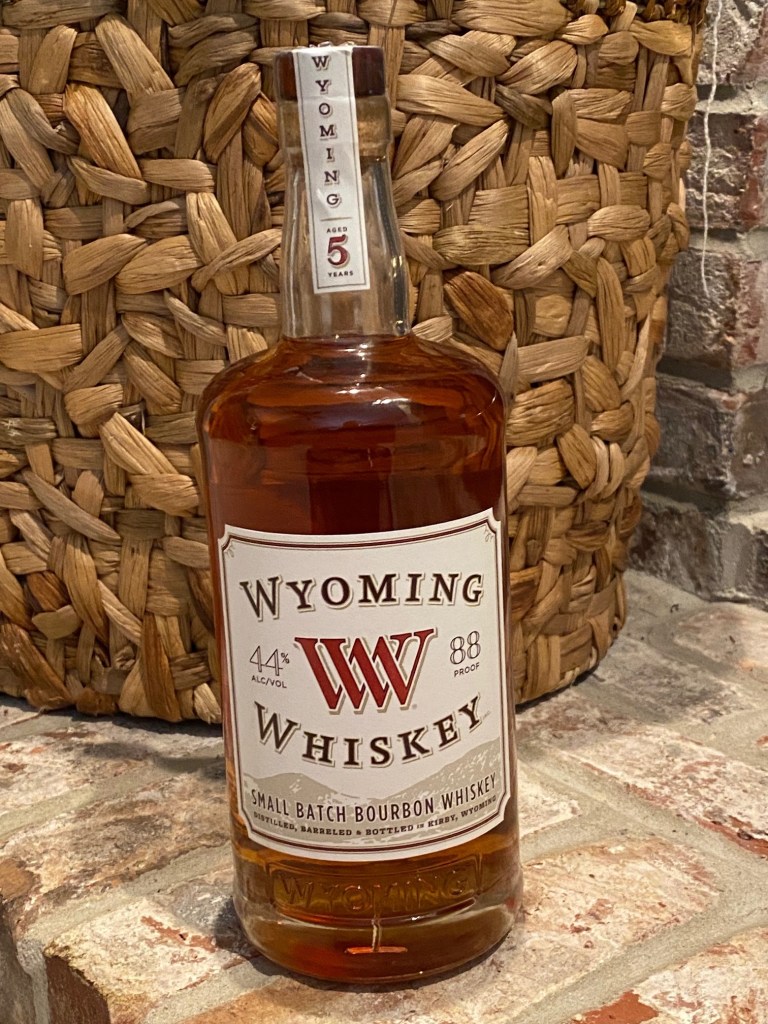
Bardstown Bourbon Company produces unique bourbons of the highest quality. Steve Nally, the Master Distiller, had the same role at Maker’s Mark for 18 years before leaving to found Bardstown. Their mashbills are fascinating to read, and the Fusion Series (around $55) offers blends that are proposed by everyone in the company and go through a March Madness-style taste-off to find the best one. Ask about engraving a bottle to commemorate Dad’s ace or low round (like in the photo below, engraved to recall my first sub-80 round of this season).

Callaway and Bridgestone Golf Balls

You know, if Dad loads his High Camp Flask with Bardstown Bourbon, he might need some help lining up his putts. Callaway’s new ERC Soft and Supersoft golf balls ($35) feature “triple-track technology”—three lines that might look like six lines when that flask is empty. These balls are arguably the softest on the market, yet they have succeeded in squeezing every possible bit of distance out of a design optimized for feel.

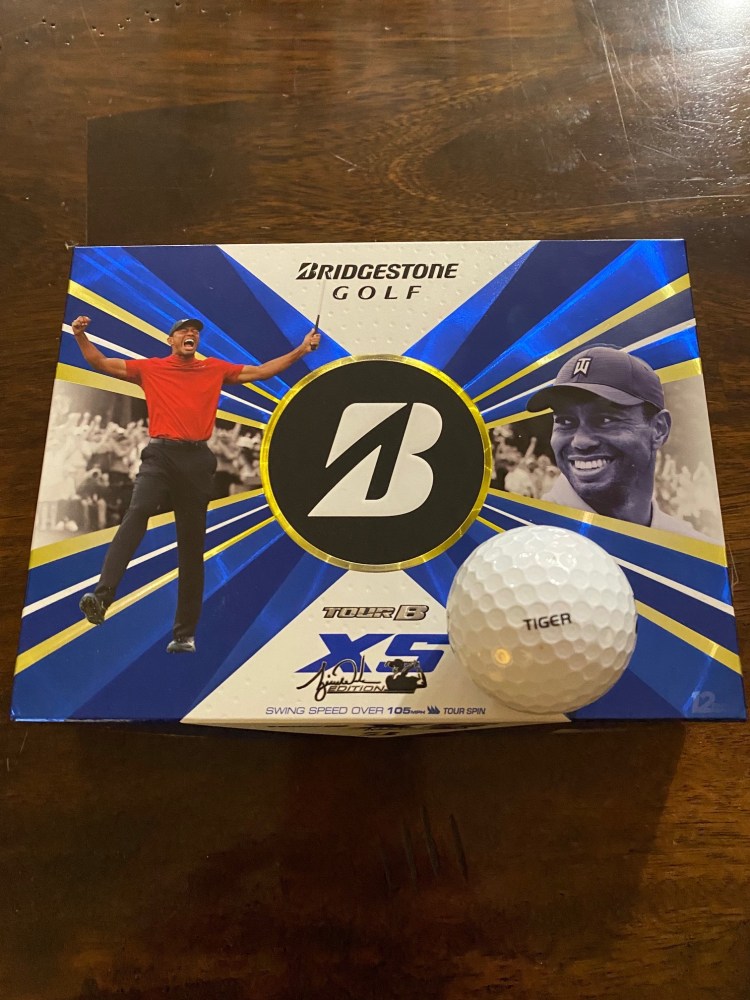
Some extra visibility might be useful, too, given Dad’s condition. Bridgestone has recently introduced a high-contrast yellow version of its TOUR B XS—the ball Tiger played before his accident. The yellow version ($45), like the white, features REACTIV cover technology, which employs an “impact modifier,” to allow the urethane to behave differently based on swing speed.  For example, when struck with a driver or any longer club, the REACTIV urethane cover “reacts,” as a firmer, more resilient material, providing more speed and distance. However, on slower swings with a wedge or short iron, the cover performs like a softer material, creating more shot-stopping spin and control. I wonder if the cover is made of cornstartch…but that might be the Bardstown talking…

Club Champion Fitting

If Dad’s clubs need a tune-up or an upgrade, now’s a great time to lock in some savings on the fitting process. The #1 clubfitter in the U.S., Club Champion, has a limited-time offer from now through Father’s Day. Buy Dad a gift card for $150 or more and get $75 toward an equipment purchase.

Stix Golf Clubs

Now, if Dad doesn’t want to go through a fitting, or if you’re just leading him to the game, a new budget-friend equipment option is Stix Golf. Never heard of Stix Golf? Well imagine if Dollar Shave Club made golf clubs – same idea, sort of. Stix makes high-quality golf clubs – entire sets, bags, apparel, etc. – and offers them directly to consumers in the same sort of marketing model as Vice Golf Balls (with whom Stix partners). The result is affordable, solid equipment with minimalist design and consistent performance. At the Stix website, you can find all combinations of gear for Dad, including a full 14-club set plus golf bag for $924. If he doesn’t need that much stuff, 11-piece and 9-piece sets are available, or just wedges or woods – basically whatever he needs or wants.

PrecisionPro Golf R1 Smart Rangefinder

PrecisionPro’s new Smart Rangefinder ($320) has more features packed into it than any other rangefinder on the market. Pre-orders for the official July release are closed already, but maybe give Dad an IOU. The Smart Rangefinder is “smart” because you can pair it to your phone with the PrecisionPro app, and it will provide a list of information including your personalized slope (based on your stock club yardages, elevation, and real-time wind and weather conditions). It even has a “Find My Rangefinder” function to allow you to track it in case Dad leaves it lying on a teebox in his Bardstown fog.

Over-the-top Pebble Beach Getaway

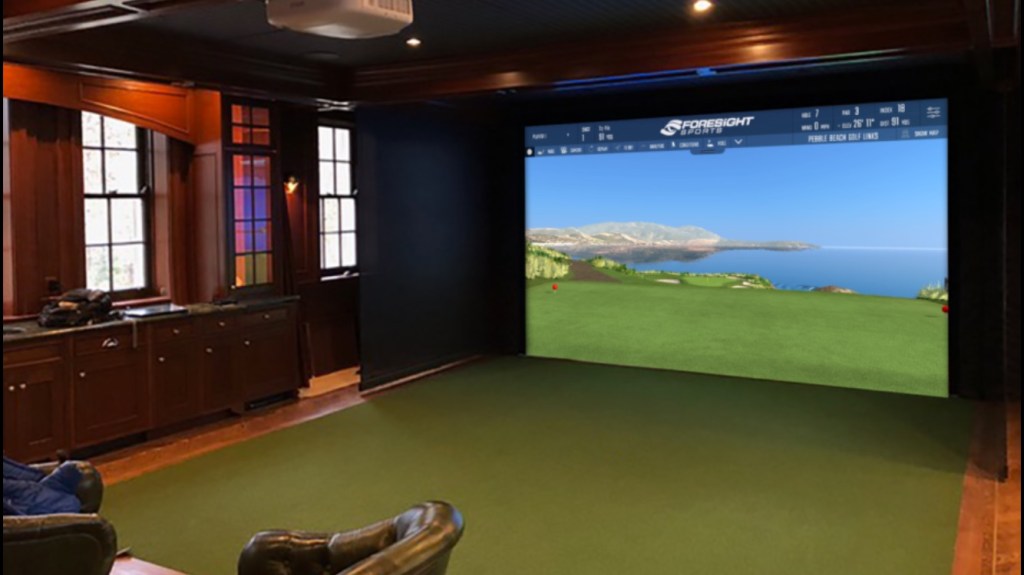
In 2008, I took my father-in-law with me to cover the US Open at Torrey Pines over Father’s Day. Now that he’s gone, I am more grateful every year that we had that time together. If you’re looking for a bucket list gift and escape with Old Dad, what better place is there than up the California coast a ways — Pebble Beach Resorts? At Pebble Beach, you and Dad can savor five legendary golf courses, including The Hay, the resort’s brand-new short course designed by Tiger Woods, world-class accommodations, and seemingly endless dining options – that’s the way to Dad’s heart. Here’s how to treat Dad to the ultimate Father’s Day or guy’s getaway trip: A round on Pebble Beach Golf Links – the number one public golf course in America – is a must. Post-golf, spots like The Bench and STICKS provide options for casual drinks or a celebratory meal. When it’s time to call it a night, the guys can retreat to one of two four-bedroom cottages located at Fairway One at The Lodge. Cottages feature a luxurious living room flanked by big screen TVs, a stacked-stone fireplace, and an open kitchen and wet bar. An outdoor terrace overlooking the famed first fairway at Pebble Beach Golf Links is ideal for post-round cigars.

Want to dial up the experience a notch higher? Check out the  Lexus Performance Driving School. Lexus, the official vehicle of Pebble Beach Resorts (and the company that sent me and my late father-in-law to Torrey Pines in 2008), is offering a full-day racing experience at WeatherTech Raceway Laguna Seca. Dad can drive this thrilling, iconic circuit while building his driving skills and confidence – on and off the track. Summer school dates include June 25, 26 or 27, and Aug. 20, 21 or 22, 2021. Fall and winter dates are also available. The experience is $995. To order a gift certificate or to register a participant as a gift, contact the Lexus Concierge at 888-211-8522 or Concierge@LexusPerformanceDrivingSchool.com.

I know my father-in-law never forgot that trip to watch Tiger win his final U.S. Open. And I’m positive that your father will never forget a trip to Pebble Beach. None of us will forget 2020, but we can pile some amazing memories on top of it. This Father’s Day is a great time to begin!

Srixon ZX5 Driver: Balancing power, forgiveness, and control

Here’s why I don’t completely believe golf simulators or launch monitors: it’s really easy for recreational players to get wrapped up in the numbers. Any avid, average golfer has read about how the pros try to optimize “low spin, high launch” in their drivers. Then they get on one of these high-tech machines and flail away, scrutinizing numbers and subconsciously changing their swings to try to fit the ideal they’ve pictured in their heads.

Me, I prefer to test out clubs on a course I know well, where my normal shots, strategies, and yardages provide a baseline for comparison.

Such was the story of the 2021 Srixon ZX5 Driver ($500). When it arrived on my porch in February, snow was still falling, and the only place to swing it was on the simulator of my home course. So off I went with it and my go-to big stick from the previous season for a head-to-head.

Overall distance was similar between the two, but the ZX5 launched a lot higher, due, I thought, to more backspin – like, 3,000 RPM more. Beguiled by numbers, I thought, “Hmmm. They say low spin is better.” I put my current driver back into my bag and took the ZX5 back home to wait for spring.

Playing the Srixon ZX5 Driver

If the proof is in the pudding, then when it comes to golf clubs, the pudding is the golf course. Springtime came, my home course opened, and I took the ZX5 out for my first two rounds. Conditions were cold, damp, and blustery. Nevertheless, the first drive of the year launched high and long, and it split the fairway. Already better than the simulator.

The main feature of the ZX5 is a 15% larger carbon crown compared to previous iterations, which moves weight lower and farther back and boosts MOI and COR (more numbers recreational golfers use a lot but know little about)—hence the reported backspin, I suppose. The ZX5’s sister driver, the ZX7 ($530) has a deeper face and two adjustable weights in the sole, compared to the one in the ZX5. I’m not much of a fiddler, so the single weight of the ZX5, along with the standard adjustable hosel, is plenty for me.

It was on the 12th hole – one of my several nemeses holes – where the ZX5 revealed its true stripes. The 12th is a 510-yard par 5, with OB all down the left and water on the right about 260 yards off the tee. I haven’t hit driver here regularly for probably 10 years because I can reach the water and I can rope-hook OB without equal likelihood. But I’d hit so many fairways already, I figured I’d give it a try. Watching my ball rocket over the hill 160 yards from the tee, right of the trees and left of the tall red post marking the start of the water, one of my playing partners said, “That Srixon is doing some good work for you today.”

The result: the best drive I’ve hit on 12 in over a decade, with only 198 yards left into the green. (I hit the front of the green with my 2nd and proceeded to 3-putt for par.)

The verdict

Srixon might not be the first manufacturer that comes to mind when you’re shopping for new clubs. But you’d be wise to give them a chance. Their tour-level clubs are as good as any on the market—as evidenced by Hideki Matsuyama’s Masters victory. Their standard clubs are equally competitive. The ZX5—like all the new ZX woods—feature the Rebound Frame, which increases ball speed, especially on center-struck shots, along with the aforementioned carbon crown, which provided remarkable forgiveness. In my two rounds (so far) with the ZX5, I’ve hit 50% of fairways, which is a significant increase over my normal 32.5% of fairways hit.

Now that’s a number that I can believe.

But wait, there’s more!

If you’re looking for irons to complement a new ZX5 Driver, the ZX5 Irons ($1,300) are the perfect match. Forged yet forgiving, the AI-designed face delivers both feel and power. I’ve tested a few of these on the range, and, for whatever range work alone is worth (everything is easier on the range), workability was impressive – calling my shots was a breeze. Better players might opt for the ZX7 or the ZX blades.

Mother’s Day Gifts 2021: Honoring Mom, Mother Earth, and Golf

When COVID-19 is said and done—hopefully sooner rather than later—one of the unexpected beneficiaries of a mostly tragic event could be golf. As an outdoor activity that naturally allows for social distancing, golf has become an outlet for people who only played once or twice a year in the before times.

And at my local course, anyway, these new, recently “regular” players include a lot of kids, teens, and women. So if you kids, teens, and partners are listening, this means you have a good chance of getting Mom hooked on the game. This is your time, and this is your Mother’s Day.

And this is a list of ideas for gifts to take advantage.

Ocean Tees

Plastics may be necessary for some things, but golf tees ain’t one of them. And chopping down hardwood timber for golf tees doesn’t seem quite right, either. Enter Ocean Tees, made from Moso bamboo farmed exclusively in the company’s 100-hectare in Jiangxi Provence, China, under strict environmental controls. This kind of bamboo is 4x stronger than hardwood. The packaging is even made from recycled (and recyclable) material. The tees come in short, long, mixed, and “castle” versions (4 British pounds per box online, and they accept PayPal). I’ve found the castle tees to be most durable in dry turf conditions where even my previous plastic tees snapped every few drives.

If you feel like exploring the Ocean Tees website further, you’ll find that they also sell golf apparel. Their polos, sweaters, and other apparel (from 49 British pounds) are produced in the only factory in Europe that meets Greenpeace’s textile procurement standards. Both women’s and men’s lines are woven from blends of organic cotton and proprietary degradable elastane. And none of the process or packaging contains any virgin plastic.

Srixon, Callaway, OnCore, Wilson golf balls

We’re living in a golden age for golf balls. It wasn’t long ago that all we had to choose from was one good ball and a gaggle of rocks. And the good ball was 3x the price of the rocks. Now the market offers a cornucopia of golf balls, from behemoths like Titleist to smaller boutique manufacturers. All of them offer a range of feel, firmness, and price to appeal to players of any levels and preferences. And the colors! Reds, pinks, yellows, fluorescent greens, blues, oranges – practically any color you can imagine. Heck, there are even multi-colored balls now. Srixon’s Q-Star Divide ($33) is one-half yellow and one-half red. The company claims this combination aids in aligning putts and seeing the ball in the air.

If Mom is a bit more of a traditionalist, Callaway’s new ERC Soft and Supersoft golf balls ($35) feature “triple-track technology”—three lines, to help line up putts. These balls are arguably the softest on the market that have succeeded in squeezing every possible bit of distance out of a design optimized for feel thanks to Dow PARALOID Impact Modifier technology.

If Mom wants to go alternative, the Buffalo, New York-based Oncore offers a range of balls at three price-points—the Avant 55 ($20), Elixr ($30), and the new tour-caliber Vero X1 ($40).

Finally, if you want to personalize your gift, check out the Wilson Duo Optix with custom text ($22). Mom will be pretty sad when she loses one of these!

Wilson Staff Eco Stand Bag

Show your love for Mom and Mother Earth at the same time by giving her the Wilson Staff Eco Stand Bag ($150). This bag is made from over 50 recycled plastic water bottles (verified by Global Recycled Standards 4.0). Durable, functional, and stylish, the Eco Stand Bag also helps keep plastic out of landfills.

“The Golf Lover’s Guide to England”

If Mom is champing at the bit to do some traveling, maybe she’d like to read up on golf courses in Merry Olde England so she can plan her first post-pandemic golf trip. “The Golf Lover’s Guide to England” by Michael Whitehead ($27, White Owl) is a comprehensive yet digestible field guide to some of the oldest, most famous, and best courses in the world. Mom will find everything from local 9-holers to Open Championship venues here.

Alright, there are a host of equipment recommendations I could make for Mom, too, but the best advice I can give is to get her a gift card for a clubfitting (e.g., at Club Champion). If you want to get Mom hooked on golf, she should have clubs that fit her. After all, she’s no off-the-shelf mother, is she? She deserves better than off-the-shelf clubs.

Happy Mother’s Day to all the moms out there, and I sincerely hope to see you out on the links this year!

Titleist TSi woods and hybrids: Terminate the golf ball

Remember the Terminator movies? Skynet was the artificial neural network-based conscious group mind and artificial general super-intelligence system that built the Terminators. And the Terminators were nigh-indestructible metal killing machines.

Imagine if Skynet made golf clubs instead of cybernetic monsters, and the only killing was the murdering of golf balls.

Oh, what a wonderful (future) world it would be.

Titleist’s TSi drivers, fairway metals, and hybrids (TSi1, TSi2, TSi3, and TSi4) all feature faces forged from Allegheny Technologies Incorporated (ATI) 425 titanium alloy. This alloy is made in the US near Pittsburgh originally for use in ballistic armor and then in aerospace, including the Mars rover. It’s light, strong, and has tighter tolerances than typical titanium. The crown is also titanium, combining with the face to be arguably the strongest, lightest, fastest, and best-sounding driver on the market.

The TSi models differ with respect to specs and the players they target. The TSi2 is sort of the “standard”: more forgiving, with a higher, straighter “stock” trajectory than the TSi3 or TSi4, and sole weights that can be adjusted. The TSi3 has a more compact head (though still 460cc) and a lower trajectory and features sole weighting adjustment capabilities (both drivers have adjustable hosels). The TSi1 is ultra-light for slower swingspeeds, and the TSi4 is played by several Tour players.

This said, the TSi2 is still—like all Titleist offerings in my experience—“playable” and “workable” for even semi-skilled players like me, assuming the shaft and specs fit your game.

The metal woods and hybrids are equally well-built and powerful. Without getting too far ahead of myself, I will say that the TSi2 3-wood is the first 3-wood I have hit regularly and without trepidation on the course in over 5 years. My swing is regaining some old form…and the TSi3 is both easy enough to hit and long enough to make it both a reliable AND powerful weapon. Like when the original Terminator started protecting John Connor.

Playing the Titleist TSi2 line

I normally play a 9.5- or 10.5-degree lofted driver. The TSi series comes in whole number lofts. So 10-degree it was. The reason for these lofts is the weighting and spin characteristics add approximately .5 degrees of loft. Despite the TSi2 ($549) being the “higher launching” model, it would be completely wrong to say that you can’t hit lower, boring drives with it. Just put the ball back in your stance a bit. Move the ball up a titch, and you get towering shots. Speaking of lower drives, the first time out with the TSi2 driver, my son and I both semi-topped drives – and then watched as both balls seared the turf all the way out to where many folks hit their regular drives.

“That face is hot,” said my son after he stopped complaining about his “bad” drive that rolled out 230 yards, dead straight.

The face of the TSi line is composed, as mentioned, of a novel material in the golf world. And the ATI 425 titanium is sort of pebbled in texture, too. This might strike some as weird. But the important thing is that it strikes the ball with other-worldly power. The head of the TSi2 is somewhat flattened and sort of flared at the back compared to the TSi3—a shape that some purists may object to. Frankly, until reading about it in the press release, I didn’t even notice. What I did notice is that in four rounds playing and testing it, I have hit more fairways and have driven the ball consistently farther than I have in any round during the past few years.

When I mentioned to a clubfitter colleague at Club Champion that I was testing the TSi2, his reply was, “That is one hell of a driver!” I can’t disagree.

The TSi2 3-wood ($299), as noted above, performs like a smaller carbon-copy – or rather titanium-copy – of the driver. The low profile and consistent launch of the 15-degree metalwood imbues even this shell-shocked fairway wood player with confidence.

Rounding out my testing set is the TSi2 23-degree hybrid ($279), and it has has truly become the workhorse of my bag. In one fell swoop it replaced a 21-degree hybrid and a 24-degree hybrid, which were the two longest-tenured clubs in my bag (8 years and 7 years, respectively). With the ATI 425 construction of the TSi2 hybrid face, I can hit it as far as the old 21-degree with the control of the old 24-degree (and just choke down a hair if I need to play shorter).

Best of all, I have three spectacular matching clubs to use on the tee on nearly any length or design par-4 or par-5 I can imagine. All three are decked out with Tensei AV Blue Raw (stiff) shafts—one of a handful of featured shafts. The Tensei AV was my choice (absent a personalized fitting) as a fairly straightforward mid-launch, mid-spin shaft, excellent for most recreational players.

The Verdict

There are sort of “flashbulb” moments with any club—both good and bad. Iconic shots that stick in your head. For me, the TSi2 line’s moment came on the 508-yard 3rd hole of Lake of the Woods Golf Course in Mahomet, Illinois (my home course). OB runs from tee to green on the right, and trees line the left side of the fairway. Starting 110 yards into the green are two ponds, right and left. I haven’t hit driver here regularly for 10 years, as it will invariably be the one hole where I hit a slice OB, or protect from the slice and pull it into the trees. And hell, I’m too old to go for it in two these days, anyway.

But the third time out with the TSi2, there was a bit of a tailwind, and I’d hit the fairways of Holes 1 and 2 already. After a good swing, I watched my ball sail high and straight over the hill in the fairway. When I crested that hill to see where my ball ended up, I was 190 yards from the green, dead center of the short grass. I put an easy, choked-down swing on my TSi2 hybrid and ended up pin-high, just right of the green. As easy as any par 4.

As I slid the hybrid cover back on, put it in my bag, and looped the straps over my shoulders, I swear I heard the trio of TSi2 clubs say to me, “Play us if you want to live.” Indeed, these three clubs are going to serve as my personal golf ball-killing machines well into the future.