Dr. Alister MacKenzie was a civilian surgeon in the British military before turning to golf course architecture. He designed around 50 courses world-wide, with three immediately recognizable to most avid players: Augusta National, Cypress Point, and Royal Melbourne. A strong case can be made that the good doctor’s 1928-vintage New South Wales Golf Club rounds out the top four of his legacy courses.
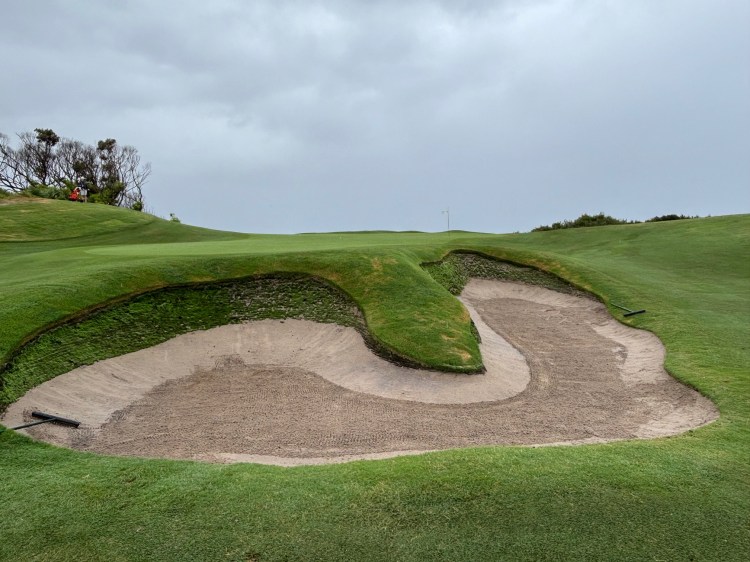
Currently ranked by GOLF Magazine as the 46th-best course in the world, the 6,380-yard layout (from the member tees) climbs and tumbles along the cliffs of the national park area at La Perouse, just outside Sydney, overlooking historical Botany Bay. In 2024, the legacy firm of MacKenzie and Ebert rebuilt and redesigned every green and rivetted most of the bunkers, bolstering the classic design to withstand modern equipment and play. The originally small, mostly elevated table-top putting surfaces were enlarged considerably, reshaped to add variety, and leveled somewhat to keep shots from rolling back off down the fairways. About two years ago, all the greens were resodded with triple bentgrass, and they opened about a year ago.
New South Wales GC is a private course, but it does allow limited public play – for a price. Greens fees for guests from abroad are $850 AUS. For Australians from outside New South Wales (NSW), the cost is $450 AUS. Residents of NSW are restricted from play – they must be accompanied by a member. Few golf carts are available, only for medical exemptions.
Considering the cost, the restrictions, and the distance for many avid golfers to travel “Down Under,” the obvious question is: Is New South Wales GC worth it?
“This is the number one course I’ve ever played!”
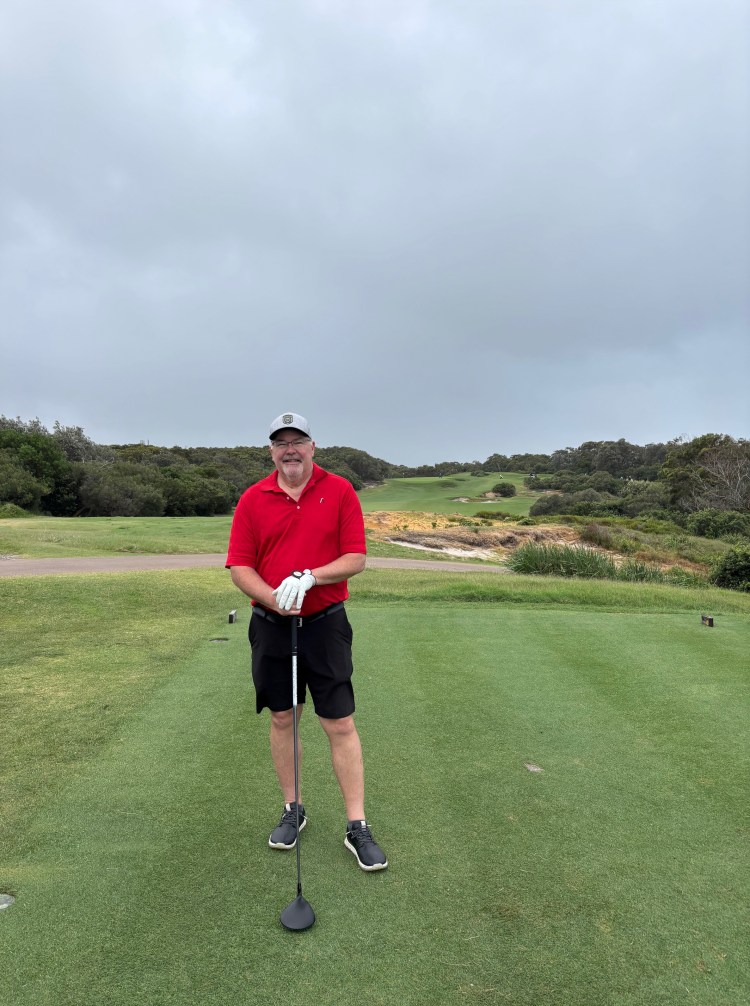
The day I visited New South Wales GC, it was blustery, rainy, and cool to start out. I had forgotten my rain suit, so I was clad in only a golf polo and shorts. I also was playing a set of excellent rented Callaway clubs. I was paired with a young couple, Charlie and Erika, from New York City who had come to Australia to visit friends and play nearly 10 courses across the country; this was their second stop.
After the sun appeared on our 9th hole, Charlie shared that he had played Augusta National five times, Pebble Beach a few times, and several other legendary courses. On the 16th hole, he said to me, “I just told Erika that this is the number one course I’ve ever played. This place is incredible!” High praise, indeed.
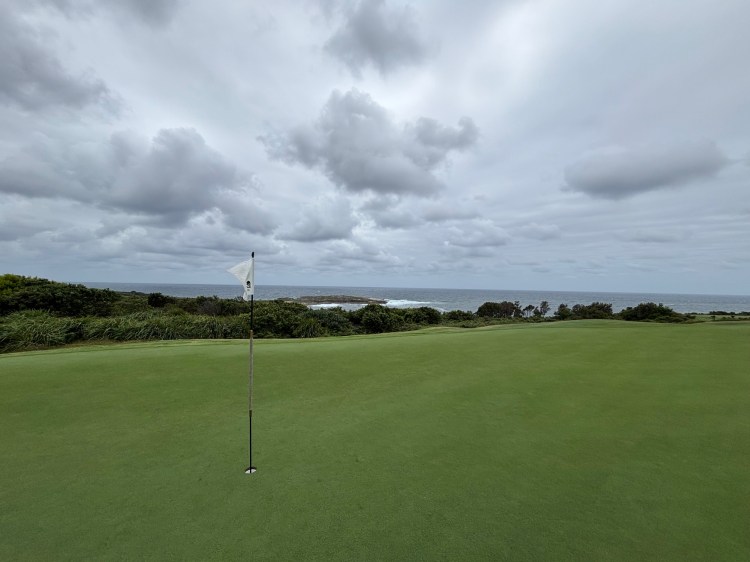
Playing New South Wales GC
What makes players like Charlie – and yours truly – gush about New South Wales GC? For one thing, there is the natural splendor of the location. As noted, the course weaves through national parkland. The grounds were leased originally for 100 years for $1. Happily, the lease has been renewed in preparation for the course’s 100th Anniversary in 2028. Consequently, there are no houses, no development – just golf and the wild Australian countryside. One tip: If you hit a ball into the bush, just drop another. It’s not worth risking an encounter with one of the country’s famed deadly snakes.
Perhaps snakebite risk is why the proshop staff offered this tip upon checking in: “Keep the ball in play off the tee.” Although, to be fair, they also advised that the redesigned greens “have lots of different areas, so you need to hit the right one to have a good putt. Distance control is critical.” Honestly, though, I just did my best not to wander too far off the fairways.
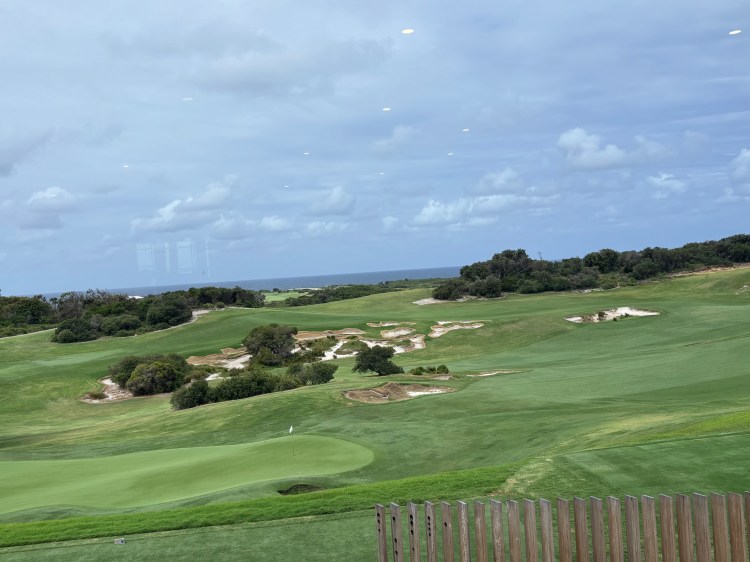
Keeping the ball in play turned out to be easier said than done, however, given that the layout features a number of totally or nearly blind tee shots and second shots. The course guide they provide with your greens fees is helpful, but when you’re standing on a tee and unsure where to hit it – for example on Holes 3 and 7 – everything feels awkward.
Yet course knowledge is limited even for regulars. As Director of Golf, Craig Stickling, says, “Every day here plays differently, because of the wind. And all the par 3s and 5s play in different directions, so however the wind is blowing, you’ll be challenged somewhere.”
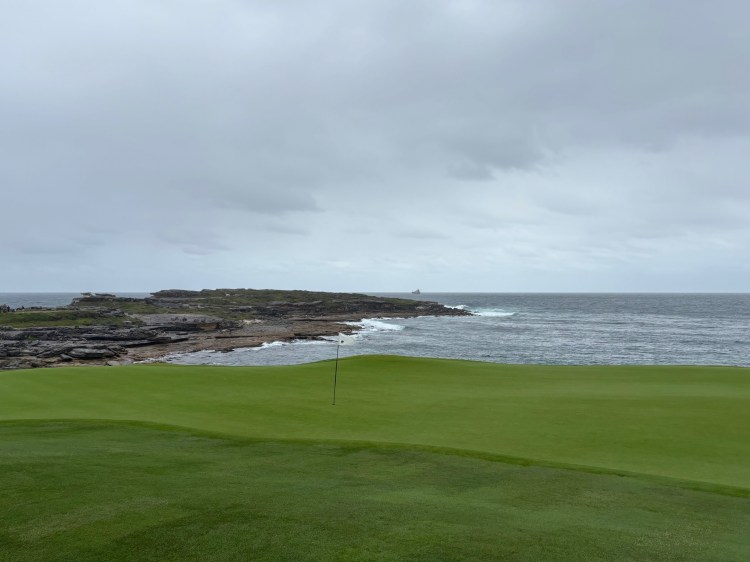
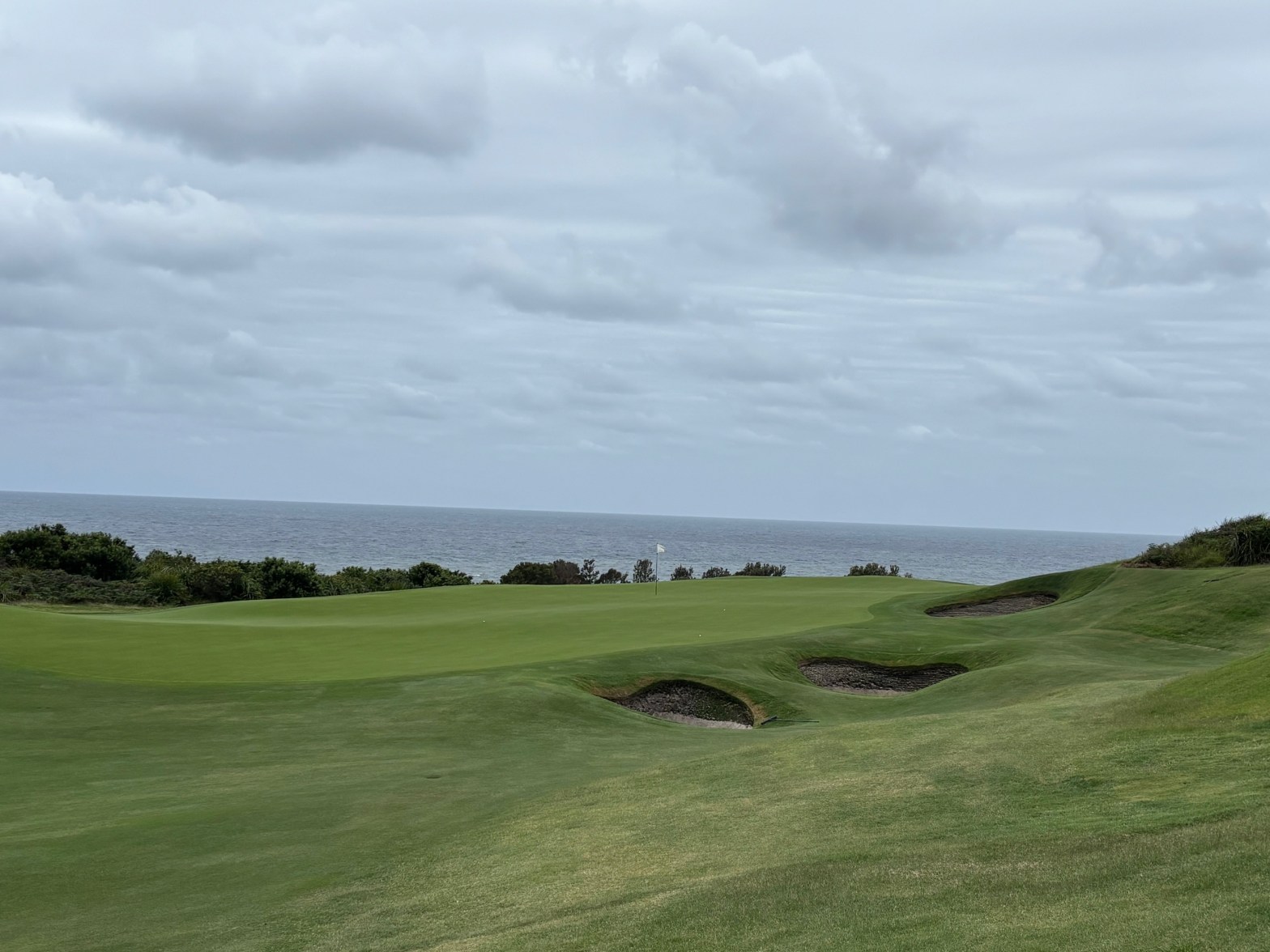
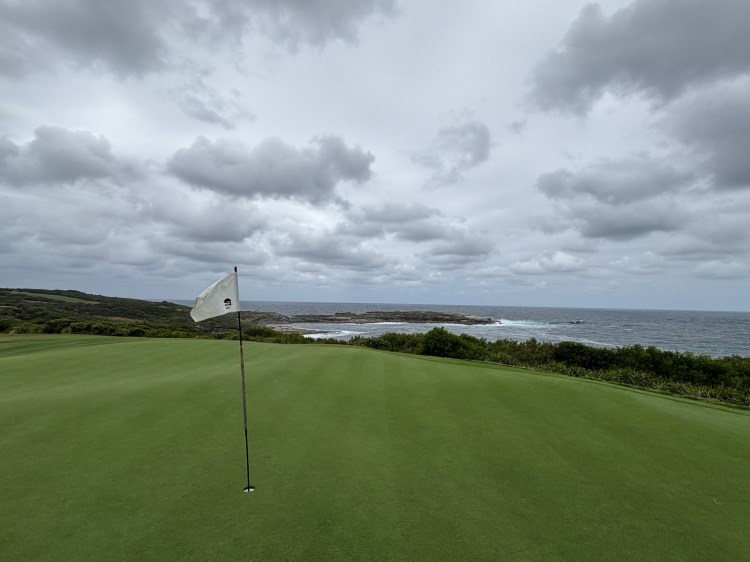
Although the entire layout is memorable, the stretches of holes on the front and back nines that run down to and along the ocean are the standouts. The 444-meter (486-yard) par-5 5th Hole tees over a hill, down into a valley, and then back up over another hill, presenting a completely blind second shot. As you trudge up and crest the second rise, you’re presented with a spectacular view out into the sea. Then comes the “signature” 150-meter par-3 6th Hole, where the tee shot must traverse seawater, rocky shoreline, and deep bunkers fronting the wide, shallow green. (I made one of the best up-and-downs of my life from the sandy road running behind that green!)
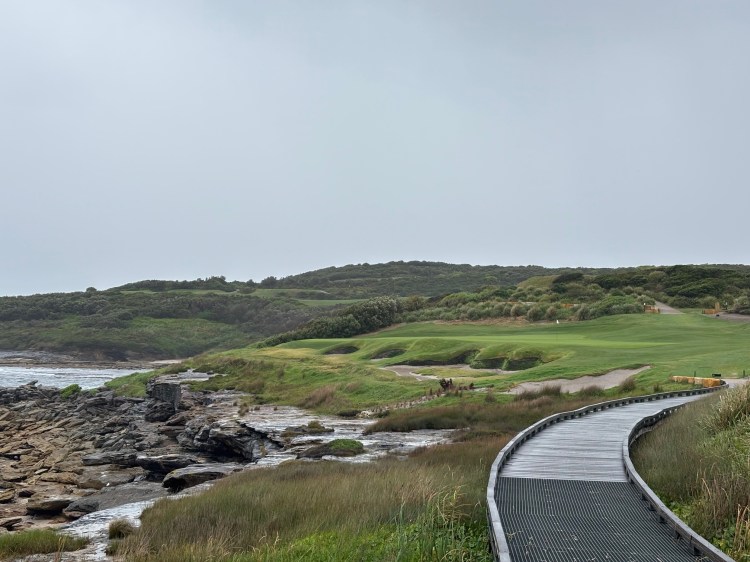
On the back side, the 303-meter (331-yard) 14th Hole challenges with an intimidating carry over brush and ocean to a dogleg-left fairway whose contours mirror the waves in the ocean. The second shot is all uphill, usually into a stiff wind. The number 1 handicap 15th Hole starts out with another blind tee shot to a saddleback fairway, but rewards with more ocean views. Perhaps the most awe-inspiring vista on the entire property, though, comes at the 16th green, the climax of a brute of a dogleg par-4 measuring over 452 yards from the tips (“just” 426 from the member tees). It was here where Charlie professed his admiration for New South Wales GC – “The best I’ve ever played!”
New South Wales Golf Club – The verdict
Australia is a long way to travel for most folks, but if you play golf and are coming to Sydney, it is a must-play. The cost is not trivial, but according to my playing partners, they would have gladly paid it again if their schedule permitted another round. It is simply not often that you can access one of the top 50 courses in the entire world.
The 2009 Australian Open was contested here and won by Adam Scott. According to someone on staff for that event, multiple pros said the national Open could be played here every year, but the practice facilities are too limited for a major professional event—the range is quite small.
Sydney itself is a city of beauty and excitement. Australia’s largest city is a delight for history buffs, gastronomes, and sightseers of all stripes. The seafood and wine are highly recommended, and, if you have time, book a sailboat cruise on the Sydney Harbor to enjoy the best vantage of the famed Sydney Opera House. (I highly recommend Liquid Edge Sailing School for a personalized harbor cruise.) A road trip out to the Blue Mountains is also a must for scenery, wildlife and cider- and wine-tasting. Jervis Bay National Park south of the city is a great place to see gray kangaroos (those are the cute ones—red kangaroos are the intimidating, muscle-bound ones).
No doubt, the city and area have changed immeasurably since Dr. MacKenzie built New South Wales GC in 1928, but even with the updates to the course design, you still feel the ageless wonder of the Australian coastline and appreciate the brilliance of one of the good doctor’s greatest creations. If you’re thinking about traversing the planet to tee it up, New South Wales GC should be on your bucketlist.