In 1963, there were only 47 nesting pairs of American bald eagles left in the lower 48 states. In 1973, the eagles received protection from the Endangered Species Act. Today, there are tens of thousands of nesting pairs in the lower 48, and the bald eagle was removed from the list of endangered species in 2007.
Around the same year the bald eagle was thriving, Eagle Creek Golf Course in Findlay, Illinois, was on the verge of extinction. Perched on the shores of Lake Shelbyville, the Eagle Creek Resort in the Eagle Creek State Park was in a death spiral – financial mismanagement coupled with pervasive black mold throughout the Lodge forced permanent closure of the resort and lodge in 2009. In 2017, the lodge was demolished in a controlled burn.
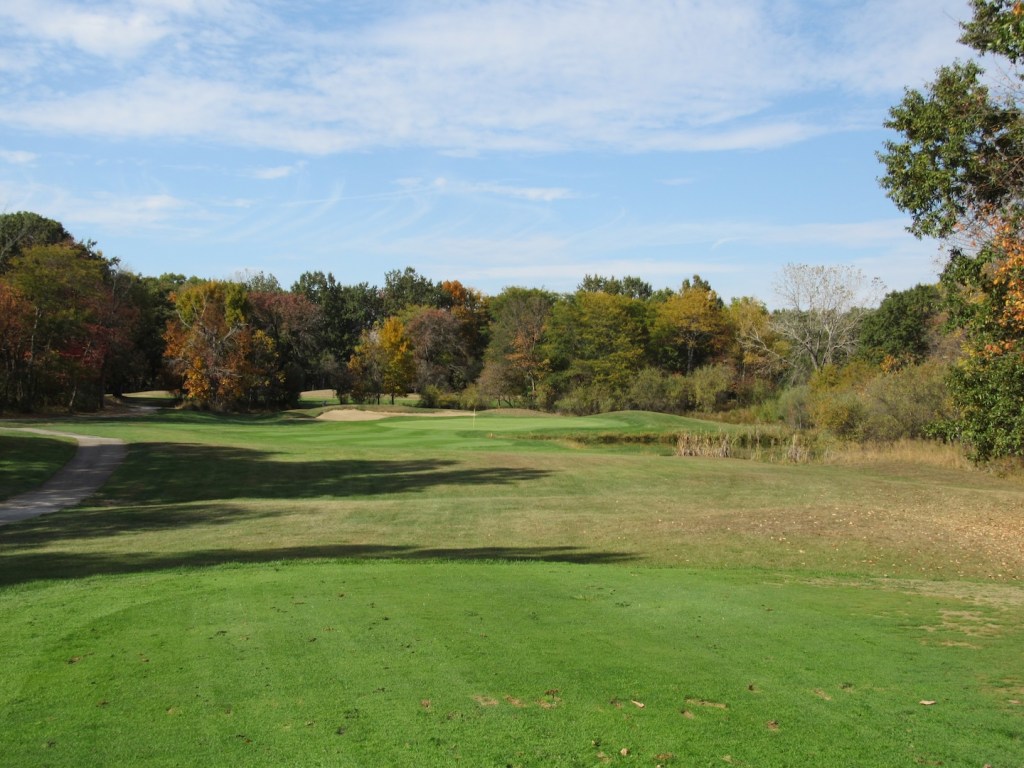
During those dark years, the 6,942-yard Ken Killian-designed golf course seemed destined for closure. Smack-dab in the middle of the state, nowhere near any large towns or interstate highways, the course is remote and not terribly inviting without the associated amenities of a resort. But the rugged, rolling layout traverses the shoreline of the expansive lake and offers a playing experience reminiscent of courses in the Kentucky Lakes area or some courses in the Tennessee State Park system.
Fortunately, the decision was eventually made to preserve the challenging golf course. Today, Eagle Creek Golf Course, like its namesake raptor, appears to be returning from the brink of extinction.
Playing Eagle Creek Golf Course
At Eagle Creek, golf course architect Ken Killian, a past president of the American Society of Golf Course Architects (ASGCA), did not build a typical “resort course.” Such courses prioritize “playability,” with fairly intuitive routings, less penal hazards, and contouring that encourages wayward shots to stay in play. None of these features can be found here. The difficulty of the layout is evident from the rating and slope from the tips: 75.0 and 139, respectively. Even from the 6,390-yard “men’s” tees, we’re talking 73.5 and 136.
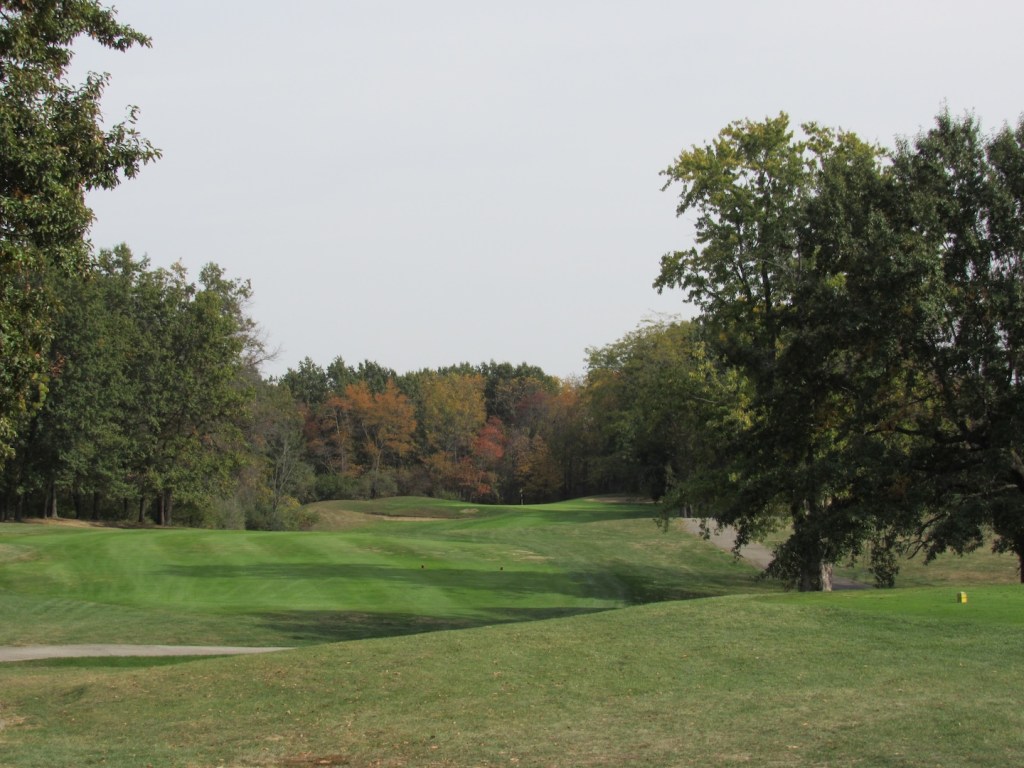
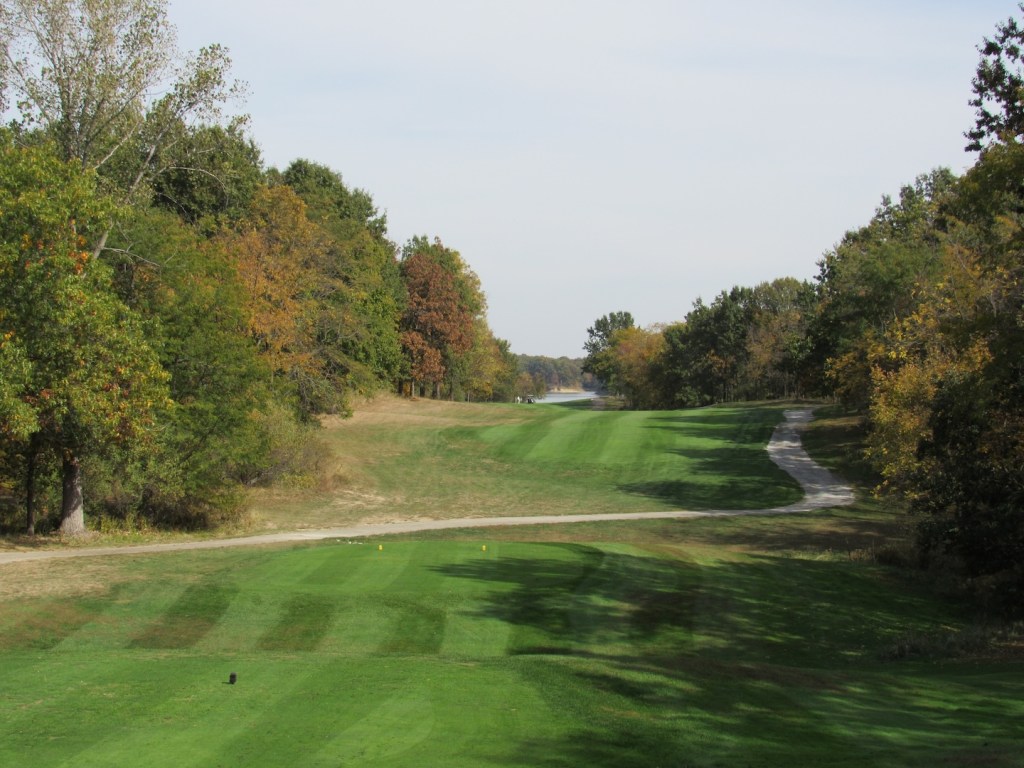
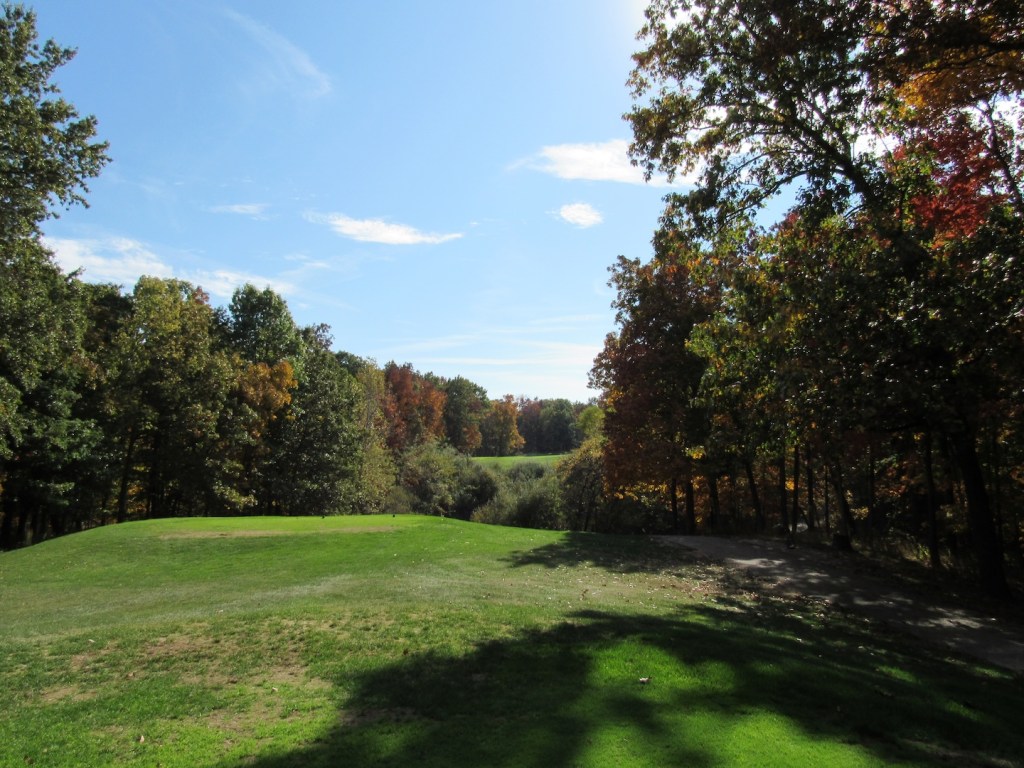
Several design features conspire to make the layout so difficult. The most obvious is the dense woods lining most fairways. Furthermore, 10 of the 14 par-4s and par-5s are doglegs, all of which call for local knowledge to know the lines to obscured landing areas. All doglegs on the front side are left-to-right, too, punishing golfers who play a draw. A few even feature cross hazards, so club selection is also often a guessing game for newcomers (there are no yardage books or GPS on the carts).
Given an abundance of blind and semi-blind tee shots and second shots, and the aforementioned trees, players must often resign themselves to a “hit and hope” philosophy. On the 405-yard dogleg right 1st Hole, you need to pick the precise angle over the oaks on the corner of the dogleg from the tee, or a good drive may go through the fairway. If it’s your first time here, you have no clue what the fairway looks like beyond that bend.
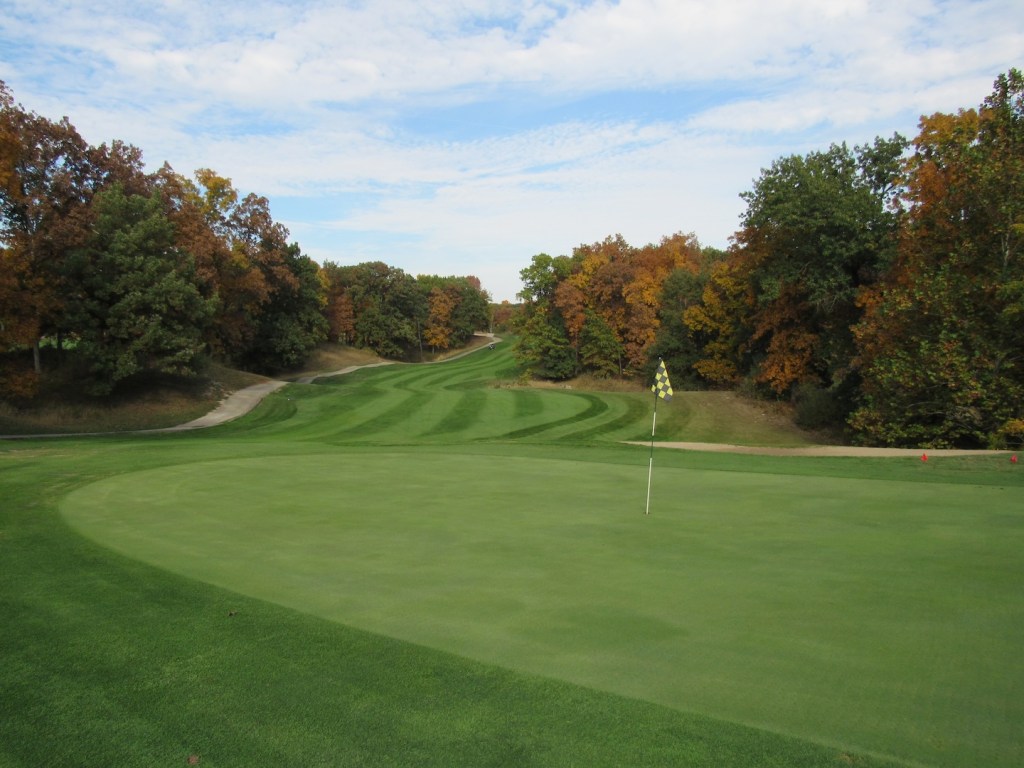
Uncertainty aside, this wild and wooded layout offers some lovely approach shots after you do find your golf ball (or drop one – bring plenty!). When you round the bends in the fairways – hopefully spotting your ball in the short grass – you are struck repeatedly by green complexes framed by the thick foliage. Picturesque as most of the greens are, they are also generally small, with numerous wide, shallow surfaces that demand precise distance control – so club selection difficult if you are not familiar with the course.
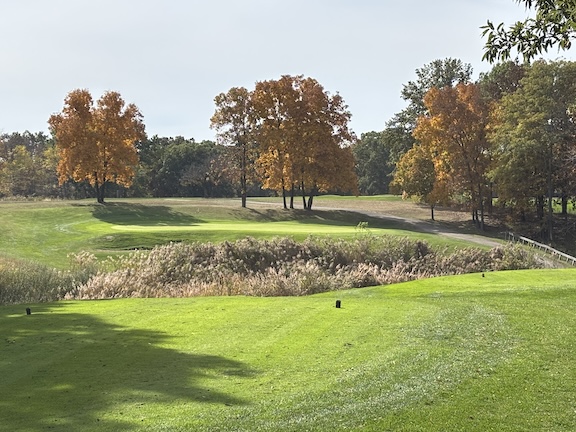
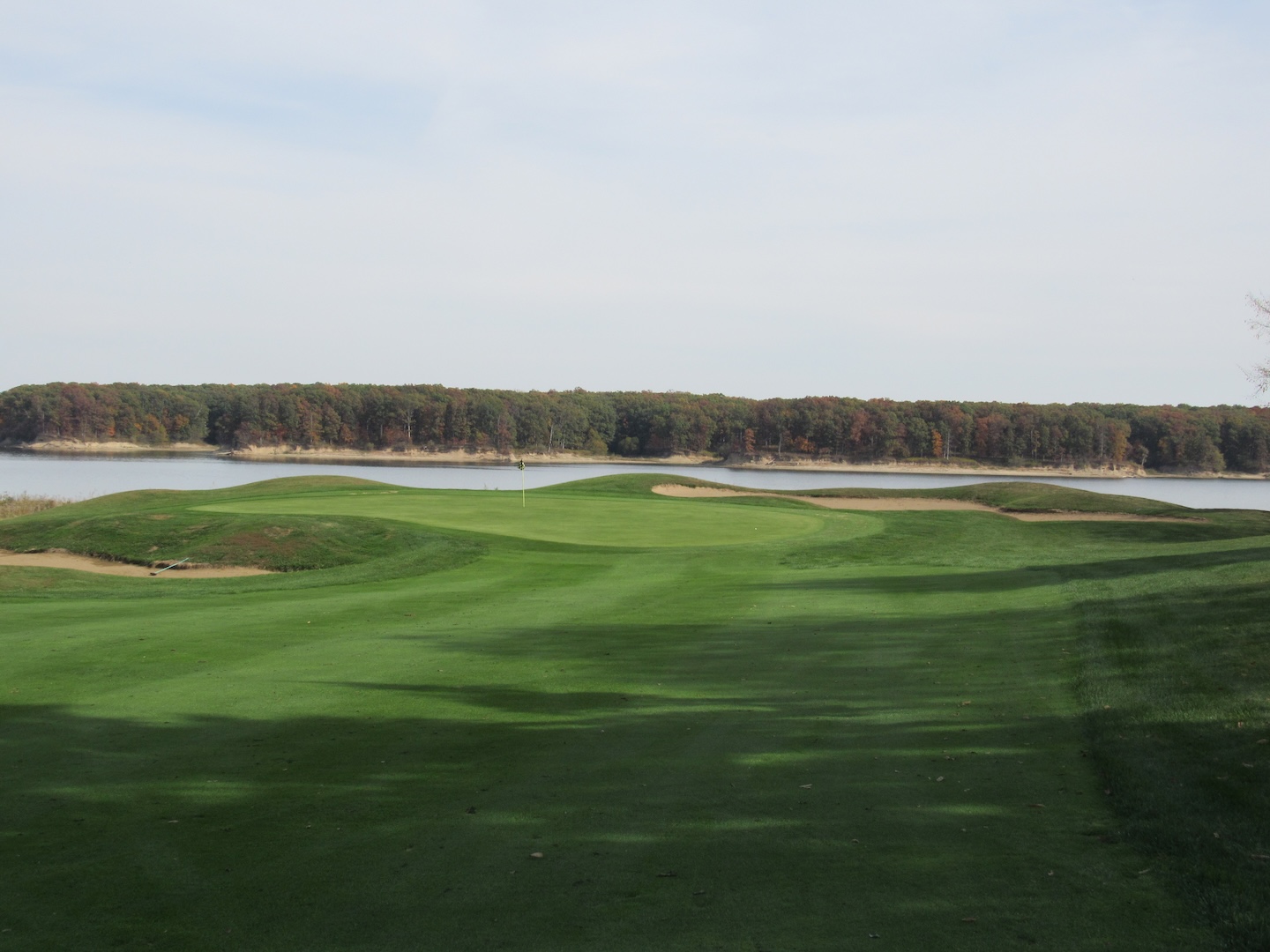
There are several memorable holes at Eagle Creek, but the par-3, 170-yard 8th and the par-5, 580-yard 12th stand out. The idyllic 8th – the second-easiest hole, according to the scorecard – plays downhill over a stand of bulrushes. The 12th – the second-hardest – presents players with a narrow fairway lined by dense undergrowth and towering trees on both sides. There’s no chance of seeing the green upon your approach unless you’ve laid up to at most 100 yards out. From that point on, the fairway runs downhill to the small green, behind which is a wonderful view of Lake Shelbyville.
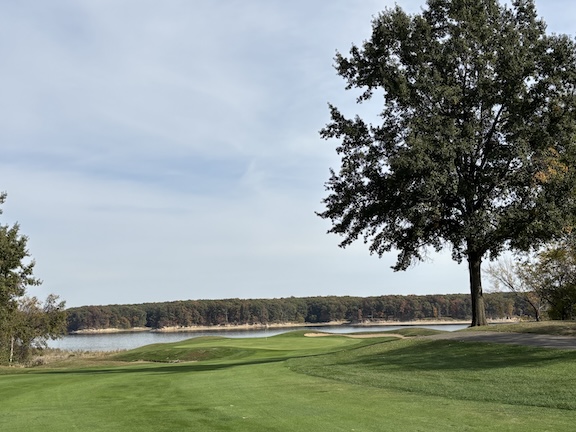
The beautiful 395-yard 14th is a local favorite, but only if you’ve played it before. First-timers have absolutely no clue what to hit to the fairway, which turns 90-degrees left halfway to the green and is bisected by a rough-filled ditch. Two fingers of the lake probe deeply into play at the corner, and everything tilts toward the water. The green complex is also banked toward the lake, making the experience from tee to green a potential nightmare if you hit a draw – and for the uninitiated.
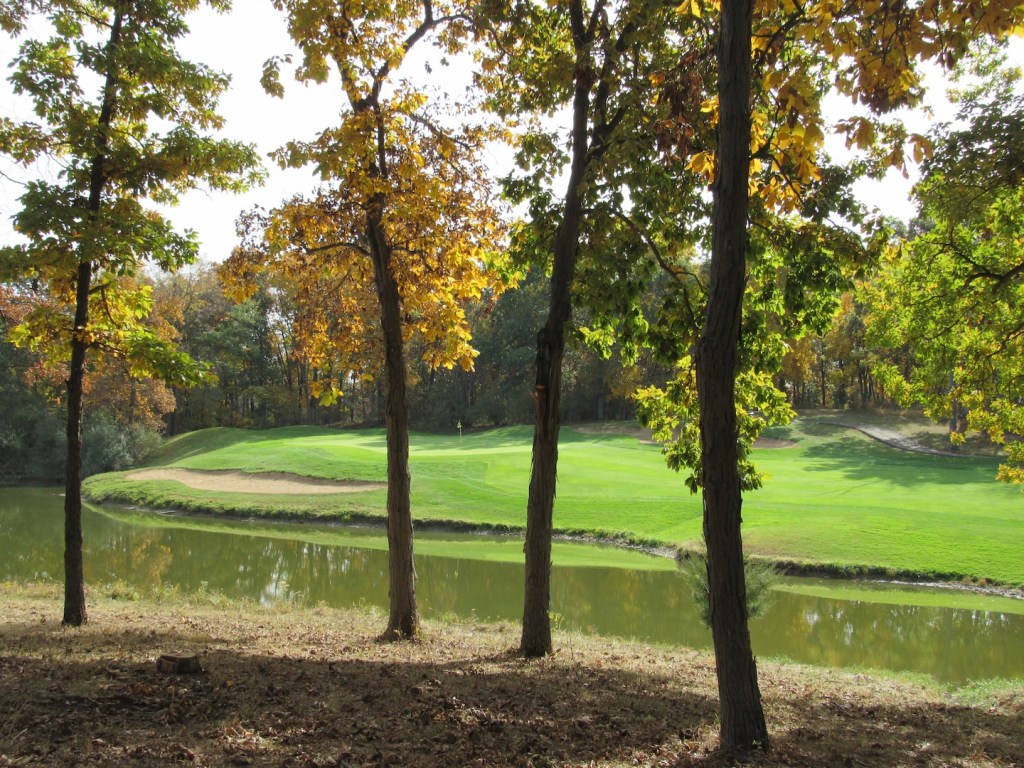
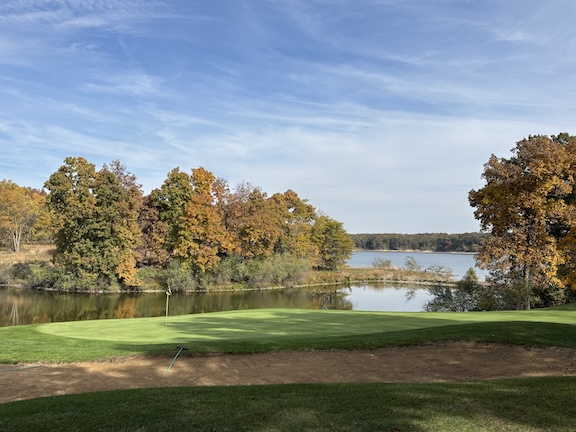
The 535-yard 18th is intimidating: 95% of the landing area is blind from the tee, thanks to the scrub growing up from the ravine your drive must carry. The landing area itself is also not very wide, and it narrows quickly into a ribbon-thin fairway that snakes downhill through impenetrable brush. Water looms to the left on your blind lay-up. The approach is then back uphill to an elevated and heavily bunkered green that has some of the most severe undulation on the course.
Eagle Creek Golf Course: The verdict
Eagle Creek Golf Course is a bit of an enigma. The phrase that kept coming to me while playing was “great bones.” The demanding Killean layout is not in any sense a “resort course,” but it has held up with, frankly, relatively minimal updating over the decades. I played and reviewed Eagle Creek in 2006. Looking back at my notes, not much about the course itself has changed. For example, twenty years ago, I remarked how some bunkers were like concrete, while others were perfect. In my notes for today, I made the same comment; some were unplayable, but a couple were perfect.
The rest of the property is drastically different, though. As mentioned, the lodge and resort are all gone. There’s no clubhouse either, just a small trailer to check in and perhaps grab a snack. (FYI: The routing doesn’t take you back to the proshop between holes 9 and 10.) Heck, there’s not even a practice putting green.
Amazingly, however, green fees have gone DOWN since 2006, when they were $55 with cart. Today, regular rates are just $42 with cart (and $25 with cart on “Manic Mondays”!), making Eagle Creek arguably the toughest “cheap” course in all of Illinois – and also one of the best values in the state. But what you save on green fees, you might pay in gas and golf balls.
According to Head Pro Micah Sandiford, over 50% of players travel over an hour to tee up. “We get most of our play from Decatur, Springfield, Champaign-Urbana, and other larger cities,” said Sandiford. Indeed, the foursome behind me had trekked from Bloomington-Normal.
This means there are a lot of players here who are not “regulars,” and because of the challenging design and terrain, there are also countless lost balls. “We sell found balls in the proshop for a dollar apiece,” said Sandiford, “and every year, we make between $7,000 and $10,000 on those balls.” Holy smokes!
For now, Eagle Creek Golf Course clings stubbornly to life, its talons dug deeply into the Lake Shelbyville shoreline. It may not be a phoenix arising from the ashes of the lodge, but it is resurgent, much like the bald eagle itself.