2024 Father’s Day Golf Gift Guide

It’s Father’s Day again! Seems like the last one was just a year ago. Time flies like a McIlroy drive, as they (should) say.

Let’s get right to the point: The best gift you can give to old Dad – or any father-figure or mentor in your life who happens to love golf – is to play a round with them. But if time or opportunity don’t allow, here are a few of the best Father’s Day gifts I’ve run across this year.

Upper Deck Golf Trading Cards

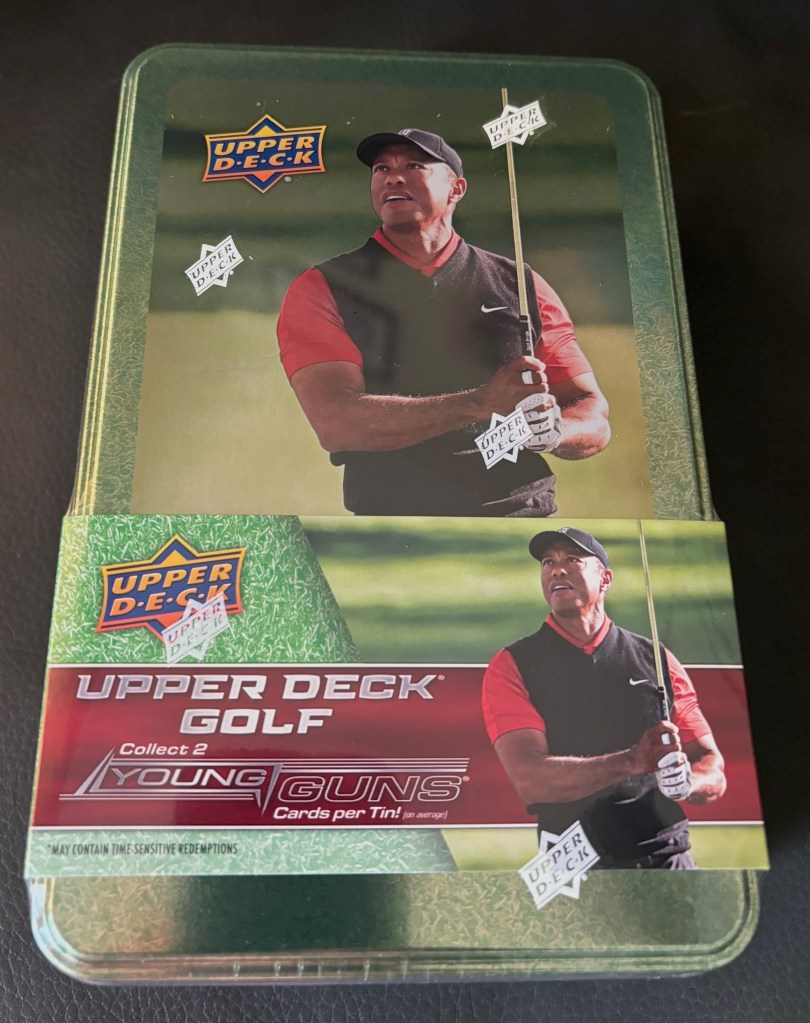
I’ve been collecting sports trading cards since I was 10 years old. I’ve just recently gotten back into the hobby, and based on the prices of cards on eBay and the thousands of “card twitter” accounts, it appears I’m not alone. I’m a much bigger golf fan than I am baseball fan these days, so I was thrilled to find sleek tins of Upper Deck Golf Cards ($35) on the shelves of my local card hot-spot. They’re printed on high-quality stock and the photography is excellent; however I was somewhat disappointed with the inserts and parallels. For example, the tin touts “Young Gun” inserts, one of which in my tin was…Billy Horschel. Huh? Guy’s been on tour for 15 years. And the “Dazzlers” inserts are shiny and sparkly, but Joel Dahmen and Ashleigh Buhai are “Dazzlers” (despite Buhai’s 2022 Women’s Open victory)? Nevertheless, it’s cool to have a few Tiger Woods and Annika Sorenstam cards, and I appreciate the inclusion of plenty of LPGA players. If your dad finds himself reliving the childhood thrill of opening packs of trading cards, this is a fun gift.
Arcade Belts

At a certain age, belts become a “must” for men. Weight redistributes, backsides turn into bellies. I don’t know why. It’s just a thing. But belts can be a pain: wrong size, metal buckles that set off airport metal detectors, expensive leather that stains and warps. Arcade Belts ($35-$40) are revolutionary, futuristic belts that solve these problems. These fabric belts are woven from 85% post-consumer polyester. They stretch and are adjustable precisely to any size. The buckle is plastic, so you can leave it on for TSA. They’re so light, you don’t even know they’re on. The only caveat is that the plastic hardware is slightly bulky, and if your beltloops are narrow, it’s tough to thread the Arcade through while your shorts are on. It works better to put the belt through before you put the shorts on. And once the belt is threaded through the loops, you can leave it in your pants when you do laundry, as it’s machine-washable!

GolfLogix Green Books

GolfLogix has custom green books for over 15,000 courses worldwide. Books ($50) contain hole overviews and heatmaps of greens with directional arrow for the breaks. Dad will feel like a Tour Pro pulling out one of these…until he misses the 5-footer for par anyway. Seriously, every time I show these to people at my home course, they all want one. Your Dad will, too!

adidas Sport SP0070 Sunglasses

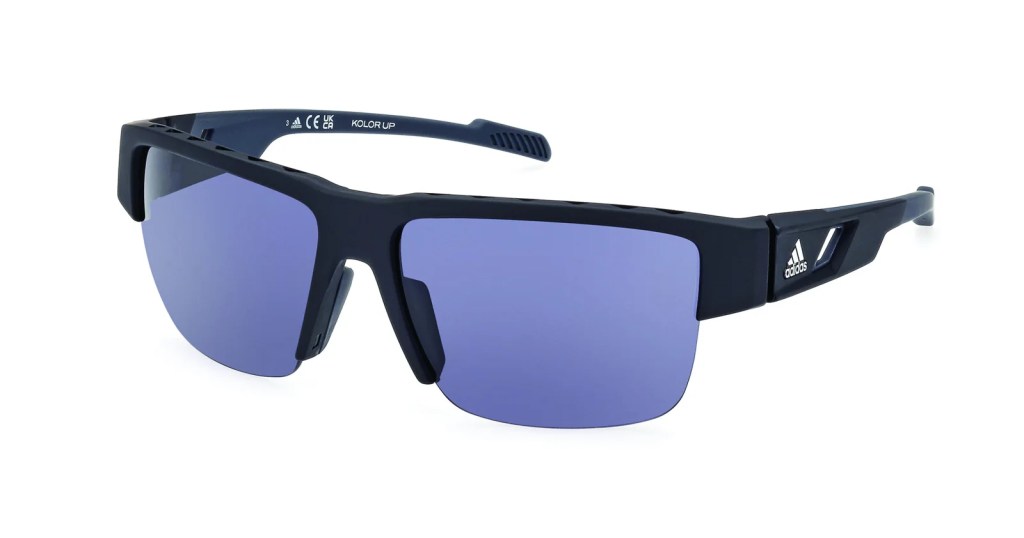
Is Dad looking to elevate his game on the greens? Adidas Sport eyewear has sunglasses tailored specifically for golf enthusiasts. The adidas Sport SP0070 sunglasses ($78) boast advanced lens technology that enhances clarity, color, contrast, and surrounding light, allowing you to read the greens with unparalleled precision. The impact resistant, ultra-lightweight frames ensure maximum comfort throughout your round, while the ergonomic design guarantees a secure fit, even during your most powerful swings. I don’t wear a lot of sunglasses, but these light and aerodynamic frames with aeration slots contoured to my head, and the flexible temples with a rubberized inside stayed snug without sacrificing comfort. And adjustable nose pads with sweat draining lines stayed put on my (usually sweaty) nose, too.
Balls, glorious balls!

If there’s anything you can get Dad that he will (a) use, and (b) lose, and (c) need plenty of replacements for (aside from sunglasses), it’s golf balls. Just last week, I was playing with a guy who sliced a brand-new pearl into the pond on the first hole and said, “There goes $5.50 in one swing.” And he was a 3-handicap.

The trick is finding balls that work for ol’ Pops. What does he like? What fits his game? There are more and more choices every year!

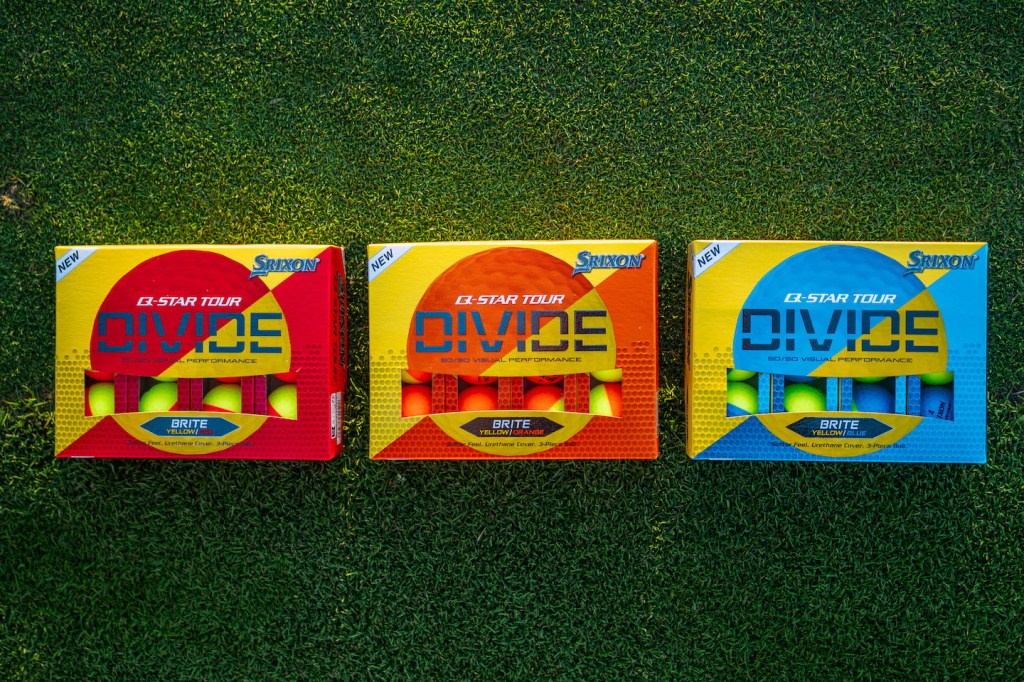
Srixon Q-Star Tour Divide

The Srixon Q-Star Tour Divide ($40/doz) are the half-and-half colored balls you have likely seen around and thought, “Why?” Well, I’ll give you three good reasons: One, they are EASY to see in the air, even with old-man eyes on overcast days. Two, they have a built-in alignment line for putting. If Dad is one of those players who draws a line on his ball to line it up with the hole when he putts – just skip the Sharpie. Three, even if Dad doesn’t want to play them, they are AMAZING for practice: the split-color design provides immediate feedback in putting and chipping – line, rotation, spin. (And then he can play with the white version, also $40).
Honma TW-S and TW-X

Honma, the biggest golf equipment company in Japan, has introduced a pair of Tour-quality golf balls to the US market in 2024: The TW-X and TW-S ($36/doz). Both sport a premium cast urethane cover that provides amazing spin performance on short irons, increased durability, and an extremely scratch-resistant surface. The TW-X and TW-S deliver exceptional feel shot after shot. Honma’s 326 Dimple construction was developed over a rigorous three-year design process. The 326 dimples are intentionally aligned with a certain size to withstand strong winds with mid/high trajectory. I’ve tested both of these extensively this year and love them. The S is softer and spinnier around the greens, with a higher ball-flight. The X has lower spin off the driver, and a more piercing ball-flight. Both are very responsive around the greens, but if I had to pick one for my game, it would be the X.

Bridgestone – so many options!

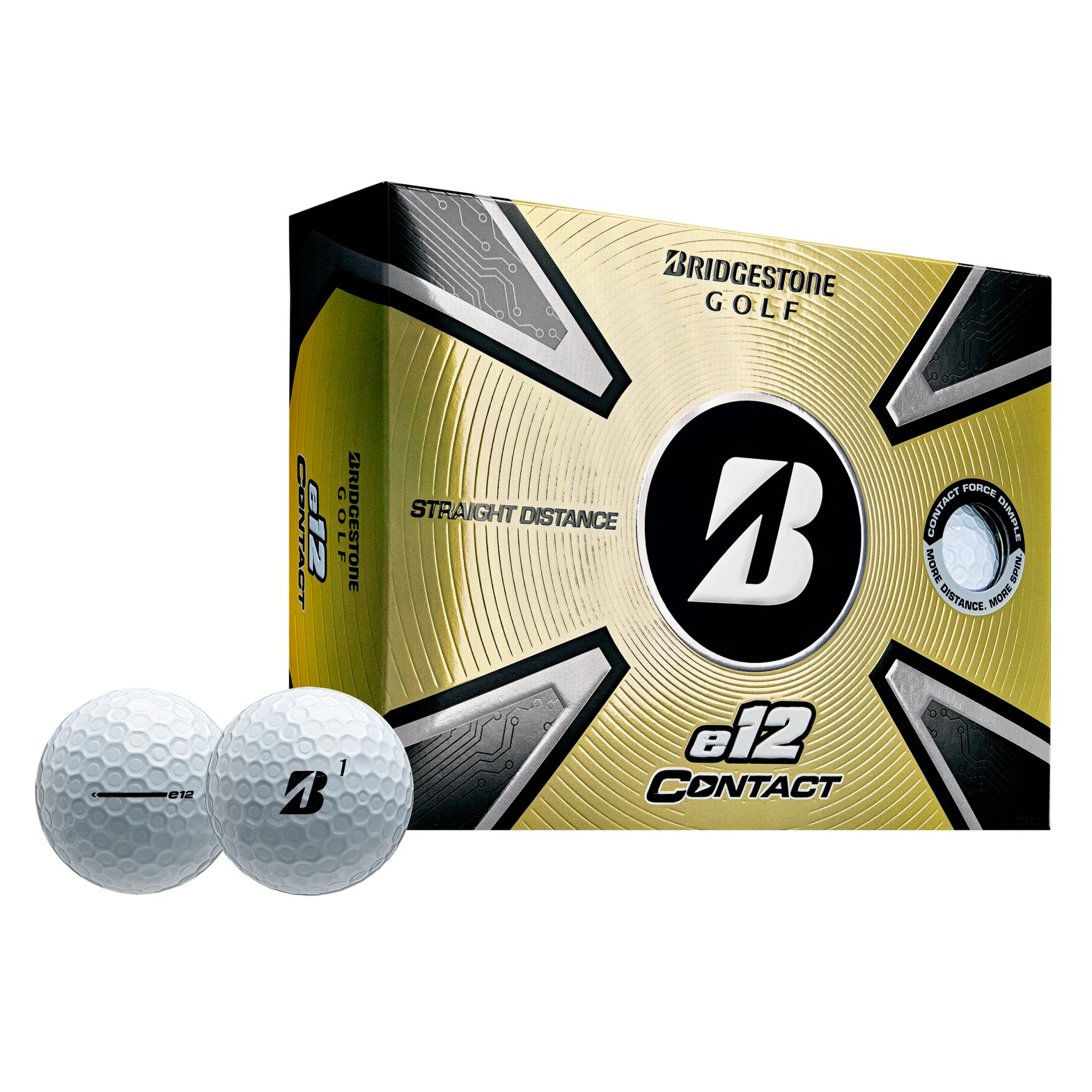
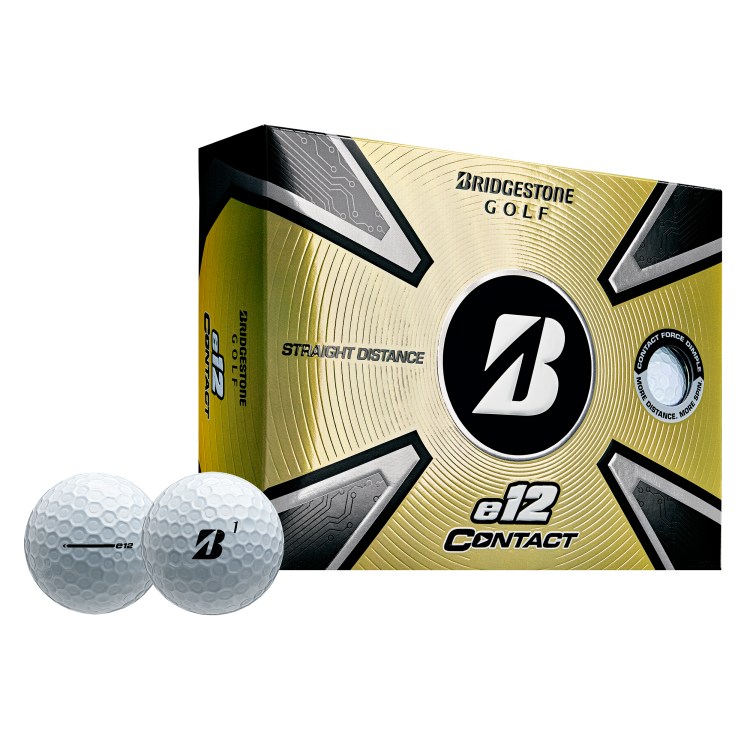
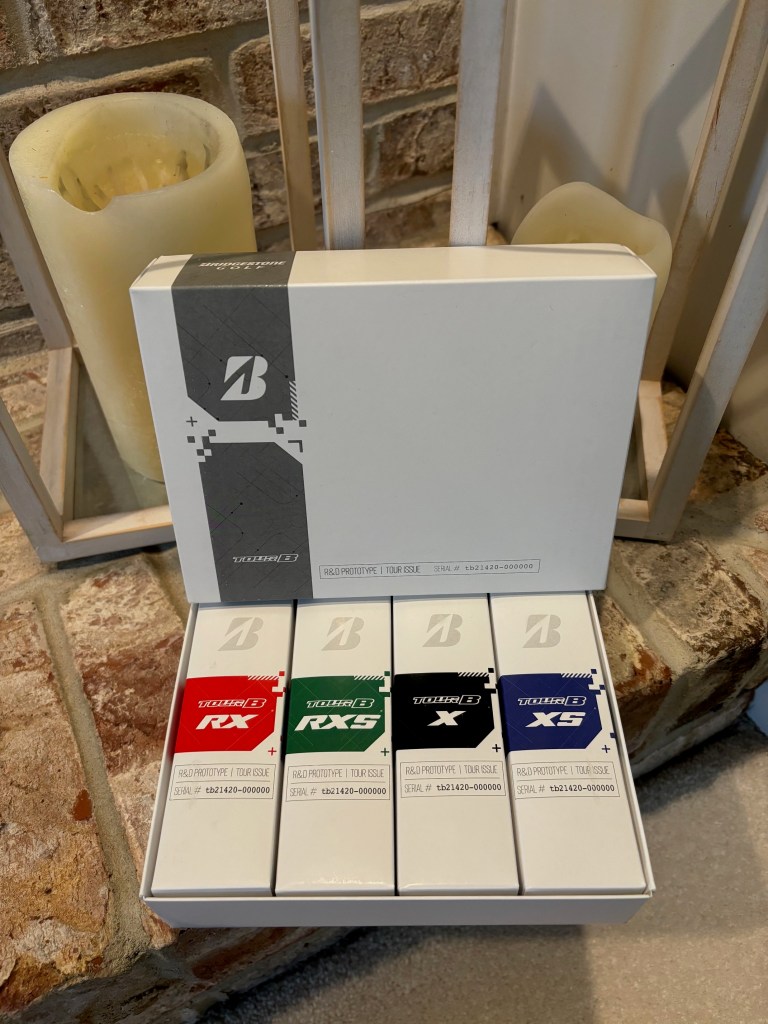
There is one golf ball company that is sort of the current heavyweight champion of the world. We all know its name, and we all know why. Its balls are outstanding. But there are plenty of challengers, including Srixon (above) and upstarts like Honma. If this were boxing, though, there would be one ball maker that would be ready to enter the ring for a title shot: Bridgestone. Bridgestone has multiple offerings at all price points for golfers looking for all sorts of features: Tour-grade performance, softness, distance, fun, budget, ladies – you name it, there’s a Bridgestone. I was able to test out all the 2024 Tour B ($50/doz) prototypes this year and was impressed by every one. Spin, control, distance – almost hard to tell them apart. Another big favorite of mine is the e12 Contact ($30/doz), whose dimples are designed to allow more clubface to contact the ball at impact. I can’t say for sure it’s not a gimmick, but I can say that every time I play the e12, I hit nearly every fairway. Could be coincidence, but it does build confidence!
TRUE Golf Shoes and Apparel

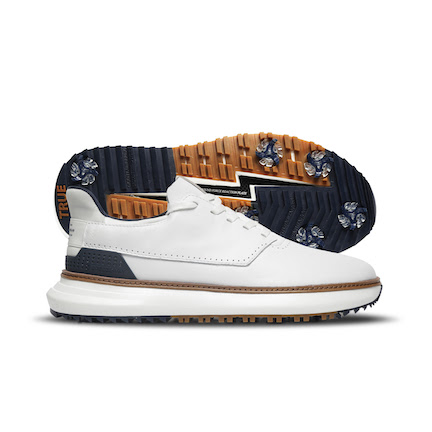
I’ll be honest: Golf apparel is really the best clothing and accessories I own. More thought goes into what I’m going to play golf in than into what I’m going to wear for a nice dinner out (much to my wife’s dismay). In fact, if I can wear the same clothes for golf AND for everywhere else, that’s ideal. TRUE Linkswear caters to golfers like me. From finely crafted shoes to hoodies to pants to flip-flops, TRUE carries just about everything for both men and women who want to look stylish on the links AND out and about before or after a round. I’ve got two pair of TRUE shoes (LUX OG Tour ($143-$205), LUX G ($175)), and I get more compliments on both than any other shoes I have. The detailing, down to the metal-capped aglets on one pair, is impeccable. The website has a shoe sizer for ease of reference, but they do run a tad small, so I’d recommend going up ½ a size. The Limited Edition Members Only collection includes a range of on- and off-course apparel and accessories that mix and match seamlessly no matter the occasion – perfect for that anniversary dinner! (Right, honey?)

Dead Golfer Bourbon

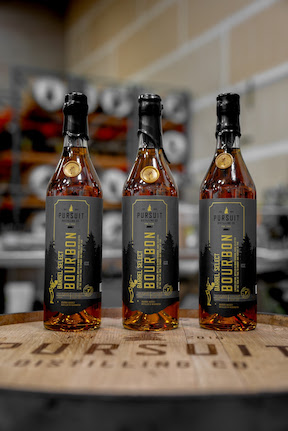
Just this year, TRUE Linkswear has partnered with Washington state’s Pursuit Distilling Co. in creating a hand-selected, limited-edition, bottled-in-bond, 100-proof bourbon called Dead Golfer Bourbon. They’ll make just 438 bottles of this wonderful elixir, aged carefully for more than six years in American White Oak barrels. The Mash Bill is 72% yellow corn, 24% rye, and 4% specialty malt barley. You can order it directly at the link above for $105 a bottle.
The Payne Stewart Collection

Golf has its share of style icons, but few can match the late, great Payne Stewart. A new eponymous apparel line, the Payne Stewart Collection, will be debuting June 8, 2024, just in time for the U.S. Open at Pinehurst #2 (where Stewart won 25 years ago). Polos, quarter-zips, wind shirts, shorts and slacks, and, of course, the ubiquitous plus-fours and Hogan cap are part of the new collection. This line will be featured in the merch tents at the U.S. Open, but you can order yours online earlier!

 SuperStroke Putter Grips

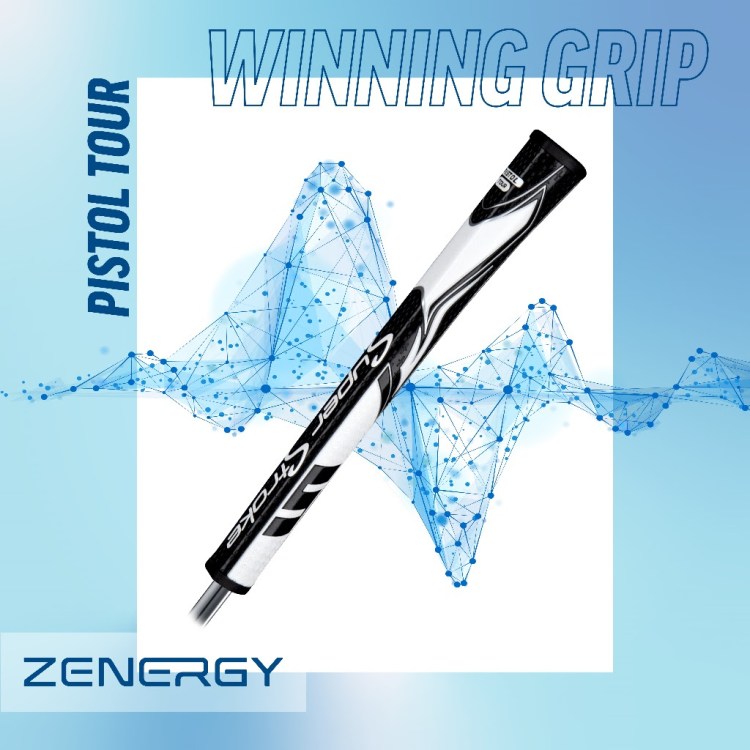
Perhaps the best feeling in golf is feeling comfortable – and confident – on the greens. An essential part of achieving this blessed nirvana-like state is your putter grip. Your putter should feel so natural in your hands, that it’s like an extension of your body. SuperStroke Putter Grips ($30-$40) have in a very short time become ubiquitous on greens everywhere from local municipal courses to the PGA Tour, where it seems like the winner every week plays them. (By the way, SuperStroke just acquired the illustrious Lamkin Grips company, so if you play Lamkins, look for more innovation from that line, too.)

 Bushnell Wingman View

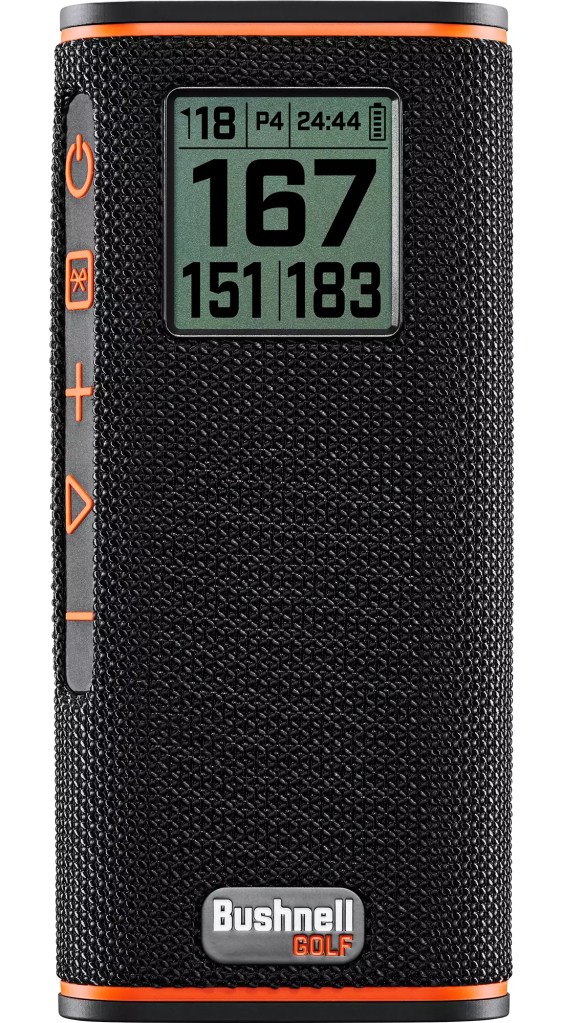
If Dad likes music on the course, there is one accessory that has become essential: The Bushnell Wingman. Bushnell’s newest version of the their revolutionary yardage-provider and speaker, the Bushnell Wingman, is the Wingman View ($200). The View incorporates visual yardages and music information on an integrated LCD screen, so if you want to play in silent mode, you can still get your yardages. And even if you don’t want music (or yardages) on the course, the Wingman serves as an excellent Bluetooth speaker anywhere (it’s not just for golf!).

Life on the Green by Ann Liguori

Iconic sports and golf broadcaster Ann Liguori works in the medium of the long-form interview like van Gogh worked in oil paints. Her award-winning cable series is called Sports Innerview precisely because of her ability to delve deep into the hearts and minds of athletes. Golf, being the mental game that it is, produces many deep thinkers, and Liguori’s interviews of golfers are some of her very best. In her new book, Life on the Green: Lessons and Wisdom from Legends of Golf (Hatherleigh Press, $18), she shares 12 interviews with some of golf’s all-time greats, from Jack Nicklaus to Annika Sorenstam. Each chapter is distilled down to a central lesson in the table of contents (e.g., Nancy Lopez: Stay positive and play happy golf), and the contents of each one make you appreciate both the interviewee and golf itself even more with every page.

You know, my kids give me a hard time because I tend to turn everything into a lesson. I love Liguori’s book because it reminds readers that, in fact, everything can be a lesson. And after individual memories and names fade, we can all hope that the lessons, at least, remain.

So happy Father’s Day, and may your lessons be passed on for many generations to come!

Cleveland Golf Launcher XL2 Driver is a Fairway-Finder

Golfers’ single-minded pursuit of distance at the expense of control reminds me of the way some people – mostly young people – drink the strongest booze possible, flavor be damned, just to “get there” faster. With age, one realizes that savoring a fine bourbon is more enjoyable than slamming shots of swill. And on the golf course, one learns that second shots from the middle of your fairway are more conducive to low scores than from rough, woods, and other fairways.

This is all to say that there is virtue in control. If your golf game is predicated on this axiom – or if your game could perhaps stand a skosh more virtue – the new Cleveland Golf Launcher XL2 Driver is worth a look.

Cleveland has long been known as a top-tier wedge- and putter-maker. In 2024, Cleveland has also debuted outstanding irons, with their ZipCore XL Irons and hybrids, with their XL Hy-Woods. Rounding out the XL line, the Launcher XL2 ($450) brings AI-assisted technology to the tee. The high-tech approach allowed Cleveland’s engineers to identify the spots on the face where amateurs tend to contact the ball (i.e., high/low, and heel/toe), and increase MOI in those regions of the face. This made for a 2% heel/toe MOI boost and a whopping 12% MOI boost on high/low contact. These numbers translate into less yardage lost on off-center hits.

Playing the Cleveland Launcher XL2 Driver

What does this AI-driven design look like on the golf course? I took the Launcher XL2 out for several rounds early this season, when my swing usually feels rusty and fairways feel like foreign lands. Much to my surprise, and delight, I found myself hitting my second shots from short grass at a far higher rate than normal for the time of the season. In fact, I would have been very pleased with the number of fairways hit in every one of these test rounds mid-season. Was it that my swing had somehow weathered the winter better than usual? I don’t think so, because several swings felt cringingly awkward. Still, off went the ball into the fairway.

Don’t get me wrong, there were still a few pulls and pushes – the Launcher XL2 isn’t a cure-all. It must also be said that when it came to “pop” resulting from my best swings and contact, the results were somewhat less than anticipated. Several drives – in admittedly cooler and wetter conditions than normal – ended up about 10 yards shorter than I would have otherwise expected. The XL2’s Rebound Frame technology produces two flex zones for concentrated power, so power wasn’t lacking, per se, but it felt like contact was just a bit soft. This said, the off-center hits ended up about where I would have expected them to. So it was overall a reasonable trade-off.

Here’s where we return to the opening reflection on distance and control: Despite often being first to hit in the foursomes of much younger players than me, I was also often the only one in the fairway, the only one to hit the green, and the one with the lowest score. Ah, the joys of sipping over taking shots.

The verdict on the Cleveland Launcher XL2 Driver

My testing of the Cleveland Launcher XL2 left me extremely impressed with the control it provides. The cool, wet, early-season conditions (and my advancing age) may have been detrimental to its distance performance in my rounds. However, even if there is any lack of “pop,” the ultimate value of a dependable fairway-finder cannot be overstated. If you happen to struggle with a slice, there is also a draw version, and if you REALLY want to go all-in for control, there is a custom control version with a shorter custom shaft.

In short, if you pair this solid big-stick with Cleveland’s excellent irons, hybrids, wedges, and putter, you’ll have a bag top-to-bottom that will allow you to savor every hole, tee to green.

Omni Tucson National boasts 36 golf holes and rich golf history

Tucson, Arizona, is a long-time PGA Tour and Champions Tour stop. The Tucson Open was played (under various monikers) from 1945 to 2006. From 2015 onward, the Cologuard Classic (again, under multiple names) has been played against the backdrop of the lovely Santa Catalina Mountains. For around 35 years, the venue for these prestigious events was the Tucson National Golf Club, renamed in 1997 as Omni Tucson National Golf Resort and Spa. Golf history runs deep here.

The opening hole on The Catalina Course eases you into the round, but it does present players with decisions off the tee.

In 2006, Tom Lehman and his golf course design firm were brought into Omni Tucson National to revamp the 27 Bruce Devlin and Robert von Hagge designed-holes and create another 9, expanding the playing options at the Omni to two 18-hole courses. And you’d be hard-pressed to find any golf resort in the Southwest that has two courses with more divergent feels and looks.

The Catalina Course is the more traditional design, with wider fairways, plenty of trees, and nary a cactus in sight. The most radical feature of the Catalina is its 5 par-5s, making for a par of 73. The Sonoran Course, on the other hand, is shorter – at par 70 – narrower, and replete with dry washes and all manner of prickly plants. This variety sets Omni Tucson National apart from most other golf resorts in the Southwest, where “multiple courses” means “multiple desert-style courses.”

Given the dramatically different vibes of the two courses, I asked Omni Tucson National Resort’s Direct of Golf, Brent Newcomb, which one is more popular with guests and visitors. “Well,” he replied thoughtfully, “if they’re interested in 35-plus years of PGA Tour history, then the Catalina. If they’re from the North or Midwest, and they want to play ‘desert golf,’ then the Sonoran.”

What sort of player tends to play well on one versus the other, I asked. “The Sonoran is a desert-style course,” explained Newcomb. “There’s not a premium on distance – more on accuracy. It’s not ‘target golf,’ exactly, though, but there are elevation changes and waste areas. On the Catalina, there are five par-5s, so there are good scoring opportunities for longer hitters.”

The downhill par-3 3rd Hole on The Sonoran Course brings elevation, wind, and precision into play.

Playing the Catalina and Sonoran Courses at Omni Tucson National

I had the good fortune to play both the Catalina and Sonoran Courses during my visit, along with 13 other avid golfers who were in my group. Every one of us commented on the vastly different natures of the two layouts. From the back tees, the Catalina stretches to a tour-worthy 7,262 yards. The next-furthest back tees are 6,610, which then jump rather abruptly down to 5,717. Wisely, both courses offer both longer and shorter sets of combo tees. Most first-timers on the Catalina will find the “Medium Combo” (6,145) a comfortable compromise.

The par-3 4th on The Catalina Course feels less like a desert course and more like a resort course.

The Sonoran maxes out at 6,529 yards, but given the numerous blind landing areas and fair amount of local knowledge you need to plot your way around the course, the starter recommended the 5,995-yard white tees to me (a 10-handicap). Despite Newcomb’s claim that the Sonoran isn’t “target golf,” I found it quite targety indeed. A couple of my group members reported feeling awkward throughout the round, as did I, due to both the yardages and the placement of hazards. One colleague drove his ball over the green on the downhill 304-yard 1st hole, for example, and there’s no coming back from the drop-off behind that green. So longer hitters need to take club selection into account on nearly every hole, if the starters’ advice is followed.

Back to the Catalina, the first few holes ease you into the round. From the opening hole – where bunkering, water, and a slight dogleg right conspire to constrict the fairway – you realize that here, too, choices will have to be made off the tee. Lehman does a nice job of placing bunkers and pinching fairways at multiple points, ensuring that players of all skill levels will need to pay attention, and none will be able to just blast their ball over them without considering what else lies beyond.

Plentiful bunkering, strategically placed, characterizes both The Catalina and Sonoran Courses. (Here, the 5th Hole on the Catalina Course)

A fine example of this strategic plan is the par-4 9th, which plays between 436 yards from the tips to 300 yards from the forward tees (where some of the combo tees play). Water juts in from the right edge of the fairway, making a narrow landing area for a driver from the back tees or for a hybrid from the more forward tees. Alternatively, just a 200-yard carry will clear the water from the more forward tees. A long drive, however, makes for a delicate flip wedge over the yawning bunker with a 10-foot face that fronts the elevated green, and, if not placed correctly, may have some tree trouble.

How good is your wedge game? A long drive on the 9th Hole of The Catalina Course leaves a flip-wedge over this cavernous bunker fronting the green.

The back nine of the Catalina features several shorter par-4s (depending on your tees), along with three of the five par-5s. So there’s great variety and new challenges on nearly every hole. The 443-yard 18th was long-known as one of the toughest closing holes on the PGA Tour, with more water testing both distance and directional control off the tee.

The Legacy Grill is located right behind the 18th green of The Catalina Course. From there, you can watch at least one player each group looking for their ball in that pond on the right of the photo.

The Sonoran looks, feels, and plays completely different from the Catalina from tee to green. Consider, for example, that I three-putted a grand total of one time on the Catalina, but three-putted 6 times on just the front side of the Sonoran. (I stopped counting after that.) I hit every single par-3 on the Sonoran in regulation but didn’t par any of them. Whereas the Catalina greens are generally large, gently cantilevered, and quick, the Sonoran greens are variable in size, dramatically contoured, and, given the contouring, seem much faster.

Despite the desert nature of The Sonoran Course, there’s still some water to be found, er. avoided, like here on the par-3 5th Hole.

The Sonoran’s fairways also felt firmer, so shots really ran, especially with some of the elevation off the tees. This is great for gaining distance, but not so great if you don’t know where, exactly, you’re going. The carts all have GPS, fortunately, but sometimes yardages don’t tell quite the whole story. Holes 4, 8, and 16, for example, all have cross-hazards of waste areas. On the downhill-then-uphill par-4 16th, for example, my best drive of the day ran down into the center of a gravelly waste area, from which I had to shoot back uphill toward a completely blind green.

9th green, Sonoran Course — notice the pronounced false front.

The signature hole of the Sonoran is the daunting par-5 15th. From the very tips, it only plays 515 yards, but it is 100% uphill. On the day we played, it (along with all but two holes, somehow) played straight into the wind as well, so it felt more like 715 yards. In addition to the elevation, the fairway is littered with bunkers and OB runs along both sides, so a bogey here feels like a hard-earned par.

“You sure there’s a green up there?” A common question on the tee of the par-5 15th on The Sonoran Course.

Unlike the Catalina, the Sonoran has almost no parallel holes, so wayward tee shots will likely end up in the desert or in the yard of one of the many homes lining most of the fairways. If I were to play the Sonoran again, I would play from a slightly longer set of tees (“long combo”) and would also pull driver less often, choosing instead to keep the ball in play. And, I hope, I would learn how to putt those greens.

The verdict: Omni Tucson National

Omni Tucson National is steeped in golf history. It is a must-visit for northern golfers looking to escape winter’s cold. During peak season – basically spring and fall, before the hot desert summer and then, later, the winter monsoons – rack rate is $220, including cart, range balls and water, with a 20% discount for resort guests. March and April are really the height of peak season. In the summer, that rate drops all the way down to $80 ($60 for guests), and Brent Newcomb notes that the summers in Tucson, while still hot, are cooler than Phoenix. (I’ve played summer golf in the desert, and it can be done if you plan accordingly.)

Visitors really should avail themselves of the vastly different experiences that the Catalina and Sonoran offer. Average golfers have a chance to score well first time out on the Catalina – it may be a Tour stop, but it’s also a classic resort course, where, aside from ponds on about seven holes, recovery from wayward shots is possible.

First-timers on the Sonoran, however, should probably temper expectations for low scores. Local knowledge is critical here for club selection, tee selection, and line selection, so the layout doesn’t really lend itself to typical “resort” play. The uninitiated are encouraged to bring both extra balls and extra patience, along with the requisite extra water needed on all the courses in the golf-rich Tucson area.

This is NOT the angle you want to approach the green from on the short par-4 13th on The Catalina Course.

Cleveland Golf HALO XL Hy-Woods: Blurring the lines, filling the gaps

Twenty-five years ago, I could really bomb my fairway woods. I didn’t know where they were going, but I knew they were going far in some direction. The rare occasions they went straight were the rare occasions I scored well.

Then something happened. Slowly, sort of like how you gain weight. Doesn’t seem bad at first. But while the rest of my game improved, my fairway woods deteriorated so badly two years ago, I took them out of my bag completely. What’s the point in risking a top or a pull-hook OB? Lay up with a mid-iron and trust the wedge game, right?

Then I read the quotes below from Casey Shultz, Sr. Product Manager at Cleveland Golf, about the company’s new HALO XL Hy-Wood line ($240), and it was like he was talking directly to me:

“Picture this – You’re in the middle of the fairway on a par-5 with a chance to get on the green in regulation. You pull out a long-game option in your bag because it’s the one you always use, and proceed to duff it 20 yards in front of you and now you’re struggling to save par. This new system and our unique lineup will fill in those gaps where the mishits tend to happen and help golfers love their long-game again instead of dreading it.”

“Golf’s unique that way. What fits one player doesn’t fit all. If the Fairway Wood isn’t cutting it and you feel it’s hurting your game, why is it still in the bag? Finding the right Wood type for your swing, whether it’s using Hybrids instead of Fairways, or something new like our Hy-Wood, will ultimately lead to better results.”

I don’t think Casey and I have ever played together, but holy hell, it’s like he was watching my struggles with my 3-wood.

What, pray tell, is this magic wand he’s describing? I had to get my hands on a Hy-Wood. When my 3+ Hy-Wood showed up, I couldn’t wait to test it out, first on a simulator and then on the course.

Playing the Cleveland Golf HALO XL Hy-Wood

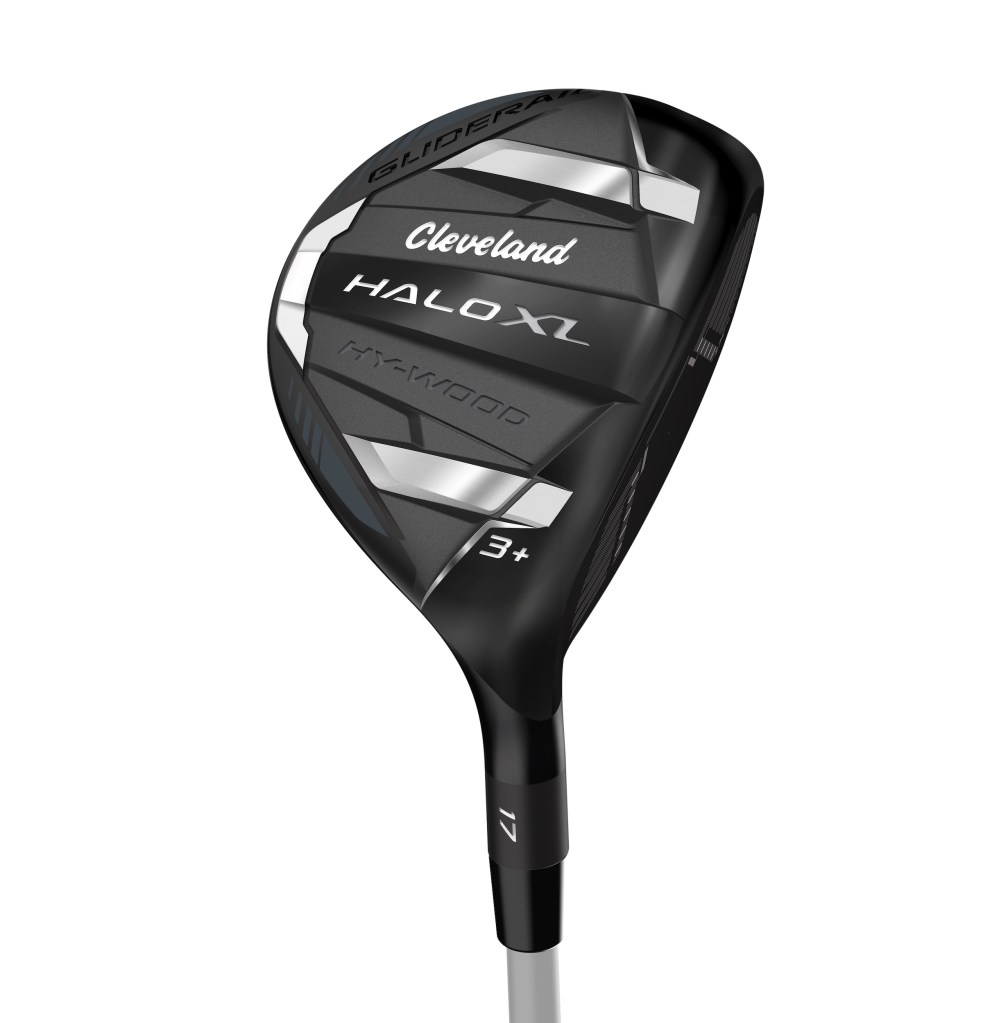
The HALO XL Hy-Wood 3+ is 17 degrees, exactly between the lofts of my 15-degree 3-wood and 19-degree 5-wood, both of which have been collecting dust in my basement since their banishment form my bag. Removing them left quite a gap between my 4 hybrid and driver. The 3+ Hy-Wood fills that gap.

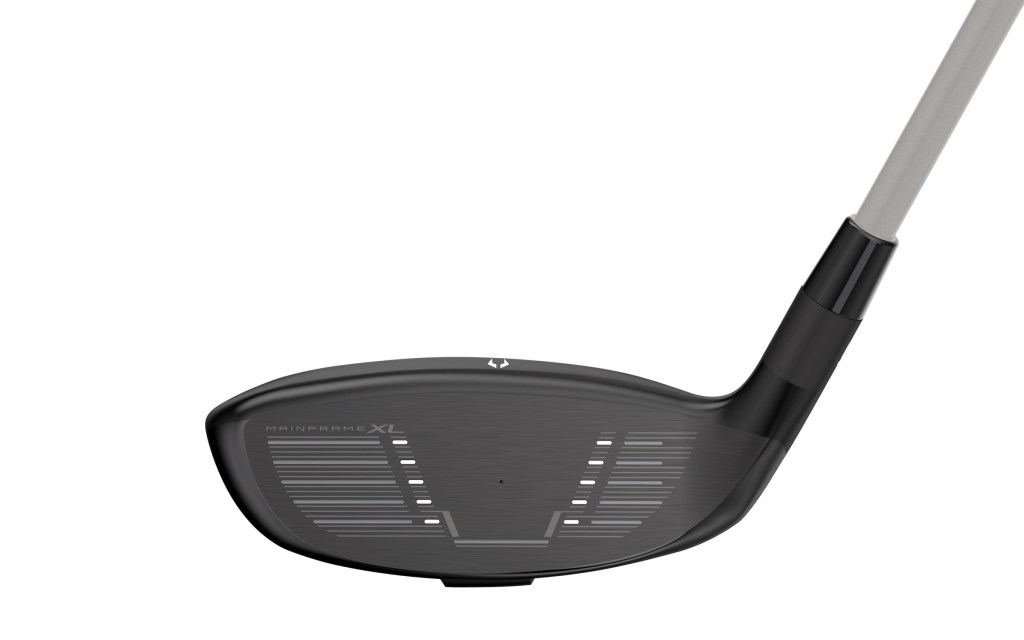
The first thing you notice about the Hy-Wood out of the box is that the head is larger than a typical hybrid, but smaller than most fairway woods, and the Aldila Ascent 40gr shaft is a bit shorter than most fairway woods but a bit longer than most hybrids. So not only does the loft fill a gap, but the clubhead sort of fills a mental gap in confidence – “Not a fairway wood. I can hit this!”

My very first swing in the simulator reinforced this confidence – right down the center line of the virtual range, 225 yards – a yardage I had sorely missed in my bag these past seasons!

When winter decided to take a break and suddenly it was 50 degrees in Illinois in February, I headed out to a sloppy, windy, yet still open course for some real golf. In the cool, wet conditions, my drives came up much shorter than usual, so there were plenty of opportunities to hit the Hy-Wood. And where my 3-wood would have come off low and left (based on recent history), the Hy-Wood sailed high and true. I cleared trees, I shaped a butter-cut, I carried it past a new “pond” (blind, flooded area filled with confused ducks) right of a par-5 green and got up and down for the first birdie of the year.

Casey Shultz was not lying.

Nearly 30 years ago, I reviewed some of the first hybrid or “rescue clubs” (as they were often called) when they started to go mainstream. Back then, they didn’t really fit into my bag, as my fairway woods were dependable and I hit everything longer than I do today. But time and tide wait for no man, and neither do swings or strength. Things change, needs change, and equipment changes.

Cleveland has blurred the lines between fairway woods and hybrids. Frankly, who cares what you call any given club? The Hy-Wood fills the gap between traditional hybrids and my driver, both in terms of yardage and reliability. I don’t need a 3-wood to go 270 anymore (in some direction) – just not going to happen. What I do need is a dependable 220-230 club that’s going to go straight and carry trouble. In the Hy-Wood, that’s exactly what I’ve found.

Shultz said he wanted to, “help golfers love their long game again instead of dreading it.” Mission accomplished. Maybe I’m just suffering a sappy Valentine’s Day hangover, but “love” doesn’t seem like too strong a word.

Cleveland Golf ZipCoreXL Irons: Make Forgiveness Sexy Again

Over 3.5 years ago, I reviewed my first set of “players distance” irons. I admitted in that review that I had reached a certain age when I needed a little assistance from club-making engineers to maintain distance and accuracy, even on mis-hits, while preserving some semblance of shot-making control.

I have been playing with those irons ever since, and have done some of my best ball-striking ever with them. To be honest, I suspected that I might never change my irons again.

Then I opened a shipment of the 2024 Cleveland Golf ZipCoreXL Irons ($900, PW-4i steel; $100 graphite). My heart fluttered a little. My wife, who was standing next to me at the time, said, “Oh, calm down.” I think she was jealous.

Why did I get so worked up? Well, because Cleveland’s new version of “players distance” irons are sexier than most in the category, not just in profile, but also in their technology. The ZipCoreXLs are the first irons to incorporate the groove system found in Cleveland’s award-winning wedges. The 4i-7i feature a rougher HydraZip blast with wider, flatter grooves to protect against excessive spin. The 8i-PW have deeper, narrower grooves to provide extra spin. The MainFrame technology provides the face flex and weighting scheme that combine to give these “players distance” irons maximum pop. And finally, the V-sole design promotes a cleaner strike and more workability.

Playing the Cleveland ZipCoreXL Irons

How does all this technological wizardry manifest on the course, you ask? Well, it’s February in Illinois, so I thought my testing would be limited to the indoor simulator at my local course. On Simulator League night, I swapped out my usual 5, 7, and 9-irons for the newer, sexier ZipCoreXLs. That night, we were playing 18 holes, and all the par 3s were around either 150 or 170 yards, within a few yards either way. My 9-iron is my go-to 150 club, and my 7 is my go-to 170 club. Perfect.

After the fourth par 3, my playing partner (who currently carries a +8 handicap in the league) exclaimed, “I have never seen anyone hit their irons – much less brand-new irons they’ve never swung before – to exactly the yardage on every hole!” And sure enough, if the hole was 173, I hit the 7i 173. If it was 148, I hit the 9i 148. Unfortunately, I was closing the face that night a touch early, so I missed all the greens slightly to the left. But the yardages were impeccable.

Then winter unexpectedly buggered off, and on a sunny 47-degree day, I found an open course nearby and decided to test the irons out under real (and really soggy) conditions. In the chilly wind, my distance control was not at the level of the indoor simulator, but every shot I hit with the three ZipCoreXLs I was sent for testing were like lasers at the pin. Best of all, the V-soles never dug into the saturated, rich black soil underlying courses here in Central Illinois, unlike the sharper leading edges of my usual irons.

The verdict on the Cleveland ZipCoreXL Irons

Ever since I shoved my ego aside a few years ago and started playing “players distance” irons, I have resigned myself to the fact that even though my shots can be, at times, admirable, my clubs were destined to be somewhat less than flashy. Rather, they’ve been workmanlike. The golf club equivalent of the dad-bod. Then the ZipCoreXLs walked into my life (well, were carried into it by a UPS driver, but whatever), and suddenly forgiveness and distance-enhancement doesn’t seem so dowdy.

These sticks are sexy, darn it. And I can’t wait for golf season to start in earnest, because can’t wait to show off my new trophy-clubs. I just have to fill the gaps…

2023 Holiday Golf Gift Guide: New year, new memories

Another year is coming to a close, and for golfers in many places, another golf season is ending as well. I’m writing this a few hours after what might be my final round of the year, played on my local municipal course with two good golf buddies and my son, home from his sophomore year in college. This will be one of the best memories of the season for me, not only because of the company, but because I somehow shot my best score of the year, a 76.

Golf is all about these memories and experiences – and because golf can be played for a lifetime, there are many to be gathered along the way. Hopefully, far, far more good than bad. Here’s a list of holiday golf gift ideas that will, I hope, add to the enjoyment of the greatest game on earth.

SuperStroke Grips

After every professional tournament ends, I get a string of emails from companies touting the winners who’ve played their balls or clubs. The senders of these emails vary week to week, depending on who wins and their various sponsorship agreements. But there is one company who sends out emails almost every week. SuperStroke, the No. 1 putter-grip maker in all of golf. It feels like everyone on tour (every tour) plays SuperStroke grips. Some even play them on their irons and woods. Early this year, I put a Pistol Tour version on my favorite putter, and it felt amazing from the very first day. Yesterday, en route to my best score of the season, I had just 27 putts, including a snaking, downhill 30-footer for birdie on the 5th hole and a par-saving 7-footer on 6. My son said, “Automatic.” Give someone the gift of memories like these!
 Bushnell Wingman View

If the golfer on your holiday shopping list likes music on the course, there is one accessory that has become essential: The Bushnell Wingman. In 2023, Bushnell introduced the newest version of the revolutionary yardage-provider and speaker, the Bushnell Wingman View ($200). The View incorporates visual yardages and music information on an integrated LCD screen, so if you want to play in silent mode, you can get your yardages. And even if you don’t want music (or yardages) on the course, the Wingman serves as an excellent Bluetooth speaker anywhere (it’s not just for golf!).

Bushmills Irish Whiskey & Fuzzy’s Vodka

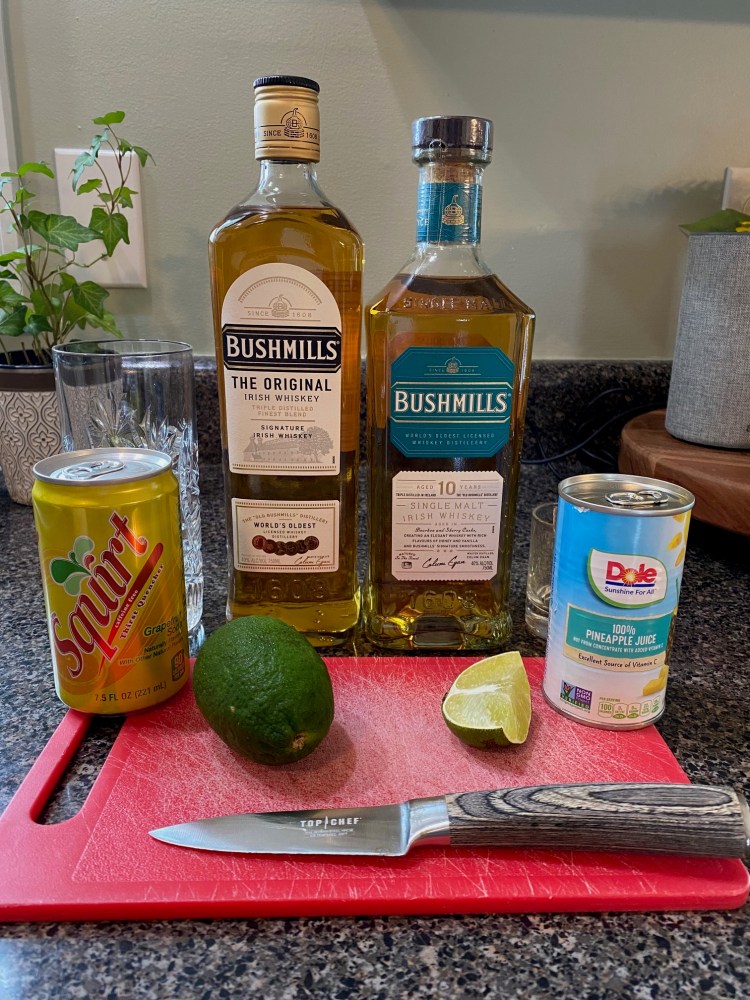
Some memories are meant to be cherished. Some, you’d rather forget. The wonder of alcohol is that it can be both a memory enhancer and a memory eraser, depending on dosage. This summer, PGA Tour fan favorite Joel Dahmen teamed up with Bushmills Irish Whiskey to develop his own signature cocktail, Joel’s Juicy Lie. It’s made with Bushmills 10 Year Old, grapefruit soda, pineapple juice, and a squeeze of lime. The original Bushmills works great though, too. And if you’re lucky enough to get out for some winter golf in colder climes, either one works perfectly for a warming nip throughout your round.

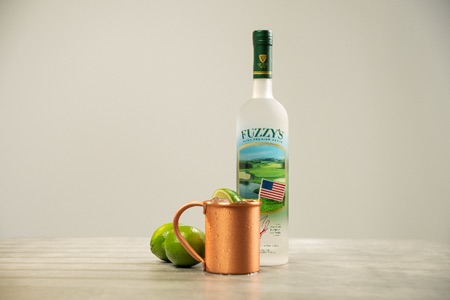
If whiskey isn’t your libation of choice, perhaps Fuzzy’s Vodka is more to your taste. In 1979 Fuzzy Zoeller, one of golf’s biggest personalities, burst onto the scene with his surprise win at the Masters. Today, his eponymous Fuzzy’s Vodka is made from 100% American corn, five times distilled and ten times filtered, and a portion of each batch is rested in new American oak barrels. The result is crisp, smooth, and incredibly clean.

Bridgestone e9 and e12 Balls

Losing a golf ball is never a good memory. But you know what makes it less bad? Having a bunch more to take its place. So stock up! Bridgestone Golf has for years applied technological innovations developed first in the realm of tire design to golf equipment, especially their golf balls. The e12 Contact ball ($35/doz) is in its fourth generation and better than ever. The genius of these balls is the dimple pattern that allows for 46% more contact between clubhead and ball at impact, imparting more spin and better control. This newest iteration combines this racing-tire-inspired engineering feat with a FLEXATIV cover material that acts like a firmer material when struck with longer clubs, and a softer material when struck with shorter irons and wedges. Whoa.
The Bridgestone e9 Long Drive ball ($30/doz) does what the box says: Long Drive. But don’t let the moniker scare you – it’s a solid all-around ball. I’ve played a few rounds with the e9, and besides a slightly firmer feel off the putter, I noticed no real difference in performance between it and softer and/or more “high-end” balls. It’s especially great in wetter, slower conditions, when you need all the pop you can get.

Sun Mountain Eco-Lite Golf Bags

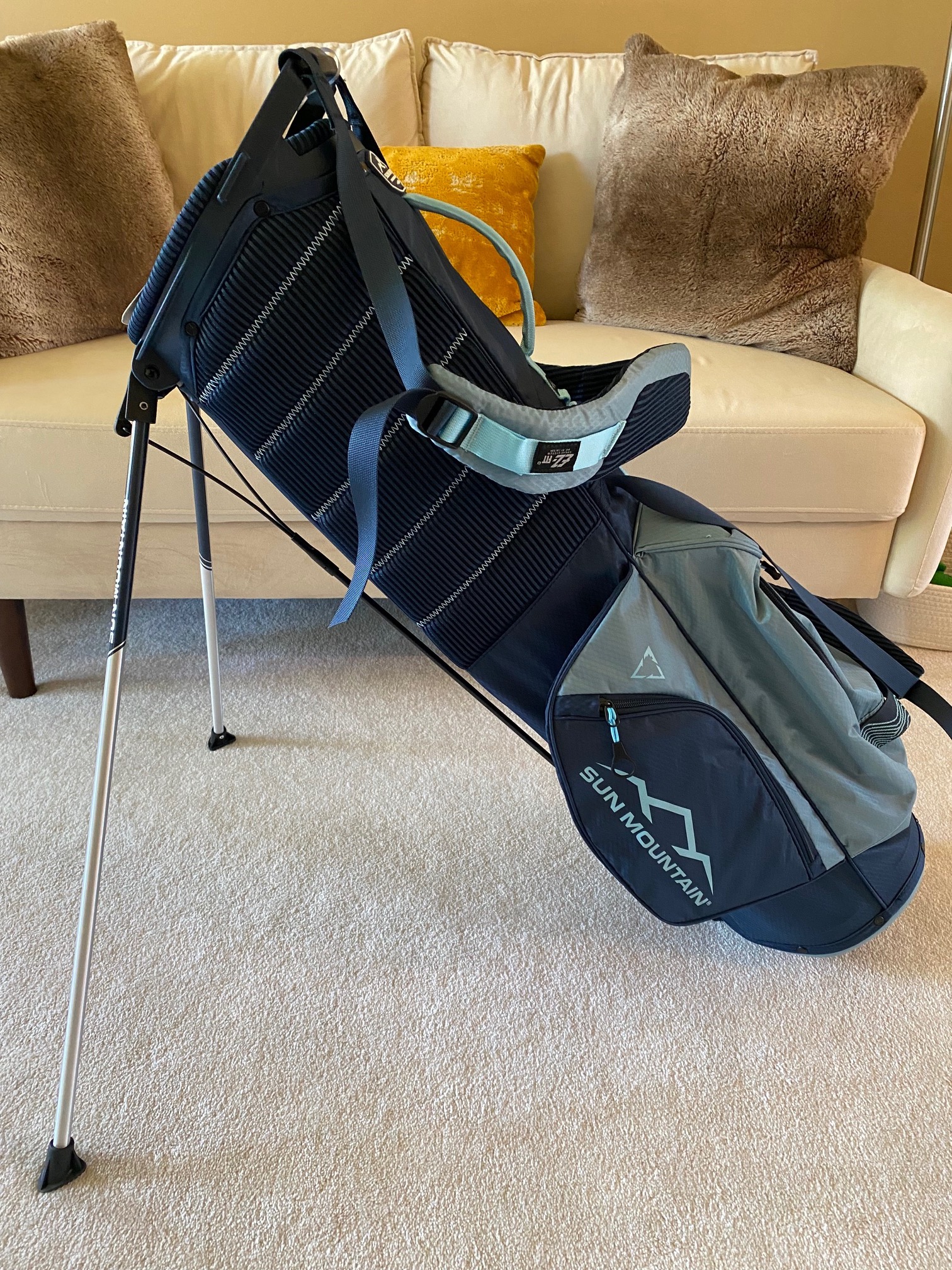
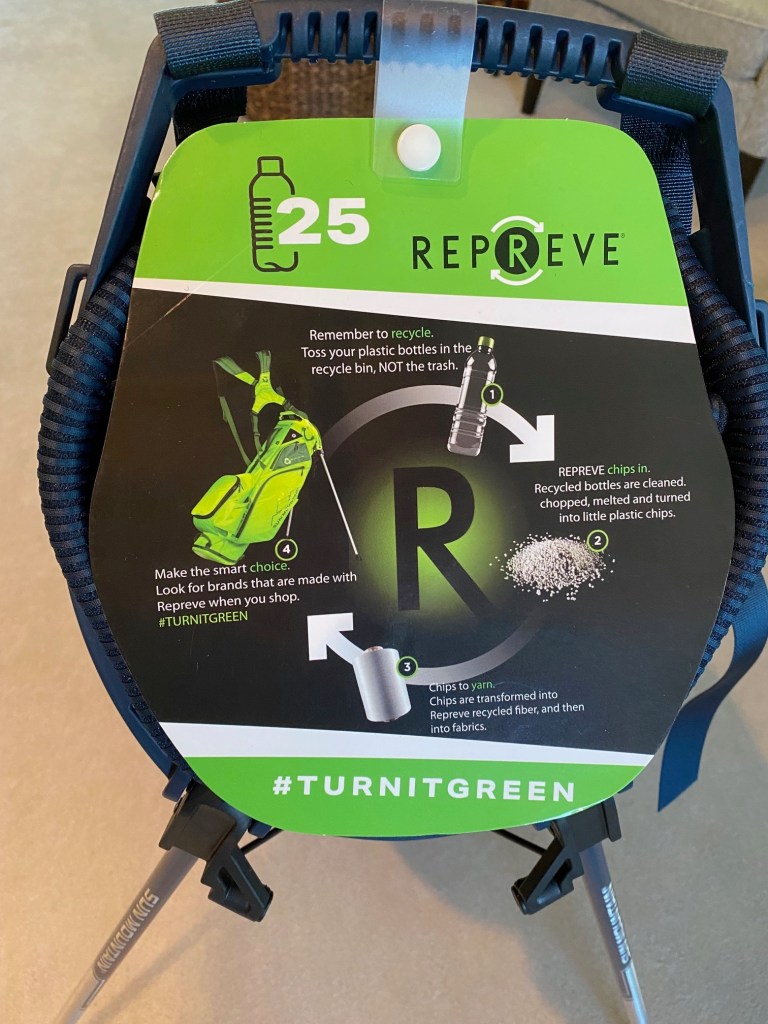
Like I said, golf provides a lifetime of memories for those who love it. And I want my kids to have a lifetime of memories in golf, too, and their kids someday, and theirs…hopefully for many generations to come. But if we don’t take care of our planet, I worry the opportunity for wonderful outdoor memories will eventually be limited. In the spirit of stewardship of this great game and our only planet, Sun Mountain has developed the Eco-Lite Golf Bag line ($250-$280). Eco-Lite Bags are made with Repreve® Fabric, which is woven from recycled plastic bottles. Approximately 25 20-ounce bottles go into the construction of each Eco-Lite golf bag. Sun Mountain has also partnered with 1% for the Planet, a global network of businesses, individuals, and environmental organizations tackling our planet’s biggest environmental issues. They donate a percentage of Eco-Lite sales to Montana Rivers, Inc., an organization dedicated to conserving and protecting rivers through outreach, restoration, and advocacy. These bags are super light-weight, extremely durable, and packed with clever, useful design features.

Edison Wedges

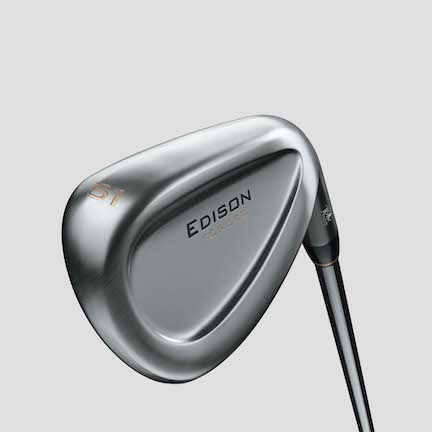
Ask my regular playing partners what they remember of my golf game, and they’ll say, “Recovery shots.” You see, I hit the ball crooked sometimes (well, pretty regularly). Yesterday, my tee shot on 7 landed on the 12th fairway. Then my second turned into an inexplicable shank that ended up next to the 11th green. So my third shot needed to be a 60-yard full flop shot uphill and over several fairly large trees. My Edison 59-degree wedge delivered the ball directly over the 7th flag to the front of the green. I sank the putt for a “textbook” par. Memories.

Haven’t heard of Edison wedges? Well, read about them here, and then shop their new Gen 2 wedges and enjoy a 25% holiday discount here. These magnificent boutique wedges are guaranteed to give you some great memories.

Golf Simulators

You know the saying, “Go big or stay home”? Well, how about you go big AND stay home? If you’re really looking to make memories this holiday season, and have the space and cash to go big, check out the golf simulator packages at The Indoor Golf Shop. The Indoor Golf Shop has simulator packages by all the top makers – SkyTrak, Garmin, Uneekor, and more. You’ll also find an enormous selection of golf nets, mats, rangefinders, and pretty much anything else you need to dial in your swing and dial up the memories.

Well, that’s it for this season, folks. May you remember your good shots, forget your bad, and cherish every minute playing the game we all love. Happy Holidays!

Bonus Stocking Stuffer — MagnetOwl Towel & Accessories

I like to take a towel to the green with me to wipe off my golf ball and wedges or putter. But I usually forget to grab one before I walk to the green, and frankly, I’m too lazy to walk back — even when my pushcart is parked just off the edge of the green. The MagnetOwl magnetic towel ($35) is a super-cool, super convenient solution to my combined forgetfulness and sloth. The microfiber towel has a powerful screw-in magnet that’ll lock tight to your wedge or (ferrous) putter. The magnet will also hold a ballmarker in place for easy access. Just toss it on the ground and, when done putting, pick it up with your clubhead. The MagnetOwl 7-in-1 divot repair tool ($20) (aka ‘pitchfork’, for our British readers) is also a great stocking stuffer — divot repair, groove cleaner, brush, cigar/club holder, ballmarker, bottle opener, belt/bag clip. It’s like a Swiss Army Knife for golf!

Last-minute Gift — because we all forget sometimes

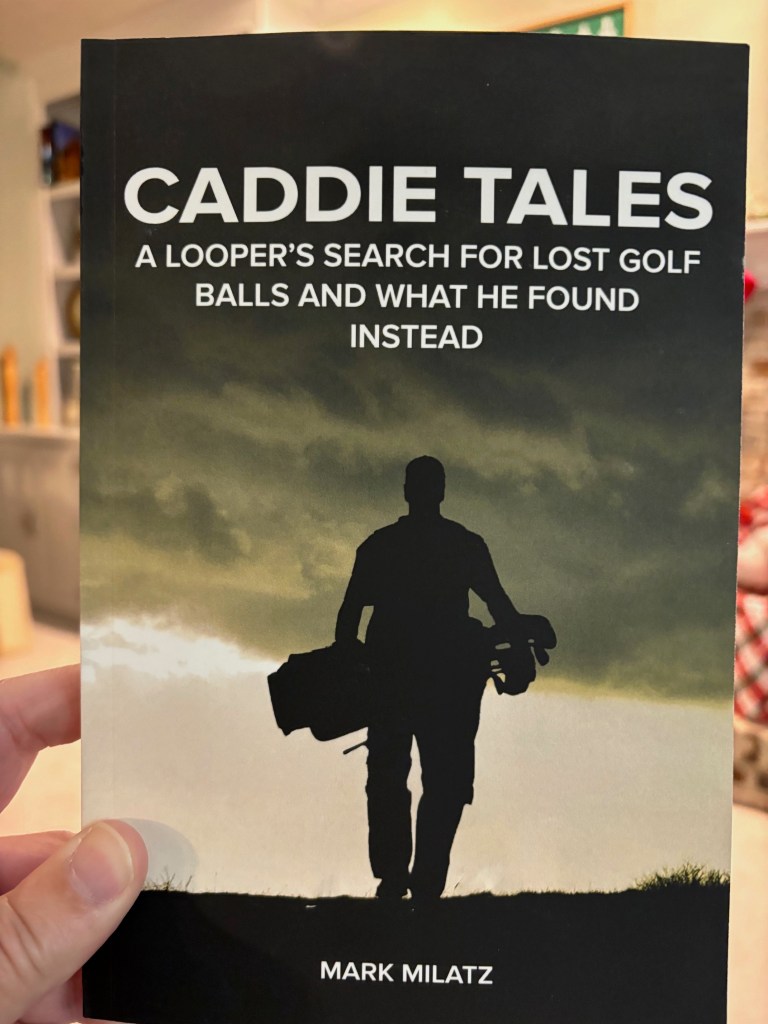
Hey, we all forget sometimes. Maybe you forgot to get something for that one golfer on your list. But you want to do something special anyway, and who cares if it won’t arrive by Christmas? If this describes your situation, let me recommend the new book “Caddie Tales” by Mark Milatz (available here). Mark (aka @markthecaddie on Twitter/X) is a caddie at one of the best courses in the US, and he’s learned a lot along the way about golf, people, himself, and life. Great stories and lessons here, including how one of his favorite loops ever was with a guy who shot 176. Seriously. If you’ve never played with a caddie before, this is super-important to remember: They don’t care what you shoot. They care that you’re a pleasant person and not a total jerk. This book is well worth the read, even if you’re not a golf nut!

“Sustainable golf” with Sun Mountain Eco-Lite Golf Bags

Every year or two, some non-golfer commentator decries golf courses as environmentally disastrous or socially corrosive, or both. Calls to “liberate” golf courses for the masses ignore the fact that 75% of American courses are public. Criticisms of golf courses as chemical-laden monocultures are not without some merit, though: in the US, those private clubs and some high-end public courses do have a history of environmentally unfriendly maintenance habits over-reliant on pesticides and herbicides.

But the vast green spaces that golf courses represent are increasingly more sustainable, developing low-impact herbicides and drought-resistant turfs, and fostering biodiversity. Here’s an incomplete list of the wildlife I’ve seen on the municipal course that I call home: red fox, woodchuck, otter, muskrat, white-tailed deer, bald eagle, red-tailed hawk, great blue heron, snowy egret, great horned owl, snapping turtle, painted turtle, black snake, pileated woodpecker, Cooper’s hawk…the list could go on for a full page. It is hard to see how converting green spaces into, say, tracts of housing, would improve the environment.

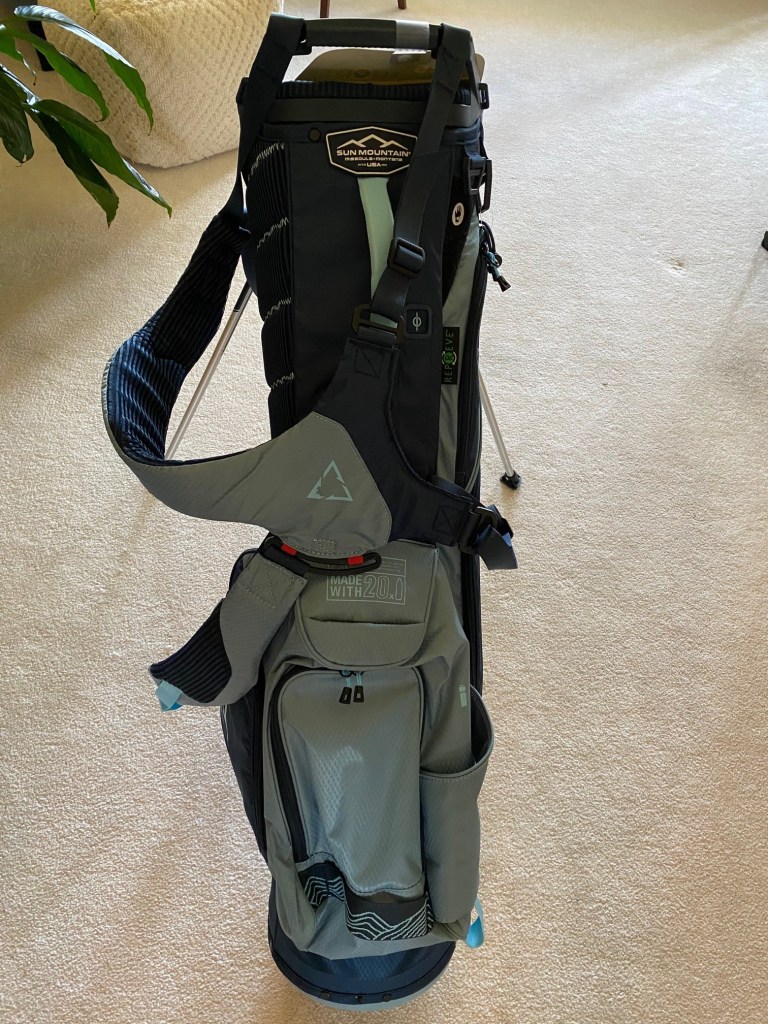
Golf equipment has lagged somewhat behind golf courses in its evolution towards sustainability, although some of the clubs themselves can last for many decades. There are notable exceptions like bamboo and biodegradable tees, bamboo-fiber clothing, and electric golf carts. Sun Mountain’s 2024 Eco-Lite Stand Bag ($250) and Eco-Lite Cart Bag ($280) are prime examples of this new breed of sustainable golf equipment.

Eco-Lite Bags are made with Repreve® Fabric, which is woven from recycled plastic bottles. Approximately 25 20-ounce bottles go into the construction of each Eco-Lite golf bag. Sun Mountain has partnered with 1% for the Planet, a global network of businesses, individuals, and environmental organizations tackling our planet’s biggest environmental issues. They donate a percentage of Eco-Lite sales to Montana Rivers, Inc., an organization dedicated to conserving and protecting rivers through outreach, restoration, and advocacy. 

How does the Sun Mountain Eco-Lite Stand Bag play?

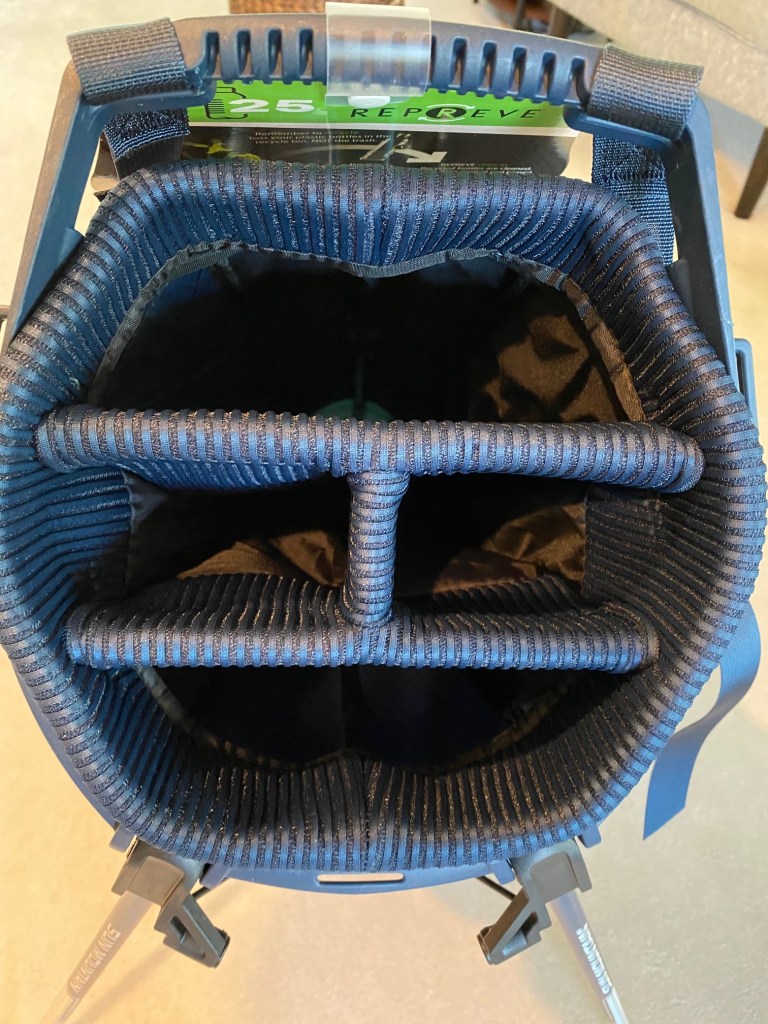
We’ve established the “eco” bit of the bag’s moniker. What about the “lite” bit? The Eco-Lite Stand Bag weighs in at just 4.1 lbs. It has a roomy 9-inch top with a 4-way divider, along with 6 pockets.

Despite the light weight, the pocket configuration is extremely accommodating. There’s room for the rain hood (included) and rain gear, extra towel, extra balls, and an umbrella. The specialized pockets include a lined valuables pocket, a pocket for a range-finder, and an oversized bottle sleeve. The clips at the top are convenient for a towel and a bag of tees. The graphite legs are very stable, and the well-padded, dual-straps are easy-on, easy-off.

The Eco-Lite is ideal as either a carry bag, a pushcart bag, or as a cart bag when riding is in the cards. But if you ride, hopefully the cart is electric – sustainable golf isn’t paradoxical, after all.

Cragun’s Legacy Courses add The Lehman 18

In 1955, Dutch Cragun graduated from the University of Minnesota. He called his father and asked if he could make a living running the family’s small fishing resort on the shores of Gull Lake in the heart of the Brainerd lakes region. His dad said, “Hell no.” Nevertheless, Dutch headed north and began a legendary process of renovation, acquisition, and expansion of Cragun’s Resort on Gull Lake.

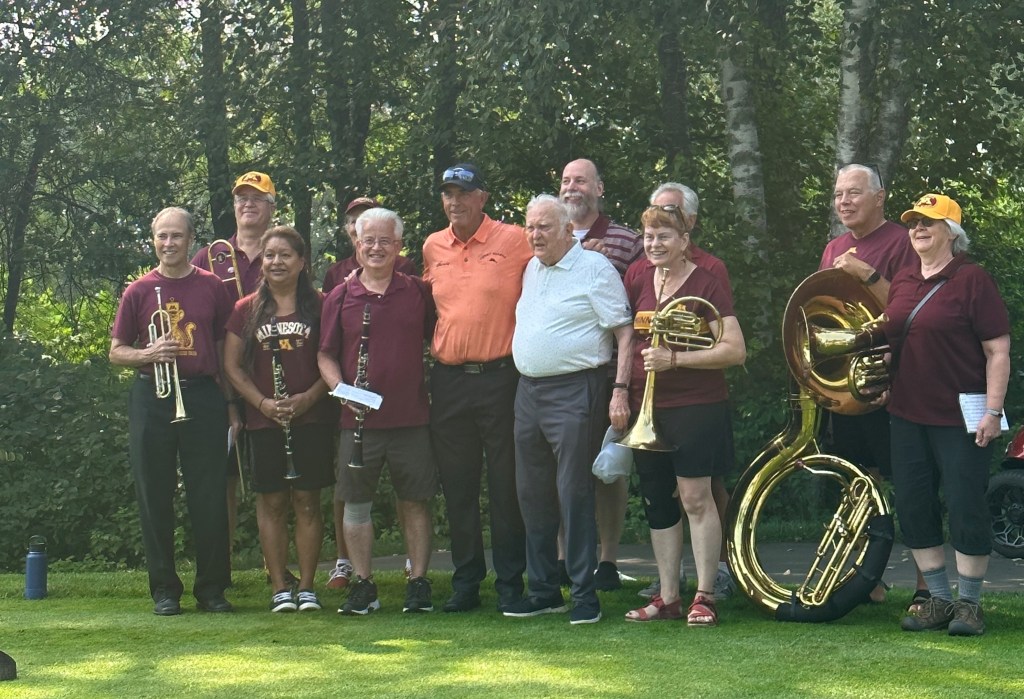
The Legend, Dutch Cragun, expands his legacy. He and Tom Lehman joined the U of MN Alumni Band for a 1st-tee fight song.

By 1997, he’d acquired enough land to solicit bids on a championship golf course from two of the biggest names in golf course design at the time: Robert Trent Jones, Jr., and Rees Jones. The two famously combative brothers were set for a showdown on Gull Lake when Rees pulled out and RTJ, Jr., traveled all the way from Siberia to survey the property.

In 1998, Cragun’s Legacy Course opened. In 2000, Jones had expanded the Legacy Courses to 36 holes. In 2020, Dutch wanted to expand further – the resort comprises over 1,000 acres today, after all. He asked three course architects to submit plans. Former (British) Open Champion and Minnesota native Tom Lehman came to town to watch his son compete in the Minnesota State Amateur. The then-86-year-old Dutch approached the fellow University of Minnesota grad and asked if his firm might be interested in submitting a plan. Within two months, Lehman’s firm had a plan, and after two days of talking, Lehman was “all in” – not just for the new course, but also for a radical redesign of the original holes.

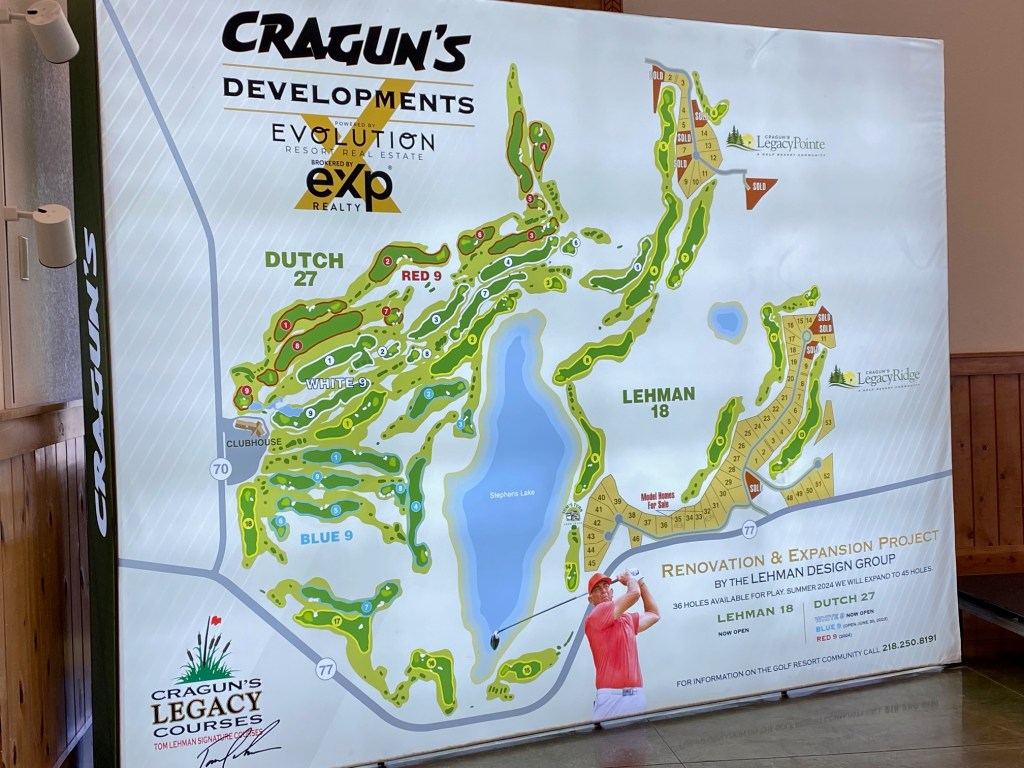
Map of The Lehman 18, The Dutch White and Blue, and the Dutch Red, currently being rebuilt in the final phase of the multi-million-dollar project.

Now, in 2023, The Lehman 18 and The Dutch 18 are fully in play, with the radical facelift of the final 9 now underway. Thus, Cragun’s Resort on Gull Lake is poised to wrestle the golf crown from the adjacent Madden’s on Gull Lake – whose owner graduated college with Dutch and which vacillates between a Hatfield-and-McCoy and cozy “frienemies” sort of relationship with Cragun’s.

“The Everything Bagel”

The Lehman 18 is an amalgam of brand-new holes and redesigned holes from the original 36 holes, and it encircles the land those holes occupied. During construction, Cragun’s GM, Eric Peterson, dubbed it “The Everything Bagel,” and the moniker stuck like a good bagel sticks to your ribs. In the opening-day media interview, Lehman said the development and building of his eponymous course was “a really fun process of discovery,” and “a completely collaborative effort.”

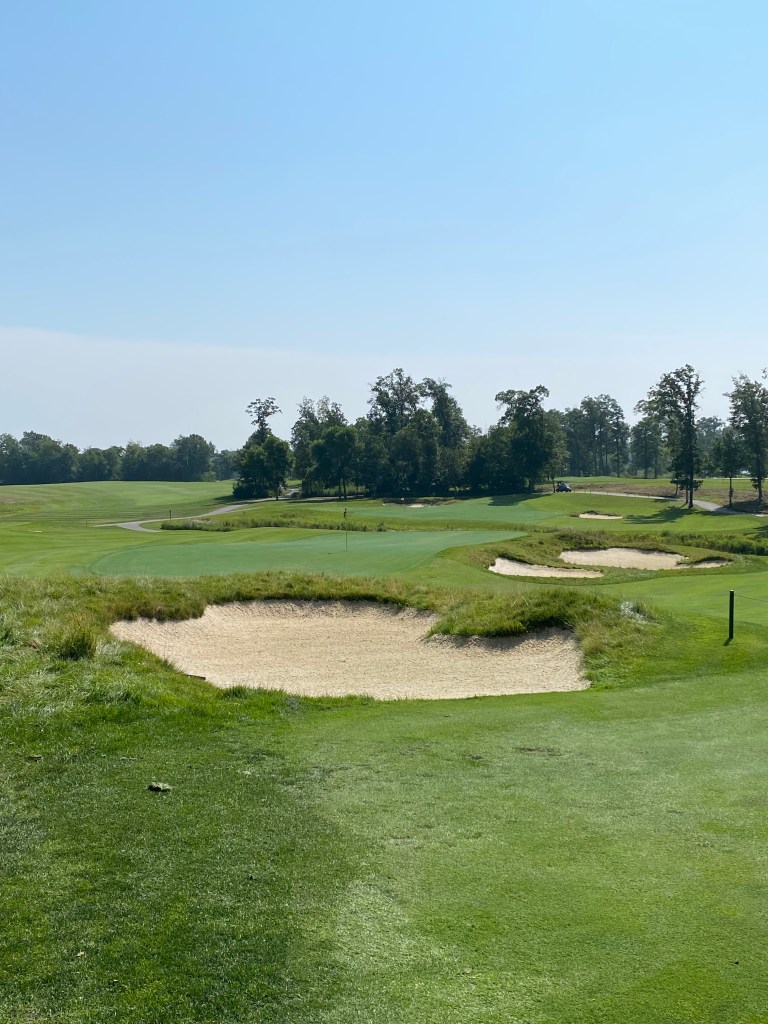
One of the hallmarks of the design are the pseudo-stacked-sod bunkers, the sharp, steep lips and revetted faces of which strike fear into the hearts of weekend warrior players. Lehman said he wanted to evoke the sandbelt courses of Australia on the glacial deposits of northern Minnesota, so the bunkers filled with white (Ohio) sand and the firm, fast fairways and greens are central to the homage.

The revetted faces of the bunkers on The Lehman 18 are reare in the upper Midwest.

Although the routing of the course makes for some long distances between greens and tees (and reduces walkability), the flow of the routing is smooth and logical. There are three par-5s on the par-37 front nine, and just one on the par-35 back nine. Like the Dutch 18, the main defense is those par 5s, which heave and twist as they skirt the edges of wetlands and woods.

From the championship tees, the Lehman stretches to 7,491 yards, but can be played as short as 4,707 yards, with six sets of tee boxes. Green fees as of opening are $159. At just under $9 a hole, it’s well worth the price.

For a resort course, the Lehman 18 presents a number of daunting tee shots to blind landing areas that are, at times, penally crowned. Late in the front nine, players are faced with a number of these, and without careful study of the GPS display on the cart, they will likely take lines that result in apparently good drives running off into the underbrush. Or, as in my case, they’ll miss their lines and just hit directly into the woods.

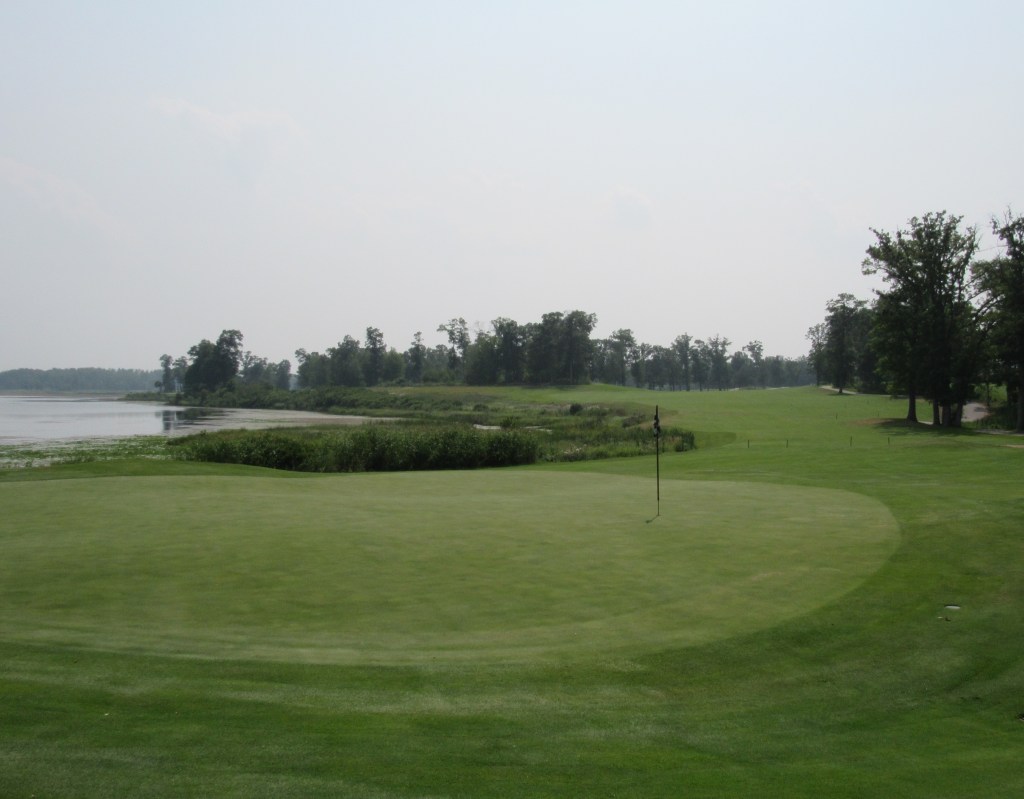
Fortunately, moments of beauty and pleasure outnumber lost balls. Take the par-3 6th Hole, for example. Tom Lehman says this is his favorite hole, as tree-removal behind the green revealed a picturesque pond complete with a large beaver lodge.

The Lehman 18, 6th Hole, with beaver lodge in the background, behind the right-center of the green

Lehman tagged the 2nd Hole as another favorite. It combines the old 2nd and 3rd holes to make a demanding par 5 with a devilish 2nd shot into a bottleneck landing area with marsh both left and right.

The Lehman 18, Hole 2

Prior to the 2nd, the first-time golfer’s hopes will be raised by the gentle, mid-length par-4 opening hole, only to find those hopes buffeted – if not dashed – by the 2nd and the long par-3 3rd, where a raised green perches over wetlands to the right. From the tips, the 3rd can stretch out over 220 yards. From any tee, just hitting the green feels like a birdie.

The par-3 12th Hole, Lehman 18

Speaking of greens, the Lehman 18’s putting surfaces are fast – running around 9.5 on the Stimp Meter – but very true. Speed, though, is key, as many greens resemble potato chips in their contours. The only exception is the massive and relatively level 17th green, which used to be “The Gambler’s Green,” where residual bets could be settled on the original 18-hole course.

The 10th green on The Lehman 18 has two halves, separated by a 3-foot-high mound bisecting the putting surface.

Dutch 18

Unlike the orbital Lehman, the 7,001-yard, par-70 Dutch 18 is an excellent walking course ($139 green fees currently, with cart). Its proximity to the grand clubhouse and Legends Grille also make it the obvious host for the Canadian PGA Tour CRMC Championship. But like the Lehman, the current 18-hole design – really the combination of the Blue and the White nines – is actually an amalgam of new, old, and radically re-imagined old holes. The remaining Red nine is currently closed for a deep facelift (reopening 2024). It is a testament to the Cragun’s team, especially Superintendent Matt McKinnon and his crew, that they have been able to build a new course and renovate another 27 holes while always keeping at least 18 holes open for play.

This is the team that has ushered in a new era of golf at Cragun’s Resort. From left to right: Eric Peterson (GM), Matt McKinnon (Superintendent), Judd Duininck (Shaper/Construction), Dutch Cragun, Tom Lehman

It’s rare for a golf resort – and at Cragun’s, the golf is front and center, even though the fishing and watersports are outstanding – to have 45 holes that will be, after the final renovation by Lehman’s firm, essentially by one designer but with such different feels. Whereas the Lehman 18 has those revetted bunkers, the Dutch 18 has sprawling, natural-looking bunkers with thick fescue “eyelashes.” As the starter warns at the first tee, players should keep their eye on all balls heading toward bunkers, as they can disappear in the blink of a human eyelash; you’d rather your ball gets into the pristine white Ohio sand. And if you do find your ball in those eyelashes, your best bet is to just wedge it out. Trust me.

The Dutch 18 and its wild and wooly “eyelash” bunkers

Logan Jackson, Cragun’s Head Professional, calls the Dutch “more gettable” than the Lehman, but warns to “play to where you can see.” Like the Lehman, there are several blind shots here, including tee shots over marshland, that demand players pick a number and hit to it…and trust. Also like the Lehman, the par 5s are the major defense, with some awkward tee shots and lay-up areas.

The par-3 3rd Hole on The Dutch 18 can be stretched to over 260 yards from the tips.

The renovation, though, was geared towards, “making the course more playable,” according to Lehman. “We focused on creating width,” he stressed, “There were a lot of places where a mishit would make the next shot unplayable.” Increasing playability required removing a large number of trees, as well as removing bunkers from areas 180 yards out and to the right of the tees. “Who were those bunkers meant to punish?” asked Lehman. “Average players. Golf is hard enough without punishing the people you want to enjoy the course the most.”

Lehman and his team may have thinned a lot of trees from the Legacy Courses, but there are still plenty to deal with.
The Dutch 18, 1st Hole

The number one handicap hole is the long par-4 1st Hole, with fairway bunkers left and trees to the right making for a demanding drive. But the hardest hole according to Jackson is the even longer par-4 14th, which plays like a par 5 as it doglegs left around wetlands that collect as many golf balls as they do raindrops.

Thepar-4 14th Hole on The Dutch 18 is a microcosm of the course: winding fairways, trouble on both sides, and large, relatively flatter greens.

The Dutch 18 crescendos at the lovely 18th, a reachable par-5 – really the only receptive par-5 on either course – with a green partially fronted by a serene pond and framed by the ruggedly handsome Legacy clubhouse.

The Dutch 18, 18th Hole

Cragun’s Resort

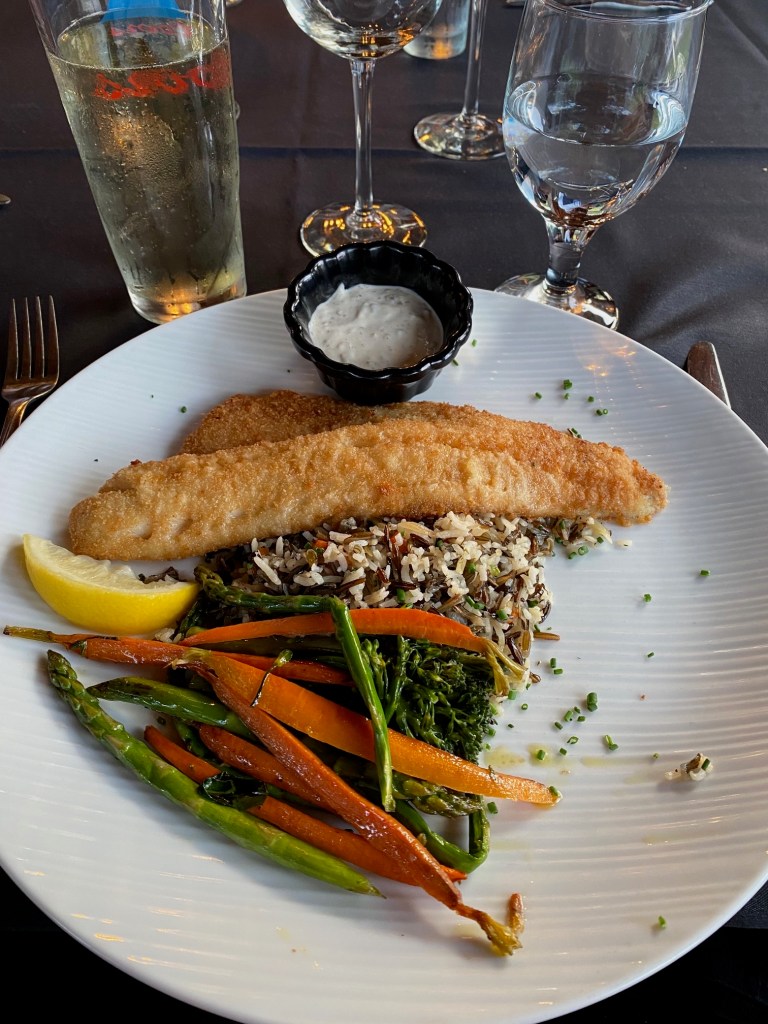
In the Legacy Grille, the BLT or the wings are excellent choices for a post-round snack. If you hanker for something more upscale, head over to the main resort buildings to Irma’s Kitchen, where Northwoods ingredients meet fine European preparation. Seriously, the best piece of walleye this Minnesota native has ever eaten.

Walleye and wild rice at Irma’s Kitchen

Behind the main lodge is a large marina, with pontoons and other flavors of floating fun available for rentals. The fishing on Gull Lake is, according to local sources, the best in the area, with its almost labyrinthine collection of bays and inlets. Book the dinner cruise for both the delectable prime rib and a luxurious tour of the lake.

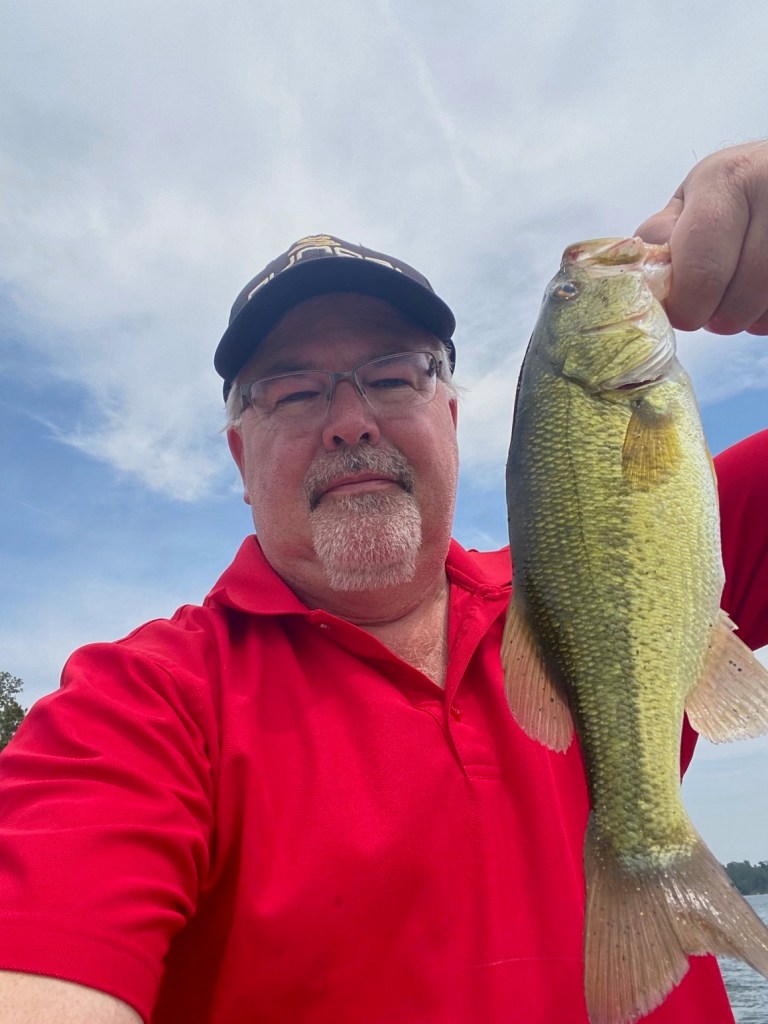
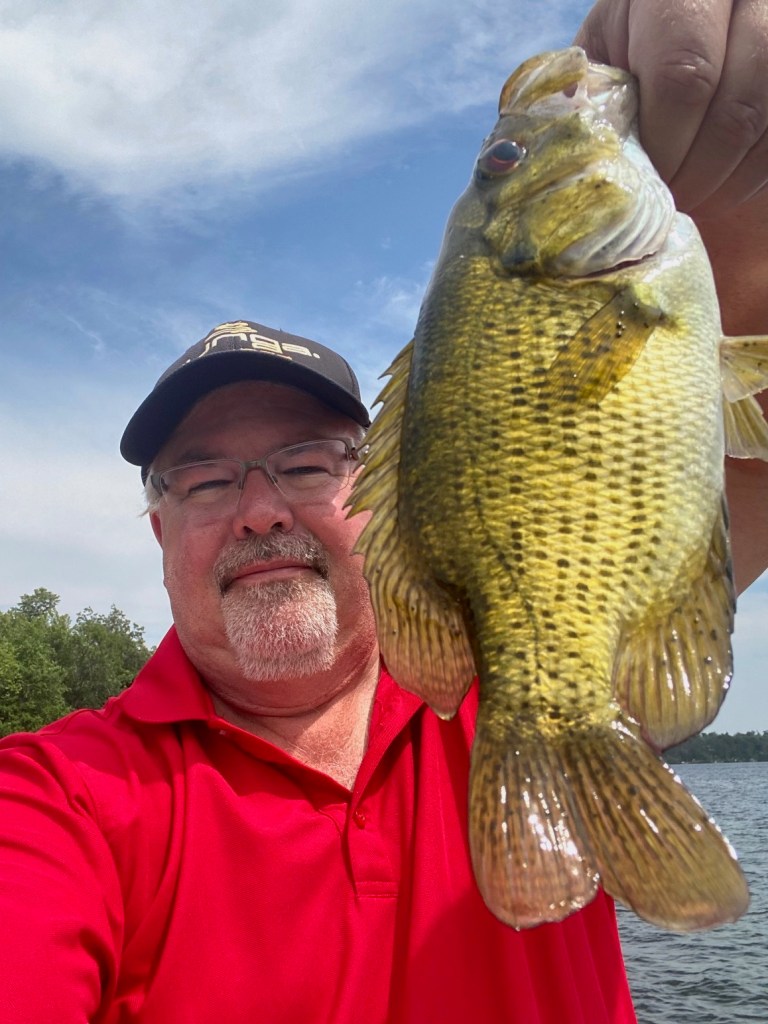
When I say the fishing on Gull Lake is good, I’m serious. Hooked into both of these within 20 min of finding my spot.

Golfers and families alike are recommended to consider renting one of the several entirely renovated houses for rent. These have multiple bedrooms and baths, generous kitchens and common areas, and former garages renovated into poker and poll rooms. I can imagine a boys’ trip with golf, fishing, pool, and poker on the docket during a winner-take-all battle royale long weekend.

In case you want to try to recoup your losses from the golf course…

In short, Cragun’s Resort offers a veritable cornucopia of Northwoods activities year-round (ice-fishing and cross-country skiing, anyone?). For those really looking to exploit the area’s under-rated and oft-overlooked northern Minnesota golf courses, The Gravel Pit short course is across the street, and Madden’s at Gull Lake’s The Classic are highly recommended, along with several other area gems.

Tom Lehman takes the first ceremonial shot on his new Lehman 18 Course at Cragun’s Resort

Residents of and visitors to the Brainerd lakes region can be awfully glad Dutch Cragun didn’t listen to his father when he came north to take over the family resort. Tom Lehman calls Dutch “a Minnesota treasure,” and what he’s built at his namesake resort is priceless. Fortunately for us, and for the world of golf, he’s strived to share his bounty with the rest of us in legendary fashion.

Forest Dunes, The Loop, and more! Destination golf in Roscommon, MI

Every once in a while, you pass through the entrance to a golf course or resort, and something suddenly changes. You feel the buzz and hum of the world die out behind you, and the destination envelops you in peacefulness. Erin Hills in Wisconsin is one of those places. I imagine Bandon Dunes in Oregon is, too.

In the Great Lakes Sate, there are hundreds of beautiful courses, and dozens of luxurious golf resorts, but of all the ones I’ve visited, Forest Dunes has, more than any other, the magical feel of complete and total golf nirvana. Mike Keiser, progenitor of Bandon Dunes and Sand Valley, once famously said something to the effect of, “One golf course is just a golf course. Two golf courses make a destination.” Forest Dunes is now a full-fledged golf destination. And as the facilities keep expanding, it is arguably the best “pure golf” destination in “Pure Michigan.”

Forest Dunes opened in 2002 as a private club, but has been fully public since 2011, when it was purchased by Arkansas trucking magnate Lew Thompson. The layout, which Tom Weiskopf has described as “one of my top-five all-time designs,” can be played at five different lengths, from 7,116 yards all the way down to 4,993 yards. For purists, one of the most welcome aspects of the course is that – unlike most Northern Michigan tracks – it’s extremely walkable. Forest Dunes doesn’t have the lake views of Arcadia Bluffs, but the layout has been voted as the best in the state by multiple publications and is perennially ranked as one of the top 25 public courses in the nation.

In 2017, a second course opened at Forest Dunes—well technically, a second AND a third. The Loop debuted as the first, and only, fully reversable 18-hole championship course in the U.S. After playing this brilliant design, I would wager that several similar courses will be opening very soon, though, as it allows operators to maintain just one set of holes while offering two very different courses.

In 2020, The Bootlegger – a 10-hole “short course” designed by Keith Rhebb and Riley Johns opened. It’s perfect for juniors, beginners, and anyone looking to squeeze some golf into a broader itinerary, with green fees of $49 for unlimited play (based on availability. The Bootlegger takes its name from the legend of The Purple Gang, Detroit-area gangsters who reportedly ran liquor from Canada through the area during Prohibition. Finally, a new putting course, the Hilltop Putting Course, occupies two acres of rolling terrain, is free to play and ideal for post-round putting contests.

The Bootlegger short course opened in 2020 (courtesy Forest Dunes)
The Hilltop Putting Course is ideal for practice and for post-round big-money putting contests.

With the addition of The Loop, Forest Dunes is a full-fledged destination. Luxurious accommodations are provided in the AuSable Lodge and golfers’ villas (more on these later), and the food in the clubhouse ranks as some of the best I’ve ever tasted in Northern Michigan (more on that later, too). In 2020, a new par-3 course will open on the property as well. But let’s begin with The Loop.

The Loop Red

Forest Dunes owner Lew Thompson long wanted a second course that would entice golfers to stay on the property longer – á la the golf destinations mentioned above. He also wanted a course concept that would “wow” him. World-famous golf course architect and Michigan native Tom Doak delivered a plan for a fully reversible course.

3ed green, Loop Red

“The appeal of a reversible course is people would want to play it both ways. You are getting two golf courses in one,” Doak said in a press release from August 4, 2014.

According to the press release, Doak said the idea of reversible course is not as revolutionary as it sounds. Many Scottish links, including The Old Course at St. Andrews, were played in reverse in winter to spread out the wear and tear of divots.

The term “one-of-a-kind” has been applied to countless golf resorts, but given the top-ranked status of Forest Dunes, and the uniqueness of The Loop, this one is fully deserving of the description.

6th tee, Loop Red

The Loop switches playing directions every other day, and, amazingly, for the most part, it feels like you are playing two completely different courses. It is very difficult to identify fairways and greens from one day to the next. Only the 18th green is same playing both directions. On the Red Course, it’s wide and shallow, with a pot bunker in the back. On the Black Course, it’s deep and narrow, with the pot bunker on the left.

The Loop has a strong caddie corps, and players would be very wise to hire one, especially their first couple times around each “course.” This design is like nothing I, or you, have played. It feels, sounds, and plays like a seaside links course, but it’s here in the woods of Northern Michigan. The lines off the tees – which are simply three small flags stuck in the ground for each hole – are not at all obvious. Our caddie, Marcelo, told us where to aim. Sometimes we missed those lines badly and though we had lost our balls for sure. But Marcelo would almost always say, “You’re fine there!” How he found those balls, I have no idea. It was uncanny.

The same goes for the approaches to the greens. Most of the time, Marcelo advised us to take less club than the yardage would indicate, given the course’s firm, linksy character. Shots bounce and run quite a bit, and run-up shots to the amazingly contoured greens are preferred.

We played The Red Course first, from the 6,054-yard middle tees (back = 6,805, front = 5,006) and already at the green of the 551-yard, par-5  2nd hole, I was hooked. “This is the hardest green on the course,” Marcelo said, as we gazed upon the putting surface, which is bisected by a deep trench I had to putt down into and back out of.

The greens of The Loop are the wildest I’ve ever seen: the aforementioned trench, yawning bunkers all around, crazy but mostly natural humps and mounds – and these various carnivalesque features appear in both directions, but provide utterly different experiences from one day to the next.

How does one pick out highlights on a course whose holes change from day to day? On the Red Course, the 125-yard 6th was maybe the most fun, with its benign distance but malignant bunkering. The 442-yard 8th is a cool dogleg downhill and back up to a green that seems to be floating in the air. And the green of the 185-yard 14th is perhaps the craziest green I’ve ever seen anywhere, yet somehow avoids feeling tricked up.

Approach, Hole 8, Loop Red

The Loop Black

“Good morning!” said Marcelo, whom we also engaged for our second round on The Loop. We could not imagine figuring out where to go and how to play the holes in the other direction without his skilled guidance. He kept asking, “Does it look like the Red Course? Do you recognize where you are?” My son and I just kept shaking our heads dumbly. With the exception of a couple of greens, it truly felt like we were on a completely different links. Doak has performed some incredible alchemy here. In a different era, they may have burned him as a witch.

Our caddie, Marcelo, found balls we thought were lost forever. Uncanny!

My favorite two holes might have been the 414-yard 11th, which Marcelo described as “not long,” although it plays uphill and was directly into the wind. A single sentinel pine and a deep pot bunker make for a difficult approach. The 381-yard 12th features the prettiest approach on the course, which is a downhill shot to a three-tiered green, with bunkers like mortar craters dotting the fairway and greenside.

Approach, 12th hole, Loop Black

From there, the back nine of the Black Course takes an evil turn two brutish long par-3s (#13, 222 yards; #15, 195 yards) bookend the 489-yard, par-4 14th. My son and I played these three holes in a combined 11-over, but you know what? We still had a blast.

Approach, 11th hole, Loop Black

The Black Course plays at 4,982 yards, 6,078 yards, and 6,704 yards from the front, middle, and back tees, respectively. Although modern-day recreational golfers might think a course of ~6,000 yards will be too easy, I recommend sticking with the middle tees for both the Red and Black. There are plenty of challenges and plenty of places to bomb a drive, no matter the yardage. Doak is a genius, and you will never feel bored or untested.

Forest Dunes

Tom Weiskopf may have listed Forest Dunes in the Top 5 of his designs, but it is #1 in my book. The design is characterized by generous landing areas, each portion of which poses subtly different challenges and angles toward the large, rumpled greens. The approaches into the greens are multifarious, and the greens themselves rank as some of the smoothest and purest I have ever been privileged to putt on. Tee boxes allow players to choose from five different yardages, ranging from 7,116 yards down to 4,993 yards. My 15-year-old son and I chose the II tees (6,550), but numbers reported here reflect the yardage from the tips.

On the tee of the 403-yard par-4 1st hole, the first-time visitor is presented with a classic resort-course opener: easy bogey, reasonable par, if the correct club and line are chosen for the sharp left-to-right dogleg. The 451-yard par-4 2nd is rated as the #1 handicap hole on the course, but is not all that difficult, as long as your drive moves a little right to left around the corner of a stand of pines.

By the 605-yard, par-5 5th hole, it becomes apparent why they named the course “Forest Dunes”—the moniker is not as contradictory as you may have imagined before arriving. The equally picturesque par-5 7th (dubbed “Goalposts”) has all the bucolic charm of a par 3, with its green nestled into trees and ferns and sand.

Forest Dunes, Hole 5, approach over the ever-present waste area

Forest Dunes is one of those rare courses that keeps getting better on every hole. The 443-yard 8th may offer the prettiest approach on the course, with a marsh left, bunkers right, and the clubhouse and lodge behind the green.

Forest Dunes, Hole 8

After the turn, the interest level builds further. The 439-yard 10th hole (named “Decision”), with its forked fairway and forked green, might be the most memorable of all, as it’s disorienting and delightful all at once.

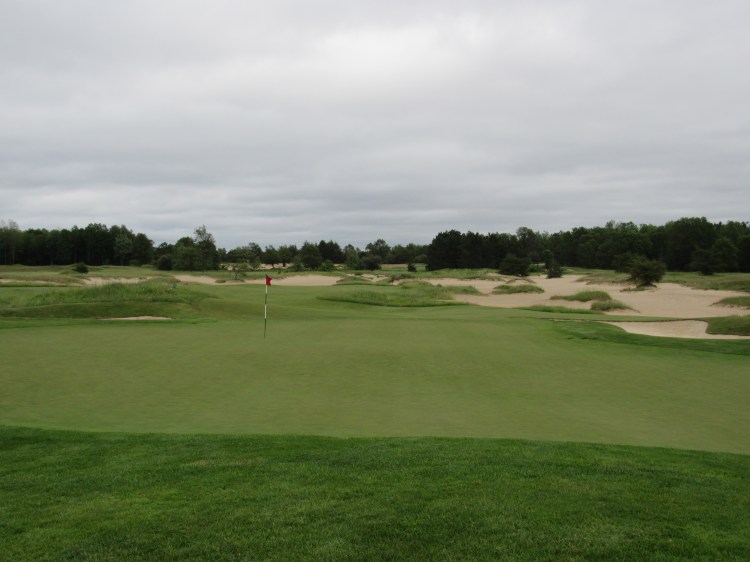
A hallmark of Forest Dunes Golf Club is ever-present waste areas, from which the course derives its name. You see, just below the turf lie acre upon acre of sand, deposited millennia ago by receding glaciers. Not only does this mean the course drains beautifully, it also allowed Weiskopf to expose vast stretches of it create natural hazards. Just wait until you get to the 233-yard, par-3 16th and the drivable, risk-reward, 302-yard, par-4 17th—the type of hole Weiskopf became famous for. There is so much sand from tee to green on these holes, you’ll feel like you’re on some ocean-side course in Florida rather than deep in the Michigan woods.

Behind the green of the 17th hole, Forest Dunes

Lake AuSable Lodge, Villas, and Cottages

Forest Dunes has evolved into an idyllic golf destination. The original course and The Loop provide three top-notch rounds. Toss in The Bootlegger and Hilltop Putting Course, and devoted golfers have enough entertainment for days.

In short, Forest Dunes represents a veritable golf theme park for golfers of all skill levels. Lake AuSable Lodge stands just 35 yards from the first tee of the original course, and the clubhouse restaurant offers excellent food and drink (the gourmet mac-n-cheese and the Forest Dunes burger are highly recommended, and the made-to-order breakfast sandwich is a pre-round must). Prices are surprisingly reasonable as well, considering the virtual monopoly they have. The back patio is one of the most peaceful post-round spots you’ll find on any course, anywhere, so eat outside if the weather allows.

Ausable Lodge
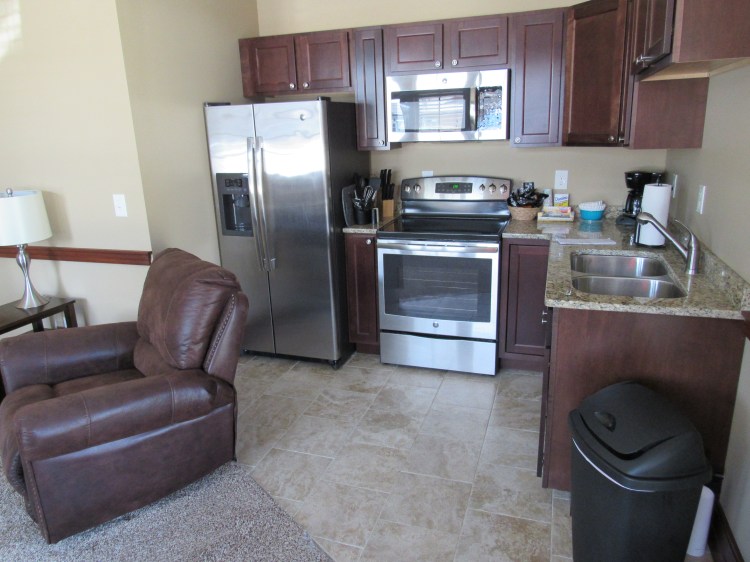
Kitchenette, golf condos

The Villas consist of 2- and 4-bedroom condos, ideal for buddy or family trips. My son and I frankly did not want to leave, we had grown so comfortable after just two nights in the princely digs.  If you want even more space, or to spend extended time in this golf haven, there are 7 cottages (i.e., full-fledged houses) on site, which sleep from 4 to 8 people in total luxury. My son is already imagining buddy trips when he gets older, and this is now his ideal destination.

The back patio of the clubhouse at Forest Dunes is an idyllic setting for dinner and drinks.

Indeed, there are few golf destinations as peaceful as Forest Dunes. As soon as you enter the grounds, the world melts away and you are enveloped in world-class golf. There is a rumor a third 18-hole course is in the planning stages. If true, there are some people—like me and my son—who will never want to go anywhere else.

“U.S. Open Challenge”: SentryWorld Hosts 2023 U.S. Senior Open

As I milled around the interview room at the 2023 US Senior Open, which just wrapped up at SentryWorld in Stevens Point, Wisconsin, I heard the same refrain from nearly every player:

“This is a U.S. Open challenge. We’re just putting ‘Senior’ in front of it.”

Brett Quigley, whose final round 66 (-5) vaulted him to a T4, was asked if the 1982 Robert Trent Jones, Jr. course (which has been renovated twice by Jones himself) could host a U.S. Open – ignoring the remote location and lack of local infrastructure. “Definitely. There’s more room behind where we were playing. It’s as good as any U.S. Open course I’ve played.”

Clear evidence for this assertion could be found on Day 2, when the scoring average on every hole was above par. And Day 2 scoring was about a stroke better overall than Day 1.

The cool thing about the U.S. Senior Open is that the fields are so diverse. Fans get to see true legends of the game – World Golf Hall of Famers like Mark O’Meara, Ernie Els, Bernhard Langer, Vijay Singh, and Padraig Harrington – along with worldwide golf icons like Miguel Angel Jiménez, Y.E. Yang, and Darren Clarke. And then about half the field is guys you’ve probably never heard of who qualified, including a handful of amateur graybeards living every older weekend warrior’s dream.

Ernie Els, Tom Lehman, and Justin Leonard shake hands at the end of Round 2. Between them, they have 6 major championships. All three made the cut.

The amazing thing is that even though some of the big names don’t make the cut, a respectable number of the latter categories do, even at a brutish test like SentryWorld. It just goes to show you how dang good these players are.

Take Mike Small, Head Men’s Golf Coach at the University of Illinois at Urbana-Champaign. His teams have won the Big Ten title 13 of the past 14 years, and qualified for NCAA Team Matchplay several times. His former players can be found on pro tours all around the world, including the PGA Tour. His former college teammate is Wisconsin native and 2023 Ryder Cup Captain Steve Stricker – the two played together at Illinois. Small ended Day 1 on the front page of the leaderboard at -1. A 78 (+7) on Day 2 still left him inside the cut line.

Illini Men’s Golf Coach saves par on the 9th Hole, Day 2, helping him make the cut.
Takashi Kanemoto cards the best round on Day 2 to make the cut by two strokes.

What’s making SentryWorld – one of Wisconsin’s original “destination” daily fee courses – so rough? Well…the rough, for one thing. But that’s not all.

Two-time Masters Champion Bernhard Langer explained on the second day why the scores were so high like this: “Obviously, there’s the rough, but there’s a lot of water in play. Then you have the greens that are quite severe at times too. Four or five of them are really firm. And the undulation. They hide the pins behind knobs and behind bunkers. That’s the U.S. Open … well, every week really. It’s vital to come from the fairway and control your distance and control your spin, and the rough is just extremely tough to play out of.”

Langer’s assessment of the course can be believed: He’s won 45 Champions Tour events, including 12 Senior majors. At 65, he would be the oldest player to win a Senior major by seven years. Although he’s not as long as most out here, he can hit a green with a hybrid as easily as most can with a mid-iron.

At the end of Day 3, there were a grand total of five players under par. Just two were Americans, both from Wisconsin: Jerry Kelly (-4) and Steve Stricker (-3). They both birdied 18 for a nearly storybook end to the round.

Jerry Kelly after Round 3
Steve Stricker after Round three, looking up at the TV and saying he had hoped Bernhard Langer would stumble.
Berhnard Langer, Leader after Round 3. He didn’t stumble.

“We couldn’t have scripted it any better,” said Kelly. “Well, we both could have been in the final group, I guess.”

So the question was: Would Day 4 turn out to be a Hollywood ending no one would believe if it were a script? Or would it be thwarted by a taciturn German (who really is a nice, engaging guy and a legitimate legend of the sport)? And of course, some other contender might rise to the top in a totally unexpected plot-twist. Twelve players began the day within 8 strokes of the lead, including four PGA Tour major winners.

The sun rose on Day 4 bright and hopeful, the northern air redolent with pine and the thousands of flowers surrounding Robert Trent Jones, Jr.’s “Mona Lisa” – the 16th Hole (a.k.a. The Flower Hole).

“The Flower Hole” — Hole 16, SentryWorld

In the second group out, Coach Small repeated his respectable Day 1 score with another -1. His caddie said, “He found something out on the course. He pured every shot on the last eight holes. He shot as high as he could have, really.” The caddie of Tom Lehman, Small’s playing partner for the day, agreed. “[Small] nearly rolled in a half-dozen more putts.”

So low scores were out there. Would the leader – or pursuers – find the magic like Small did? Langer seemed to find it right out of the gate, with an easy birdie on Hole 1 and an improbably long birdie putt on Hole 2, while Stricker went par-par, and Kelly par-bogey.

But it was on the par-5 5th hole where Langer all but laid claim to the title. His second shot came up just short, in the mud of the lake fronting the green. He walked up, assessed the ball, and proceeded to remove both shoes, roll up his slacks, and splash his third to about five feet. Of course, he made the birdie, for a five-shot lead over Kelly.

Coming down the stretch, though, the ageless marvel showed a few hints of mortality. Bogeys on 16 and 17, combined with a Stricker birdie on 17, left Langer with a 3-shot lead standing on the 10th tee. Up ahead, Stricker had a putt from the back fringe to put on even more pressure, but his birdie putt came up a little right and short. This half of the home-state hero duo ended up at -5.

The stage was thus set for Langer to take his 13th Senior Major title, along with the all-time Champions Tour win title, for which he’d previously been tied with Hale Irwin. Langer’s approach ended in the right fringe – by design. “18 was a bogey on purpose. No way was I going left, where all the trouble is.” Langer marched up to the elevated 18th green, stopping half-way and waiting for Kelly – a classy move for a tournament winner (it’s usually the vanquished who pay their respects to the victors).

Langer, again, played conservative to secure the win. “I told my caddie I would be leaving the putt from the fringe 20 feet short to two putt from there.” And that’s what he did.

After the round, Kelly was visibly disappointed, with so many friends and his mother on hand watching. But he was sanguine about the third-place finish: “Langer wins. Stricker beats me. What’s new?”

More seriously, Kelly applauded Langer: “It was incredible to have a front row seat to [Langer’s wins number] 45 and 46. And Bernhard’s a really good friend of mine.”

As for his post-victory opinion of the course, Langer said, “It’s one of the best courses I’ve ever played.”

Regarding the win – which gives him more wins than anyone on the Champions Tour and more Senior Majors than anyone, Langer said, “This one is right up there. My two Masters wins probably rank ahead of it. But having more Senior Majors than Nicklaus, or Trevino, or Player – this is very special.”

Special win. Special course. Special week in Wisconsin’s north woods. A “senior moment” worth remembering.

Your 2023 U.S. Senior Open Champion, Bernhard Langer, and the slightly spitoon-like trophy, thinking about where this one ranks in his career.