Listen up duffers and duffettes – Christmas 2020 is just one week away (and Hanukkah is already over!). If you haven’t secured gifts for the golfers on your list by now, you’re going to need to hit the shot of the year. Seriously, this is the holiday equivalent of stepping onto the 18th tee dormie: it’s now or never.
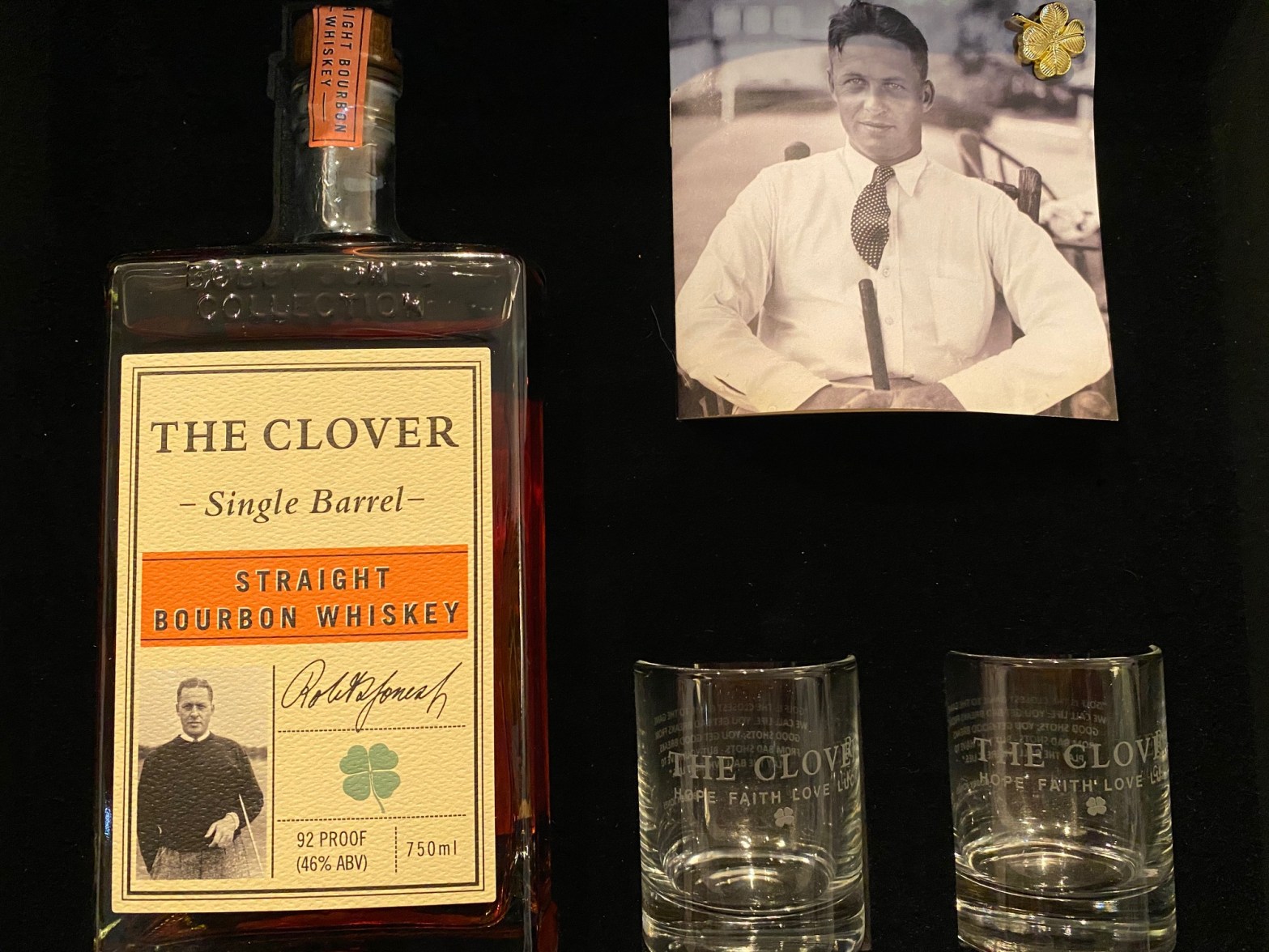
Bobby Jones was not only a golf legend; he was a legendary connoisseur of fine bourbon. The Bobby Jones Clover Collection by The Clover Whiskey is a Jones family initiative to carry on the legacy and traditions of Bobby Jones. The collection includes several single-barrel aged bourbons and ryes (starting at about $60), along with a very classy selection of accessories, including tasting and low-ball glasses, and a signature gold clover lapel pin (just as Jones himself always wore). The 4-year old straight bourbon whiskey is 92-proof, but perhaps the smoothest I have ever drunk. I can only imagine how velvety the 10-yar-old is! The flavor profile is vanilla, smoked almonds, and cardamom. The Clover Whiskeys are available in about 20 states so far, and at some of the most exclusive golf resorts and clubs in America (see the website for a list). You can’t buy it online, but you can buy the gift boxes and accessories (starting around $35) if you’re lucky enough to track down a bottle and want to dress it up even further. I cannot stress enough how much any whiskey-loving golfer (or non-golfer!) on your list will love this stuff. Pair it with the golf-ball shaped ice cubes by Tovolo from my original gift guide
Club Champion Club Fitting
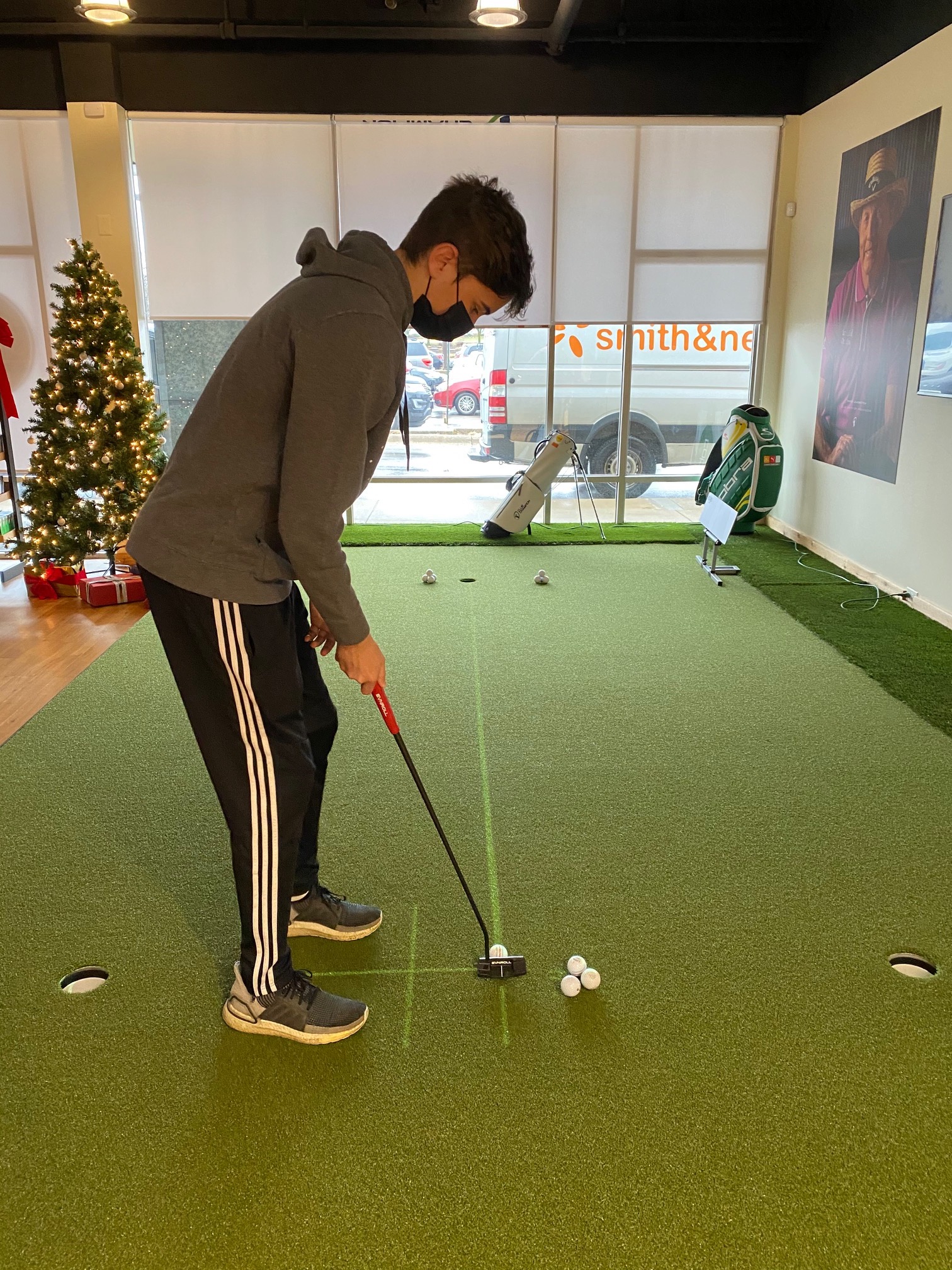
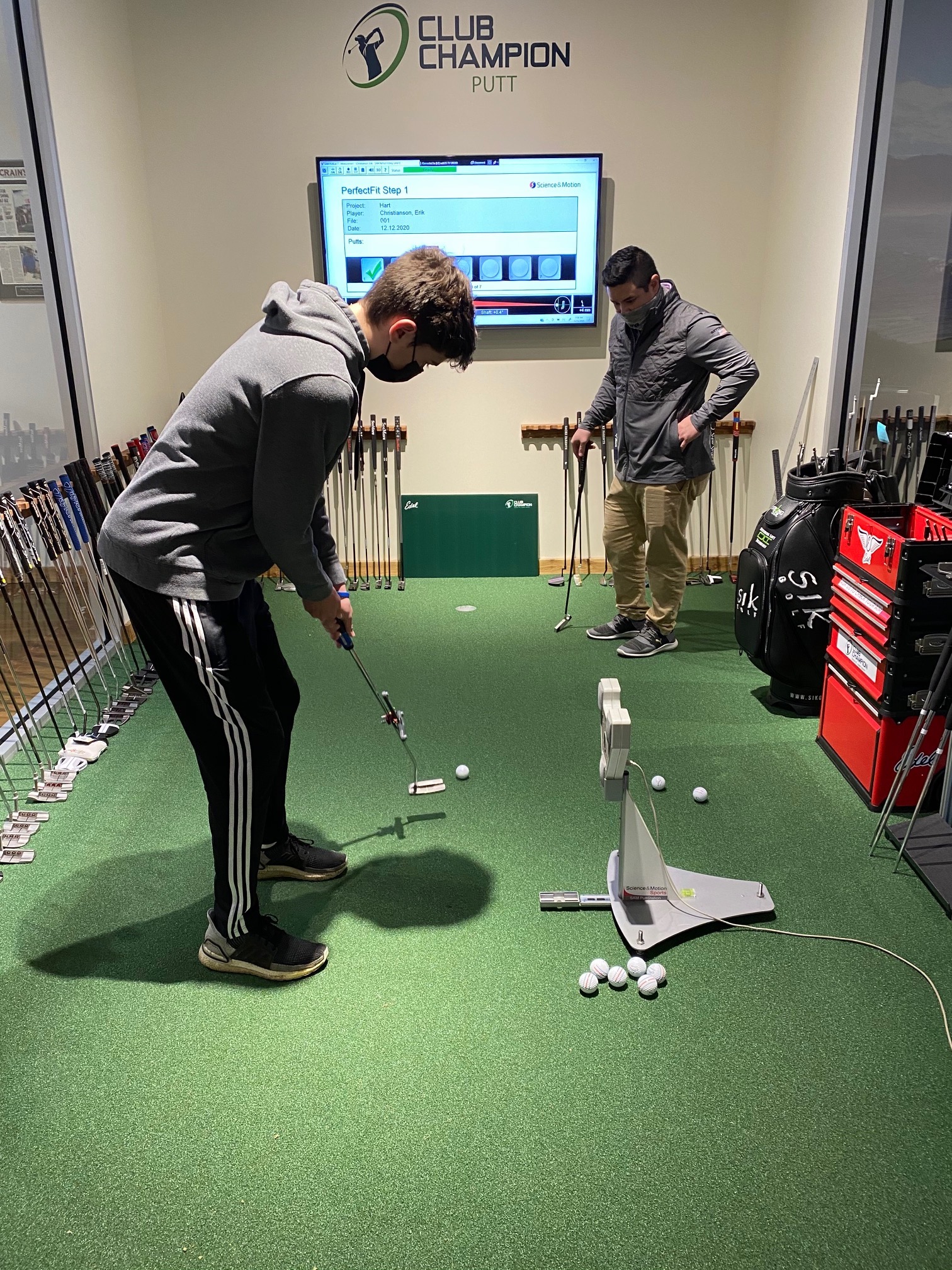
Club Champion is the nation’s premier club-fitter, with 75 centers throughout the country. They’ve made me a believer. I’ve gone through fittings there myself, as have several friends too, and the level of detail and the sheer amount of information you learn about your swing will astound you. Same goes for the vast array of equipment they can choose from—tens of thousands of head, shaft, and grip combinations. For the holidays, get 50% off fittings booked and completed from November 1, 2020 – January 31, 2021 when you purchase $500 in equipment. Golfers booking putter fittings will receive 50% off their fitting fee with the purchase of a new putter — no price minimum. My son just did a putter fitting, and he loved every second of it. You can also purchase gift cards to use with this deal, or later in 2021, at their website.
The Claw PRO Golf Glove by CaddyDaddy
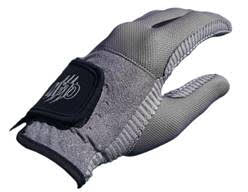
If your favorite golfer wears old, torn, smelly golf gloves, do him or her a favor and restock their bag with a couple of Claw PRO gloves by CaddyDaddy ($25). These gloves are the grippiest, strongest, most breathable gloves you will find. The palms are coated with silicon webbing, and the fully synthetic suede and mesh back are durable and amply vented. The Claw PRO has added grip in the thumb and forefinger and is machine-washable. They will last 4x-5x longer than a traditional glove. I got my original model Claw glove over a year ago, and I still wear it nearly every round. I expect to be wearing the PRO for another couple years.
OnCore Online Gift Card
OnCore makes some of the best golf balls you’ve maybe never heard of. This Buffalo, NY, company has a new tour-level ball (see my ball round-up from earlier this year), the Vero X1, that can stand alongside any of the top-line big-company balls. Anyway, OnCore is having a big holiday sale on gift cards: Spend $50 on a gift card and get $65 in OnCore cash to spend. Spend $75 and get $100. If you really want to impress, spend $100 and give a gift worth $140.
Annual Membership in the golf Heritage Society
Are there golfers on your list who have all the gadgets, gear, and gee-gaws they could ever need? Then give them the gift of history with a $50 annual membership in the Golf Heritage Society. The GHS exists to share stories, artifacts, and pure love of golf. In short, this is where golf collectors, writers, historians, and fanatics of all types satisfy their cravings and curiosity. Members gain access to a members-only section of the Society’s website, where they’ll find special and archived content and a shop full of cool GHS merchandise that your favorite golf geek cannot get anywhere else.
Ryder Cup Experience Package at Geneva National Resort & Club
Have you ever dreamed of holing the putt to win the Ryder Cup? I can’t help you live that dream, but I can point you toward a gift that will win both the holiday season AND get you closer to the Ryder Cup than you ever thought possible. Geneva National Resort and Club in Geneva, Wisconsin, has put together a dream package for golf fans who want to attend the Ryder Cup at Whistling Straits (Sept. 23-27) and play Geneva National’s championship courses. Packages include 54 holes of golf at Geneva National, four nights deluxe accommodations, two days of Ryder Cup tickets with transportation, and a Ryder Cup Watch Party ($3,000-$4,000, depending on occupancy; discounts for GN members). These packages will go fast, so contact them NOW if you want to be a Ryder Cup hero without actually qualifying for the team.
Well, that’s it. That’s all I can do for you this year. Even though the pandemic has made everything harder, I hope these ideas help make your 2020 holidays easier, and most memorable ever – for good reasons.
Be well, play good golf, and keep in touch. I’ll see you on the other side in 2021.
If ever there was a holiday season for online shopping, it’s 2020. Most of us have been shopping online since March, but now we’ve hit the big time. This is The Show, baby! So step up to the tee and let the big dog eat!
Here’s a list of my favorite golf gifts this year. It’s pretty long, but what the heck else do you have to do?
Arnold Palmer Umbrellas by Weatherman
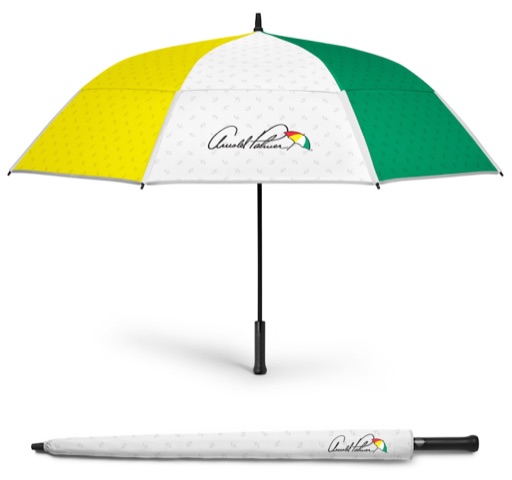
It’s been one dreary year, and when that hard rain falls – literally or figuratively – it’s nice to have a big ol’ umbrella. The Arnold Palmer Umbrella Collection by Weatherman offers shelter from the rain for everyone, golfers and non-golfers alike. The Arnold Palmer Classic Golf Umbrella ($89) has Arnie’s trademark pattern and measures 68”. That’s big enough to keep a threesome dry, if you like each other well enough and don’t need to socially distance.
ECCO Golf Street Retro shoes, PUMA IGNITE Caged Crafted shoes, & Swiftwick MAXUS Zero Tab socks
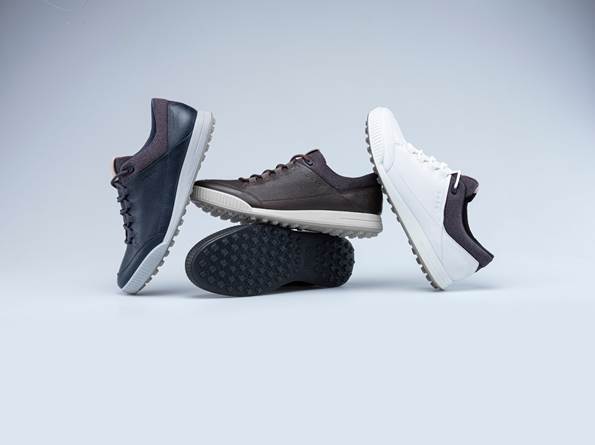
The saying goes that you can’t understand another person’s struggles unless you walk a mile in their shoes. Anyone who walks a mile in my new ECCO Golf Street Retro shoes ($150), though, isn’t going to feel very sorry for me. ECCO is the long-running champion in the “Most Comfortable Right Out of the Box” category, and the Street Retros are no exception. I wore mine for the first time a couple weekends ago—2 days in a row, walking 18 holes, and afterwards my feet felt like I’d had them up on the couch all day. Crafted with full-grain leather, waterproof, and with some 800 traction angles, these shoes perform, too. My favorite part is the textile, sort of felt-like collar that adds even more comfort around your ankle.
The PUMA IGNITE Caged Crafted shoes ($170) represent a solid entry into the “crossover” golf shoe category, that look both good on and off the course. They are constructed with a premium full grain leather PWRCAGE Saddle that wraps around the medial and lateral sides of the shoe providing incredible stability throughout the swing along with a 1-year waterproof guarantee, and a cool nuvo-classic look. Bryson DeChambeau and Gary Woodland have been wearing these beauties on Tour for the past year, so you know they perform at the same time they protect and pamper your feet.
Either the ECCO Retro Street or PUMA IGNITE Caged Crafted shoes pair nicely with the most comfortable sock in golf – the Swiftwick MAXUS Zero Tab ($15). These ankle socks come in a rainbow of colors, and they absorb sweat better than any sock I’ve ever worn. But the best feature is an enlarged microtab on the heel to make sure whatever shoes you wear won’t rub.
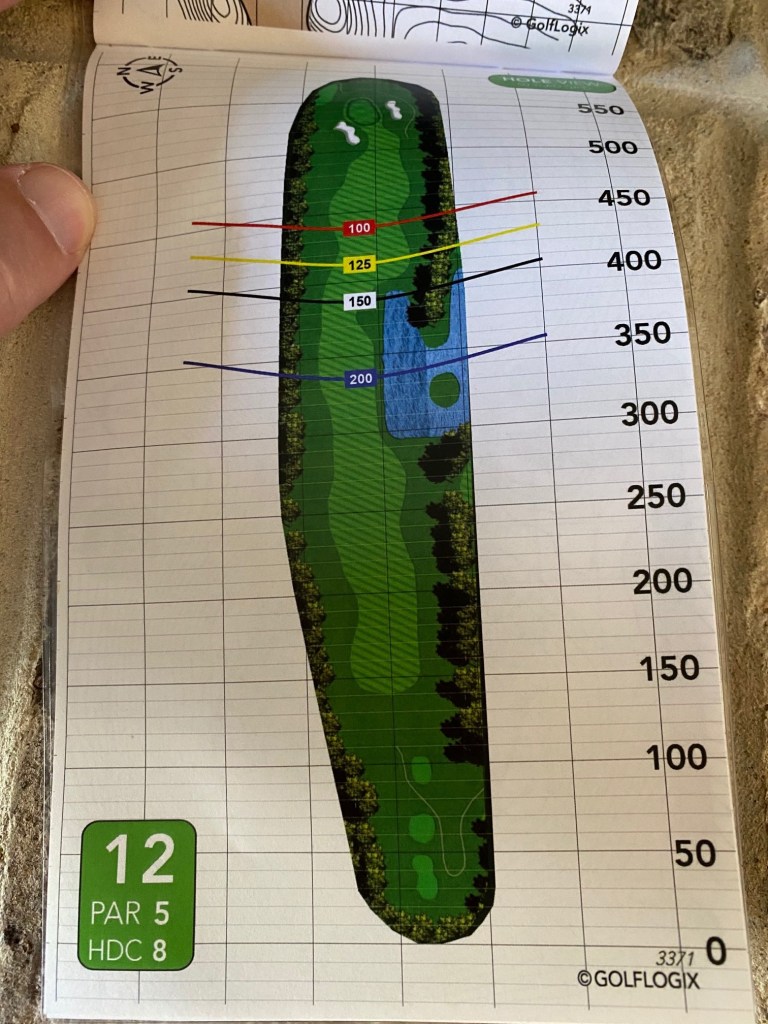
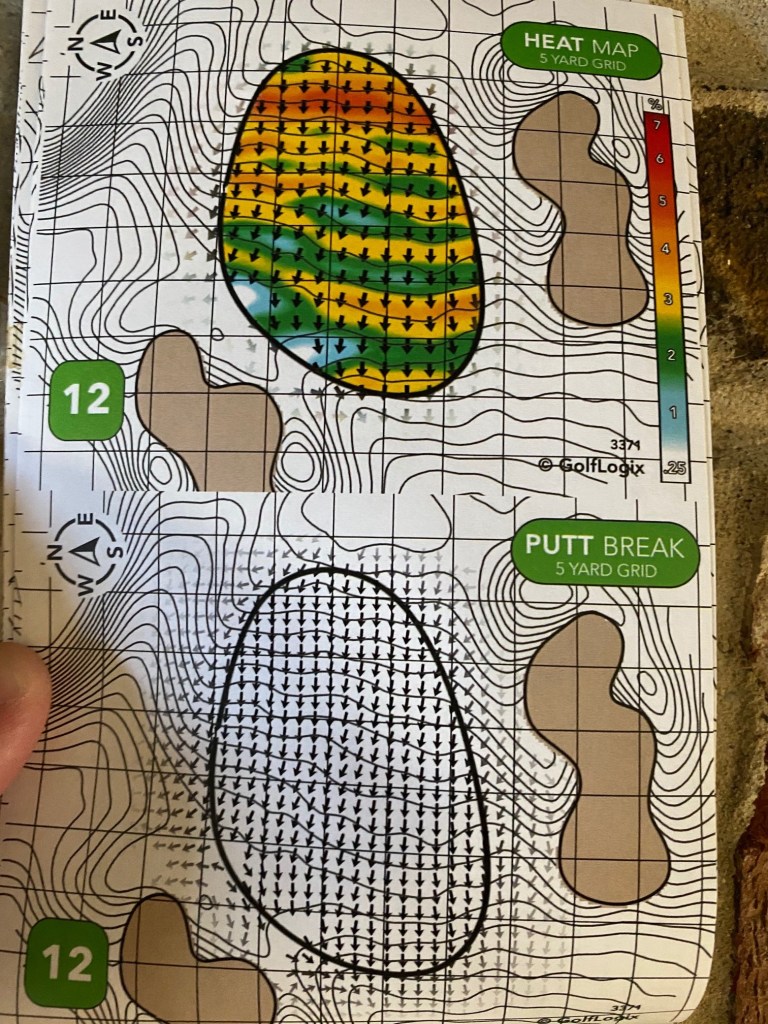
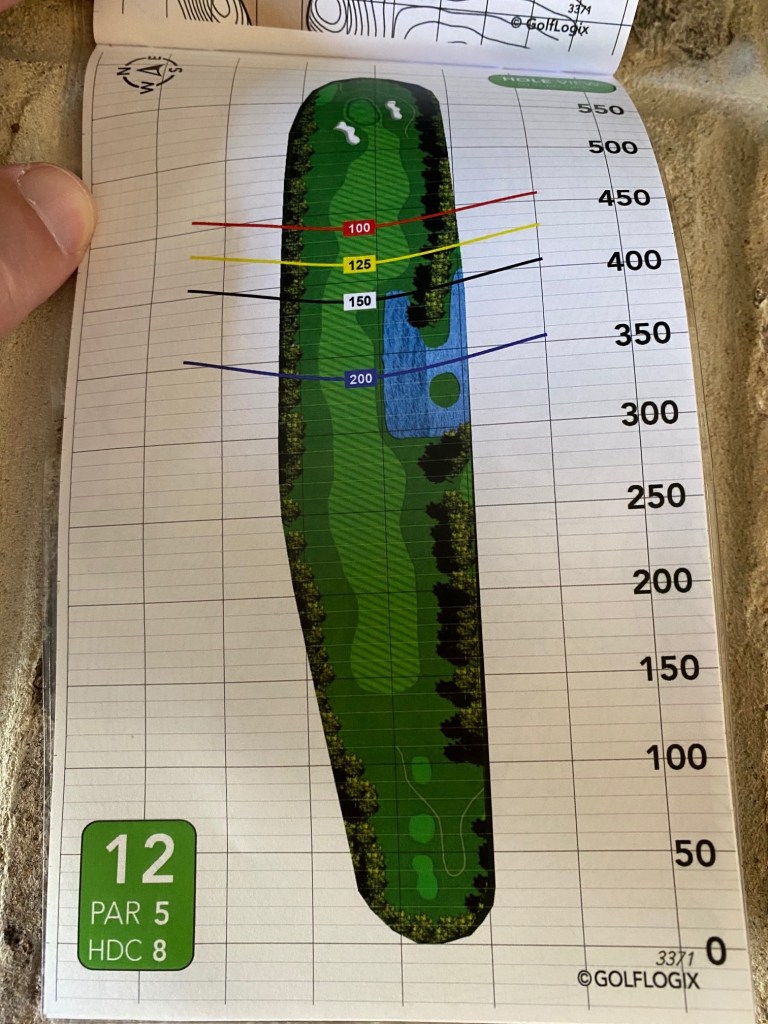
These days, it’s all about data: yardages, green books, stats tracking. You name it, you can quantify it. There are more options than ever this holiday season. GolfLogix offers green maps and yardage books of nearly any course you can think of. These books run $40 each, and they make outstanding gifts for golfers on your list—personalized for their home courses! They include hole maps on 50-yard scales and green break maps and heat maps on 5-yard grids. We’re talking serious data here. The hole maps are excellent, but the stars of the show are the exquisite green maps, with break arrows and heat maps for judging both direction AND amount of break.
If you want yardages and more in a sleek wearable unit—like hole maps, yardages to hazards, score-keeping and game stats, step-counter, heartrate monitor and more—you will want to consider the new SkyCaddie LX5 ($330, incl. a $20 holiday discount). The LX5 has a ceramic touch-screen bezel that measures 1.39 inches, with hi-def resolution so even old(er) guys like me can read the numbers on the screen. It comes with a 3-year SkyCaddie Premium membership and is pre-loaded with 35,000 courses around the world. The membership allows you to sync data (scores and stats for every hole that you enter during your round) with a laptop or phone, and then you can access stats from all your rounds on the www.SkyGolf360.com website. Added benefits are a step-counter, so I can show my wife that my morning rounds include 14,000 steps (6+ miles) and a battery that lasts for two full rounds.
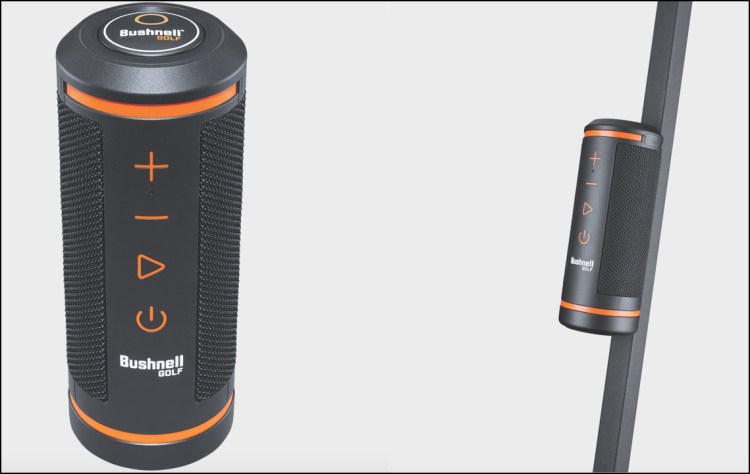
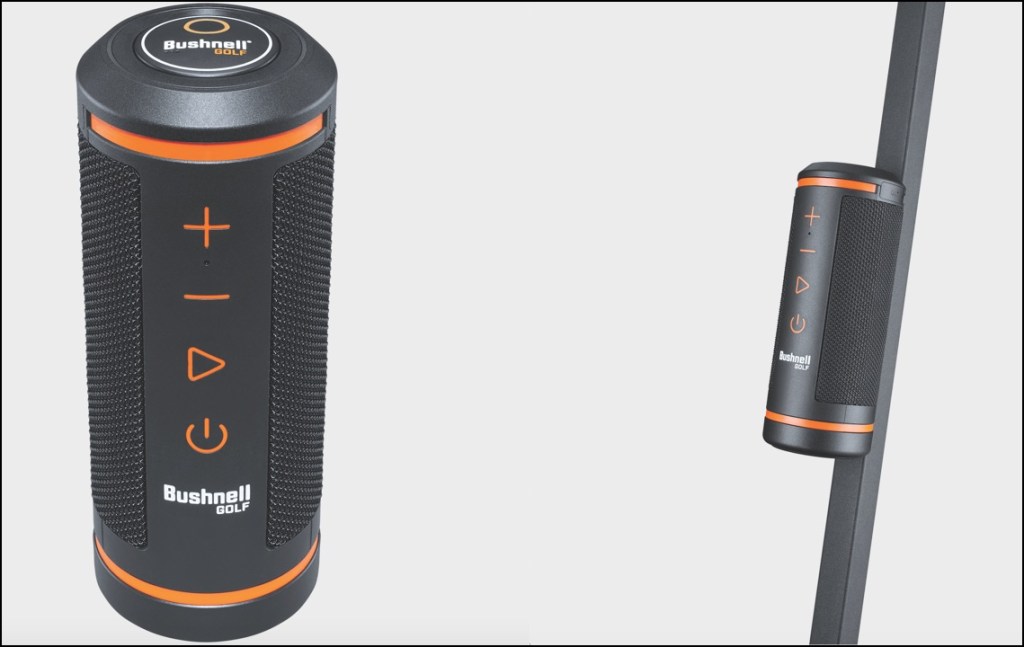
If the golfer on your list likes to play tunes on the course the Bushnell Wingman ($150) is for you. Essentially the Wingman is a top-notch Bluetooth stereo speaker combined with one of the best GPS systems in golf. Integrated into the speaker is a powerful magnet so you can stick it on your golf cart (or on your pushcart), and there’s a detachable remote control you can keep in your pocket to click for audible yardages to the front, middle, and back of the green. Pair the Wingman with your phone to play music from your own library or streaming service, if the gentle strains of birdsong and the breeze in the leaves are too old-fashioned for you. Then download the Bushnell app onto your smartphone to display detailed maps and yardages of 36,000 courses, keep score, and more all on your phone.
Balls, balls everywhere
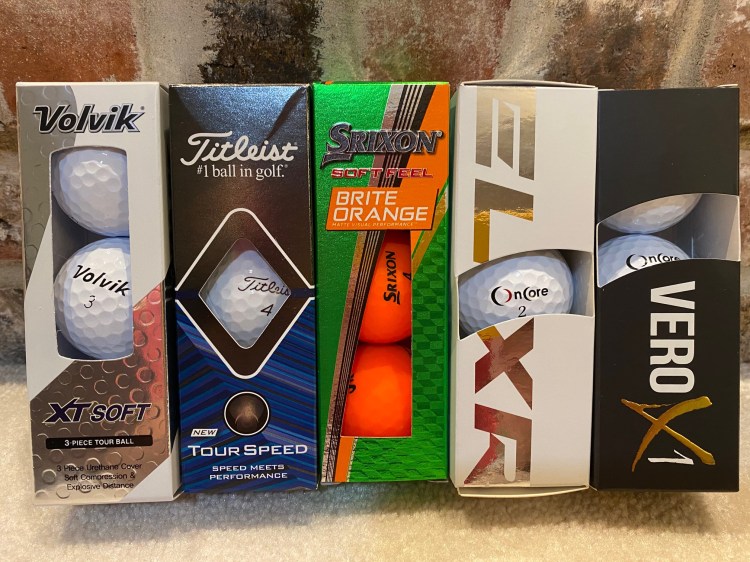
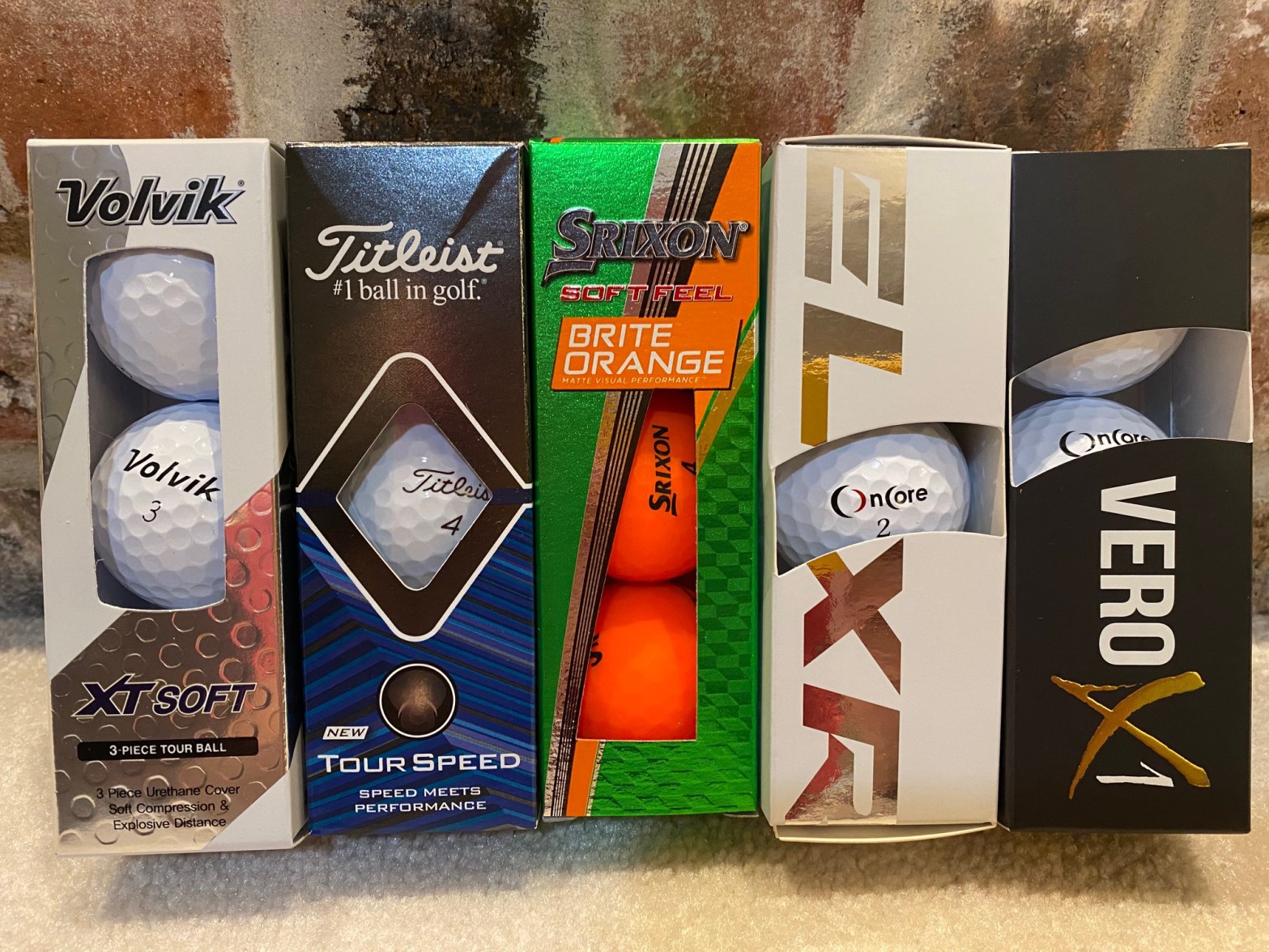
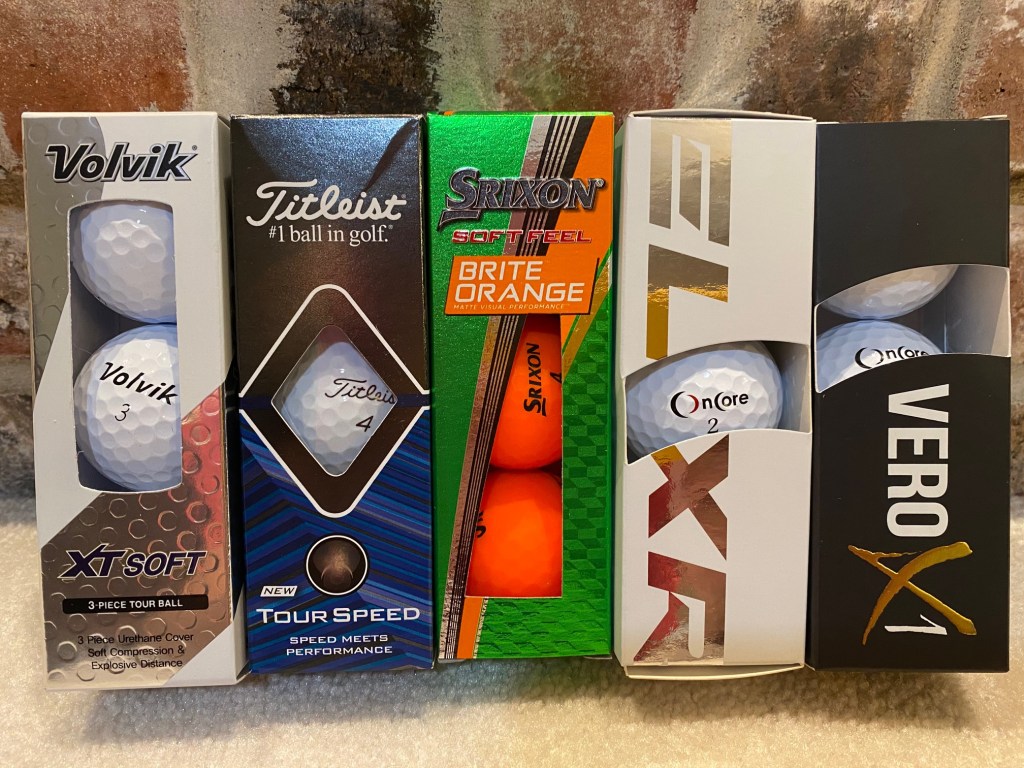
Is it just me, or has there been a recent proliferation of golf ball companies and models? Gone are the days when everyone in your group plays the same Titleist or TopFlite. Not only is there variety, there is quality, as engineers have figured out how to combine distance and control qualities in the same ball. Here are five current favs to choose from:
Volvik XT Soft ($37.99/doz)
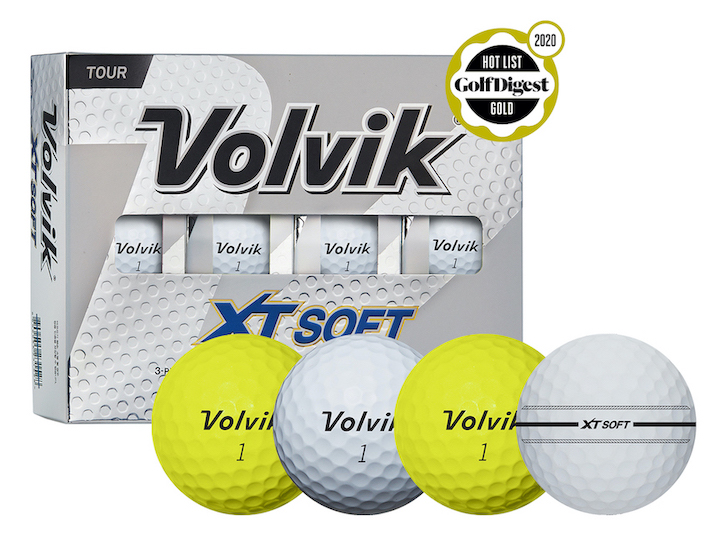
Volvik is one of the most intriguing and fastest-growing brands of golf balls. They certainly win the “unique line-up” award. Volvik’s balls are widely played on the LPGA Tour, and the company sponsors the Long Drive Tour. The XT Soft model represents an affordable premium entry that received a Gold rating on Golf Digest’s “Best New Golf Balls” Hot List this year in the over $35 premium category.
Titleist Tour Speed ($39.99/doz)
MyGolfSpy.com has fabulous golf ball testing facilities and methods, and according to their crack staff, there’s a reason the ProV1 has dominated the golf ball market for so long: Titleist has some of, if not the, most stringent quality control in the golf ball world.
Titleist brings that same meticulousness to the production of their new Tour Speed balls.
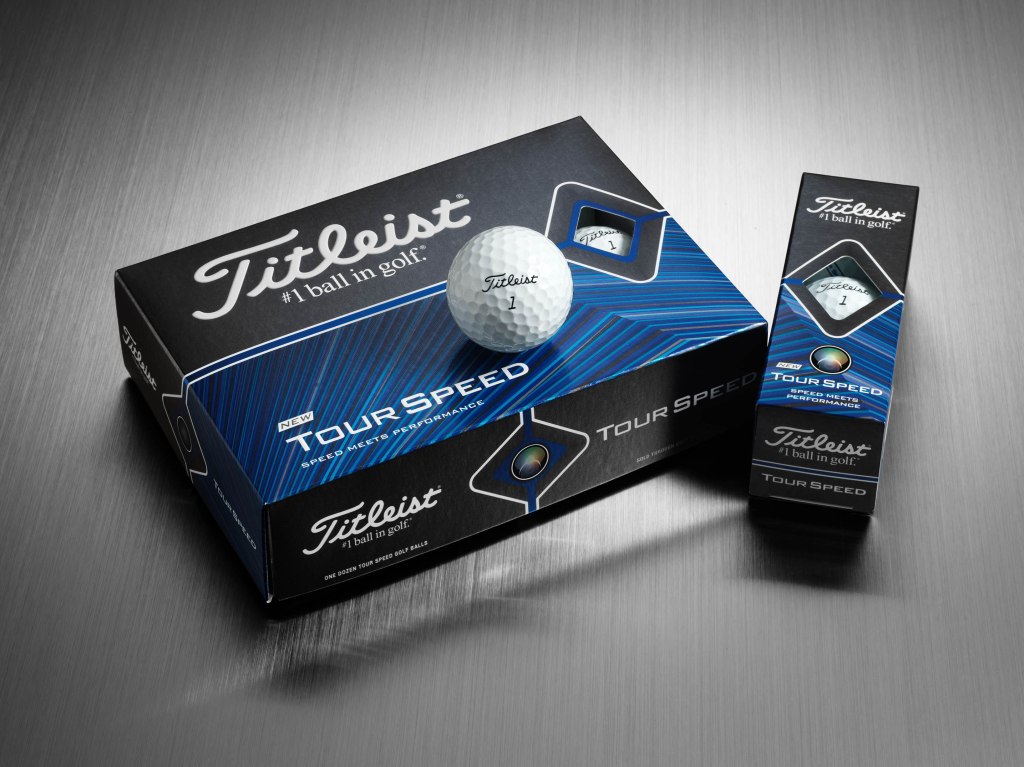
The Tour Speed has a proprietary thermoplastic urethane cover and a 346 quadrilateral dipyramid dimple design that the company claims make it longer and faster than Callaway Chrome Soft, Bridgestone Tour B RX, TaylorMade Tour Response, Srixon Z-STAR and Srixon Q-STAR TOUR.
Srixon Soft Feel Brite ($21.99/doz)
If your absolute bottom line when it comes to golf balls is finding the best ball possible at the lowest price possible, Srixon Soft Feel has been your go-to for several years now. Are they the longest ball you will play? No. But do they combine competitive distance with excellent responsiveness around the greens? You bet they do. So if you tend to lose a lot of balls, you can stock up on these at basically 2-for-1 the price of “premium” balls.
OnCore ELIXR ($25.99/doz) and Vero X1 Prototype ($39.99/doz)
Buffalo-based OnCore Golf probably makes the best balls you’ve never heard of. The direct-to-consumer manufacturer has three models: Avant, ELIXR, and the brand-spanking new limited-edition prototype Vero X1. The ELIXR is a three-piece, value-priced premium ball that performs as well as or better than balls selling for $10 more per dozen. OnCore’s new premium four-piece, tour-caliber ball is the Vero X1. This ball also has the metal-infused mantle, 85 compression, and a premium cast urethane cover that in combination produce tremendous distance off the tee and spin around the green. I played the Vero X1 over two rounds in a recent tournament and experienced something I rarely, if ever, have before: backing the ball up on the greens. OnCore is having a buy 2 dozen get one free deal.
Short Game Gains and Pro Path putting mirrors
Maybe you live in a house with vaulted ceilings so you can take full swings. Maybe you have one of those fancy indoor simulators. For those of us who aren’t in those categories, the best off-season practice we can do indoors is putting. And the best way to maximize putting practice—indoors or outdoors—is with a putting mirror. Here are two excellent options, each with its own unique features.
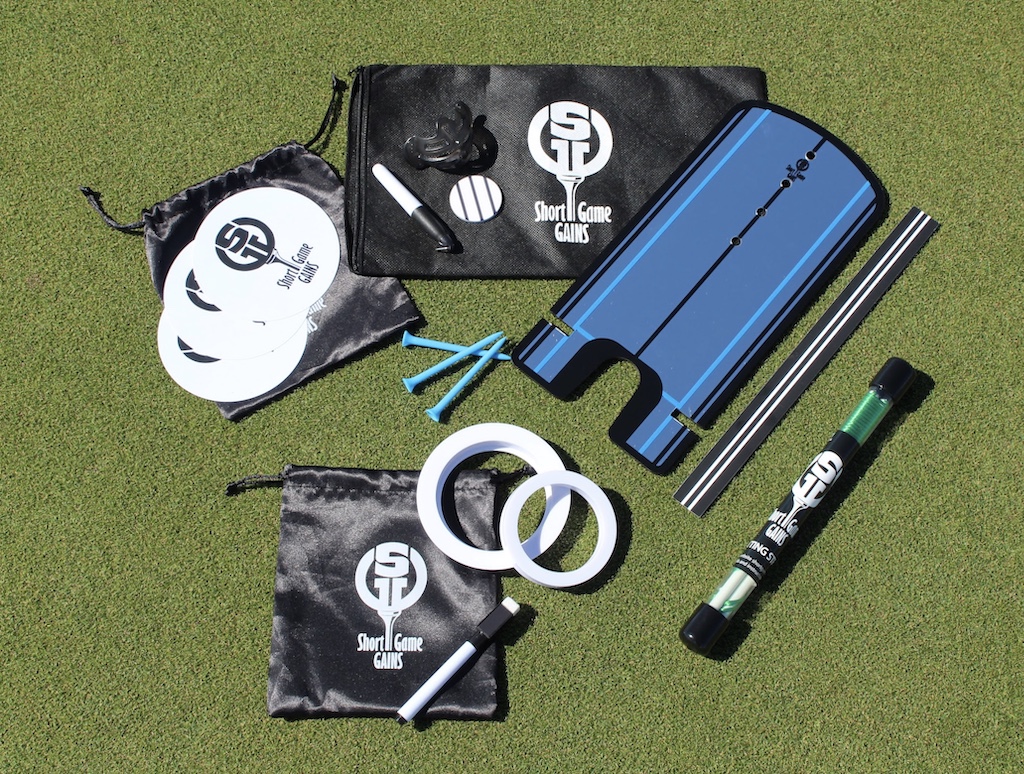
Pro golfers, social media butterflies, and sweethearts Hannah Gregg and Fredrik Lindblom have developed a line of products based on the tools and tricks of their fellow Symetra and Korn Ferry Tour players and named their company Short Game Gains. All of their training aids are simple and intuitive to use, yet sophisticated in design and high-quality in construction. Their putting mirror ($40) is compact, and the plastic “runway” that you can use with it is particularly helpful for getting the ball started online. Their set of “ghost holes” ($15) is particularly useful for dialing in speed, as they allow you to gauge how far past the hole your ball is running. Their hole reducers ($18) are one of the cleverest putting aids I’ve ever used. The concentric hole inserts reduce the diameter of holes on your local putting green to dial in your aim. Practice a while with these, and when you hit the course, the standard-sized holes feel like buckets. Everything comes in its own cinch-sack for easy transport. You can grab all of these aids along with a few others for $90 – and your short game will emerge from this pandemic tastier than your sourdough loaves.
The Pro Path putting mirror by Back 2 Basics Golf ($65) is a bit larger than the one by Short Game Gains, with more detailed graphics printed on it. I especially like the stroke-path line, which helps you groove a bit of a closed-open-closed stroke on longer putts. The mirror also comes in its own carrying sack, and it includes four staggered putting gates that you can stick into your local putting green to narrow your aim and ensure you hit hour line every time. Happily, both of these mirrors work just as well on your livingroom carpet as they do on a practice green.
Man Crates and Canteen Vodka & Soda
Pandemic, you say? Lockdown, you say? Well I say it’s a perfect opportunity to indulge your passions or take up a new hobby. Especially a manly one. Man Crates are care packages for the men OR women on your gift list. Crates contain a variety of goodies centered around various themes, from whiskey-lovers to baking to beef jerky to BBQ to knife-making to ales to personalized golf balls ($50-$150). I love to cook, but I’m not much of a baker. So when my Get Baked crate ($60) arrived, I was skeptical. Then I read the instructions and threw together a blueberry crumble that wowed my family and me, and then I started in on the iron skillet desserts. I guess I’m a baker now!
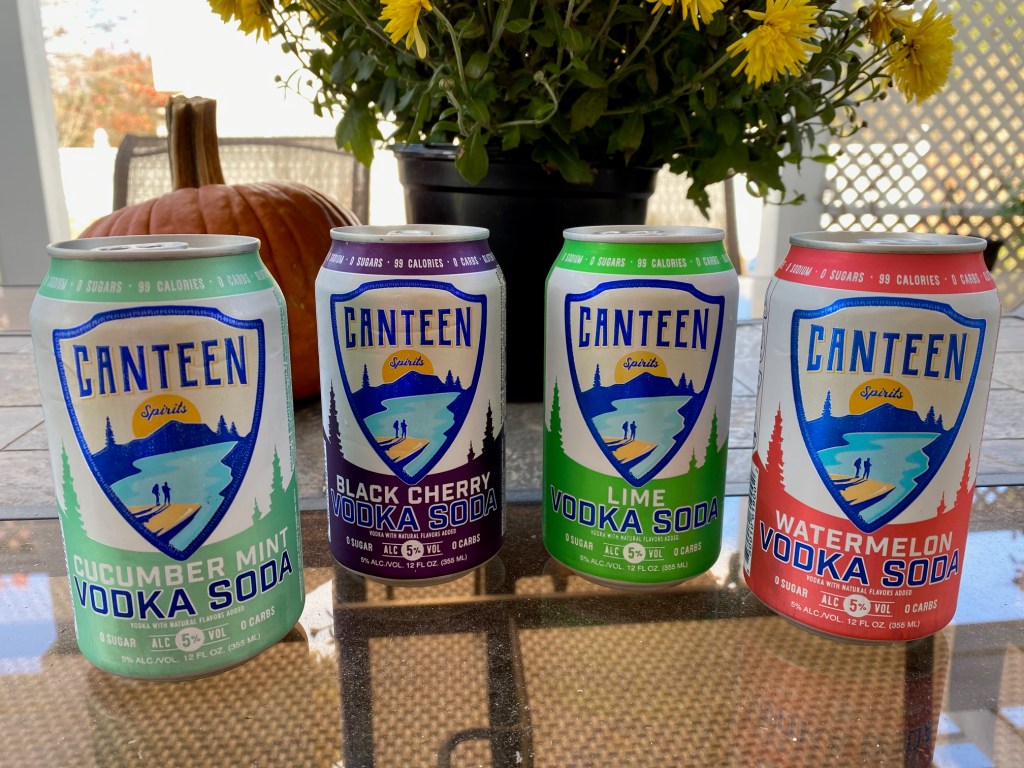
Whether you enjoy libations on the golf course or only after you hit the 19th hole, something light is generally the way to go. Seltzers have become surprisingly popular, even amongst the older golfing set. But if you are looking for something light with more substance and flavor than your typical seltzer, I highly recommend Canteen Vodka and Soda. These canned 5% alcohol drinks—made with real vodka, rather than the beer-like fermented cane sugar found in most seltzers—make those seltzers taste like bad mineral water. The Canteen flavors are perfectly calibrated, with no aftertaste. They were my Official Drink of the November Masters.
Tovolo Golf Ball Ice Molds
Dress up your Canteen drinks or your Man Crate whiskey with giant golf ball-shaped ice spheres with the Tovolo ice molds ($15 for set of 3). These latex molds are easy to fill and, with a little practice, you create bubble-free balls that cool immediately and melt very slowly.
If you can’t find something in the list above for the golfers on your gifts lists, I’m not sure what to say. Maybe you’ve contracted the virus, because you’ve obviously lost your taste.
Seriously, may everyone be well, stay hopeful, and be surrounded with love and laughter this holiday season. 2021 has got to be better, right?
Finding your way on the course today takes everything you’ve got.
Taking a break from indecision sure would help a lot.
Wouldn’t you like to know how far it is from here to there?
And the carry in the air?
–“Cheers” … sort of
All right, all right. Enough of that. I’ve been watching WAY too much old TV during this pandemic.
Let’s get serious: Is there any question asked more often on a golf course than, “What’s the yardage?” Or some version thereof?
Take a walk with me through the range of ways to answer this recurrent query in today’s game, using technology that’ll suit technophobes and technophiles alike.
Old-school yardage calculation
Nothing much to say here: Find a sprinkler head, or stake, or bush, and guess. Or, if you’re really anal, pace it off. If your preference is the latter, be prepared for your playing partners to play out of turn and walk ahead. Many years ago and someone growled at a kid in our group what we all were thinking: “If you pace off another pitch, Woody, I’ll hit every ball in your bag into the effing woods.”
Retro Cool: GolfLogix Greens Books
Depending on your perspective, when pros pull those greens books from their back pockets, it’s either ultra-cool or utterly infuriating. Now YOU can be one of these polarizing figures on your own home course. How can you get a taste of that sweet, sweet data for your local links? GolfLogix offers green maps and yardage books of nearly any course you can think of. These books run $40 each, include hole maps on 50-yard scales and green break maps and heat maps on 5-yard grids. We’re talking serious data here. The hole maps are excellent, but the stars of the show are the exquisite green maps, with break arrows and heat maps for judging both direction AND amount of break. Since getting one of these for my home course, I have discovered flat spots on the greens I didn’t know existed and had always over-read. So now I can enlighten (or bore) my buddies, “It’s a little-known fact that that part of the green actually doesn’t break.”
Laser focus: TecTecTec! ULT-X Rangefinder
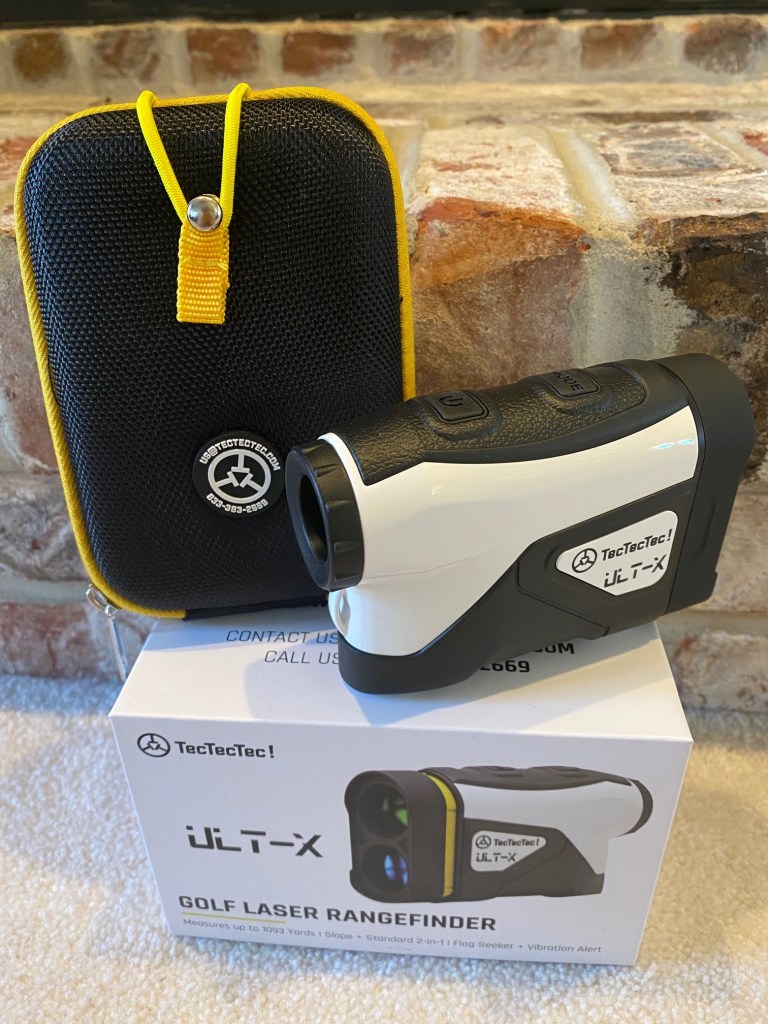
Rangefinders have really grown on me over the years. I used to love the old-school guess, but now I enjoy verifying the yardage with laser precision. If you’re only a slight technophobe, the laser rangefinder is probably your top choice: just aim press a button. One of the more advanced rangefinders on the market is the ULT-X by TecTecTec! ($250). It’s lightweight, uber-precise, and has an elevation mode that is easy to turn on and off. Doing so is accomplished by pulling the lens housing out or pushing it in. When the elevation mode is engaged, a bright yellow band is revealed, so players like my son, who play in tournaments in which measuring elevation is not allowed, will be less likely to forget to turn it off. There is a vibration confirmation when the target is locked in, too (though it’s a bit slower than some higher-priced competitors). I’ve also recently found that another handy use of the ULT-X is keeping an eye on other golfers around the course to maintain social distancing. You can ID friends from 100+ yards away and wave – “Hey, Norm!”
Sleek, stylish, and hi-tech: SkyCaddie LX5 GPS Smart Watch
If you don’t normally wear a watch while playing, it might take some getting used to, but a GPS watch can be the easiest way to know the yardage wherever you are. And if you want more than just yardages—like hole maps, yardages to hazards, score-keeping and game stats, step-counter, heartrate monitor and more—you will want to consider the new SkyCaddie LX5 ($350). I’ve been testing one of these beauties for a couple of months now, and it does practically everything – and I feel like I’ve barely scratched the surface of its functionality.
The LX5 has a ceramic touch-screen bezel that measures 1.39 inches, with hi-def resolution so even old(er) guys like me can read the numbers on the screen. Although its price tag is substantial, it comes with a 3-year SkyCaddie Premium membership and is pre-loaded with 35,000 courses around the world. I’ve actually learned to enjoy entering my scores and basic stats into the watch after each hole. The membership allows you to sync data with a laptop or phone, and then you can access stats from all your rounds on the SkyGolf360.com website.
Added benefits are a step-counter, so I can show my wife that my morning rounds include 14,000 steps (6+ miles) and a battery that lasts for two full rounds. The only feature I am not fully enamored of is the LX5’s habit of asking “Are you done with Hole X?” It asks this dumb question sort of a lot, and it vibrates on your wrist when it does. I don’t play slowly, but a few times, this buzzing has happened in the middle of my backswing in a bunker or on a putt, with deleterious effects. No one likes a know-it-all, Diane.
Bushnell Wingman: Swing your swing and play your music
If you’ve gone all-in on technology and all the ways it’s changing golf, the Bushnell Wingman ($150) is for you. Essentially the Wingman is a top-notch stereo speaker combined with one of the best GPS systems in golf. Integrated into the speaker is a powerful magnet so you can stick it on your golf cart (or on your pushcart), and there’s a detachable remote control you can keep in your pocket to click for audible yardages to the front, middle, and back of the green.
But wait – there’s more!
Pair the Wingman with your phone to play music from your own library or streaming service, if the gentle strains of birdsong and the breeze in the leaves are too old-fashioned for you. Then download the Bushnell app onto your smartphone to display detailed maps and yardages of 36,000 courses, keep score, and more all on your phone. I’m not a big phone-fan on the course, but there’s so much functionality with the Wingman—all accessible without subscription or membership—that I discover more features every time I use it. Smoothest wingman since Sam Malone.
So cheers to all you golfers, no matter how you decide to make your way in the world today. It’s not easy out there, but it’s a little better when everybody knows your name—and you know your yardages.
Full disclosure: I’ve always been a big fan of Cleveland Golf wedges. I have tested and reviewed a LOT of wedges over the decades, and whenever a new set of Clevelands arrive, they end up staying in my bag longer than the others.
Fuller disclosure: It’s happened again. And this time, Cleveland’s new ZipCore wedges kicked another model of their wedges out of my bag.
I had been playing the Cleveland RTX 4 60-, 56-, and 52-degree wedges since those first hit the market. Then the RTX ZipCores arrived on my porch, and, well, that was that.
Ever since I switched, I’ve been closer to the hole on every manner of shots within 120 yards – low, high, pitch, chip, flop – you name it. The ZipCore can do it.
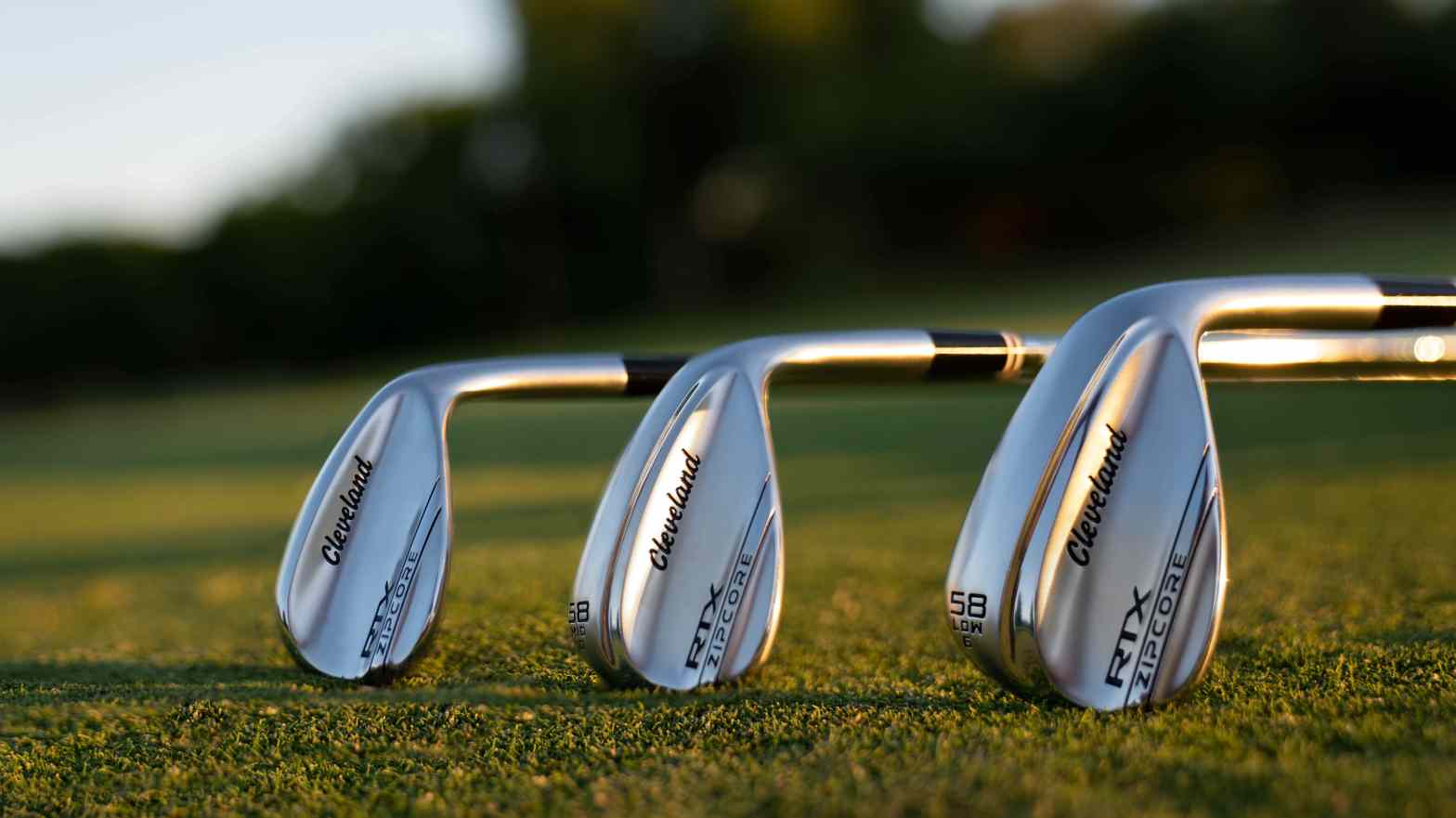
Playing the Cleveland Golf RTX ZipCore wedges
Of course every new incarnation of any golf club model boasts “innovations” and “improvements” over the previous generation, but the ZipCore wedges ($150) actually represent a significant transformation from the excellent earlier RTX designs.
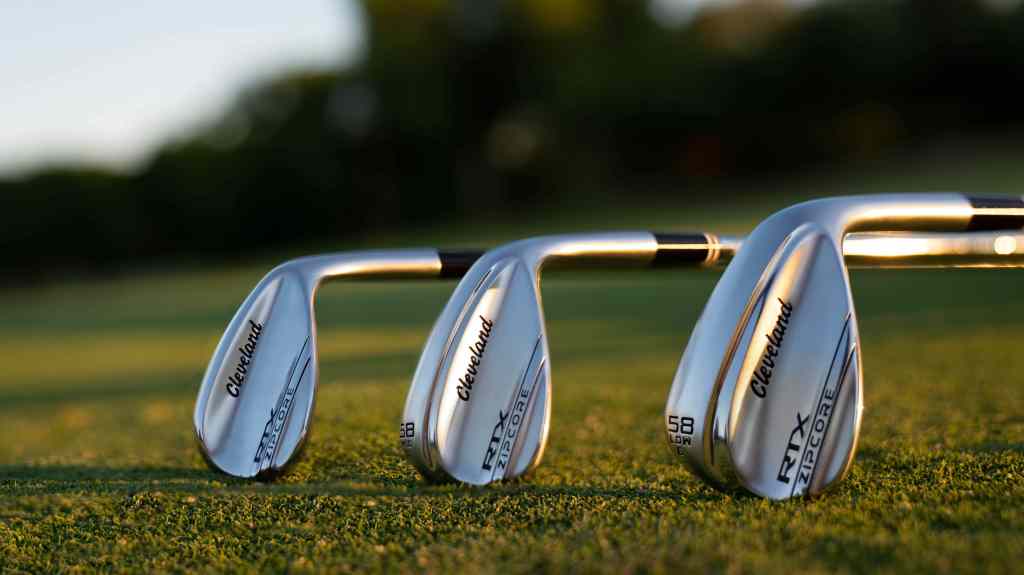
First and foremost, the namesake “ZipCore” feature refers to the removal of mass from inner core of the hosel and heel portion of the clubhead. This weight has been redistributed into a ridge or bar on the back of the clubhead, just below the top of the face. This weight redistribution stretches the center of gravity a bit higher and toward the toe – precisely where a lot of contact occurs.
In addition to this weighting scheme, the UtiliZip grooves are deeper and closer together than ever before. These grooves put noticeable spin on the ball. I’ve nipped several short shots (<50 yards) a bit thin since playing the ZipCores, and they usually end up biting after the first bounce and finishing much better than they deserved to, based on the contact (it helps to play a premium ball like the OnCore Vero X1).
The ZipCores come in lofts of 46 to 60 degrees in a standard Tour satin finish (other finishes also available). As I say, once the 56- and 60-degree RTX ZipCores went into my bag, they have never come out. I wasn’t hitting my previous RTX 4s badly, but the ZipCores simply out-perform them. My favorite feature is the new weight distribution. When the ball rolls a bit up the face in the rough, there is enough mass to carry the shot most of the way to the target instead of popping up half-way there. This design also brings amazing consistency to my sand game.
Cleveland Golf RTX ZipCore wedges: The Skinny
You don’t have to be a scratch handicapper to play these great new wedges. And you don’t have to be a chopper to benefit from the engineering innovations. You don’t need to be rich to afford them, either. Win, win, win. The only concern is what Cleveland can do to top them next year.
Sometimes the best ideas take a while to come to fruition. Worse yet, sometimes those “can’t-miss” plans sink faster than a chunked ProV in a greenside pond. Fyre Lake Golf Course in Sherrard, Ill. (20 minutes outside Moline in the Quad Cities), is a very good idea that has flared and flickered and nearly gone out a few times. Ground was actually broken for the Nicklaus Design course on the shores of the namesake man-made lake way back in the late-mid 2000s. Ownership woes and a historic national economic collapse delayed opening. Then yet more mismanagement threatened its survival until it was purchased in 2015 by Larry Whitty and Mike Thoms. In July, 2020 – during yet another national economic crisis – Fyre Lake was sold to PGA Certified Director of Golf Mark Krizic, who will also lease 144 acres of adjacent land from Whitty and Thoms and establish a year-round Callaway Training Center.
“The bones of the facility are fantastic. When I first went there, I thought that this could be a top-10 Illinois course,” says Krizic.
These all seem like big plans for the unique layout, which rises and falls along the shores and inlets of Fyre Lake. Local players in the golf-rich Quad Cities tend to view the 6,505-yard course as a bit of an enigma: it’s a bit out of the way, and conditions and green fees have fluctuated over the years. Length is not the primary defense; the members’ tees are just 5,945 yards. Rather, uneven lies, tucked greens guarded by the lake, deceiving yardages, and ever-present prevailing winds conspire to make Fyre Lake play at least 500 yards longer that it says on the scorecard. In other words, it’s a challenge and a thrill, and locals really hope the course’s newest incarnation under Krizic’s ownership will finally establish it as one of the area’s—maybe even the state’s—best public courses.
“I wish the new guy all the best,” said one Quad Cities golfer whom I spoke to at a recent visit to TPC Deere Run. “It’s a great design. But you never know what you’re going to get out there.” Krizic has a lot of plans to address that uncertainty. “I have a pretty good track record of addressing issues like that,” he says.
Playing Fyre Lake Golf Course
As noted already, Fyre Lake Golf Course should not be underrated due to its length. The par-70 design forces precision from tee to green, and plenty of power is also required on several holes. The 436-yard 1st is one of the prettiest opening holes in the state, with the back tees set basically off the edge of the practice putting green next to the clubhouse. A good drive here still leaves a mid- to long-iron to a narrow green that falls off dead right or rises to a rough-covered mound on the left.
Fyre Lake Hole 1 offers one of the prettiest opening drives in the state.
The 521-yard 2nd is the only par 5 on the front. It plays from a tee sitting below the level of the fairway all the way uphill to a green perched on a hillside high above. It feels more like a 700-yard par 5 every time I play it.
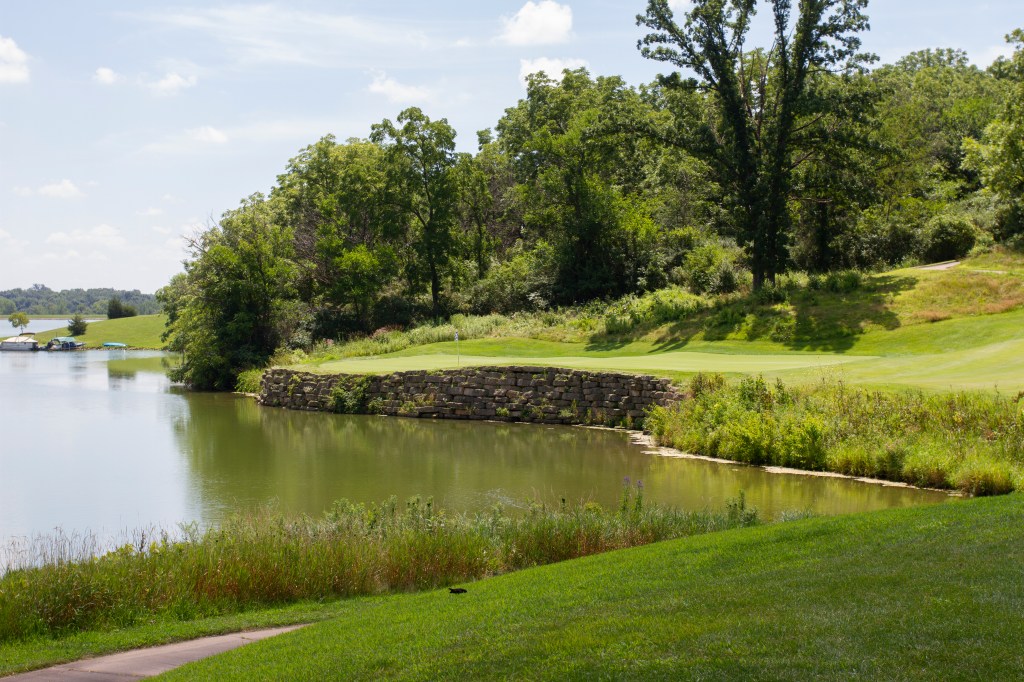
The 424-yard 3rd tumbles back downhill toward the lake, with no level spot on the fairway until it ends short of the thick rough on the lakeshore. Your approach here has to find a rock-walled green with no bailout right and H2O left.
There’s no bail-out on the approach to the 3rd green at Fyre Lake.
As pretty as the front nine holes are, the real fun starts after the turn. There is one memorable hole after another. The 190-yard 12th is a pulse-racing par 3 from the tips – actually a totally different hole from the back tees compared to all the other tees. From there, it’s a 180-yard carry between trees and over a deep ravine. From the more forward tees, there’s progressively less and less carry required. Really a nice design for players of all skill levels.
The back tees of the par-3 12th demand everything you’ve got.The middle tees on the 12th hole are much less intimidating, but still no cake-walk.
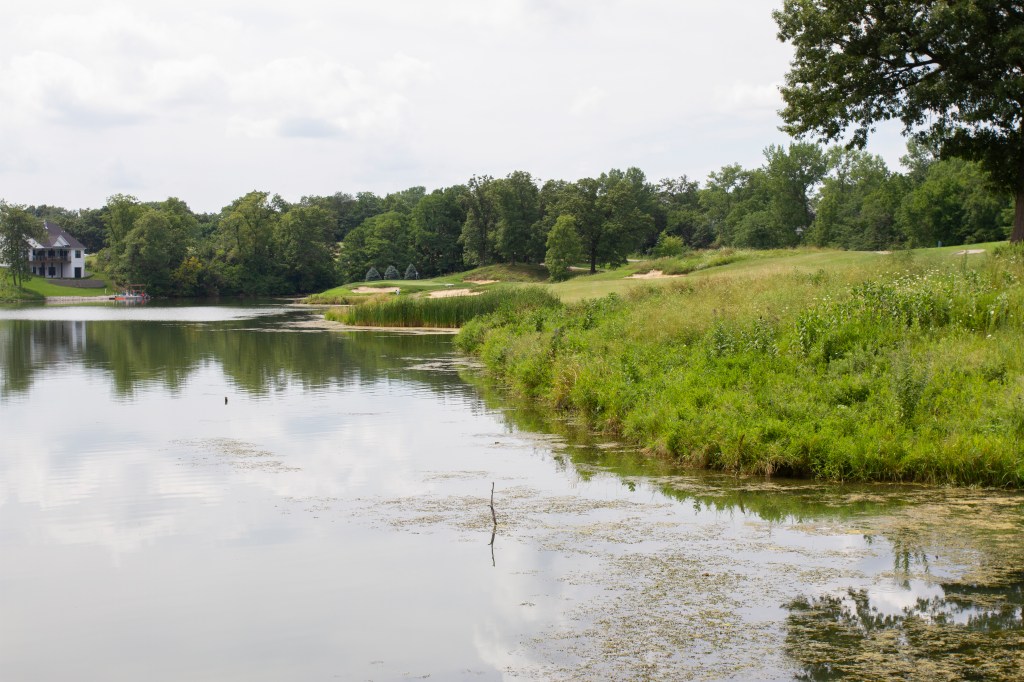
The 401-yard 13th plays way downhill to a semi-blind landing area, and then further downhill to an island green that you just might see in your dreams or your nightmares, depending on how well you hit your approach. One of Fyre Lake’s few design drawbacks is here. The back tees for the 386-yard 14th are located on the same island. So if the group in front of you is pokey—like maybe they’re playing the tips when they shouldn’t be and are hitting ball after ball to try to get back over 230 yards of water to the 14th fairway—you will have a lot of time to ponder the tricky approach.
Waiting to hit your approach on 13 until the group on the back tees of 14 finally clear the water is…frustrating.
A second design flaw is on the 372-yard 15th. From the back tees, there’s only a sliver of fairway to aim at, paralleling the reedy shore of the lake. The problem is a large tree that stands between the members’ tees and the water, which nearly blocks the fairway from view from the tips. If you’ve got a reliable power fade with your driver that you feel comfortable aiming out over the water, you’re fine. Otherwise, chances are you’ll find rough, reeds, or water. Or, like one hapless golf writer, the tree AND the water, with a nearly perfect yet utterly disastrous drive.
View from the tips on Hole 15 at Fyre Lake. Do you see any fairway up there? Even if you find the fairway on 15, the green is as unforgiving as any on the entire course.
What’s the skinny on Fyre Lake Golf Course?
Fyre Lake Golf Course is all the challenge and fun (and perhaps frustration) you can handle. Many casual golfers might be surprised to find that a course doesn’t need to have four par 5s to demand length and control on basically every hole. If you’re struggling with your driver, Fyre Lake will burn you. There are plenty of forced carries, both from the tee and on approaches, and several greens that leave basically no room for error on any side.
There are precious few places to miss the green on Fyre Lake’s 8th Hole.
The putting surfaces themselves are full of movement, and many of them have multiple tiers. A curious – and particularly vexing – aspect of the current course set-up is the total lack of collars around the greens. You read that right: no fringe, no “first cut,” no “frog hair.” What this means is there is no buffer between the putting surface and 3”-4” rough. So if you ball rolls to the edge of the green, you have no way to take your putter back without hitting said rough. It’s sort of like putting on a mini-golf hole when your ball is up against the boards. If this sounds like an exaggeration, see the photo below. That was my ball and, shortly thereafter, my three-putt.
Pretty hard to take a decent backswing on putts like this.
According to Krizic, though, this is a hallmark of a lot of Nicklaus designs. “He doesn’t like collars. I like this aspect of the design, actually. It makes the greens really pop visually. But yes, sometimes it makes putting hard.” So I’ve learned my lesson for next time: don’t hit it near the edges of the greens!
In short, Fyre Lake Golf Course is a very good idea that has persevered through bad timing, bad times, and bad business. But it’s a great layout, with a seasoned, dedicated new owner. Golfers who haven’t visited it yet owe themselves a round.
For those who have played and wonder about the future of this unique course, Mark Krizic says this: “The vision for the course is always the same. Make sure the greens are consistent, maintain the golf course. But you have to put money into the golf course to make it happen. We’ll improve customer service, including pyramids of balls on the range, names on golf carts, starters and rangers. Our very first aspect will be the golf course, but that professionalism will be there, along with an actual pro shop. And a Callaway Performance Center is on the table. We’re going to start reaching these goals in 2021.”
When it comes to golfers, there’s a continuum running from those who commit to playing one brand and model of golf ball to those who put into play literally any ball they scoop out of a pond, stumble upon in the weeds, or spot in the woods.
Me? Well, I’m somewhere in the middle. I’ve learned that there’s a huge difference between various golf balls, and some do simply perform better *for me* than others do. However, I also have learned that there is a fairly large number of recreational players for whom the golf ball they use is one of the lesser impediments to their consistent success.
I have grown particularly fond of several companies’ balls, though, especially during this past summer, in which my game has stabilized and improved to the point where I can fairly compare one model against another.
These are the five golf ball models, from four different manufacturers, that have made the biggest impressions on me this season.
Volvik XT Soft ($37.99/doz)
Volvik is one of the most intriguing and fastest-growing brands of golf balls. They certainly win the “unique line-up” award. Volvik’s balls are widely played on the LPGA Tour, and the company sponsors the Long Drive Tour. I’ve written several times about their Marvel Comics Universe super-hero balls, which are fantastic gifts and conversation pieces as well as solid performers.
The XT Soft model represents an affordable premium entry that received a Gold rating on Golf Digest’s “Best New Golf Balls” Hot List this year in the over $35 premium category. The special sauce in this three-piece, urethane-covered ball is bismuth, a metal that is incorporated into the core. Now, bismuth is a key ingredient in Pepto-Bismol, and I’m not positive I understand what it does to promote energy transfer in a golf ball. But I can confidently report that I never experienced any queasiness while playing the XT Softs.
The yellow version of the XT Soft is the most visible yellow hue I’ve ever played, and both the white and the yellow perform admirably. They are long off the tee and offer excellent control around the greens. The three-line alignment system is perhaps the best on the market. Interestingly, whenever I play these, I feel like I get helpful bounces off trees, too. Maybe it’s the bismuth, I don’t know. These balls just seem to pop back into play somehow.
Titleist Tour Speed ($39.99/doz)
MyGolfSpy.com has fabulous golf ball testing facilities and methods, and according to their crack staff, there’s a reason the ProV1 has dominated the golf ball market for so long: Titleist has some of, if not the, most stringent quality control in the golf ball world.
Titleist brings that same meticulousness to the production of their new Tour Speed balls.
The Tour Speed has a proprietary thermoplastic urethane cover and a 346 quadrilateral dipyramid dimple design that the company claims make it longer and faster than Callaway Chrome Soft, Bridgestone Tour B RX, TaylorMade Tour Response, Srixon Z-STAR and Srixon Q-STAR TOUR.
I’ve played the Tour Speeds several times, and they do indeed have a piercing ball flight that launches like a bullet and plays particularly well in hard, fast conditions. Spin and feel on the greens are not as exquisite as ProV1, but they are very well behaved and consistent. It seems like my distance judgment on pitches, chips, and putts is always particularly good on days playing the Tour Speeds. It’s sort of a Goldilocks thing: not too much spin, not too little—just right. If the ProV1 feels too squishy or spinny for you, give these a whack.
Srixon Soft Feel Brite ($21.99/doz)
If your absolute bottom line when it comes to golf balls is finding the best ball possible at the lowest price possible, Srixon Soft Feel has been your go-to for several years now. Are they the longest ball you will play? No. But do they combine competitive distance with excellent responsiveness around the greens? You bet they do. So if you tend to lose a lot of balls, you can stock up on these at basically 2-for-1 the price of “premium” balls.
And if you do lose a lot of balls, try the new Brite version of the Soft Feel. These golf balls in orange, red, and yellow-green practically glow. For a somewhat seasoned player such as myself (ahem), whose seasoned eyes have trouble following the ball in the air, especially in overcast conditions, the Brites make an enormous difference.
OnCore ELIXR ($25.99/doz) and Vero X1 Prototype ($39.99/doz)
Buffalo-based OnCore Golf probably makes the best balls you’ve never heard of. The direct-to-consumer manufacturer has three models: Avant, ELIXR, and the brand-spanking new limited-edition prototype Vero X1. I’ve written about the ELIXR before, reporting about the good impression it has made. It is a three-piece, value-priced premium ball that performs as well as or better than balls selling for $10 more per dozen. The ELIXR incorporates OnCore’s original design idea: metal in the mantel. This combination of performance and price-point has earned the ELIXR a Golf Digest Gold rating for 2020.
OnCore’s new premium four-piece, tour-caliber ball is the Vero X1. This ball also has the metal-infused mantle, 85 compression, and a premium cast urethane cover that in combination produce tremendous distance off the tee and spin around the green. I played the Vero X1 over two rounds in a recent tournament and experienced something I rarely, if ever, have before: backing the ball up on the greens. Seriously, with everything from a 6-iron on down, I was able to spin the ball back on the greens of my home course between 6 inches and 6 feet. In fact, for the first time in my life—including rounds played with ProV1(x)—I had to worry about backing the ball up too much. But don’t take my word for it. A scratch-handicap buddy of mine found one of the Vero X1s at another course a few months ago. He’d never heard of them but decided to play it. “That’s a really good ball!” he raved. “I couldn’t tell any difference between it and my normal Bridgestone.”
But just in case you’re skeptical about a direct-to-consumer outfit, you might be interested to know that OnCore not only has team members like the Dallas Cowboys’ Ezekiel Elliott, but is also breaking ground on a $30 million golf entertainment facility with an integrated hotel in spring, 2021. The facility will feature heated hitting bays with virtual and augmented reality capabilities, swing analysis and diagnostics, and 120-160 hotel rooms. According to a press release from 2019 (before the pandemic), OnCore Buffalo was also “exploring numerous additional sports entertainment options … including year-round indoor surfing, skateboarding, and snowboarding, and bays with simulated baseball, basketball, hockey, and archery competitions.”
So OnCore must be onto something, because they seem to be selling plenty of golf balls. And as soon as their sports nirvana opens up, I’m shuffling off to Buffalo!
When Bryson DeChambeau reaches into his back pocket for a fourth look at his yardage or green book, I want to drive a ProV1 straight through my TV screen. But then again, the guy did just dominate the U.S. Open, so all that information can’t hurt. In fact, it seems to help quite a bit.
But how can you get a taste of that sweet, sweet data for your home course? I mean, maybe you belong to a swanky private or semi-private club that prints up detailed yardage books. If you play at a daily-fee course or muni, though, you’ll need to measure out your own green maps. Ain’t nobody got time for that, except Bryson.
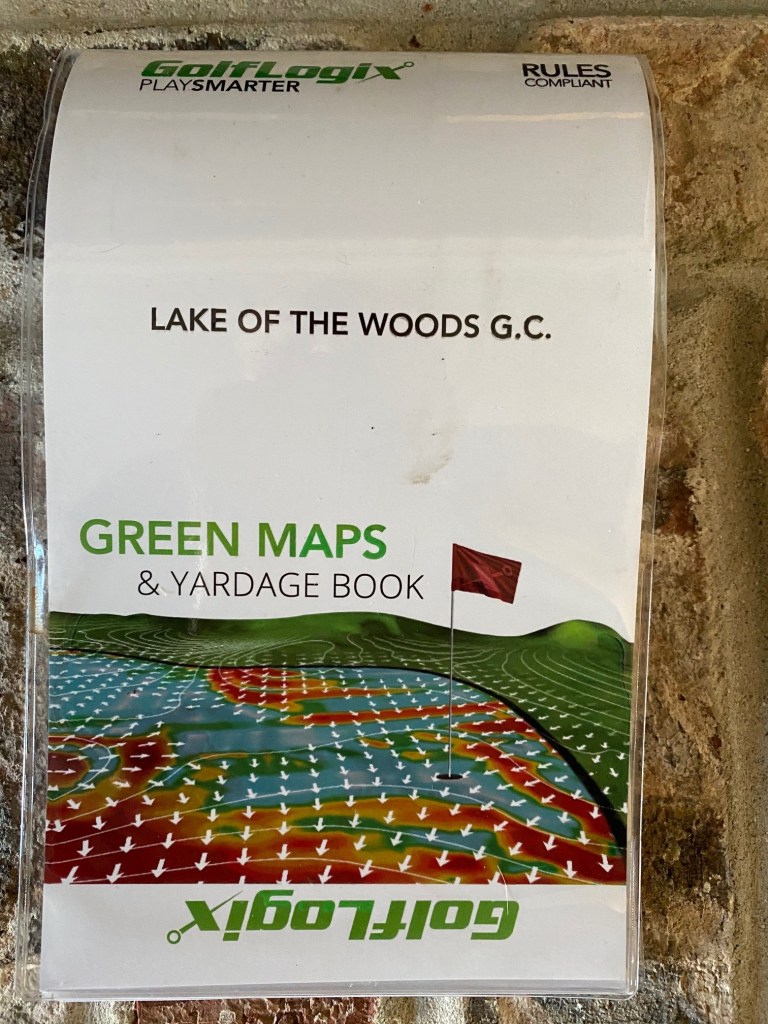
But now GolfLogix offers green maps and yardage books of nearly any course you can think of. These books run $40 each, include hole maps on 50-yard scales and green break maps and heat maps on 5-yard grids. We’re talking serious data here.
I checked out two of the GolfLogix books, one for Lake of the Woods Golf Course in Mahomet, Illinois (my home course) and one for Harrison Hills Golf Club, a superb public course in Attica, Indiana. These are two courses I know very well, so I thought I’d see if the green maps would help out with some of the tricky reads that abound at both of them.
I’ve brought several guests to Lake of the Woods, and nearly every one of them has said that the greens are among the hardest to read they’ve ever played. It’s not that the contours are crazy, or that the greens are wildly tiered or shaped. There are just lots of subtle breaks that often run in multiple directions on any given green. The Sangamon river also runs along the edge of the property, and several holes seem to be affected by the “pull” from the river. I’d always wondered if these quirks were just in my head.
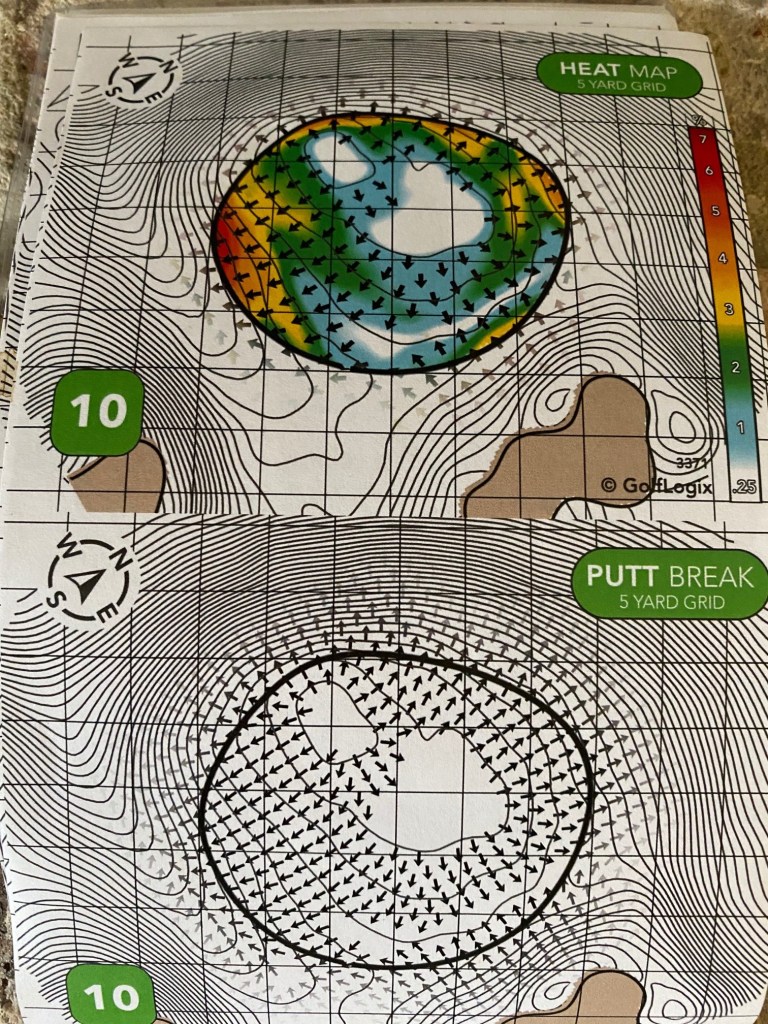
When I opened the GolfLogix green book, though, I soon realized they weren’t. Balls on the 10th hole,for example, always seem to roll faster uphill (toward the river) than downhill. And sure enough, even though the green appears to be canted from back to front, there’s a large flat spot in the middle that does not look flat. So if you’re trying to trickle a putt down from the back of the green toward the front, it hits that flat spot and, well, stops. All those downhill putts that have come up short now make sense!
Lake of the Woods, Hole 10 green: Weird flat spots that make you think the ball doesn’t roll downhill.
At Harrison Hills, the greens are dramatically contoured, and much faster than at “The Lake.” So if you’re above the hole on some of them, you’ll be lucky to roll any putt within 5 feet. The green at the 400-yard 9th is a great example. The GolfLogix heatmap of the green is deep crimson at the front, meaning a massive false front. From the fairway, though, the 40-yard-deep green looks relatively inviting. But if you land on that false front, your ball will not stay on. And any putts longer than 15 feet will require all your skill, even with the green maps, to get close with all the movement here.
It’s hard to find any straight putts on the 40-yard deep 9th green at Harrison Hills Golf Club.
GolfLogix Green Maps & Yardage Books: The skinny
It may sound corny, but when I pull one of these detailed folios out of my back pocket, I feel like a “player.” And when I point out that there’s a 3-inch break opposite the direction of every other break on the infamous 7th green of my home course – and then I turn out to be right! – I feel almost as smart as DeChambeau. Almost.
The 12th hole at Lake of the Woods Golf Course in Mahomet, Illinois, can feel like you’re playing down a corridor.
TPC stands for “Tournament Players Club.” The TPC network spans North America, and includes some courses in the Caribbean, Latin America, and Asia. Over half of them are private, many more are exclusive resort courses, and a handful have hosted PGA Tour events.
TPC Deere Run in Silvis, Illinois, is the long-time venue of the John Deere Classic, traditional PGA Tour stop the week before The Open (British). It is unique among TPC courses not only because it is a regular Tour host that is fully open to the public, but also because it is easily the most affordable of all TPC courses.
And when I say “affordable,” I mean it. Rates at Deere Run top out at $119 – that’s peak time, inclusive of cart and unlimited use of practice facilities. But savvy and flexible players who are non-local residents can find rates as low as $59. Local residents never have to pay more than $69, and they can play for as little as $49.
Let me repeat that for the readers who just joined us: You can play the self-same course where the pros play every year for less than $60.
The tournament that is today The John Deere Classic was born in 1971 as The Quad Cities Open, at a local private course. The ensuing years as a Tour event were tenuous, to say the least, but after Tiger Woods turned pro and made a splash at the 1996 playing, Illinois native D.A. Weibring negotiated with John Deere and the Tour to design and build a TPC on the banks of the Rock River. When TPC Deere Run opened in 2000, the 7,213-yard par-71 layout was ranked as the 8th Best New Public Golf Course by “Golf Digest.” And it’s been hosting the Tour event ever since.
Playing TPC Deere Run
If you watch the pros on TV, they can make it look like a pushover. Paul Goydos carded a 59 here in 2010—and didn’t win, because several other players went ultra-low, too.
But don’t let the super-humans on Tour fool you: TPC Deere Run is all the course amateur players will ever want. Conditions are impeccable, and the variety of holes is outstanding: Long and short par 3s, 4s, and 5s. Some open fairways, some tight fairways. Over 70 bunkers, and plenty of water. Opportunities for both greatness and disaster.
The variety of holes will allow you to hit – or try to hit – a full array of shots off the tees, though most par 4s on the front set up best for fades. There are seven sets of tees, including two sets of blended tees to allow players of all skill level and all lengths to find a fit for their games, from 5,179 yards up to 7,213 yards. Generous landing areas provide opportunities to approach greens from multiple angles, only a few of which are truly optimal.
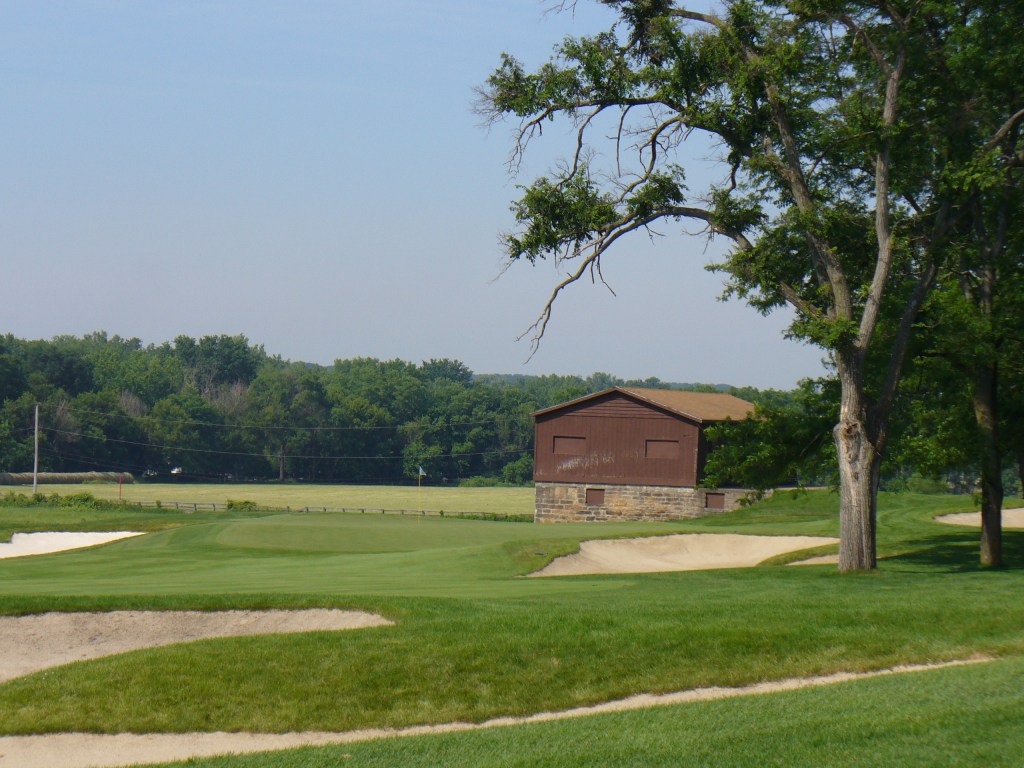
The 561-yard 2nd is one of the favorites of anyone whose played here before. From the elevated tees, the vista is expansive. The Rock River flows serenely in the distance beyond the huge fairway, which bends gently to the right on the second shot. The green is protected by a small desert’s worth of sand, and a small barn behind it harks back to the agricultural roots of the area and the sponsor of the tournament played here.
The tee shot on the par-5 2nd at TPC Deere Run is a beauty, and all about position and length.The green on the 2nd hole is a Midwestern classic.
At the 454-yard 4th, you realize that you are in for a day of one gorgeous golf hole after another. The sentinel oak in the center of the fairway makes the tee shot thrilling, and form the fairway, it feels like the river lurks just beyond the putting surface.
The green at the par-4 4th looks from the fairway like it’s ready to fall into the river.
The 158-yard 16th is one of the prettiest short par 3s in the entire Midwest. The green is cut into the bluff overlooking the river. A rock wall runs in front of the green, and the bluff drops away precipitously to the left, making the entire left side a very penal hazard. When the tournament bleachers are still up behind the green, this is a hole that gives anyone the chance to hit a good shot and feel like a pro.
The 158-yard 16th: Can you say, “Aim right?”
The 17th and 18th are two fun closers – the stuff that memories are made of. The 557-yard 17th is a reachable par 5 that plays out of a chute of trees to a wide-open fairway and green complex that allows for run-up fairway woods. The 463-yard 18th has seen its share of drama during the tournament, and amateurs can feel some degree of the same exhilaration by carving in a slight draw to the front of the green and watching their ball trundle back toward the pin. Over-cook it, though, and you’ll find the pond that borders the entire left side of the green; fade it instead, and a tricky pitch or sand save will be required, á la Jordan Spieth’s first PGA win.
The par-5 17th is reachable with two good shots.Experience the thrill of hitting it stiff on a PGA Tour closing hole.
The word on TPC Deere Run
The front side of the TPC at Deere Run is tighter than the back, with nearly every hole framed by trees on all sides. The back nine is more open, with some room along the fairways, but there are many more fairway bunkers in play on the back. There is not an awkward tee shot on the entire course; all the trouble is laid out clearly before you on the tees and approaches (with the exception of the approach on No. 4).
The greens are ideal – receptive but fast – and many are basically pear-shaped, with narrow fronts that make for some devilish pin positions. Despite some tiers and undulations, though, putts within seven feet are generally flat. Most greens are also surrounded by closely shaved run-off areas that will test all the short shots in your bag.
The clubhouse is a grand fieldstone structure, and houses a first-class restaurant and bar, with a lovely shaded patio overlooking the 18th green. The pro shop is consistently rated one of the best in the country, so take some time to browse. The walls are filled with memorabilia from the PGA Tour event that has been played in one form or another in the Quad Cities area since 1971. It is well worth coming early and staying late not only to avail yourself of the luxury of a TPC, but also to bathe in golf history. After all, how often do you get to play where the best in the world play?
The 14th at TPC Deere Run is a short, lovely, and vexing par 4.
(Photos by Andrew Hollingworth & Kiel Christianson)
There are a number of iron categories: “tour,” “player,” “game improvement,” “super game improvement.” Then of course there is the distinction between “forged” and “cast” irons.
Another new category has gained steam and fans over the last few years: the “players distance” iron. The target audience for this category is low double-digit handicappers, and maybe even high single-digit players, who find themselves losing distance either on off-center hits or with – ahem – advancing age.
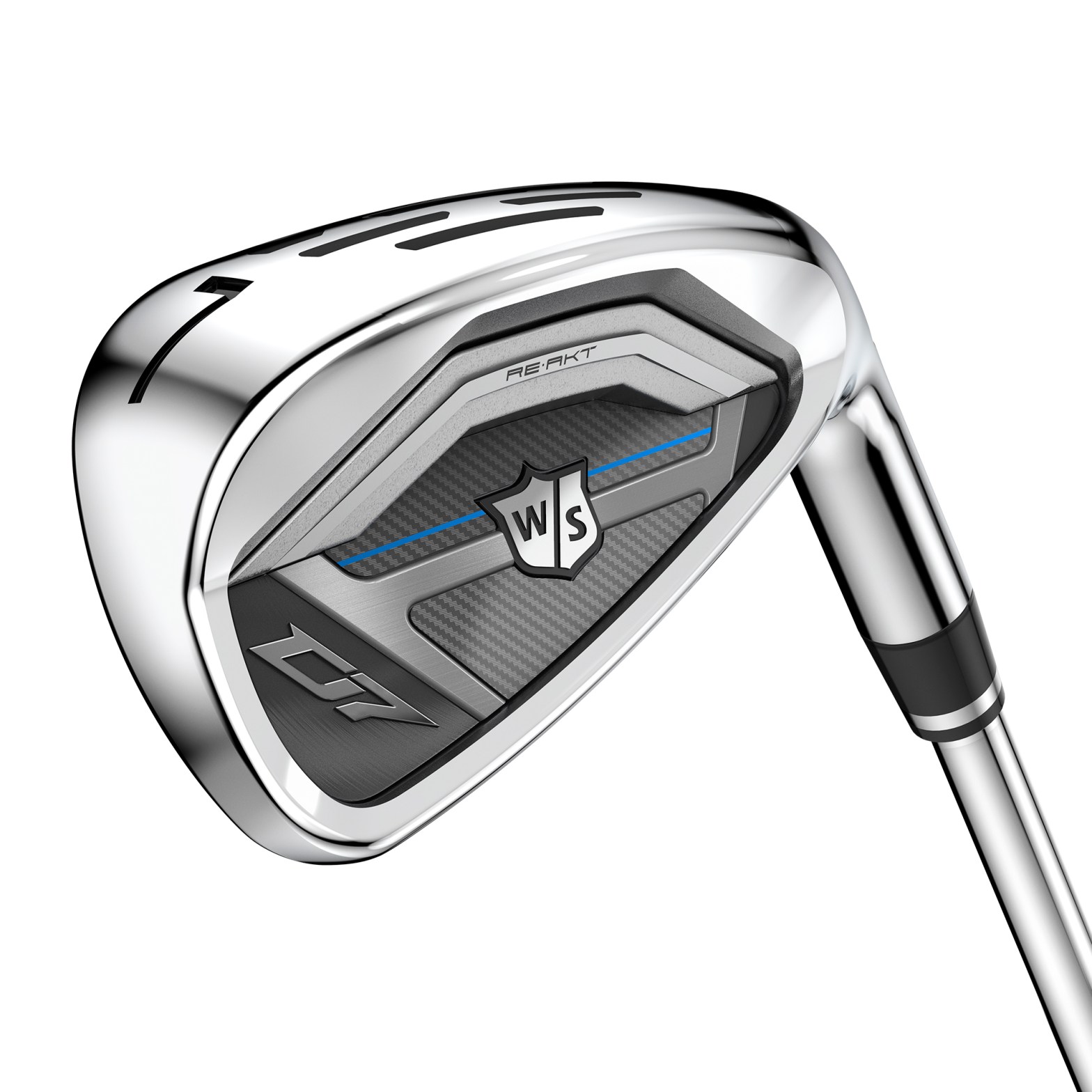
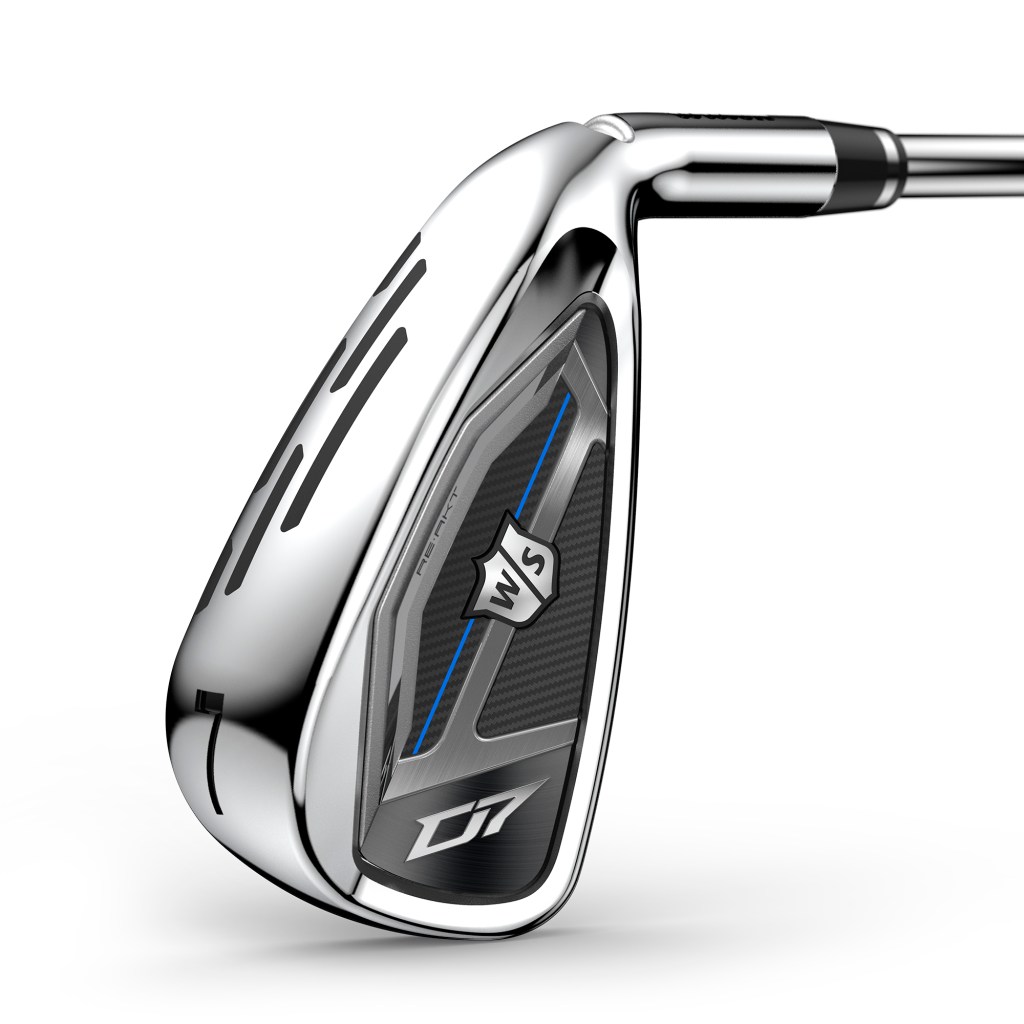
One of the real class acts in this category is the Wilson D7 Iron. The D7s are packed with technology, including progressive “power holes” and progressively thin, very “hot” faces. Best of all, they maintain a more sleek, traditional profile than many irons that straddle the “game improvement” line.
The D7s come in both forged and cast versions. The former, new for 2020, list for $1000 (GW-5), and the latter for a very reasonable $600). It has been many seasons since I switched to forged irons, so I thought I’d take the “working man” version out for a test to see what all the engineering and materials advances over the past decade or so have done to improve feel and performance of more budget-friendly clubs.
Playing the Wilson D7 Irons
I played a set of the Wilson D7s with stock KBS regular flex shafts. I was concerned about that shaft choice, as I normally play stiff shafts. But I have noticed no increase in tendency to hook (which I do at times) or slice (which I almost never do with my irons). The tips of these KBS seem somewhat stiff, so perhaps that’s the reason. To be honest, though, sometimes I wonder whether the differences in stiffness in steel iron shafts is even a thing.
So how did they perform? Let’s cut straight to the chase: I put them in my bag for what I thought would be one test round. Seven rounds later—including a semi-final win in my course’s Match-Play Tournament and my low round of the year just yesterday (75)—they’re still in the bag.
Compared to my usual forged irons (by a major and universally respected iron maker), the Wilson D7s bring several benefits. Tops among these, is their incredible forgiveness. I have mishit a dozen or more shots – fat, thin, toe, high on the face – and on well over half of those misbegotten swings, the ball has ended up on the green (or near it, anyway).
Along with forgiveness, these irons are long. This is expected, given that the lofts are jacked up, averaging 1.5-clubs stronger than “traditional.” In fact, the lofts are even stronger in the D7s than those in the Wilson Launch Pad Irons, which are in the super game-improvement category. This ratcheting up of lofts doesn’t make it harder to get the ball in the air, though, as the center of gravity is as low and as far back as can be managed without sacrificing a somewhat more “players iron” look.
Length isn’t always a plus, though. I was pretty dialed in on my yardages with my old irons. Well, to be honest I was last year. This year, I was feeling like I needed to step on some swings to get them to their “normal” yardages. I blamed lack of practice. I blamed swing changes. I blamed COVID-19. But frankly, it’s probably because (a) I’m getting old, and (b) I wasn’t striking the ball very consistently. The D7s allow me to pull my “usual” club for the “typical” yardage. If I really stripe a shot, it may go long, but aside from on greens that are very hard, this isn’t usually much of a penalty.
The only drawback to the D7 design, as far as I can tell, is their rounded sole (where you’ll find the progressive power holes, configured specifically for each iron). The leading edge of the face is protected from digging in by this sole, which adds a small bit of extra bounce angle to the clubs. Like the Launch Pads, I’m sure the D7s incorporate this design in order to help players avoid fat shots. And, when the turf is soft, it is a useful feature, indeed. But when the turf is baked out, and your swing is a little too shallow, the club tends to deflect off the ground and up into the ball, resulting in thin shots. In dry conditions, you really need to focus on descending into the ball; however, doing so will deloft the face even more and likely add yards. The rounded soles also require some practice with punch shots—a typical strength of mine, thanks to lots of practice—which don’t come out quite as clean as with irons whose leading edges are sharper.
Long story short: “players distance” irons might require some adjustment because they do, in fact, give you extra distance.
Finally, let’s talk about feel. I can’t compare the standard D7s to the Forged D7s, as I haven’t tested the latter. But to be honest, the standard D7s feel plenty soft to me. I can draw and fade them well enough, and I can feel quite clearly when I pure a shot, compared to off-center strikes.
Scorecard
The Wilson D7 Irons are ideal for players who are seeking to maintain distance without sacrificing feel or looks. They’re stable and powerful – so much so that you may find your best shots going a little too far until you recalibrate. Golfers who play well-manicured, softer courses will find the sole design particularly forgiving.
If you’re looking to buy, see below!
Discount Code: WilsonGolf15-8
A few rules to mention:
The codes give 15% off all full-priced Golf Items, including Custom. However, outlet items are excluded.
Golf is a lot harder than it looks on TV. Upon hearing of my affection for the game, a friend of mine told me that he had gone to a driving range just one time. I asked him why only once. He said, “I hit a large bucket of balls. Didn’t get one in the air. It just seemed like way too much work.”
It was several decades ago that this friend of mine had tried his hand at golf. Try as I might, I couldn’t convince him to give it another go, with more modern, more forgiving equipment. It was just too late for him.
But it’s not too late for your buddy, or you, for that matter. There is a whole new generation of golf clubs – often called “super game-improvement” clubs – whose sole purpose is to help high-handicapper recreational golfers enjoy themselves more. To help them get the ball in the air.
This is the sole purpose of the new generation of the Wilson Launch Pad Irons ($700 steel shafts; $800 graphite shafts), and their sole is their purpose. Let me clarify.
The irons’ moniker refers to the Launch Pad sole, featured throughout the set, from 4i to PW (and other wedges, which you can buy separately to match). The sole of the club is wide, wider in longer irons and narrower in shorter irons, which keeps turf interaction to a minimum. The idea is for the sole design to reduce chunked shots, while the hollow composite heads allow for a thinner, “hotter” face and move the center of gravity away from the face, which will get the ball in the air faster and with more “pop.” Along with the wide soles, the bounce angle serves to “float” the leading edge above the turf, which, according to Wilson, reduces chunked shots by 73% among testers.
Playing the Wilson Launch Pad Irons
All of this sounds great in theory, but how do they play?
Two of the more common mishits by occasional or high-handicappers are the chunk and the blade. After several range sessions with the Launch Pad Irons, it is very clear how they protect against the chunk: those wide soles and leading-edge bounce mimic hitting regular clubs off a mat. If you hit a little behind the ball, the club tends to “bounce” up off the turf, especially if the ground is firm. If you’re hitting off carpet-like bent grass, you can still chunk the occasional shot, but you almost have to try to do it.
Conversely, if you tend to blade shots – hitting them so thin that they don’t get into the air – you’ll still need to work on your swing to impart a descending—or at least level—blow with the Launch Pad Irons. However, even a more “sweeping” swing produces much higher, much longer trajectories than standard clubs.
My son, a high school player who hits the ball a mile high with his regular clubs, found the short irons in the Launch Pad set to be TOO helpful: shots just skied into the stratosphere. But once he worked into the 6i-4i range, he admitted his surprise at the consistency of the Launch Pads, in terms of both trajectory and dispersal. This made me think that for a lot of players, a blended set of more traditional shorter irons and Launch Pad mid- to long-irons would be worth considering.
As for me, I noticed an immediate increase in the height of my shots: about 5 feet higher across the set compared to my normal irons. As for distance, the Launch Pads may have increased center-struck shots just a bit, but any gain was negligible. Off-center shots were improved by several yards, though—noticeably longer.
Are the Wilson Launch Pad Irons all rainbows and unicorn farts? Not exactly, but no club is. The extra “pop” you experience in distance comes with a literal “pop” in sound. It’s sort of a hollow pop, which takes a little getting used to. The sound matches the heads in a way, whose somewhat rotund profile also takes a short while to grow accustomed to.
And if you do struggle with bladed shots, they won’t fix that flaw; however, you’ll be able to work on swinging exactly the same with your PW as you do with a fairway wood – a shallow, sweeping swing will still get the ball in the air.
One final note: it is true that “game-improvement” irons tend to decrease lofts so recreational golfers will think they’re getting more distance. The Launch Pad Iron lofts are a touch stronger than “normal,” but only by 3-4 degrees (i.e., a club stronger). So your 4i is 21 degrees, which is a typical 3i loft. That’s less than many competitor sets, and even less than many “regular” iron sets these days.
And a final, FINAL note: The stock steel KBS 80 shafts are excellent. I normally play stiff shafts, but requested to test regular shafts, as they seemed to fit the overall goals and design of the Launch Pad heads better. To be completely honest, I have noticed no adverse effects from the change in stiffness – I don’t hook the KBS shafts (in the Launch Pads or the new D7s, which I’ve also reviewed), or find them hard to control, even on full-bore swings.
Scorecard
Altogether, if you’re looking for irons to help you enjoy the game, and work less on hitting the “perfect” shot, the Wilson Launch Pad Irons are a solid bet.
If you’re looking to buy, see below!
Discount Code: WilsonGolf15-8
A few rules to mention:
The codes give 15% off all full-priced Golf Items, including Custom. However, outlet items are excluded.































 Midwestern Golf