Sandals Emerald Bay Resort and Golf Course are out of this world

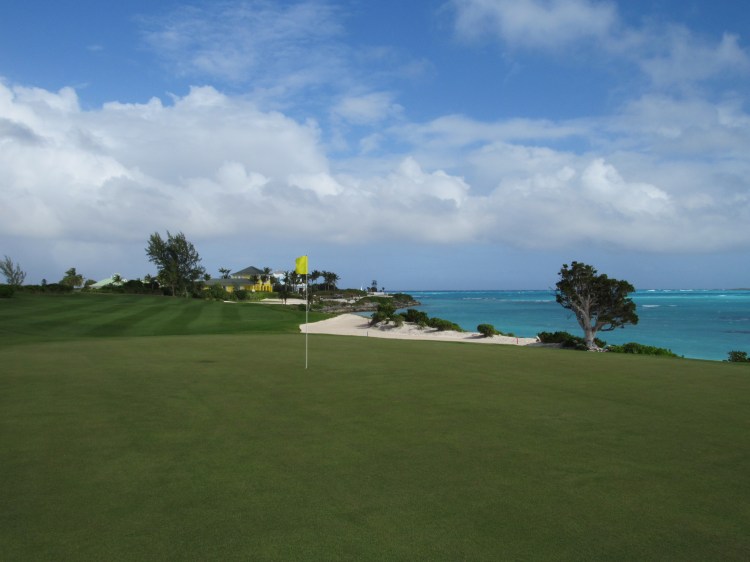
The water around Great Exuma Island in the Bahamas is one of the most recognizable landmarks to astronauts 249 miles overhead. The irradiant blue-green hues are unrivalled elsewhere on the plant, as tides rush in and out through shallow channels between Exuma’s 365 islands and cays. The ocean seems to glow, as if lit from below.

Sandals Emerald Bay Resort and its championship Greg Norman-designed golf course boast panoramic views of these waters – vistas that look like they’ve been filtered by some hyperbolic Instagram photographer. But there is no smart-phone trickery here. Only paradise wherever you look.

Sandals Emerald Bay Resort

The name Sandals is synonymous with Caribbean getaways. The first Sandals opened in 1981 in Montego Bay, Jamaica, and pioneered the concept of the all-inclusive couples resort. Sandals Emerald Bay opened in 2010 when the company took over and expanded the Four Seasons on Great Exuma. Sandals Emerald Bay is the larger of two Sandals in the Bahamas and is expansive by any measure. Sandals employs 650 on this island of 4,000 residents. Many of the staff come from other Bahamian islands other Caribbean locales (we met several from Jamaica). There are 11 restaurants on property, two large pools, and a nearly mile-long private white-sand beach.

Service at Sandals is outstanding. Guests have the option of upgrading to butler service, complete with a private cell phone to call their butler any time of day or night. Our primary butler, Kevin, seemed to anticipate our every need: surprise charcuterie boards were waiting for us in our room. Hot bubble baths were drawn to meet us when we returned from our strenuous days of sightseeing, golf, and laying about. Prime lounge chairs and cabanas were saved for us by the pool. Signature cocktails magically appeared in our hands precisely when we started thinking, “Hmmm…I might go get a drink.”

Food at all-inclusive resorts sometimes takes a back seat, given the “captive” audience. My wife and I tried nearly every restaurant at Sandals Emerald Bay and were struck by the consistent quality, ranging from very good to excellent. The Jerk Shack chicken and yams were my favorite casual fare (perfect by the pool with a cold beer). For dinners, Soy sushi, Bombay Club Indian, La Parisienne French, and il Cielo Italian were frankly neck and neck in terms of our favorite meals—all excellent, all very different. Dinner at il Cielo was especially opulent, as we attended a small private dinner with Adam Stewart, Deputy Chairman of Sandals Resorts, whose father, Gordon “Butch” Stewart, is Founder and Chairman of Sandals Resorts. Also in attendance was Greg Norman, World Golf Hall of Famer and designer of the Sandals Emerald Bay Golf Course.

Sandals amenities are legendary. From the boisterous main pool with swim-up bar to the Quiet Pool, from the bountiful hammocks strung between palms around the property to the nearly mile-long beach complete with complementary watersport equipment, there is plenty to do. Treatments at the sumptuous Red Lane Spa are extra but highly recommended.  If you feel like exploring off-site, Island Routes has a desk opposite reception, where you can book island tours, bone fishing trips, or excursions to swim with the famous pigs of the Bahamas (as seen on “The Bachelor” and soon to be a feature-length film), feed grapes to endangered Bahamian rock iguanas, and snorkel in the crystalline waters of Great Exuma.

Views from the rooms at Sandals Emerald Bay will not disappoint.

Sandals Emerald Bay Golf Course

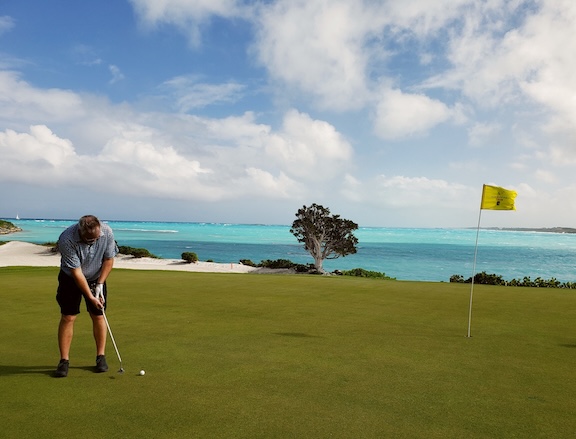
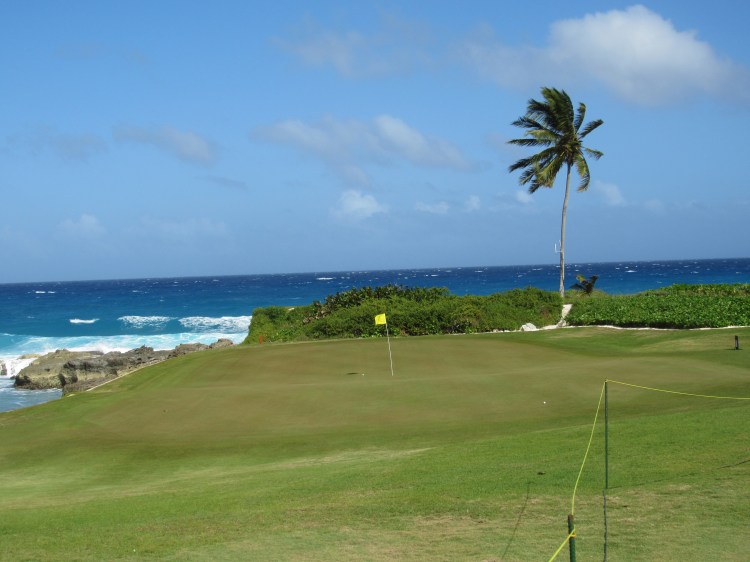
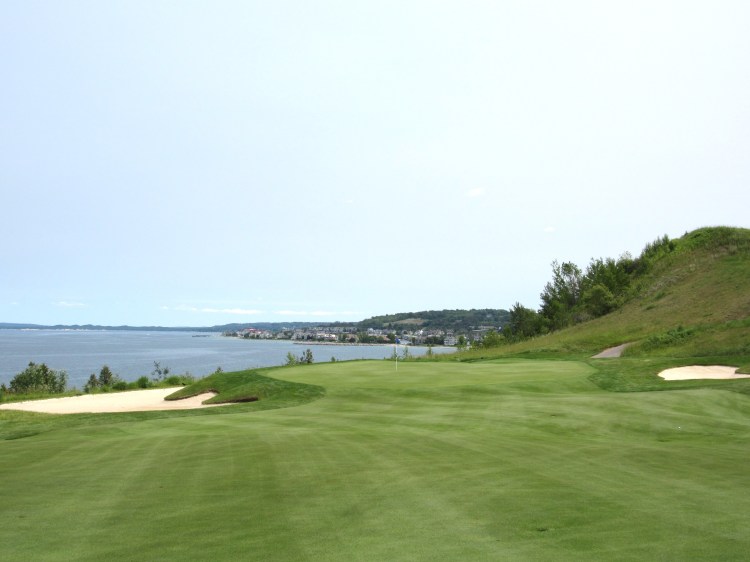
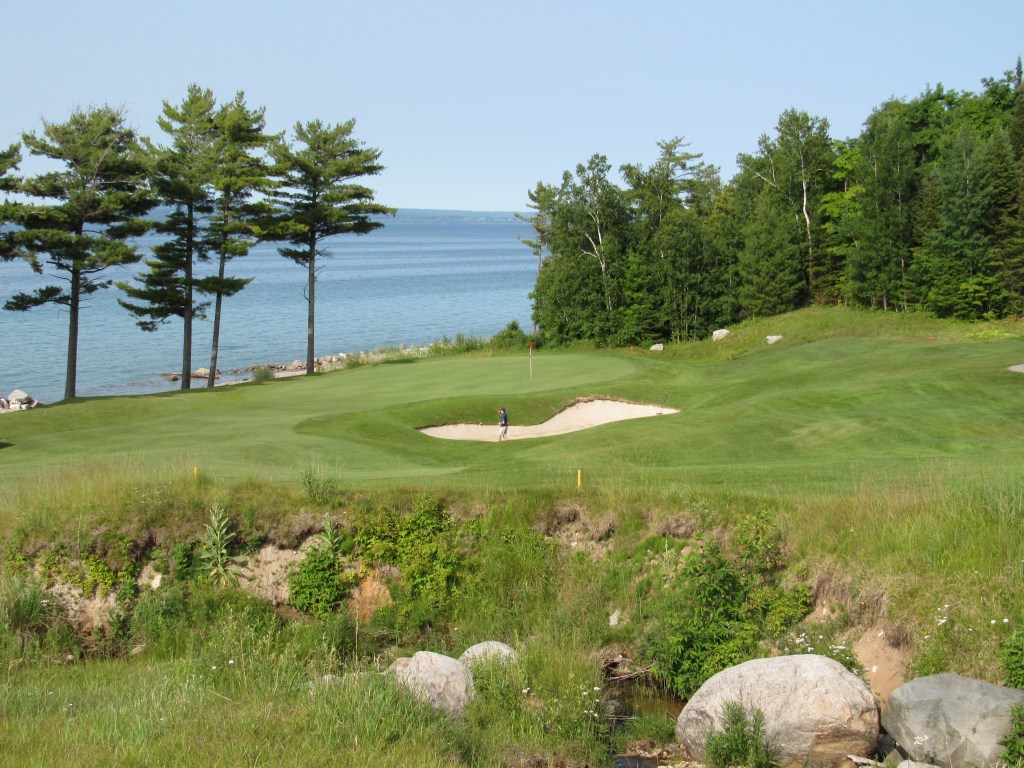
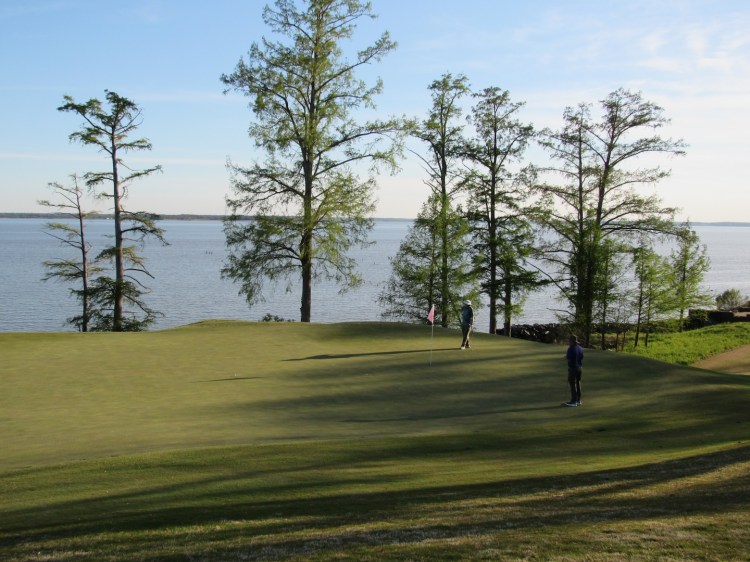
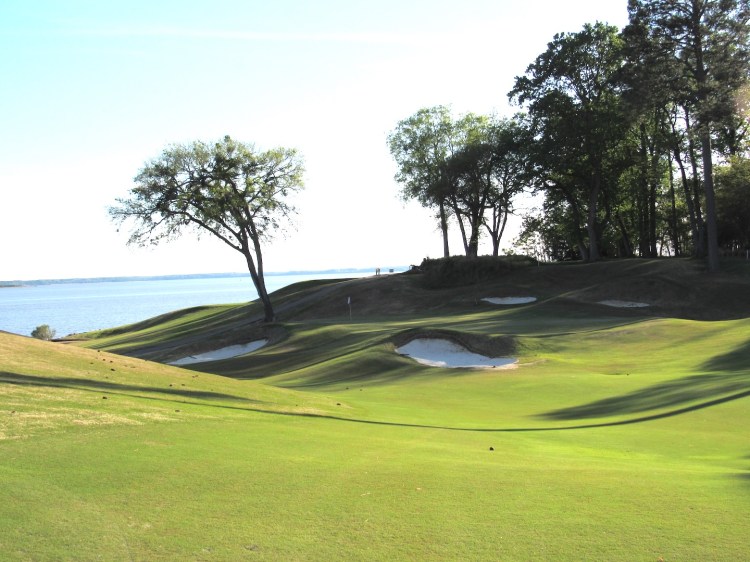
The Sandals Emerald Bay Golf Course is a stunning 7,001-yard championship Greg Norman design that has hosted the Korn Ferry Tour’s Bahamas Great Exuma Classic since 2015. The six-hole stretch from hole 11 to hole 16 are some of the prettiest oceanside holes I’ve ever seen. There are no dramatic forced carries over frothing coves, but with the electric sea as a constant companion, the vistas are nothing short of heavenly.

During an exclusive one-on-one interview with The Shark himself, Norman shared the history of the course, and how those stunning views were nearly hidden from golfers.

Some quality time with course architect and golf legend, Greg Norman (before LIV was announced).

“I became involved with the course in 2002/03. The original developer was from South Africa. Originally, it was a real-estate constrained designed. That’s why some holes are short. All those holes on the back along the ocean were supposed to run between houses, which would line the shore on both sides. Boring! Then they realized how expensive it would be to run utilities down two sides of the property. I convinced them to save money by running it just down one side and allowing for seaside holes. Then Four Seasons took over, and the course sat fallow for a while. When Sandals took over, Butch [Stewart, Sandals’ Founder] listened and carefully protected and managed this course back to life.”

Thanks to Stewart’s stewardship and Norman’s aesthetic, the course today not only hosts the Korn Ferry Tour Bahamas Great Exuma Classic, but also offers Sandals guests one of the best golf deals in the Caribbean. Non-guest green fees are $155, with cart fees $25-$35. Sandals guests pay no green fees, so a golf-addled vacationer could play 36 holes (or more!) of tournament-quality seaside golf—every day—for practically pennies. (Rental clubs and shoes are also available for the more casual player for $65 and $15, respectively.)

While the ocean features on six holes of Sandals Emerald Bay Golf Course, the trade winds feature on all eighteen, though the inland holes are somewhat sheltered. This is especially true at certain times of the year, including the week of the Korn Ferry Tour tournament. According to Brooks Downing of BD Global Sports, who runs two Korn Ferry Tour events in the Bahamas (Exuma and Abaco), the week of the tournament has been extraordinarily windy all four years so far.

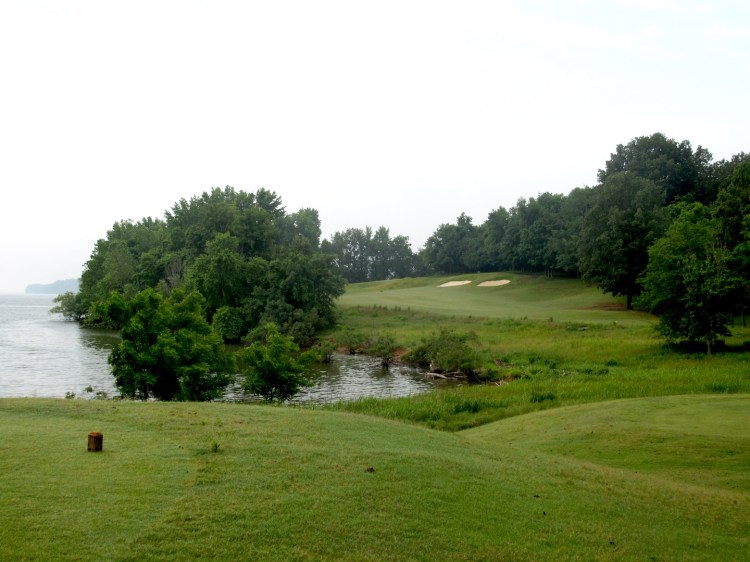
Sandals Emerald Bay, Hole 11

“The first year,” says Downing, “the tail of a nor’easter hit us. That tournament had the highest scoring average in the 30-year history of the Tour. The par-4 12th had a stroke average of 5.8. Guys couldn’t bring themselves to aim 30 yards out over the ocean and let the wind bring it back. So their tee shots kept landing OB right.”

Because of the tempestuous winds, the course plays differently every day. Even the gorgeous par-3 11th, which stretches to only 148 yards even for the pros, can be a demon if the wind is in your face. My pro-am partner, Paul Barjon, who was 2019 leading money winner on the Canadian PGA Tour, hit a 6-iron into the 11th in the pro-am. I tried a 9-iron from 100 yards…and failed to make the green.

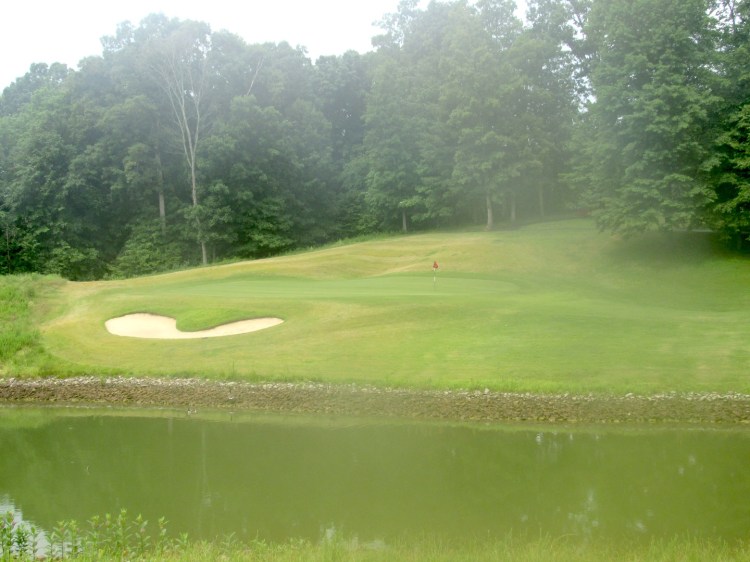
Sandals Emerald Bay, Hole 12 green (best shot I hit all day)

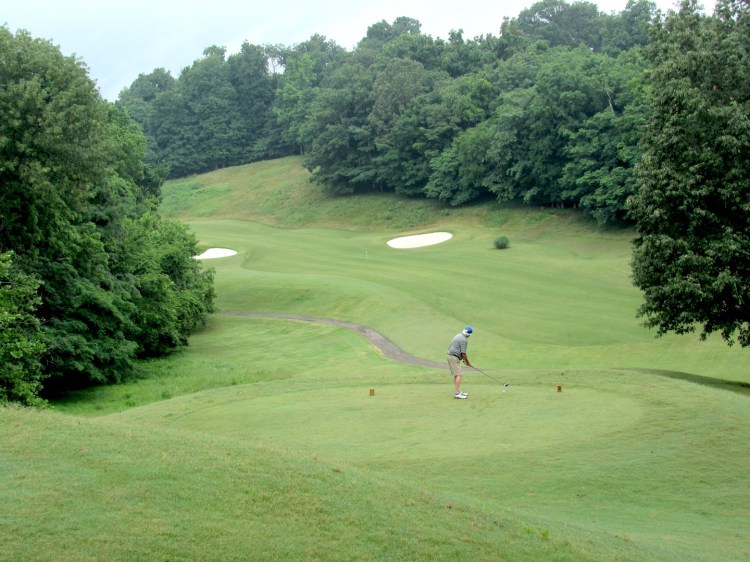
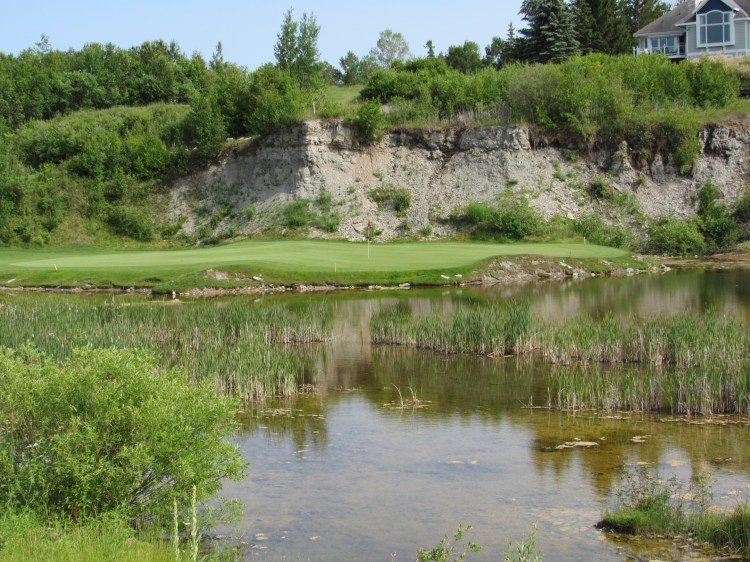
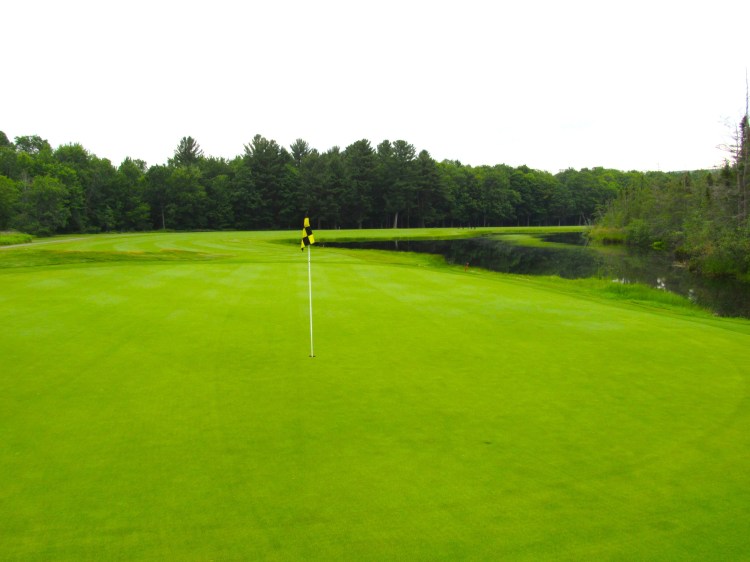
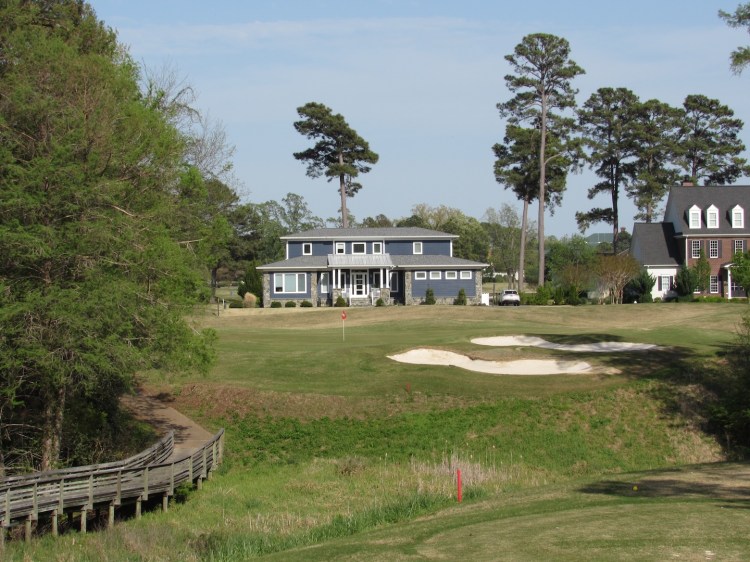
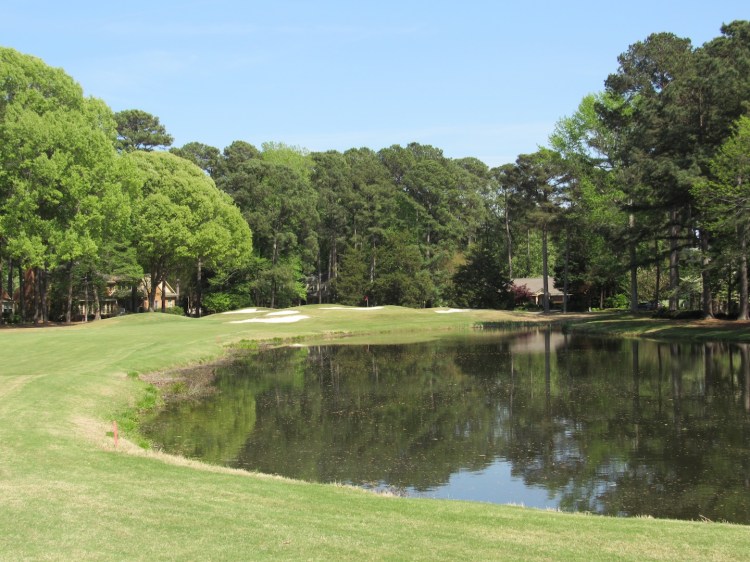
For all the postcard beauty of the seaside holes, the real test of an oceanside golf course is the inland holes. At Sandals, Norman has hewn memorable holes from scrub brush and wetlands, and incorporated several water hazards that aren’t the Atlantic Ocean. One of the real beauties is the 165-yard 6th, a downhill par-3 to a peninsula green that is wide but shallow.

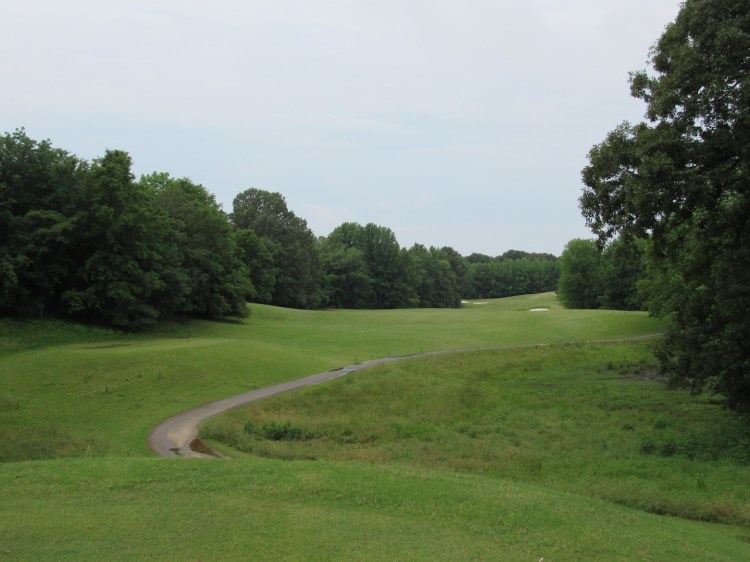
Sandals Emerald Bay, Hole 13
Sandals Emerald Bay, Hole 16

For visitors, the secret to enjoying your round (or rounds) here will be choosing the right tees not just for your skill set, but also for the conditions. If the wind is whipping, play up. In addition, always prioritize hitting it in the fairway over hitting it a long way. On nearly every hole, you will find water, rocks, brush, or waste areas 10 yards off of nearly every fairway and green. What you likely won’t find is your ball if you hit it in these places. So make sure to bring or buy plenty before your round, or you’ll be re-stocking at the turn.

No matter how you play, take plenty of time to soak in the sun and sea, along with plenty of photos of what might just be the most beautiful corner of the Caribbean. There may be astronauts overhead wishing they were playing golf in the midst of that otherworldly blue.

Golf in the Midnight Sun at Iceland’s Brautarholt Golf Course

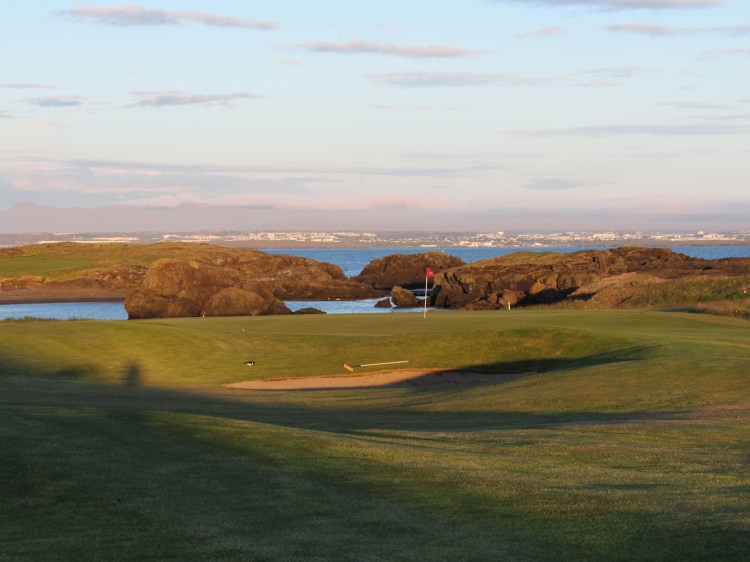
It was 9:30 p.m., June 21—Summer Solstice, 2019—when Gunnar Pálsson picked me up at Hotel Frón in Reykjavik. Soon joining us in the Brautarholt Golf Course shuttle were four test pilots from Phoenix and a couple from outside Toronto. We were all heading to the course to play a round of golf under Iceland’s never-setting Midnight Sun.

“This is a bucket list experience,” said the woman from Ontario. “I’ve been planning this since October last year.”

“We decided to do it last night,” said one of the test pilots, clearly more comfortable flying by the seat of their pants, as it were.

If you’ve never thought about golf in Iceland, you wouldn’t be alone. You also wouldn’t be from Iceland. In fact, there are some 65 golf courses in Iceland, according to Gunnar, including the Golf Club of Reykjavik, which has over 3,000 members, making it one of the largest golf clubs in Europe.

“But what sort of season do you have here?” I ask Gunnar, exposing the depths of my ignorance about golf in Iceland.

“At Brautarholt, because we are on the coast, we usually open on the first of May and close at the end of October,” he says to my obvious surprise. That season’s not so different from some of the fabulous courses in northern sates like Minnesota, Wisconsin, and Michigan.

When the shuttle pulls into the gravel Brautarholt car park, we see what Gunnar means by “on the coast”: the North Atlantic is literally a driver and a mid-iron from the first tee (driver, 7-iron to be exact – trust me, I know, though I wasn’t trying).

Brautarholt Clubhouse, 2 a.m., Summer Solstice (#nofilter)

Brautarholt Golf Course opened its first 9 holes in 2012, with three more opening last year. “We have 12 holes so far,” explained Gunnar in the shuttle, “with plans for 18 and land for 36.”

Out on the course, Gunnar provided a bit more history: “Before the financial crash in 2008, my brother-in-law was bought out of two businesses. Then the crash came and prices fell. He said, ‘When are we ever going to be able to build a golf course this cheaply again?’ So we began building the course.”

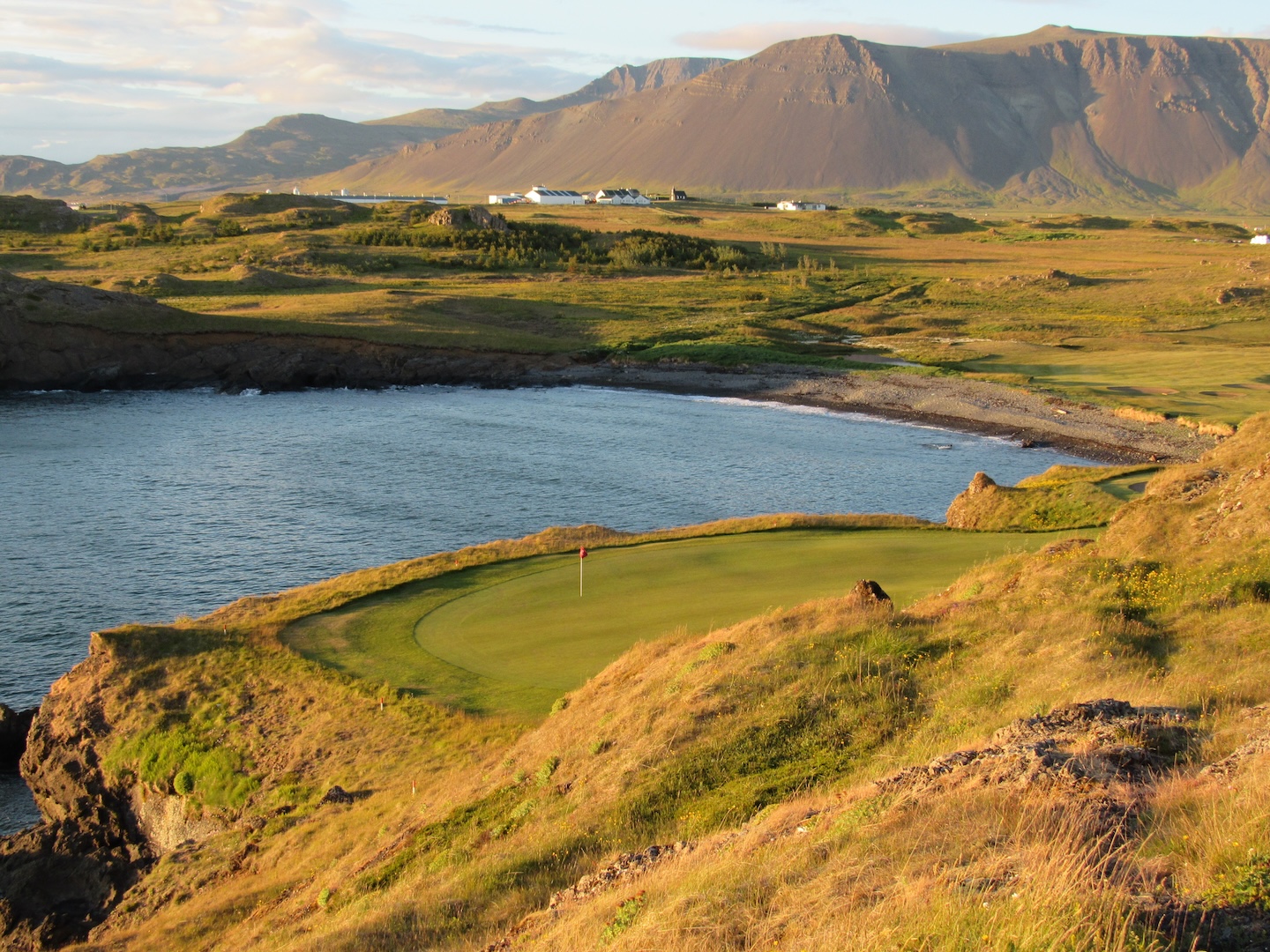
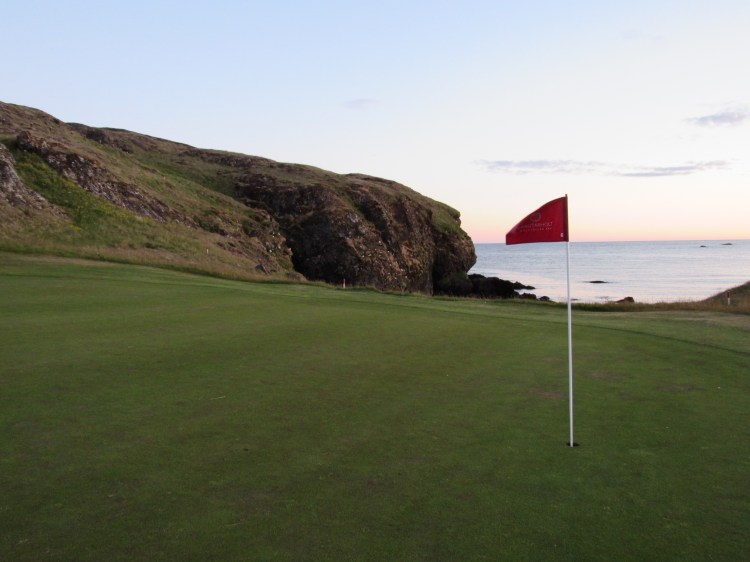
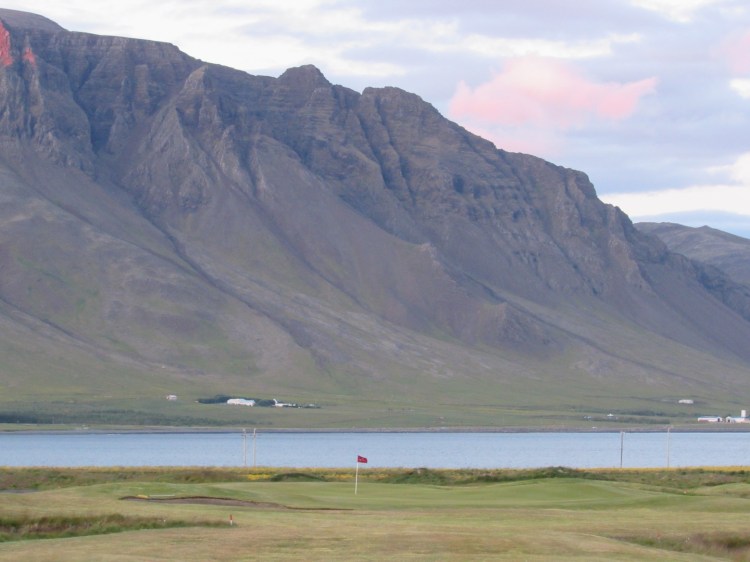
The former hay fields, most of which had been in the family for 100 years, occupy stunning headland – with the look, feel, sound, and soil of true linksland – along the shore about a 30-minute drive west of Reykjavik. The clubhouse is modest but modern and sleek, with large windows looking out toward the sea and onto the rocky outcroppings that define many of the holes. The air inside the cozy space is redolent with the aroma of homemade soup, simmering in a pot for golfers making the turn or ending their round. A delicious bowl of soup with some crusty bread seated in the clubhouse seems far more civilized than scarfing down a hotdog in the golf cart as you race to the 10th tee. But I digress.

10:00 p.m. seems like a reasonable time to tee off when the sun is still high in the southwestern sky – in fact, from the elevated westward-facing first tee, the solstice sun is fairly blinding. Although not yet complete, Brautarholt has already been nominated to the Top-100 in the World list by Golfscape website, and 40th among Scandinavian courses by Golf Digest. All comments I’ve read about it online say, “Bring a lot of balls!” and I have brought a new dozen with me; there will be only two survivors.

Brautarholt Golf Club, First Tee, just after 10 p.m., Summer Solstice

From the back tees, the 2012 Edvinn Roald and Michael Kelly design plays 2,674 yards for 9 holes, 5,348 for 18, and 3,424 for 12, to a par 70. The total yardage, at present, doesn’t seem overwhelming, but between the ocean winds and heavy maritime air, cool temperatures, copious expanses of knee-high fescue, and wildly shaped greens that often drop off into the sea, there is plenty of challenge here. This is all especially true for all first-time international visitors; it’d take a good half-dozen rounds to figure out the optimal angles and landing areas, not to mention the club selections.

That final task, club selection, is especially tricky if you’re using one of the many sets of rental clubs at Brautarholt, all of which were top quality (Callaway, PING, TaylorMade, etc.). Still, you’re never quite sure how far strange clubs will go, and distances are tough to judge against backdrops of water and mountains.

The 437-yard par-5 1st hole is a perfect example. The hole plays from an elevated tee down to a fairway the angles to the left, with the ocean on the right and a marshy pond on the left and cross-bunkers just beyond the pond. Now, the ocean on the right is out of play, but it’s hard to judge this, and my tee shot ended up too far left, catching the pond. The second shot is to a blind green up above the fairway, with a rock outcropping on the left and a cliff on the right. After playing it once, you realize to favor the left – a lot – because everything funnels left to right once you get up to the green, and if you aim left but push it, you might miss the ocean.

Brauterholt, Hole 1, 2 a.m.

From the first green it’s quite a hike further up the cliff to the tee of the 125-yard 2nd. But players are rewarded generously upon arrival. From the elevated tee on a clear day (or clear middle of the night, during summer solstice), you can see off in the distance the dormant volcano Snæfellsjökull, which appeared in the Jules Verne novel “Journey to the Center of the Earth” as the passage into the center of the earth.

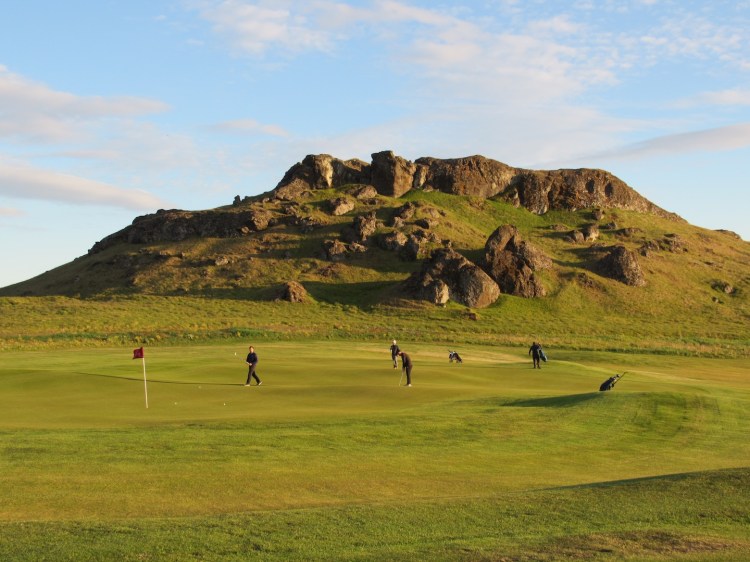
After you’ve been sufficiently impressed by the view, you tee off with a wedge to a green in whose middle lies a rather imposing hump. “There was a huge boulder there. Michael Kelly decided to leave it. He’s a proponent of laying the golf course on the land and using the natural hazards.” If your tee shot finds the opposite side of the pin location, traversing the turfed-over boulder makes a three-putt a distinct possibility. If the pin is in the back, and you go long, you might find your ball in shin-high fescue. (It’ll be there, but you might not find it.)

Brautarholt, Hole 2

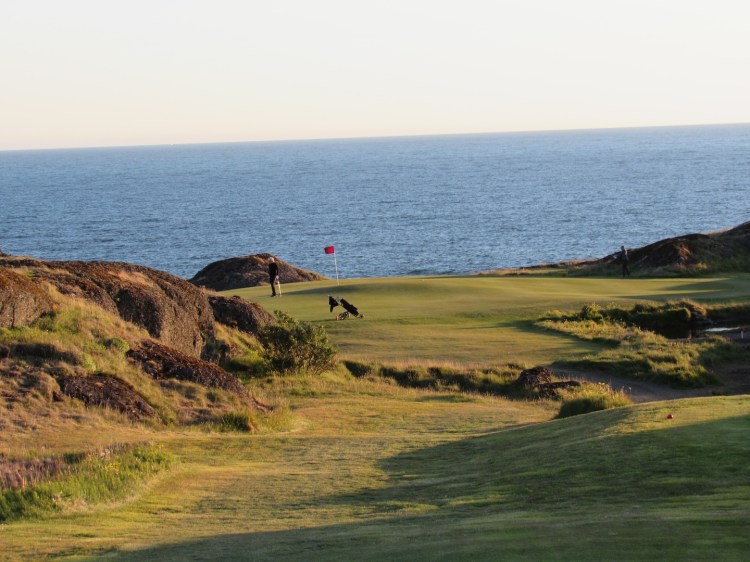
The 223-yard, par-3 5th is a left-to-right cape hole that dares you to challenge a small bay and rocky beach with your tee shot—a challenge almost worthy of its own Icelandic saga. The prevailing wind balloons shots, and the green is partially encircled by rocky shoreline. I happened to land on the beach, from which I knocked a recovery sand wedge to 12 feet and sunk the putt for one of my favorite all-time scrambling pars.

Brautarholt, Hole 5

The 359-yard 7th is brutal. It plays back up away form the ocean to a snaking sliver of fairway that angles awkwardly away from the tees. On either side lurks water and knee-high grass. To top everything off, there’s a ditch bifurcating the fairway pretty much exactly where you hope to land your drive. Things don’t get any easier on the green, which is sloped severely uphill, and if you don’t get your ball back to the top level, it’ll come back to your feet.

“Michael Kelly believes every green should be special,” says Gunnar with classic Icelandic stoicism as we both wait to see of our balls are actually going to stay up on the green.

The 491-yard par-5 9th plays from an elevated tee down to a fairway that is only partially visible from the longer tees. Favor the right side here, as the fairway cants to the left toward high grass and a stream. There is a pot bunker in the middle of the fairway, though, where even well-positioned drives can find themselves. Approaches to the green must carry a deep swale fronting the putting surface.

Brautarholt, Hole 9 tee

Behind the tee of the 262-yard par-4 11th, you can see in the distance the location of the first Christian church in Iceland (there’s still a church on the spot, but the original, and several replacements, have long since burned down). Then off to the right a way, if you know where to look, you can see an old house on the former site of a temple to Thor. There were, according to Gunnar, epic battles between the keepers of these two houses of worship around, which served as the basis for one of the Icelandic sagas.

Brautarholt, Hole 10

“This is elf land, according to folk history,” says Gunnar, as I realize how many balls I’ve lost in just 12 holes. “Perhaps elves took some of them?” Gunnar wants to put up a sign that tells golfers to behave or the elves will get them. It used to work on Icelandic children to keep them away from dangerous places. And who knows, supposedly you can meet elves at midnight on the summer and winter solstices.

I saw no elves, but experienced perhaps the pinnacle of unique golf experiences at Brautarholt Golf Course this solstice. We concluded our round (and I played a couple more holes because I didn’t want to leave) close to 2:00 a.m., and even though the sun was low behind a distant mountain, there was plenty of light. The word “magical” came to mind again and again. Indeed, if the entire cast of “Game of Thrones” showed up in full costume to play Brautarholt, they would fit right in.

Brautarholt, 9th green — wouldn’t be surprised to see a dragon fly over the top of that mountain…

Midnight golf packages at Brautarholt run about $200 total, including rental clubs and transportation to and from any hotel in Reykjavik. Even if you’re not lucky enough to be in Iceland during summer solstice, any trip to Iceland between May and November should include a round of golf here. The views of the sea, of Reykjavik itself across the bay, and the surrounding mountains are imminently memorable. 12-hole fees are around $70, 18-holes run about $85. Both pull carts and golf cars, along with rental clubs, are available.

“I can check ‘midnight golf in Iceland’ off my bucket list,” says the woman from Ontario as we load into the van to head back into town. “This was perfect.”

Magically perfect? Perfectly magical? Either one worked just fine.

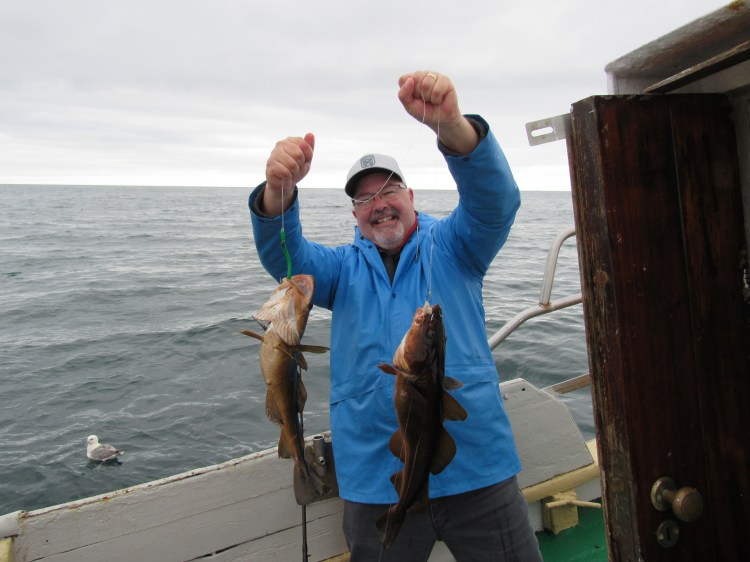
Be sure to see some of the rest of magical Iceland. Cod-fishing in the harbor is fantastic fun (look up Happy Tours) –and the cod they cook up on the boat is amazing!

Bay Harbor Golf Club: Top of the mitten, top of the MI must-play list

The 1990s were heady times for golf in Michigan. I lived in The Great Lakes State from 1996-2002 and recall a year or two when one new course was opening every week during the summer months. This was still before the terms “destination golf” or “bucket-list course” had been coined, but the volume and quality of golf in the state was probably the best-kept secret in the sport.

In the early 1990s, the Boyne Resorts – Boyne Highlands, Boyne Mountain, and The Inn at Bay Harbor – were also booming, and building courses at all their properties. The crown jewel of this collection, Bay Harbor Golf Club, opened in 1996 with the goal of becoming the Pebble Beach of the Midwest. Golf Course architect Arthur Hills crafted 27 holes through the woods and along the shores of Lake Michigan, creating arguably the first true “golf destination” in the Midwest.

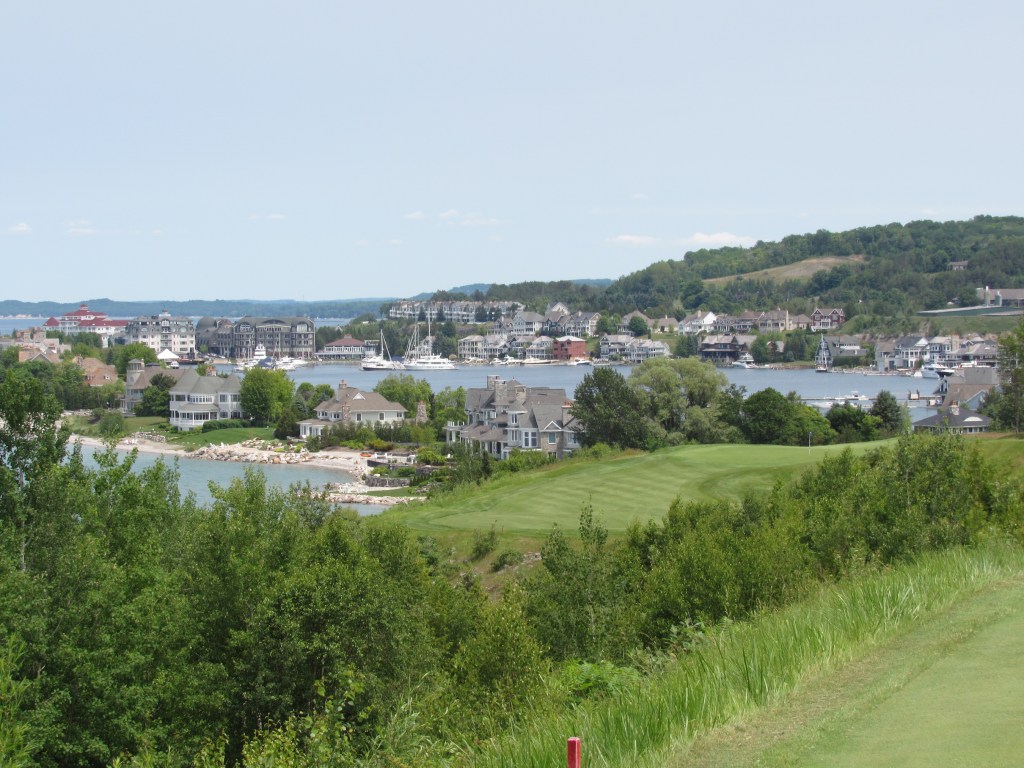
Vista from the 3rd tee box at Bay Harbor, Links Course

The “top of the mitten” – i.e., the northern tip of Michigan’s lower peninsula – is stunningly beautiful: breathtaking views of Lake Michigan, deep harbors and tranquil bays, soaring forests, a patchwork of inland lakes and rivers. Although summers, and golf seasons, are relatively short, the summer days are temperate and long, allowing golfers to play 14 hours a day during the height of the summer.

What better setting, then, for Arthur Hills to carve 27 unique holes into the bluffs overlooking the lake, centerpiece to the tawny enclave of Bay Harbor? This is the layout that would cement his reputation for scenic yet difficult courses, replete with forced carries and heroic shot opportunities. The location is so picturesque, in fact, that an episode of “Shell’s Wide World of Golf” was filmed here shortly after the course opened.

Bay Harbor Golf Club consists of three 9-hole courses: The Preserve, The Links, and The Quarry. All three are immaculately groomed and exquisitely challenging, but The Links and The Quarry comprise the “premier” 18-hole experience. All three 9s have seven(!) tee boxes, allowing players to calibrate the yardage to their skill level. From the back tees, the Links/Quarry combination stretches to over 6,800 yards. From the most forward tees, players are looking at just over 4,100 yards.

No matter the tees you choose, you’ll be treated to spectacular vistas and holes routed brilliantly through woods and grasslands, and across ravines and a massive old shale quarry, all skirting the shore of Lake Michigan.

Assistant Golf Professional Scott Puschi offers a few valuable tidbits of advice for first-time visitors. “First, download the free GPS app onto your phone,” he says. “It’s a 3D yardage book with tons of helpful tips and flyovers of every hole.”

“Second,” he continues, “Play the Links and Quarry combination, unless you don’t enjoy forced carries. The Quarry has a forced carry on every hole, and we don’t want people to have a bad day.”

The Links

Bay Harbor, Links Course, Hole 1

My 15-year-old son and I played the Links/Quarry combination in “Chamber of Commerce” weather. We chose to play at about 6,300 yards, as our games were undergoing various changes after some recent lessons. As we approached the tee box on the ~400yd 1st hole of The Links, my son started to realize why I was so excited to finally play Bay Harbor – and to understand why I am such a huge fan of Michigan golf. The panoramic view from the saddleback fairway down to the first green was just a taste of what was to come.

By the time we got to the 3rd hole, possibly the hardest short(ish) par-4 you’ve ever seen, he just kept saying, “Wow.” That’s about as much outward awe you can coax out of a teenager. Nearly every green on The Links seems to be framed or back-dropped by the lake. The short (depending on the tees you play, 178-80 yards) par-3 4th is one of the best one-shotters I’ve seen in a long time, with certain death left and long, and a bailout area to the right that leaves a nearly unstoppable downhill chip toward the lake.

Bay Harbor, Links Course, Hole 3
Bay Harbor, Links Course, Hole 4

There’s only one forced carry on The Links at the par-4 6th hole, which is to a split fairway (take the right side—it’s much shorter!). The Bay Harbor app comes in very handy over the last few holes of The Links, especially for the blind landing area on the short par-5 7th hole and the serpentine par-5 9th, which snakes through wetlands from tee to green (stay left!).

 The Quarry

As it turns out, The Links, for all its challenges—and there are many—serves as but a warm-up for The Quarry, which requires precision and power on basically very shot. Looking through my notes, I find multiple uses of the words “insane” and “crazy,” but in good ways. For example, the brawny par-5 3rd hole first requires a long carry off the tee to a fairway bordered by a marsh to the right and an enormous waste area to the left. Your second shot will likely be a lay-up to a blind landing area, followed by an approach over a sizeable portion of the old quarry.

Bay Harbor, Quarry Course, Hole 3

At this point, my son decided he was fonder of The Links. “This side is WAY harder,” he noted rather glumly as we counted up his strokes on the 3rd and penciled in a “10.”

The shorter but no less crazy par-5 5th hole was equally daunting, with a forced carry from the tee of about 220 yards over water, even from the middle tees, followed by another blind lay-up (aim toward the tall birdhouse). Heed the app and choose your club wisely, as the fairway ends at the water’s edge, water which surrounds the quarry-framed green.

Bay Harbor, Quarry Course, Hole 4
Bay Harbor, Quarry Course, Hole 5

More challenging carries follow on the brutish par-4 7th (stay right off the tee for a shorter carry), and the gorgeous yet beastly par-3 8th, whose wide, shallow green felt nearly impossible to hit (utilize the drop areas rather than pumping ball after ball into the abyss).

The app is also handy on the par-4 9th, where the drive is blind over a humpbacked fairway that ends around 280 yards from the tee. My son’s drive went too long and was lost (greatly disappointing after such a good poke!), whereas mine stayed inches from trouble. From there, I had 110 yards downhill, over a ravine to an idyllic green nestled between the clubhouse and the crystal blue lake. One of the best shots of my life nearly found the cup, leaving me with a 4-inch tap-in for birdie and applause from the clubhouse veranda.

Bay Harbor, Quarry Course, Hole 9

Even my usually nonplussed teenager was duly impressed.

Lasting impressions of Bay Harbor Golf Club

Before Whistling Straits, before Arcadia Bluffs, before Sand Valley, before The Pete Dye Course at French Lick Resort, there was Bay Harbor Golf Club, the original “bucket-list” course of the Midwest. Bay Harbor, and the rest of the Boyne Golf courses, were among the originals in what was to become a peerless collection of Northern Michigan golf destinations, which are still arguably the best-kept secret in golf.

Bay Harbor’s rack rate greens fee of nearly $400 is not necessarily budget-friendly; however, advanced tee times online can be found for as little as $140, and guests at the stately Inn at Bay Harbor (as well as other Boyne properties) enjoy a wide range of stay-and-play package rates. Although the golf season in Northern Michigan only runs from May 1 to the 2nd week in October, the weather and daylight throughout much of it are almost magical.

Like my son, you will find yourself saying “Wow!” over and over again, as you check Bay Harbor Golf Club off your bucket list.

Bay Harbor, Quarry Course, Hole 6

Boyne Highlands Resort: A four-course feast of golf

Summer is admittedly short, but if, say, you own a ski resort, and your hotel and sprawling grounds feel abandoned during the long, sun-drenched yet temperate days from May through October in the northern reaches of the state’s southern peninsula, you might well consider expanding your warm-weather offerings. After all, ski season is also only about six months long. Why not cater to both seasons?

That was the thinking at Boyne Highlands Resort in Harbor Springs, Michigan. The first golf course was built here in 1966. Designed by legendary golf course architect Robert Trent Jones, The Heather (4,485-7,143 yards) opened in 1966, presaging the “golf boom” by some three decades and establishing Boyne as a central player in Michigan golf. The Heather Course has played host over the decades to nearly every major Michigan amateur championship and remains the top draw at the Highlands Resort.

Main Lodge at Boyne Highlands Resort
Hole 5, Heather Course

Next came The Moor Course (5,099-6,850 yards), by Bill Newcombe and John Robinson, in 1974, which many locals and regulars will tell you is their favorite (perhaps partially because it tends to be less expensive and less crowded than the other three courses on the resort grounds).

In 1989, the Donald Ross Memorial Course (4,935-6,814 yards) ushered in the “golf boom” years. Also designed largely by Michigan course architect Bill Newcombe, the Ross is an 18-hole homage to legendary Donald Ross. Each hole is modeled after Ross’s most famous holes around the world. The greens, especially, are every bit as diabolical as any authentic Ross design you may encounter.

Ross Memorial Course, Hole 4

The final course added to the Boyne Highlands property was the eponymous Arthur Hills Course (4,811-7,312 yards, par 73), which, along with the spectacular Bay Harbor Golf Club a few miles away, cemented Hills’s reputation as a master of dramatic, and dramatically difficult, golf course design. The Hills Course opened in 1995 (with a redesign in 1999) and has the highest slope rating (144) and course rating (75.4) on the property. It also has the most memorable and visually striking holes at the resort.

Arthur Hills Course, Hole 13

Players’ notes

The Heather Course

Robert Trent Jones, Sr. innovated a number of golf course design features: long, narrow teeing grounds allowing for extremely variable hole lengths; deep, narrow greens; drifting, meandering doglegged fairways that encourage shots to find preferred angles and require players to move the ball in all directions. All of these RTJ hallmarks are in full display at The Heather Course. Most of all, the layout epitomizes the legendary course architect’s mantra of “Easy bogey, difficult par.”

The main advice from John Myers, Head PGA Professional at Boyne Highlands, for first-time visitors to The Heather is that “par 3s play longer than the yardage on the scorecard.” Also, says Myers, “If the green read is not obvious, the ball will break away from the mountain.”

As my son and I worked our way around The Heather, we found quickly that yes, indeed, the par 3s all play longer than they say on the card. We played the conservative orange tees (6,207 yards), but even so, the 162-yard 4th hole, which plays completely over water, felt 20 yards longer. I can only imagine how daunting it would be from the 202-yard back tees.

Hole 4, Heather Course

Our favorite holes were the closing holes on each side. The par-5 9th stretches to a brawny 617 yards from the tips. The fairway snakes left-to-right and then back right-to-left, terminating at a heavily bunkered green whose surface is occluded from view down on the fairway.

Heather Course, Hole 18

The 482-yard, par-4 18th plays downhill to a large pond that starts 275-230 yards off the tees (depending on the tee box). Although there’s a narrow crescent of fairway off to the left of the water, chances are, your second shot will be a 170-200 yard carry over the water to a kidney-shaped green with two gaping bunkers looming behind it. One of my best shots all season was a 4i-hybrid over said pond to about 10 feet from the front-left pin. (I two-putted for par.)

The Donald Ross Memorial Course

Donald Ross is an almost mythical character in the history of golf course design, a fact that was totally lost on my 15-year-old son. As we drove to the first tee, I tried to explain how Ross’s green complexes were his hallmark: generously bunkered, devilishly contoured, turtle-backed and multi-tiered.

My son said something like, “That sounds awful.” And, well, I suppose that’s sort of true. But it also makes it fun to play any Ross course, or this exquisitely executed Ross tribute course.

The greens on the Ross Memorial Course mimic the iconic course architect’s iconic greens.

But let me disabuse you of any thought of shooting a career best your first time out. Those greens, which so spooked my son, are brutal and unforgiving. I think I 3-putted nine greens here, one of which was from just six feet away…then from 9 feet…then from 3 feet. Sigh.

The holes that Bill Newcombe and colleagues chose for homage include are #14 at Royal Dornoch, #6 and #15 at Seminole, #16 and #17 at Oakland Hills, #14 and #16 at Pinehurst 2 – and so many more classic holes.

One of our favorite holes was the bucolic 181-yard par-3 8th (#11 at the Charlotte Country Club), which plays over water, with a willow tree to the right and a saddleback green.

Ross Memorial Course, Hole 8


A second favorite was the gorgeous, brilliant split fairway of the 510-yard 13th (Seminole #15). Pines and bunkers litter the area between fairway branches. From the proper tees, this par 5 is reachable in two, and it has the flattest, kindest green on the entire course. But don’t get me wrong: it is still lightning-fast, but at least there is a chance of holing a birdie (or better) here.

Ross Memorial Course, Hole 13

After our round, my son, to whom I had been rhapsodizing about Ross throughout the round, said simply: “I don’t think I like this Ross guy.” So, again, be forewarned: The Ross Memorial is a memorable experience, but be kind to yourself and modest in your expectations for your score.

The Arthur Hills Course

Art Hills is one of the more polarizing golf course architects you might never have heard of. It has been reported that his philosophy is that golf is a hard game, and his courses are not intended to make it ay easier. On the other hand, his use of topography, contour, and strategic features conspire to make his designs eminently memorable and visually inspiring.

The Arthur Hills Course is both of these things. It was our favorite course at Boyne Highlands Resort and was, generally, not nearly as unforgiving as Hills’s reputation might lead one to expect. The entire course is situated on arguably the best tract of land on the sprawling resort. There are picturesque backdrops of trees and sloping valleys, and the greens are much easier to read and putt than on the Ross Course. In my son’s words, it is far less “Rossy.”

Hills Course, Hole 4

The layout eases players into their rounds, with four straight holes that, from the proper tees, do not pose many penalties. The 481-yard par-4 5th is a brute, to be sure, but the entire hole is gloriously framed by lodge-pole pines. It is one of the few times I’ve heard my son actually utter the word “Wow!” when looking at a green. (The other times were on Hills’s masterful Bay Harbor Golf Club the previous day.)

One of the most memorable holes is the par-4 10th. At just 354 yards from the tips, it might be drivable from the proper tees. When stepping on the tee, my son said, “This doesn’t feel real.” The entire hole is encircled by towering pines, and the elevated green is fronted by a cavernous bunker.

Hills Course, Hole 10

As much as you feel that the front 9 of The Hills Course is playable and scoreable, the back 9 slaps you in the face. Misses are penalized much more harshly, and the greens are considerably more severe. Nevertheless, the experience is fantastic, and the golf is fun, even if you shoot 11 strokes worse on the back than you did on the front (like I did).

Hills Course, Hole 15

If You Go

Boyne Highlands Resort offers year-round activities and amenities centered around skiing in the winter and golf in the summer. Peak season greens fees at all four courses range from $56 (twilight) to $191 (peak times/days), and there are copious stay-and-play packages.

There are numerous dining options in the Bavarian-inspired main lodge and hotel, but the Slopeside Cafe was my son’s and my favorite. Outside the back windows, there were dozens of kids and families cavorting on the expansive green lawn at the base of the ski slope. Free cornhole (bags) games, putting greens, Frisbee, basketball, tennis, etc., etc. are available. Don’t miss the free ski-lift rides up to the top of the “mountain,” or the new zip-line. There’s even a small fishing pond stocked with trout that my son and I spent a fun hour catching and releasing. Oh, and the food’s excellent, too, especially the pizzas and burgers.

Kingsmill Resort: Where American History and Golf History Converge

The final two holes on The River Course at Kingsmill Resort, outside of Williamsburg, Virgina, feature several historical markers. One of these describes how the first English settlers in North America landed near the escarpment above the wide James River that is now the elevated tee box of the par-3 17th hole. Those settlers moved upriver a bit further, to Jamestown, where ships could anchor closer to shore. There, those settlers faced starvation, disease, and conflicts with the Native Americans, and by 1610, 80%-90% of the settlers had died. Evidence suggests that some had to resort to cannibalism to survive.

Personally, I would have stayed on the 17th green overlooking the water, but that’s just me.

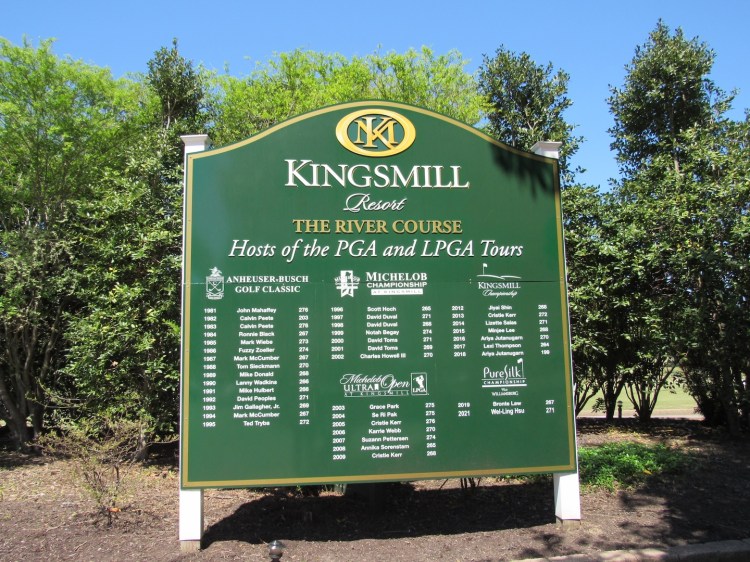
Another historical record greets you as you walk towards the front of the clubhouse – a large sign listing all the names of the winners of the multiple professional tour tournaments competed on the Kingsmill River Course over the decades: Anheuser-Busch Golf Classic, Michelob Championship at Kingsmill, Michelob Ultra Open at Kingsmill , Kingsmill Championship, and PureSilk Championship of Williamsburg. One of these tournaments ran close to annually from 1961 to 2021. When asked why the tours stopped coming to Kingsmill, one of the staff said, “They hit the ball too far these days. There’s no room to expand the course.”

Happily, 99% of recreational golfers do not hit the ball as far as Tour players. And those that might occasionally come close don’t hit it nearly as straight. So for recreational golfers looking to play some historic courses on some historic property, the 1975 Pete Dye-designed River Course and the 1986 Arnold Palmer-designed Plantation Course provide plenty of challenge and fun.

Kingsmill Resort

Kingsmill Resort is a sprawling, mixed-use property located on the outskirts of historic Williamsburg, just outside the front gates of the Busch Gardens amusement park. There are part-time and full-time residents (and members), there are timeshare condos, there are resort units. There are also myriad indoor and outdoor recreational facilities, a marina, and restaurants and bars. The sunset views from the patio of the marina restaurant really should not be missed.

Because of the sheer size of the Kingsmill Resort, guests really benefit from having a car on property. Although some of the rooms and facilities could use a bit of updating, the overall vibe is one of old-money, Mid-Atlantic rustic comfort. The two golf courses add considerably to this vibe, and they clearly serve as the crown jewels of the resort.

The Golf Courses

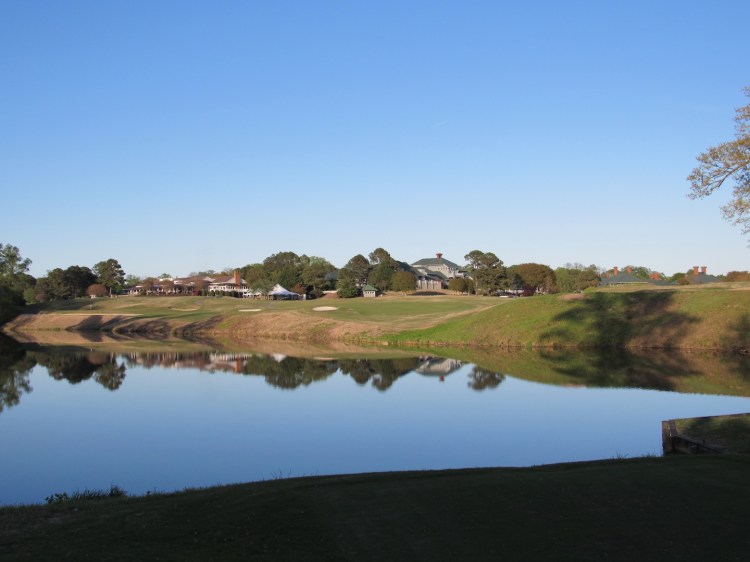
In the well-staffed, well-stocked proshop, there was a vigorous debate amongst the staff when I asked which course, River or Plantation, is the hardest. A slight majority appeared to vote for the River Course – a 1975 Pete Dye layout that stretches to 6,831 yards from the back tees. This view was mostly due to its length and, perhaps, to a sort of recency bias related to the two courses’ respective 18th holes. The River Course ends with a bang: a 450-yard par-4 cape hole that requires an intimidating carry over a lake from all but the forward tees. The Plantation Course ends with a thud: a 333-yard, possibly drivable par 4 with no real trouble in any direction.

River Course, Hole 18: My driving line was between the first and second bunkers on the right

On the other hand, those voting for the Plantation as the more difficult 18 pointed to the narrower fairways, some requirement to play “target-golf” on certain holes, multiple blind hazards (and no GPS on the carts), a few long carries off the tee, and greens that often cantilevered – sloped downward from the middle of the putting surface toward both front and back. To be honest, I do think these devilish greens made the overall experience on the Plantation for first-time players more vexing. Both courses had their own charms and demons, however.

The River Course

In 1975, Pete Dye was coming into his own as a golf course architect. He was entering the stage of his career – and an age of golf – when course difficulty was considered a paramount virtue (from the tips, Course Rating: 73.2; Course Slope: 136). The rolling topography along the James River lent itself perfectly into Dye’s penchant for visual deception: when players can’t see the ground between themselves and their targets because of swales or valleys, yardages are much harder to estimate. And in the 1970s, laser rangefinders weren’t a thing yet. Today, even with modern yardage-measuring devices, recreational golfers have trouble overcoming doubts – many carries over hazards and up to predominantly elevated greens look much longer (and occasionally even shorter) than the laser says. (Buy a Player’s Book in the proshop – very useful!)

The rollercoaster topography – featured on both courses – lends itself to plenty of blind or semi-blind shots, especially off the tee. Then, on approaches to the River Course greens, you notice that nearly every one has a certain table-top quality, with sharp and penal drop-offs to one, two, or all sides. Players who miss greens here will have their short games tested. Then, once on the putting surfaces, the grainy Bermuda turf will make both speed and line difficult to judge. I think I three-putted more on the front 9 of my first round on the River Course than I had in a half-dozen previous rounds.

There are several memorable holes on the River Course, led by the aforementioned 18th – really a stunning closer that makes you pick a line and hit it to stay dry. Even a bomb can get you in trouble, though, as the fairway is not overly wide, and the right rough is no picnic to play from.

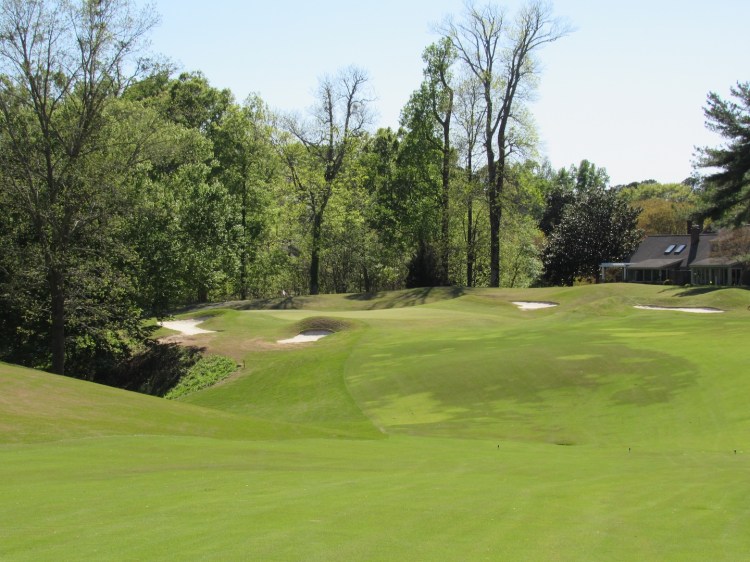
On the front side, the par-3 5th, which can play 70+ yards longer or shorter, depending on tees and pin position, is a real beauty. Here club choice is key if you’re going to hit the deep, narrow green and avoid the bunker and wetlands right and steep bank on the left.

River Course, Hole 5: Narrow target, lots of trouble, hard to judge!

The pretty 525-yard, par-5 7th is another gem. Here, like on the rest of the layout, the second shot is key. Driving the ball is not really the issue for the most part on the River Course, as long as you keep it relatively straight. But the second shots and/or approaches? Whoa. Here, the green is offset to the left of the end of the fairway. There is a dramatic drop-off to the left of the green into brush and wetlands.

River Course, Hole 7: That left pin is a sucker pin for an old hooker like me.

The closing three holes are really the stars of the River Course, though, as they play down to and along the James River. The fairway of the 458-yard 16th has OB both left and right, if you get a little wild. Then the hole turns right and snakes down toward a smallish peninsular green backdropped by the river. If the wind is coming off the water, as it usually is, club choice and angles are everything. The 177-yard, par-3 17th has an elevated tee box and equally elevated green, separated by a 30-foot valley. I don’t know if it was the wind or the weight of history (there are numerous historical markers near the tee box and green), but just about every tee shot I saw (and hit myself) came up a bit short. The unlucky ones rolled down to the bottom of the valley.

River Course, Hole 17: The elevated green on this par 3 is large and inviting — you just have to hit enough club to get here.

The Plantation Course

At just 6,437 from the back tees (Rating: 71.4, Slope: 132), the Arnold Palmer design with the historically problematical name should play easier on paper…but as noted above, might not on grass. Of special note is the back 9, which kicks off with a string of three 400+ yard par 4s. Numerous holes – notably 1, 10, 12, and 13 – have blind water hazards off the tees. Finally, as previously mentioned, the cantilevered greens require precise distance control or else balls will roll off the backs of the greens (or come back off the fronts) into areas that are very hard to get up and down from. As some of the proshop staff warned, the Plantation Course is more about position and avoiding hazards than power.

Perhaps because the junior layout was sort of shoe-horned into land surrounding its big sister, there are fewer visually arresting holes, though many of the same characteristics are shared between the two courses: elevated tees and/or greens, lots of swales and valleys, stands of hardwood trees, deep bunkers, and plenty of water. From the start, players are faced with what might be intimidating carries off the tee on the 365-yard 1st and 519-yard 2nd holes. Then, on the 177-yard, par-3 17th – arguably the most memorable hole – there’s a long carry over a ravine that is called, I believe, Snake Valley because of, well, snakes. There should really be a drop zone on the other side (it was unclear that there was, so a sign on the tee would be useful) – at least to keep players away from the snakes.

Plantation Course, Hole 17: If you hit your tee shot into that valley, just drop one on the other side.

The only sour experience on the Plantation Course was the customer service (which, to be honest, was occasionally spotty throughout the resort). One of my group actually carded a hole-in-one on the 14th. When that foursome finished and wanted to wait for my foursome to come in, they called the bar and asked if someone could drive beers out to the 18th to celebrate (neither the 9th nor the 18th of the Plantation is located near the clubhouse). They were refused. Later, one staff member drove a non-golfing member of our group out with beers, but apparently just delivering beers alone was too much to ask at the former home of multiple Anheuser-Busch-sponsored tournaments.

Plantation Course, Hole 10: One of my best drives of the round almost got to this pond (which I didn’t know was there).

The Verdict on Kingsmill Resort

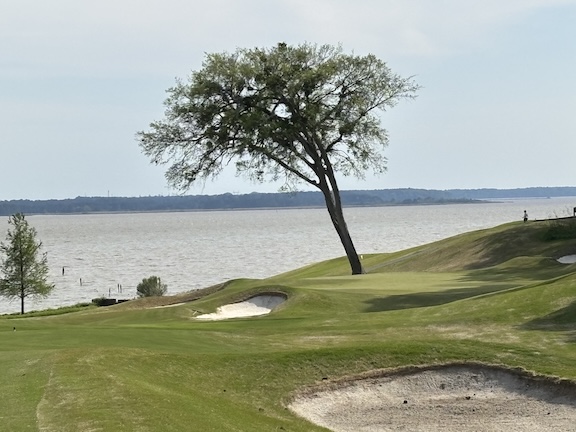
Another nice view of the memorable 16th Hole on the River Course

When I think of Mid-Atlantic golf, I basically think of Kingsmill Resort as the template: great golf, beautiful scenery, excellent food, homey accommodations. Could the Jamestown settlers of 1607 have even imagined how idyllic this land would become in 400 years? Our only real privation was that the drink cart stopped service at 1:30pm all three days we played (so, right at our tee times), and there was no other water anywhere on courses (drinking fountains were shut off). Although this lack of service on the very warm days we played actually was somewhat dangerous (a few of our members were pretty dehydrated the first day), we were thankfully not forced to resort to cannibalism to survive.

Altogether then, Kingsmill Resort remains one of the Mid-Atlantic’s premier golf vacation destinations. It is always a treat to play the same courses as the pros played, and the added benefit of treading the same soil as some of the founders of this great nation is definitely an added bonus.

2025 Season Opener Gift Guide

For golf fanatics, The Masters counts as a holiday. Like, a MAJOR holiday (pun intended). And for golfers who live in northernly climes, it also marks the start of the golf season. Or close to it anyway, depending on how far north you live.

Given this auspicious time of year, when hope for lowered handicaps, personal best rounds, and holes-in-one springs as eternal as bentgrass overseeded with rye, I think we deserve a Season Opener Gift Guide. If you can’t convince your family to buy you presents to kick off the season, you should buy them for yourself. Here are a few ideas for swag that will help your 2025 golf season get off the tee.

Bushnell Golf’s New A1-Slope Laser Rangefinder

When I was a wee lad, my grandpa took me to a Minnesota Vikings game – back when they played outside. I remember two things from that game: The Vikings blanket he brought with him that had a zipper pocket for a flask and his Bushnell binoculars that provided a crystal-clear view of the players despite cheap seats and steady snow. I’ve still got both of those things, and they both still work great. The Bushnell A1-Slope Laser Rangefinder ($300), which debuted just this February, is a worthy descendant of those binoculars. It is by far the smallest and lightest rangefinder I have ever used. Pinseeker and JOLT technology provides instant tactile feedback when the target is locked, the slope yardage is easy to see and read, and the BITE magnetic skin is great if you don’t want to take it in and out of the sturdy case. A final innovation that is rare in the market is the rechargeable battery (cord included). This might be the last rangefinder I ever use—if my grandpa’s binoculars are any indication, the A1-Slope will never wear out.

TRUE Golf Shoes

TRUE LUX2 Maven
TRUE OG3 Pro

If you’re never heard of TRUE, you’re missing out. I have four pairs of TRUE golf shoes, and I get more compliments on them than any shoes I’ve ever worn (golf or otherwise). The combination of styling, attention to detail, and comfort are tough to beat. Some of my TRUE shoes have metal aglets. Others have eye-catching sole designs that also provide outstanding traction. All of them have excellent padding and support. At the 2025 PGA Merchandise Show, TRUE launched a number of new models, including the OG PRO and LUX2 Player ($195 each) and the LUX2 Maven ($325). An unexpected luxury of TRUE shoes is that every pair comes in its own mesh and canvas carrying case, which is great for golf trips. My only advice in ordering TRUE shoes online is to order one size larger than you think, as they do run a little small.

Sun Mountain Ridgeline 3 Push Cart

Once you’ve got yourself some comfy TRUE golf shoes, you need to take them out for a good walk. The exercise potential for golf is enormous – if you walk. And what makes walking more fun is a good push cart. The Ridgeline 3 push cart by Sun Mountain ($350) opens and folds easily, with just one lever and one latch. It’s fully adjustable to every golf bag thanks to a bracket on the main vertical handle support. It rolls smooth as silk yet is extremely stable. I’ve used a lot of push carts, and this one might be the best all-around I’ve ever tried.

 SuperStroke Putter Grips

Perhaps the best feeling in golf is feeling comfortable – and confident – on the greens. An essential part of achieving this blessed nirvana-like state is your putter grip. Your putter should feel so natural in your hands that it’s like an extension of your body. SuperStroke Putter Grips ($30-$40) have in a very short time become ubiquitous on greens everywhere from local municipal courses to the PGA Tour, where it seems like the winner every week plays them. My current favorites are the Marvel Comics Series grips – Iron Man, Hulk, Spider-Man – great fun for superhero fans! Additional big news from SuperStroke is that it has acquired the legendary Lamkin Grips – the favorite grips of Arnold Palmer. SuperStroke has some innovative plans for new Lamkin grips for the clubs all through your bags this season. Be honest – your clubs probably need new grips to start the season. Treat yourself to Lamkins and SuperStrokes!

Witch Way Ball Markers

At the 2024 Valspar Championship, eventual winner Kevin Streelman had 10 one-putts in a row at one point in his final round. He attributed at least part of that efficiency to a prototype ball marker he had put in play, a Witch Way ball marker. The Witch Way ($10 each, $30 for 5-pack with carrying case) is a bit over-sized, with a bold alignment line. The innovation is a longer spike on the bottom, allowing you to rotate the marker and adjust your line without removing it from the ground.

Sub70 Sugar Skull wedges

Sycamore, Illinois is home to Sub70 Golf, one of the most well-respected boutique golf equipment companies in America. Unlike every major equipment company, and most of the other smaller ones, Sub70 doesn’t release new clubs every year just to create buzz. Sub70 only puts out new equipment when their painstaking research and testing confirms that the new sticks actually perform better than the old ones. Heck, they even offer free clubfitting in their homey HQ in Sycamore, where they tell me that sometimes they do fittings and determine that the player’s current clubs are best for them, even if they aren’t Sub70s.
So believe me (and them) when I recommend Sub70’s fan-favorite Sugar Skull wedges ($125). Ranging in loft from 46-64 degrees, these beauties feature a black finish and custom laser engraving – either the Sub70 Sugar Skull or something more personal. In short, they look great and play even better!

Bridgestone e12 golf balls

Bridgestone e12 protoypes

On February 14, 2025, Bridgestone released three new e12 ball models: the e12 HiLAUNCH, e12 STRAIGHT, and e12 SPEED ($35/doz.). Painstaking in-house research has shown that approximately 85% of golfers would benefit significantly from playing a ball that was optimized for their typical launch conditions. The e12 HiLAUNCH model, which is aimed to help golfers increase their launch angle and overall trajectory, features the lowest compression of the three new e12 models. This causes the ball to stay on the clubface longer and launch higher for added carry distance. The e12 STRAIGHT, which is designed for players that need reduced sidespin for less hooks and slices, features a soft, low compression core, sidespin reducing mantle, and Contact Force dimples. The e12 SPEED, aimed at players who launch the ball too high and need a hotter, more boring trajectory, features the firmest compression of the three models for a more penetrating launch.

Early Season Golf Getaways!

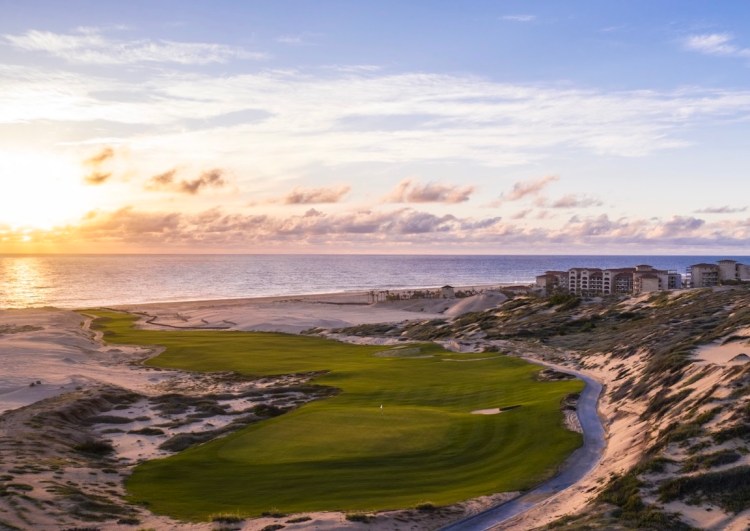
Solmar Golf Links in Cabo San Lucas

OK, you’ve got new shoes, wedges, balls, maybe a new driver (this one is HOT!), ball markers, range finder, etc., etc. Now you need to get out and use them ALL! How about a road trip to someplace sunny, warm, and magical – like Cabo?  Solmar Golf Links is located just fifteen miles north of Cabo San Lucas. The Greg Norman Signature Course was designed with a “least disturbance” approach and traverses three different ecosystems along the breathtaking Pacific Ocean. Guests at the resort can enjoy private beach cabanas, a cutting-edge fitness center, hiking and biking trails, and concierge services. Stay and play package includes one round of golf per adult (and discounts on multiple rounds), shuttle service, food and beverage while on-course, and access to the practice facility before the round.

If you’re looking for something a little closer to home, you have exactly ONE DAY after this gift guide goes live (so you just book by March 17!) to lock in a sweet deal at Kingsmill Resort in Williamsburg, VA.  Stay five nights in a riverfront Cottage and receive a $1,000 resort credit to use however you choose—whether it’s towards a waterfront dinner, a spa day, or an afternoon of golf on our championship courses. Kingsmill is familiar to many golf fans as the former long-time venue of one of both PGA and LPGA Tour events. In other words, this is some world-class golf—so lock in this deal while you still can!

There you have it, golf fans. The 2025 Season is upon us – and I for one cannot wait!

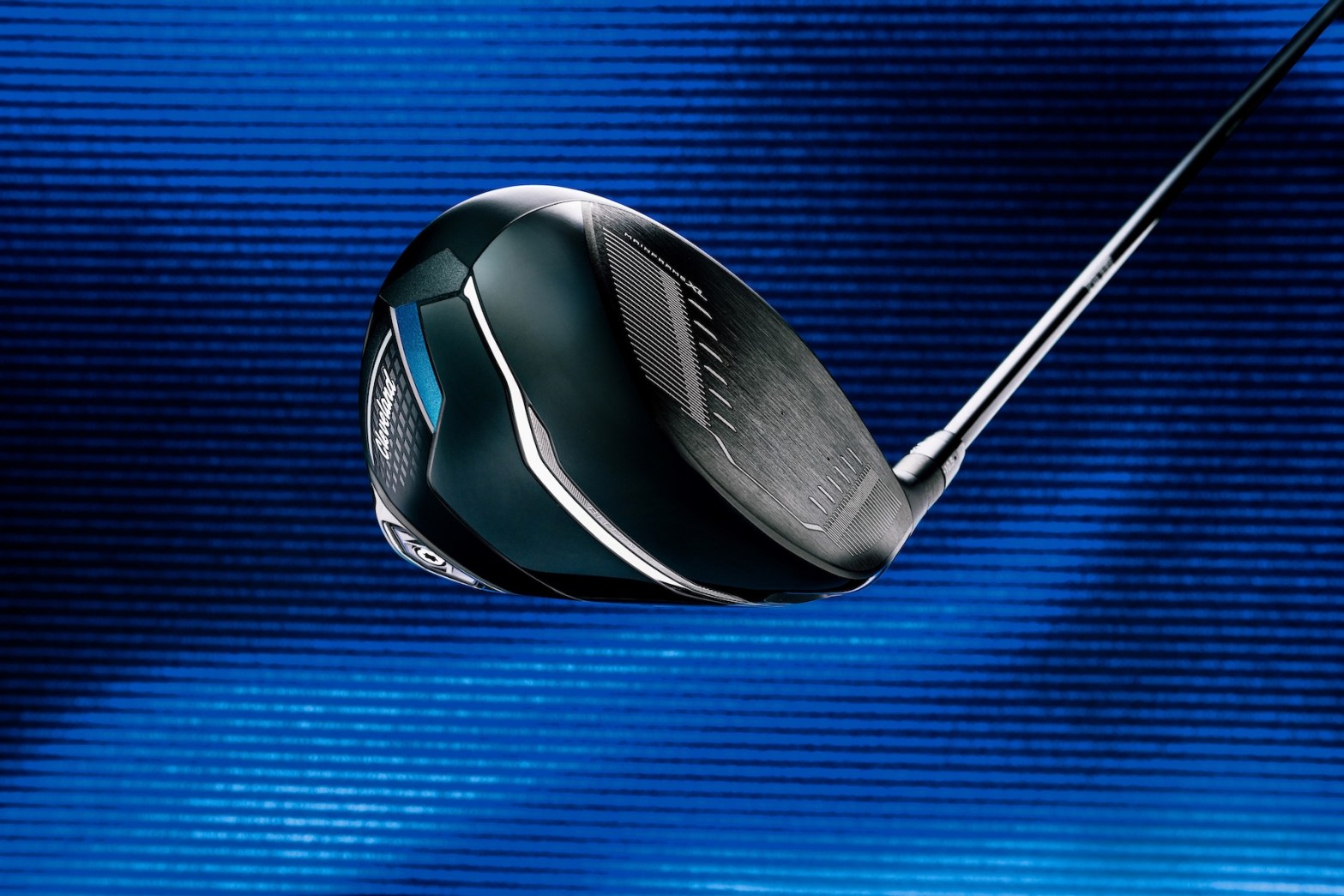
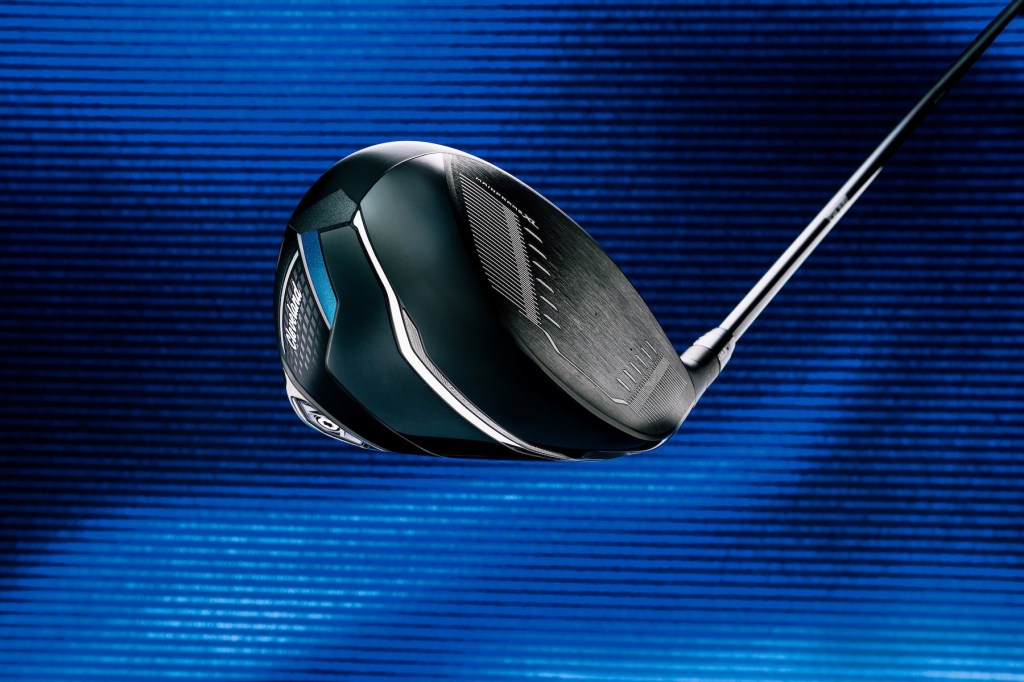
Cleveland HiBore XL Driver: All-in on AI

Golf equipment companies known for their drivers – like Callaway, TaylorMade, and Ping – have turned in recent years to AI applications to rethink and redesign their big sticks. Now Cleveland, a legendary equipment company traditionally known more for wedges and putters, has entered the AI arena. Released December 6, 2024, the Cleveland HiBore XL Driver promises longer, straighter drives and a design that stands out from the crowd.

“AI” is certainly a buzzword today, in golf and everywhere else. What does it mean to apply “artificial intelligence” to club design? Basically, it’s machine-learning – tasking a computer with looking for patterns in huge amounts of data, patterns that would take humans too long to find. What are the data? Well, you start with idealized parameters: and acceptable range of longest distance and narrowest shot dispersion. Then you build simulation models with variables associated with the clubhead, such as face thickness across the entire face, weighting (amount and position), lofts, crown and sole material density, etc. (within the bounds of USGA conforming specs). Add in variables associated with the swing, such as speed, directionality, angle of attack, etc., and maybe even variables associated with different golf ball designs. And then you run every combination of these models thousands of times each – hundreds and hundreds of thousands of runs, maybe millions. The AI bit, then, is asking the computer to analyze all these data points, learning the combinations that return the best results for the specified ideal output parameters.

The result of these sorts of AI-aided R&D processes can be designs that no human might have considered. In the case of the Cleveland HiBore XL Driver ($400), engineers began with a traditional pear-shaped driver head, and ended up with a triangular head that turns out to be as effective as it is untraditional.

According to Cleveland’s Senior Product Casey Shultz, “As our R&D research has developed hand-in-hand with advancements of our A.I. simulation capabilities, the realization came that removing the constraints of a ‘traditional’ looking driver shape would allow for new and exciting performance opportunities.…[W]e were able to unlock levels of forgiveness and distance that weren’t possible before. But there is one key difference with the new model compared to that of the past – it also sounds great!”

Playing the Cleveland HiBore XL Driver

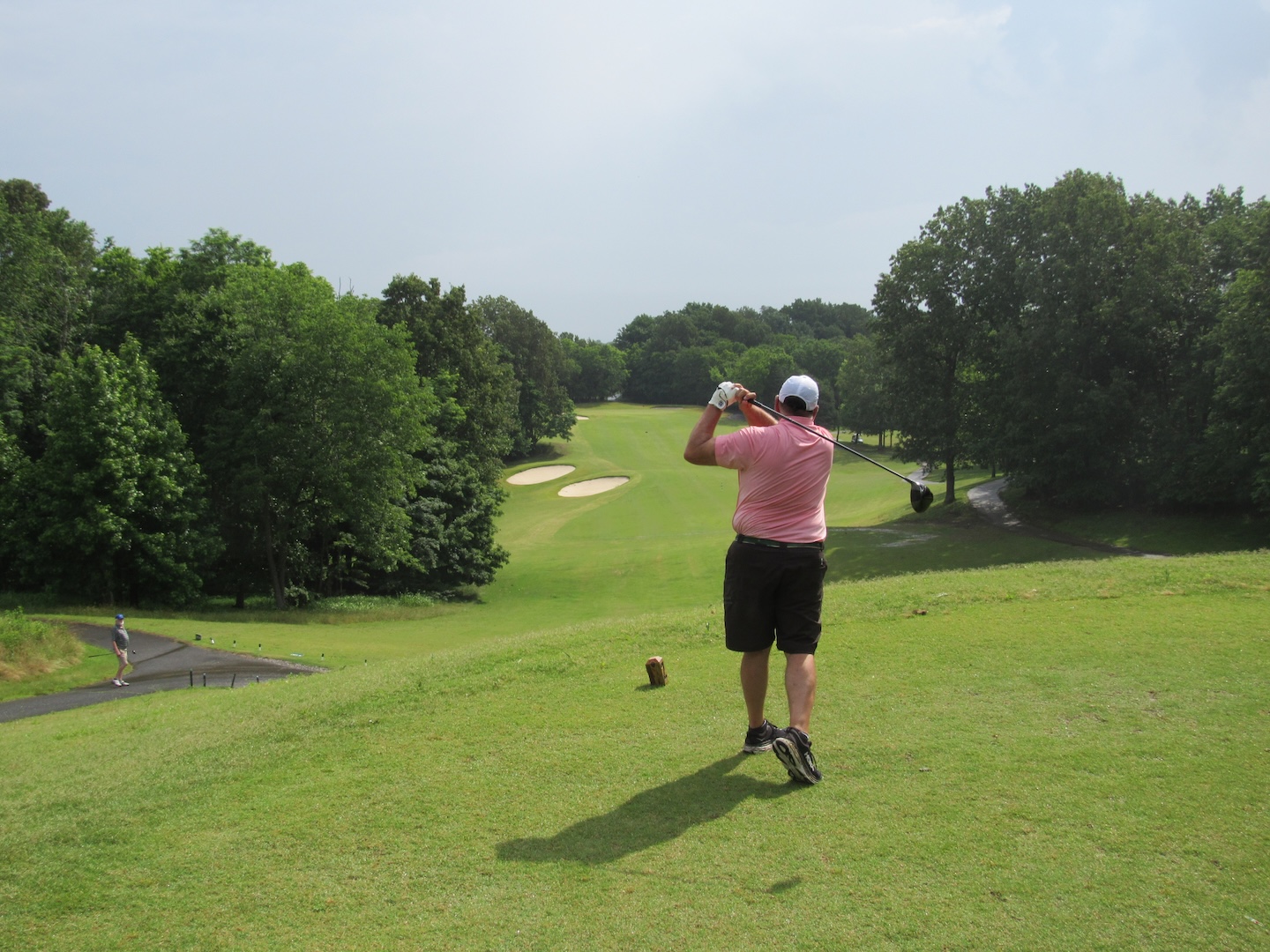
The week before someone flipped a switch and the weather in central Illinois went from 60 to 20, I took my Cleveland HiBore XL (9-degrees, stiff Mitsubishi Tensei shaft–a REALLY nice stock shaft) out to the driving range with my son, Erik, who was on his high school golf team and still plays often in college. He hits the ball a long way. I also took my past season’s gamer, a 10-degree Titleist TSR, for comparison.

The first thing we both remarked about was the unconventional shape. If you’re a “purist,” the triangular head shape will either take some getting used to or will not be for you. To my eye, it just looks powerful – kind of mallet or hammer-like. We were both a little rusty, and contact was distributed around the face for several swings. What was most striking is even though Erik hit a bunch of lower drives off the heel, and I hit a fair number of shots toward the toe, both ended up respectably long and, surprisingly in or close to what would have been the fairway.

As Erik said, “I’m not swinging great, but those all would have been acceptable drives.” I had to agree.

A week later, after the aforementioned arctic blast, I took the HiBore XL into the simulator at my local course to double-check that the numbers and accuracy impressions from the range held up under computerized scrutiny. Long story short, they did. Whereas Cleveland’s Launcher XL2, which I reviewed last year, found a lot of fairways but felt like it lacked a bit of “pop,” the HiBore XL stood up on the range and the simulator to my regular driver in terms of distance, AND it kept my ball more consistently in the fairway.

What might account for this accuracy performance? Thanks to the head shape, the driver face of the HiBore XL is 19% larger than the face of the Launcher XL2, which might be part of it. The larger face penalizes mishits (like our toe and heel contact at the range) far less. There’s also a counterbalancing weight in the shaft, which provides both control and promotes higher swing speed without losing connection between your hands and the clubhead.

Cleveland HiBore XL: The verdict

Cleveland’s initial foray into the world of AI-design appears to be a solid success. The HiBore XL is an excellent all-around driver, with plenty of “pop” and outstanding forgiveness. Both my son and I were able to work it in both directions, and the overall feel and sound were very pleasant – as long as you’re not aichmophobic. That’s the fear of sharp corners and objects with sharp corners, like triangles. (Is it just a coincidence that that word begins with “ai,” too…?)

Get ‘em before they go (up): Holiday Golf Gift Guide 2024

Another year is almost done. I hope it was full of memorable golf, camaraderie, and fun. I have no idea what’s in store for 2025, but if certain widely promoted plans come to fruition, I do know that the vast majority of golf clubs, balls, gadgets, and apparel will be significantly more expensive next holiday season. So if you can, this would be the year to stock up – for yourself and for the golfers on your holiday shopping list.

Custom club-fitting session

I’ve been going through my equipment blogs from the early 2000s, and I’ve been struck by how many drivers nearly 25 years ago were selling for $400+. The prices were not much different from today, even though a dollar bought so much more then. All major OEMs fabricate (and even assemble) their clubs abroad, with most clubheads forged or cast in China. It would be great if we did this all here, but it certainly won’t happen within the next 5 years, if it happens at all. So this holiday season, a wise investment would be a visit to a clubfitter who can build you a set of custom sticks at today’s prices.

Club Champion has pretty much every clubhead and shaft combo you can imagine, and they always have holiday fitting specials, including gift cards for your favorite golfers.

Sub70’s state-of-the-art fitting HQ, where fittings are free!

Alternatively, many “boutique” companies like Sub70 often offer free fittings and discounts on subsequent purchases of their equipment. And don’t overlook your local proshops, where local pros can usually get the lowest possible prices direct from the manufacturers for all the golfers on your list.

 TRUE Golf Shoes & Apparel

From finely crafted shoes to hoodies to pants to flip-flops, TRUE Linkswear carries just about everything for both men and women who want to look stylish on the links AND out and about before or after a round. I’ve got three pair of TRUE shoes (LUX OG Tour ($143-$205), LUX G ($175), and ORIGINAL ($134)), and I get more compliments on them than any other shoes I wear. The detailing, down to the metal-capped aglets on one pair, is impeccable. The toe boxes—which are critical for avoiding blisters on toes—are spacious. The website has a shoe sizer for ease of reference, but they do run a tad small, so I’d recommend going up ½ a size. The Limited Edition Members Only collection includes a range of on- and off-course apparel and accessories that mix and match seamlessly no matter the occasion – perfect for Christmas dinner! (I hope, because that’s what I’m wearing.)

TRUE Lux
TRUE Lux 2

Shot Scope Pro L2 Rangefinder

Shot Scope has an extensive line of GPS watches, rangefinders, performance trackers, and online platforms dedicated to lowering your scores. Their most popular laser rangefinder is the Pro L2 ($130). It’s got an adjustable eye-piece for crystal-clear graphics and view, a 700-yard range, a scan mode for quick distances, optional elevation adjustment, and a vibration “lock” when your target is identified. It’s extremely compact and durable, too.

Tiger, Tiger: His Life, as it’s Never been Told Before by James Patterson

Who better to bring a transcendent sporting figure like Tiger Woods to life than a transcendent writer like James Patterson? Tiger, Tiger (Little, Brown, $32) takes readers from Tiger’s pre-kindergarten days up through early 2024 via short, punchy, tightly interwoven vignettes and accounts, lifting the veil between the icon’s public and private life. The taught prose of an accomplished action-adventure writer like Patterson combined with the fact that readers know, at least in broad strokes the disasters that are coming, make this biography read more like a thriller than any bio I’ve ever read. It’s nearly impossible to put down!

Sun Mountain Ridgeline 3 Push Cart

The exercise potential for golf is enormous – if you walk. Entice your favorite golfer into walking more often with a gift of the Ridgeline 3 push cart by Sun Mountain ($350). This luxurious cart opens and folds easily, with just one lever and one latch. It’s fully adjustable to every golf bag thanks to a bracket on the main vertical handle support. The bracket has a lever that can be loosened or tightened to adjust the height of the bracket. It rolls smooth as silk – almost too smoothly. Last weekend, I kept forgetting to set the brake and the 30+ mph wind kept whisking it away from me across the level fairways.

 SuperStroke Putter Grips

Perhaps the best feeling in golf is feeling comfortable – and confident – on the greens. An essential part of achieving this blessed nirvana-like state is your putter grip. Your putter should feel so natural in your hands that it’s like an extension of your body. SuperStroke Putter Grips ($30-$40) have in a very short time become ubiquitous on greens everywhere from local municipal courses to the PGA Tour, where it seems like the winner every week plays them. My current favorites are the Marvel Comics Series grips – Iron Man, Hulk, Spider-Man, even Venom – great fun for superhero fans!

 Bushnell Wingman View

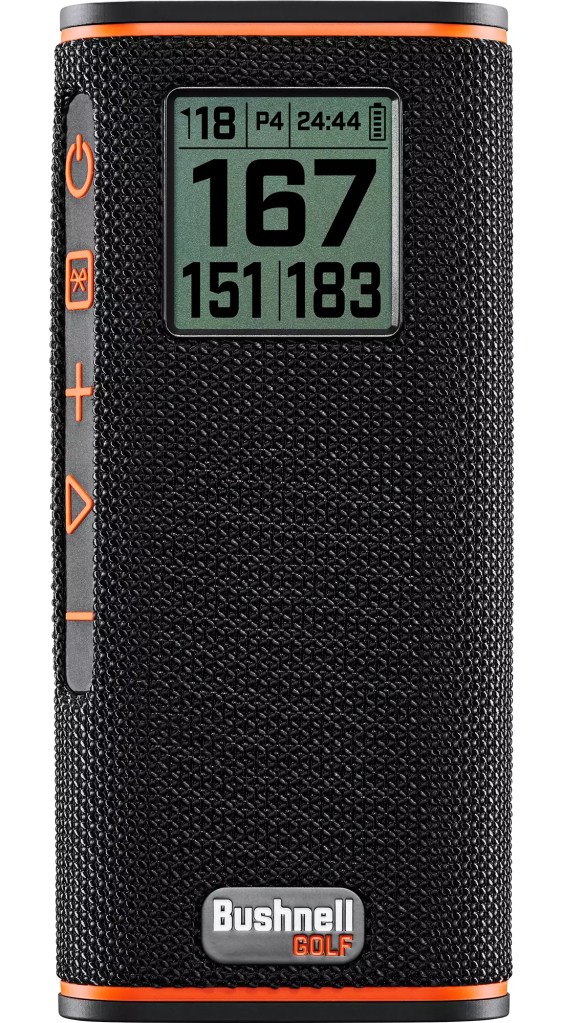
For golfers who like music on the course, there is one accessory that has become essential: The Bushnell Wingman. Bushnell’s newest version of the their revolutionary yardage-provider and speaker, the Bushnell Wingman, is the Wingman View ($150). The View incorporates visual yardages and music information on an integrated LCD screen, so if you want to play in silent mode, you can still get your yardages. And even if you don’t want music (or yardages) on the course, the Wingman serves as an excellent Bluetooth speaker anywhere (it’s not just for golf!).

Golf Balls: Srixon Z-Star and Bridgestone Tour B Turkey Ball

Srixon is, in my view, the most under-rated equipment company in golf. Their clubs are consistently some of the top-performing sticks on the market, and their golf balls rival those from any other company. Their top-shelf offerings are the Z-Star line ($50/doz.): Z-Star, Z-Star XV, and Z-Star Diamond. These all have different spin and flight characteristics, so every golfer on your list will find something to fit their game.

For performance AND extra fun, the limited-edition Bridgestone Tour B Turkey Ball ($45/doz., while supplies last) celebrates my own personal favorite holiday: Thanksgiving. I wish these balls had been around during the years when my golfing in-laws would always play golf together Thanksgiving morning while the feast was being prepared by my non-golfing in-laws. Those were great days, and these whimsical balls would have been a real hit.

Big Ticket Item: Your own golf course?

So maybe one’s very own private golf course is too extravagant for even a “big ticket item.” Fair enough. But what if you could give the most special golfer on your list and a few friends their own course for a day or two? At the ultra-exclusive Bunker Hill Farms Resort, just 90 min from downtown Chicago, this is precisely what you can do. For $1250 per person per day, not only will your golfer get exclusive access and private caddies at the 18-hole golf course, they’ll also get all-inclusive gourmet food and beverages and access to the myriad other activities and amenities of this one-of-a-kind resort, which is also a non-profit that donates all proceeds to local charities. You need to read all about it to believe it, which you can do here.

Your Golf Santa tees off at Bunker Hill Farms — checking “my own private golf course” off my bucket-list.

This wraps up yet another installment of the MidwesternGolf.com Holiday Gift Guide. Enjoy the holidays – from Thanksgiving through New Year – and may 2025 be gentle to us and our wallets. Peace.  

Bunker Hill Farms: Your Own Course for the Day (or Week)

What’s your golf fantasy? Ask most golfers this question, and the list will probably be predictable: A membership at Augusta National? A round with Tiger? Your very own private golf course? I can’t help you with the first two, but I do have advice about attaining the third, at least for a day or two or…more. For the cost of a few rounds at Pebble Beach, you and your golf buddies can experience what it is like to have your own private course—and chef, caddies, staff, and an entire estate to yourselves at Bunker Hill Farms, in Woodstock, Illinois.

You’re forgiven if you’ve never heard of Bunker Hill Farms. There are people who live within a few miles of the place who don’t know it exists. The photo below is of the front gate – with no sign at all to belie the “secluded opulence” that lies beyond.

The unmarked entrance to Bunker Hill Farms

History

Bunker Hill Farms started off in 2005 as a 150-acre family retreat for Mike and Amy Domek and their family. Mike is the founder of TicketsNow.com, which he sold to TicketMaster in 2008 for a handsome sum. With a portion of the proceeds from that sale, the Domeks embarked on a project that today includes 450 acres, a lodge and a cottage, a Silo Spa, a fishing and recreation lake, a 6,709-yard 18-hole golf course, miles and miles of trails, trap and target shooting, and, to be honest, pretty much anything else you can think of – which, I was repeatedly assured during my visit, the staff can arrange to bring in.

The Lodge at Bunker Hill Farms

The golf course officially opened in 2011, with a ceremonial first shot and commemorative concert by 80s hard-rock sensation Brett Michaels. In 2014, this musical tradition was scaled up with the first annual Rockin’ the Hill concert, when Cheap Trick was invited to play an outdoor concert to raise money for local McHenry Country charities through the Domeks’ foundation. During these years, access to the property and golf course was strictly by invitation only. Celebrities, politicians, corporate giants – they were all welcomed and pampered on the down-low, just 60-some miles from downtown Chicago but a million miles from the flashbulbs of the paparazzi.

Photos of A-list Bunker Hill Farms guests like Darius Rucker line the walls of The Lodge.

In 2023, the Domeks moved from an invite-only model to opening bookings for the expansive, luxurious property, all geared to raising even more money for their charitable foundation. All proceeds from event and group bookings of Bunker Hill Farms go into the foundation, which to date has donated over $3 million to McHenry County charities.

Signed guitars from all the musical guests and performers adorn the mantel in The Lodge.

Booking Bunker Hill Farms

Although Bunker Hill Farms is still a “celebrity haven” – as the property only books one group at a time and no one knows who is there or when – regular folks can book the entire property, including the golf course, now, too. Perhaps this needs to be qualified a bit: Regular folks who can afford $1250 per day (with a one-time $500 overnight fee if they stay overnight from one to however many nights) can book the entire property. The rules are pretty simple: $1250 per person (basic fee), minimum 8 people, and the property and staff and all amenities are yours, all-inclusive. This means you get the run of the lodge (which sleeps 12-14), the cottage (6 more suites), all the activities (guided ATV rides, shooting, water sports, cooking classes, wine tastings, etc.), a personal chef, all the food and beverages you want, and an 18-hole golf course complete with your own personal caddies and top-notch loaner clubs. Operations Manager Gretchen Pembrook assures me that pretty much any other activity can be arranged, too – from hot-air balloon and helicopter rides to horseback riding to full-service spa treatments to…well, whatever you can imagine, assuming your budget can accommodate some additional charges.

Ride an ATV to the high point of the Bunker Hill Farms property.
The Cottage at Bunker Hill Farms
The Silo-Spa at Bunker Hill Farms
The pneumatic elevator in the Silo-Spa (VERY cool!)

Not everyone who books Bunker Hill Farms is a golfer (one recent group booked the resort for two days to play Dungeons and Dragons), but if you are, and if you have the budget for it, Director & Inside Sales Manager Kayla Forschler assures me that they can even bring in PGA Tour players to play golf with you on what is, for all intents and purposes, your own private golf course.

The plaque behind the 9th green commemorating PGA Tour player Brandon Hagy’s monster tee shot.

Playing Bunker Hill Farms

Mike Domek loves golf. And his original plan, according to Joe NAME, TITLE, was for a full 18-hole golf course to cover around 120 acres of the original property. But Amy, his wife, did not want to look out her windows and see just a golf course. After some intense negotiations, Mike got approval for his full-sized golf course – 18 holes, 6,709 yards – to be built on just 60 acres of the property.

The routing diagram for the 18 holes at Bunker Hill Farms

How, you may ask, can a championship course fit on 60 acres? Enter landscape architect turned golf course architect Harry Vignocchi, whose other credits include Bull Valley in Woodstock, IL, and Bittersweet Golf Club in Gurnee, IL. Vignocchi stitched together a routing that shares fairways and greens in such a way that the back nine holes look and feel different from the front nine, even though all but one green is played to multiple times. The secret of pulling off such a design is two-fold. First, the angles and yardages into the greens on the front and back nines vary so much, it’s difficult to recognize them the second time through. Second, because the resort property is so exclusive, everyone on the course is from the same group – meaning just one or two foursomes most of the time. Occasionally, the property books larger groups for a corporate golf outing, but even then, every group will have their own caddie, and those caddies are equipped with walkie-talkies, so they can ensure everyone stays spaced out and won’t hit into each other.  

The tee shot on the 12th Hole — over the 11th green. One of the routing quirks at Bunker Hill Farms.

I cannot stress enough how impressive it is to play a course with such a small footprint but completely regular-length holes. Impressive and confusing! Without a personal forecaddie and being shepherded around by Joe Domek, Director of Outside Sales, I would have had no idea where to go – signage is non-existent. In this way, Bunker Hill Farms is similar to some historic Scottish Highlands courses, including the most famous of all, The Old Course at St. Andrews, where fairways cross and multiple greens are shared. The immense inventiveness also brings to mind The Loop at Forest Dunes in Michigan, which can be played forwards and backwards.

Equally impressive is the unmatched exclusiveness of Bunker Hill Farms – it is YOUR course while you play it: YOUR staff, YOUR beverage and food service, YOUR loaner clubs (also included, if you don’t have your own) – your EVERYTHING. You can hit 20 tee shots in a row on a par 3, if you want, to see how close you can get to the hole. You can replay the entire course as many times as you want in a day – sunrise to sunset, if you wish. In 26 years of golf writing, I have never experienced anything quite like it. No wonder it’s so popular with celebrities.

Hole 1, Bunker Hill Farms
Hole 3, Bunker Hill Farms

As one might imagine of a course that gets VERY limited play, conditions are immaculate. The 450-acre property is run with just five full-time employees, but there are a few who are dedicated solely to the golf course. Greens are large and subtly contoured, and they run around 12 on the Stimp meter. Good luck finding even one unrepaired ball mark. Fairways are generous, but there are plenty of hazards – seen and unseen – including dense underbrush, high fescue, and water. The fairways are all native fescue, and the tees and greens are bentgrass. Ironically, given the name of the resort, there is just one sand bunker on the entire course (but it is a deep one).

The lone bunker at Bunker Hill Farms

The entire course design radiates out from a pond at the center of the layout, sort of like a watery hub. Five holes (four on the front, one on the back) play across the pond in some way, with another couple skirting its shores. Most memorably, the tee box of the 137-yard 8th Hole is a small island in the pond, accessible via a stone walkway—a great photo op.

The author, teeing off on Hole 8
Hole 8 tee box (minus the author)

There’s only one set of tees per hole – the full 6,709 yards. However, for families or groups with mixed skill levels, the staff can set up tees at really any distance for every hole, so that even the course set-up is customized to your group’s needs.

It’s worth repeating again, too, that despite the petite footprint, this is a brawny, difficult course. The opening and closing par 5s measure 580 yards and 560 yards, respectively, there are four par 4s over 400 yards, and only one “short” par 4, at 303 yards. I felt like I was hitting some solid drives, but then discovering repeatedly that I still had a mid- to long-iron into many greens.

There are, nevertheless, some routing quirks imposed by the diminutive size of the course. For example, on your way to the 3rd green, you take your driver with you to tee off on the 530-yard, par 5 4th. On the 505-yard, par 5 12th Hole, you tee off over the 11th green. And the green on the 392-yard, par 4 15th Hole is the only one you play just one time. Fortunately, your personal caddie will guide you through these potential confusions, so you hardly even notice them.

Approach, Hole 5
Approach, Hole 6
9th Hole, behind the green
The 15th green at Bunker Hill Farms

Bunker Hill Farms: The Verdict

Bunker Hill Farms is by far the most exclusive golf course I have ever played, or likely ever will. It is as unique in its routing as it is in its philanthropic mission. For anyone looking for a corporate retreat, family reunion, luxury “destination” wedding (without having to fly across the globe), or just an ultra-exclusive, ultra-pampered getaway, Bunker Hill Farms is without peer. For golfers in particular, it is THE place to live out one of your golf fantasies: your own private course for a day (or two or three)!

Royal County Down: A Bucket-list Golf Experience

Imagine this: You’re playing golf. It is 38 degrees Fahrenheit. You are hitting off of a little plastic mat you’re carrying around with you. You are playing very, very badly. Yet, when you hole out on the 18th green, you can barely hold back tears because you’re so sad that the round is over.

There are few courses in the world where every step feels like a dream. Royal County Down in Northern Ireland is one of these precious few courses. None other than Bernard Darwin described golf at Royal County Down as “the kind of golf people play in their most ecstatic dreams.” And no matter what the conditions or your score, you simply do not want to wake up.

The links at Royal County Down nestle into the undulating dunescape with a natural ease that belies any human intervention. Nevertheless, in the clubhouse, you will find a photograph of Old Tom Morris and the original 1889 document that contracted him to lay out the second nine holes of the links “for a sum not to exceed £4.” That was a hell of an investment.

Royal County Down Golf Club is currently hosting the Amgen Irish Open, one of the premier events on the DP World Tour schedule. Player interviews so far  convey the deep respect and admiration players have for these links. Frankly, it is difficult to see how anyone fortunate enough to tee it up here would not immediately become a big fan.

The world-class golf at Royal County Down comes with a 360-degree panorama of mountains, sea, and village views.

Playing Royal County Down Golf Club

Like The Old Course at St. Andrews, the worst trouble (i.e., out of bounds) at Royal County Down lurks to the right, punishing slicers. The most claustrophobic OB stakes are found on the first few holes, in fact, so try to warm up a bit before your tee time. Unlike The Old Course, however, these links feature shaggy, tumultuous dunes and explosions of gorse throughout the layout. These features give the links a barely tamed feel without veering into unkempt wildness.

Unusually for historic links courses, Royal County Down opens with strong holes. The 539-yard, par-5 1st hole ushers you down the rabbit hole and offers views of the Slieve Donard Resort and the town when you look back up the fairway at the world you’re leaving for a while. The green of the 475-yard, par-4 3rd hole is tucked into a gorsey knoll and protected by a treacherous front bunker. The best views of the sea and shoreline come early, on the elevated tees of the 229-yard, par-3 4th hole.

Hole 3, Royal County Down
Hole 7, Royal County Down

The deceivingly evil 144-yard 7th was described by my caddie as, “The shortest par 5 in the world.” When I looked quizzically at him, he explained how everything runs off the putting surface into the back left bunker. When I landed short right and tried to chip to the back pin – and ran past the hole into that very bunker – he just nodded and muttered, “See what I mean?”

The 483-yard, par-4 9th is one of the most oft-photographed holes in all of golf. From the tips, the tee shot must find the right-to-left canted fairway some 260 yards off the tee. If you play more forward tees, a long drive can run off the end of the top part of the fairway, and the approach downhill to the raised green will have to be played from a terrible stance in thick rough. Good luck with that.

Hole 9, Royal County Down — one of the most photographed in golf

The 446-yard, par-4 13th is the #2-handicap hole, but it feels much harder. If your drive isn’t perfect, it’ll need to be played as a par 5. And even if your drive is perfect, the blind approach to the gorse-encircled green is never a picnic, especially if the wind is blowing (which it almost always is).

Hole 13, Royal County Down. The pole is where you aim on your approach.

Finally, the 548-yard 18th is relatively straight, relatively trouble-free. Perhaps this is because Old Tom intuited that so many future golfers would tread this fairway with misty eyes as they emerge from the dreamy, linksy wonderland. The course is open to visitors weekdays and Sun. afternoon (limited times available) mid-April to October. Green fees are £425 (£575 for 2 rounds in one day).

The 18th tee at Royal County Down — nearly time to wake up from the ultimate golf dream…

Travel Tips

The Northern Ireland seaside town of Newcastle has plenty of quaint bed and breakfasts and historic hotels, but a room at the Slieve Donard Resort and Spa is the ultimate stay-and-play experience when playing Royal County Down. The hotel was built by the railway to entice city folk to take a train ride to the coast to play golf, and opened in the same year as the back nine of the course, 1897. The famed linksland lies directly behind the back parking lot of the resort and can be seen from some of the rooms.

Slieve Donard’s red brick Victorian façade is simultaneously inviting and a bit foreboding. There are ample views out into the North Sea, and the interior has been completely refurbished with all the modern amenities, including a 5-star spa. Nevertheless, classic details have been preserved, such as the enormous carved wooden mantelpiece in The Oak Room.

Venturing beyond the exquisite confines and cuisine of Slieve Donard, gastronomes will be richly rewarded by a dinner at Brunel’s in Newcastle. The local mussels are probably the meatiest I have ever eaten anywhere in the world.