
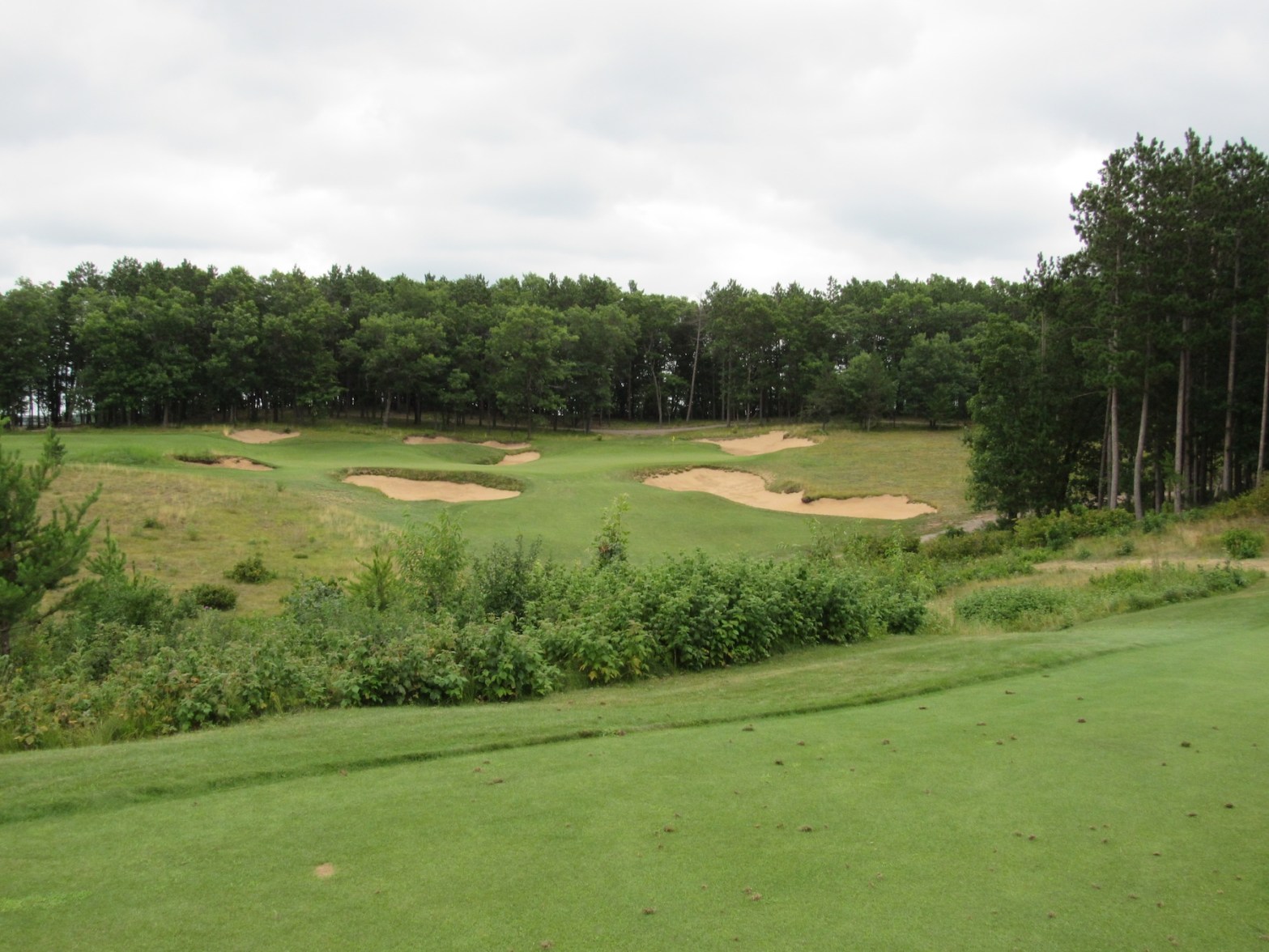
In this age of 460cc drivers and 300-yard drives, length is king. In the U.S., most recreational players immediately check the yardage of the back tees on the scorecard to determine a course’s difficulty or even its appeal. This is an amateur mistake, however. Distance and difficulty are certainly correlated, but correlation doesn’t imply causation. If you’ve ever played through the English or Scottish countryside, you’ll have discovered numerous courses with sub-70 pars – courses that are as far from push-overs as bangers and mash are from health-food.
Sand Valley Golf Resort’s Sedge Valley is golf course architect Tom Doak’s homage to English heathland courses. At just 5,808 yards from the tips and a par of 68, the uninitiated might overlook playing it, or automatically head straight to those back tees. As the starters, caddies, and proshop attendant will tell you, this is a mistake. The unanimous consensus is that Sedge Valley plays about 500 yards longer than the scorecard says from all three tees, and the wise play for first-timers is to consider the middle tees, or some middle-back or front-middle combination.
What contributes to the length and difficulty (68.7 rating, 130 slope from the tips)? Elevation changes account for some of the added yardage and difficulty; slopes are more abrupt here than on the other 18-holes courses at Sand Valley (though it is still perfectly walkable). In addition, Tom Doak’s signature visual illusions make it difficult to judge lines and pull the correct clubs. Toss in plentiful trees, omnipresent deep sand bunkers, the occasional blind shot, and green contouring that was described to me as “unreal” in the proshop, and you have a recipe for an immensely enjoyable round, but not one where you’re likely to shoot a career score your first time out.
Playing Sedge Valley
The opening two holes on Sedge Valley are quite gentle, a pleasant prelude before crashing headlong into the #1 handicap hole, the 455-yard, par-4 3rd. Not only does the 3rd Hole measure long, it plays longer, all uphill, with a blind second (or third) shot over a rise that completely blocks your view of the green and flag. There is a target hung in the trees behind the green, though, to indicate the line. Trust it, and get a good yardage from a sprinkler head, yardage book, or caddie. It’s always fun to crest a blind green and find your ball on the dancefloor.
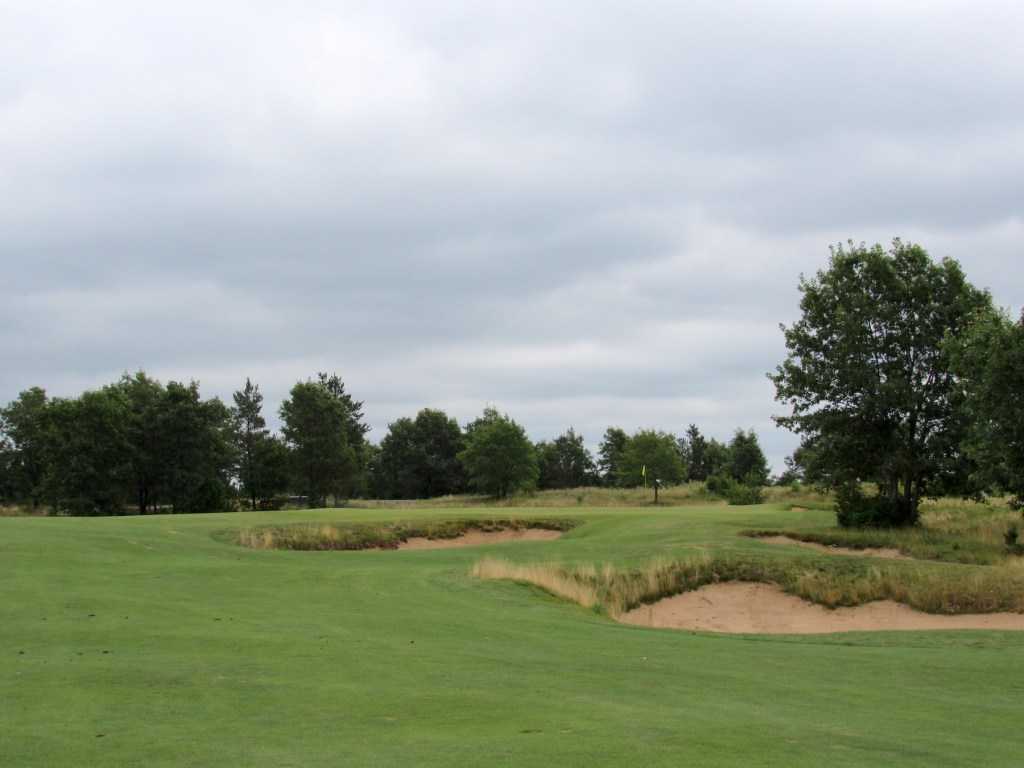
Holes 4-8 are all downhill, two par 3s and a drivable par 4. The par-3 8th is one of the standouts on the course, measuring 226 yards from the tips. If you’re into side bets, lay down some wagers on who will hit this green – it’s not easy.
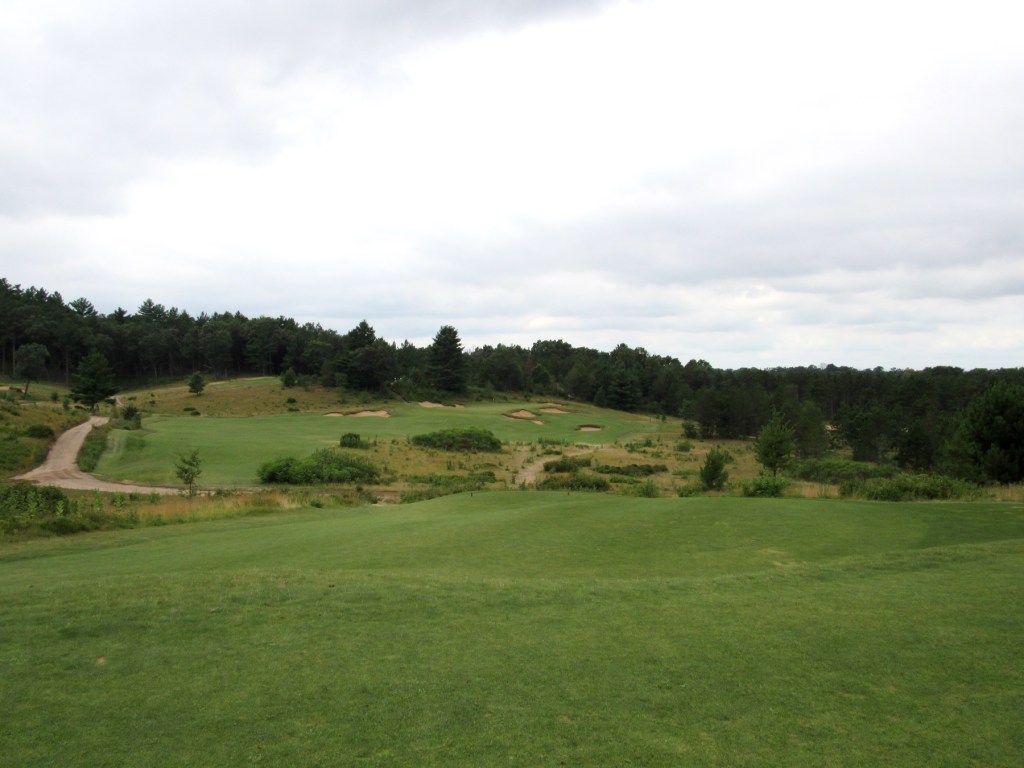
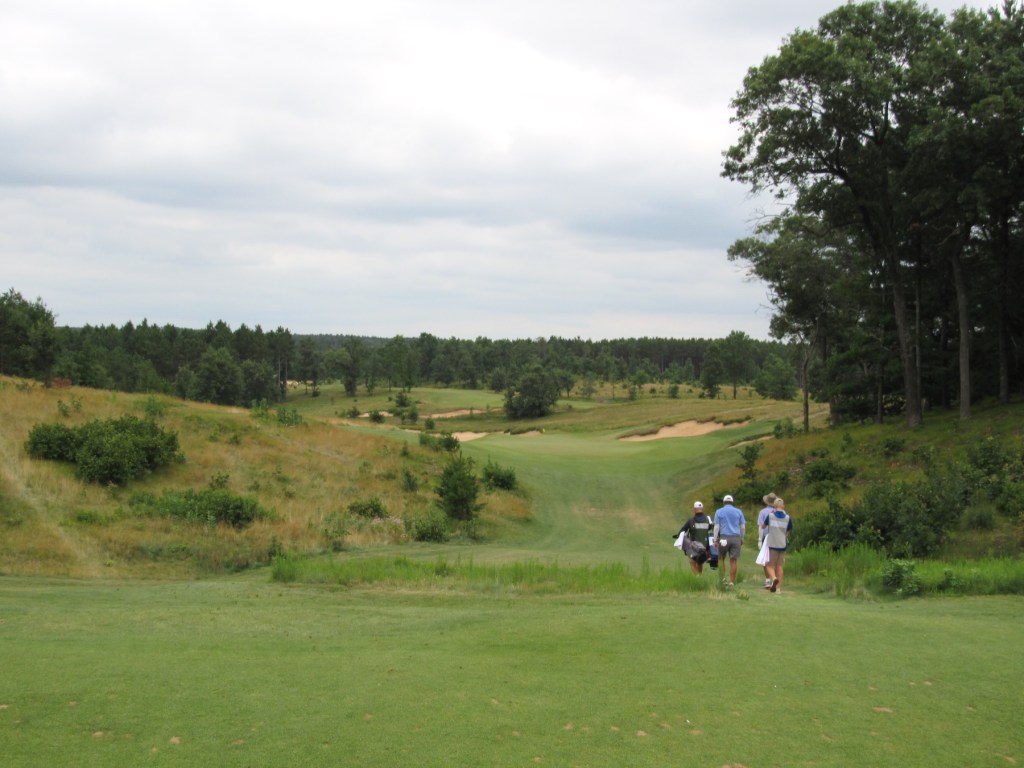
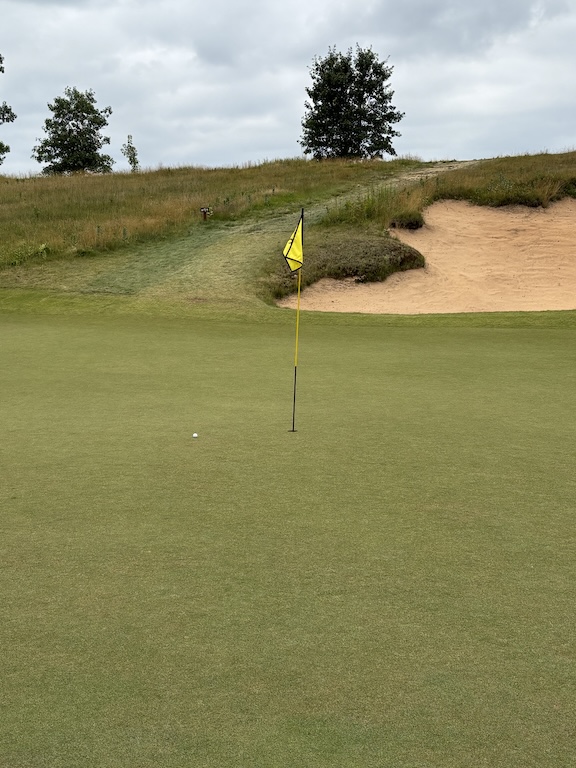
On the back side, the greens fulfill the description of “unreal.” On holes 11 & 12, the putting surfaces are simply wild, with contouring so extreme there are a few spots that are impossible to even putt from if the pin is in certain locations. I have not four-putted in many years, but I did on Hole 11, turning a birdie opportunity into a smooth triple-bogey.
The closing stretch from 15-18 is one of the most enjoyable strings of holes on the entire resort. The 15th is a par 3 that is long from the back tees (185 yds), but mercifully ~40 yds shorter from the middle tees. The 16th and 17th holes are also some 70 yards shorter from the middles than the tips, but the 16th plays from the middle in the back-middle combo, while the 17th plays from the back. So those who opt for the combo tees don’t get let off the hook completely.
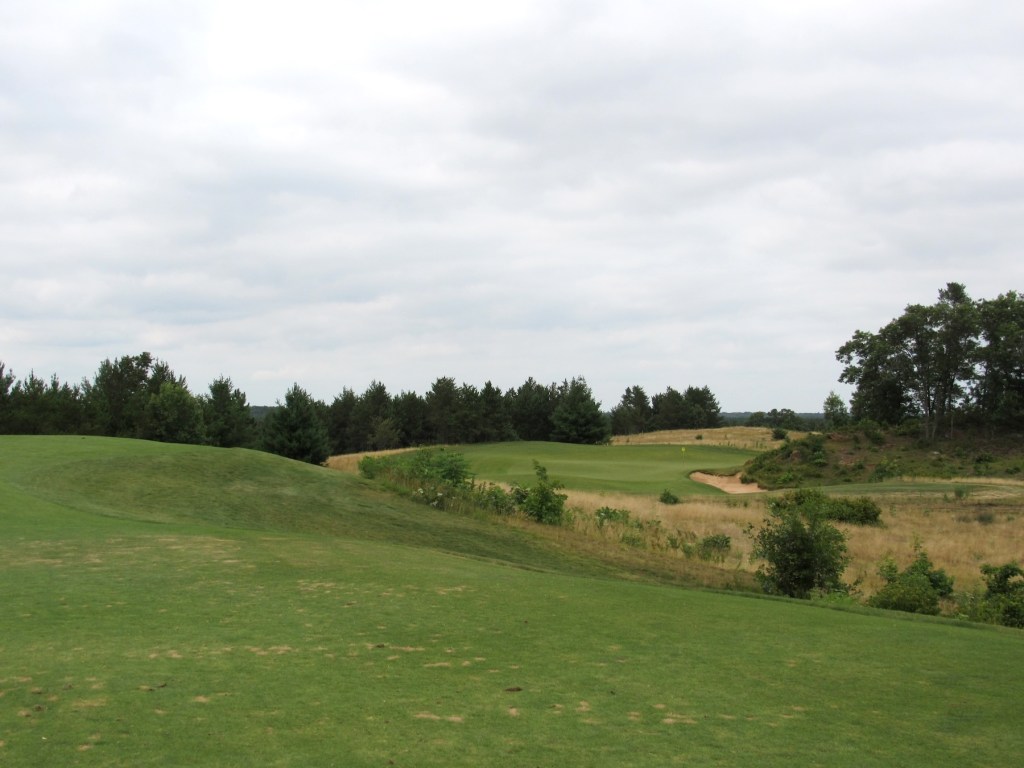
The 18th is a short (317 yds) par 4 with a mostly blind approach, especially if you’re on the left side of the fairway. The green – another wild one – is shaped like a giant quotation mark or comma, with two distinct bowls in the upper left quadrant and lower right. If you can land your ball in or near the correct portion, it should funnel toward the hole, offering a welcome birdie opportunity to close.
Sedge Valley: The verdict
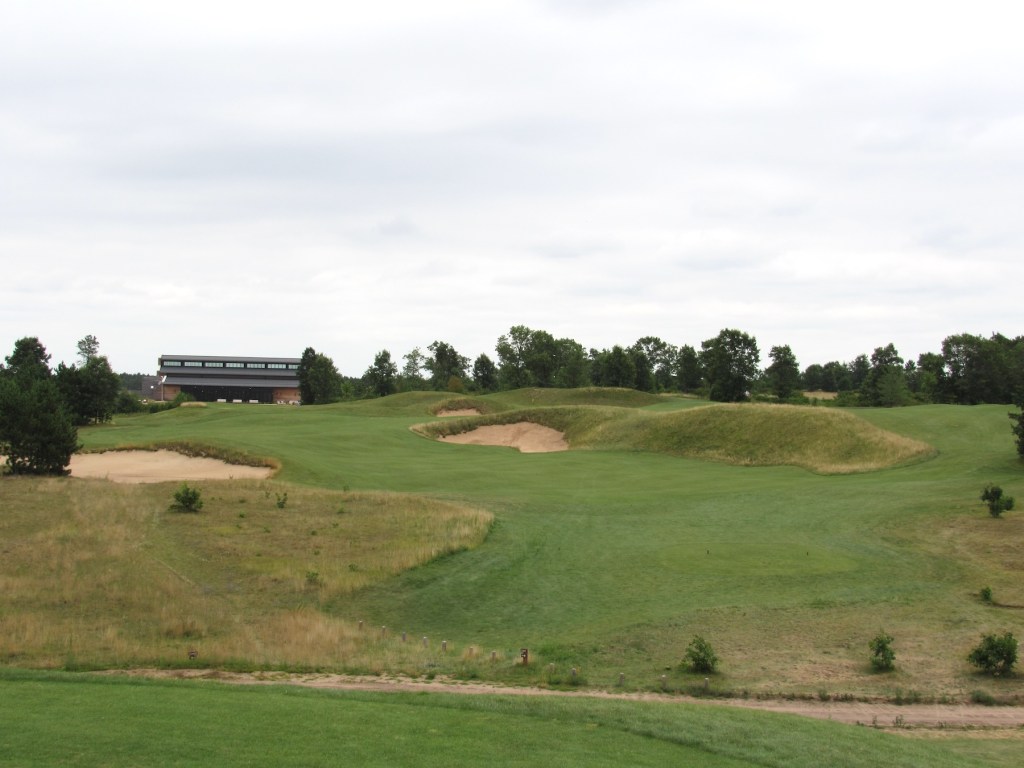
Length isn’t everything, and Tom Doak knows this. The collective opinion in my group was that Sedge Valley was more fun to play than Coore & Crenshaw’s Sand Valley, as the mix of punishing and potentially rewarding holes is more balanced. Club selections and sightlines were challenging, but the continuously rising and falling landscape and the flow and beauty of the holes were all pleasing to the eye.
There is no heather or gorse, as one might find in a true English heathland course, but there is plenty of fescue and – of course! – sand, and more trees framing holes than on Sand Valley or Mammoth Dunes. Fairway widths were similar to Sand Valley, but even when there is plenty of short grass (as on the drivable par 4 12th), there are countless humps and swales, ensuring that most lies are not flat.
In short, if I were a member at Sand Valley, I would most likely choose Sedge Valley as my regular course. It felt less crowded than the other two 18-hole courses (we felt like we had the links to ourselves), places a premium on accuracy and strategy, and, above all, is just fun to play. All qualities that are rarely ascribed to a course that tips out nearly 200 yards below 6,000.
 Midwestern Golf
One thought on “Sedge Valley is Sand Valley’s shortest 18, but not its easiest”